Fraction comparison Worksheets for Ages 5-6
10 filtered results
-
From - To
Introduce your young learners to the world of fractions with our engaging Fraction Comparison Worksheets for ages 5-6! Designed to build fundamental math skills, these colorful and exciting worksheets help children understand and compare fractions visually. They offer hands-on practice with varied activities that make learning fractions fun and intuitive. Perfect for early grade students, these worksheets will boost their confidence in math by simplifying complex concepts. Suitable for home or classroom use, our worksheets provide a strong foundation for future math success. Start discovering the joy of fractions today with Kids Academy's expertly crafted educational resources!
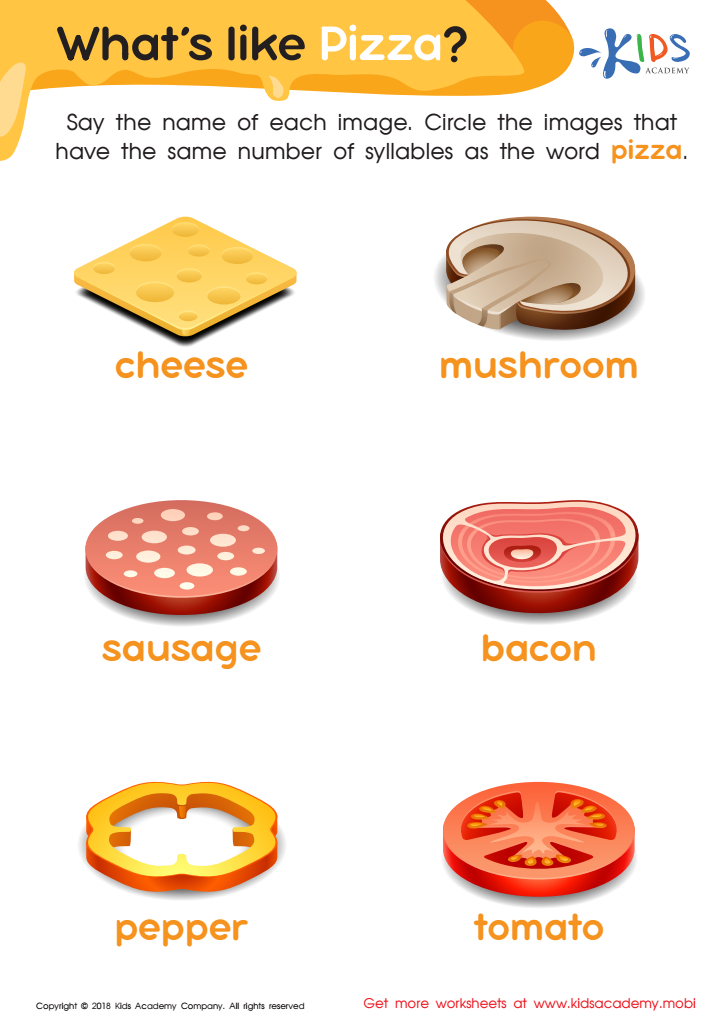
What's Like Pizza? Worksheet
 Assign to My Students
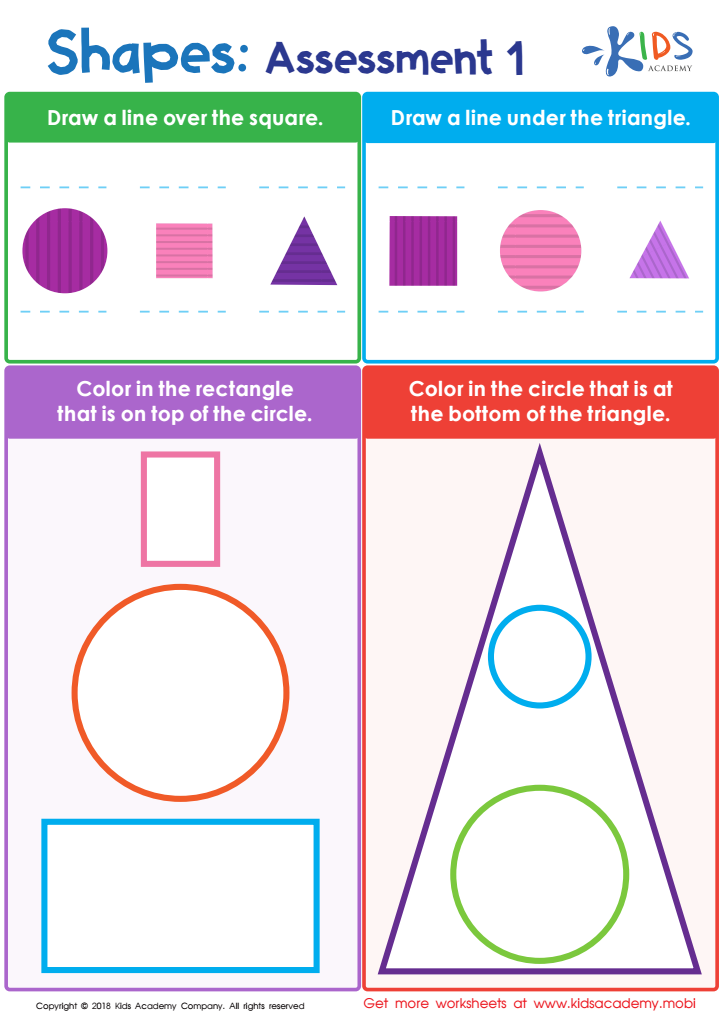
Shapes: Assessment 1 Worksheet






Understanding and comparing fractions is a crucial foundational math skill that parents and teachers should emphasize for children ages 5-6. At this developmental stage, kids are formative learners, and introducing fraction comparison early promotes strong number sense and mathematical reasoning skills essential for future academic success.
Firstly, comparing fractions builds a solid understanding of part-whole relationships. This concept underpins many areas of mathematics and everyday problem-solving skills. For instance, recognizing that 1/2 of a pizza is more than 1/4 is a practical application of fraction comparison foundational for more complex math like division and algebra.
Secondly, early exposure to fractions fosters critical thinking. Children learn to analyze quantities, decide which is larger or smaller, and reason logically, skills transferrable well beyond math scenarios. This type of analytical thinking supports cognitive development and improves problem-solving capabilities across various subjects.
Moreover, mastering fraction comparison in early grades sets a positive trajectory for future learning. Struggling with basic concepts later can lead to math anxiety and lower self-confidence. Early success, on the other hand, builds a positive attitude towards learning and perseverance.
Lastly, fractions are part of everyday life. From cooking to playing games, understanding parts of a whole helps children navigate daily activities more efficiently. Therefore, prioritizing fraction comparison at a young age equips children with tools for academic achievements and practical life skills.








