
Fraction visualization Worksheets for Ages 5-6
4 filtered results
Difficulty Level
Grade
Age
-
From - To
Subject
Activity
Standards
Explore our engaging Fraction Visualization Worksheets designed specifically for ages 5-6! These worksheets are perfect for young learners to grasp the concept of fractions in a fun and interactive way. With colorful visuals and engaging activities, children will develop foundational skills in recognizing and understanding fractions. Our resources enhance critical thinking and problem-solving abilities, providing a solid mathematical foundation while keeping learning enjoyable. Ideal for homeschooling, classroom use, or enrichment activities, these worksheets encourage kids to visualize fractions through hands-on exercises, making math easy and exciting. Start your child’s journey to becoming a fraction pro today!
Favorites
With answer key
Interactive
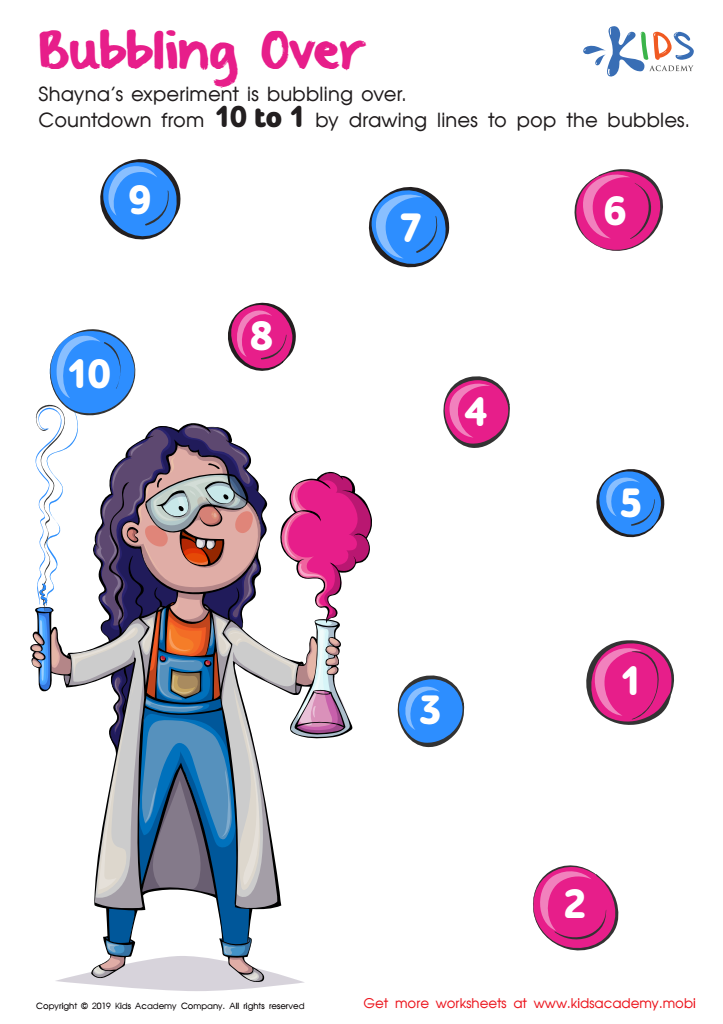
Bubbling Over Worksheet
Students love science experiments at the lab! They get to practice their counting skills while creating a masterpiece or an unexpected catastrophe! Ask them to count down from 10 to 1 by drawing lines to 'pop' the bubbles coming out of Shayna's experiment in the worksheet.
 Assign to My Students
Bubbling Over Worksheet
Worksheet
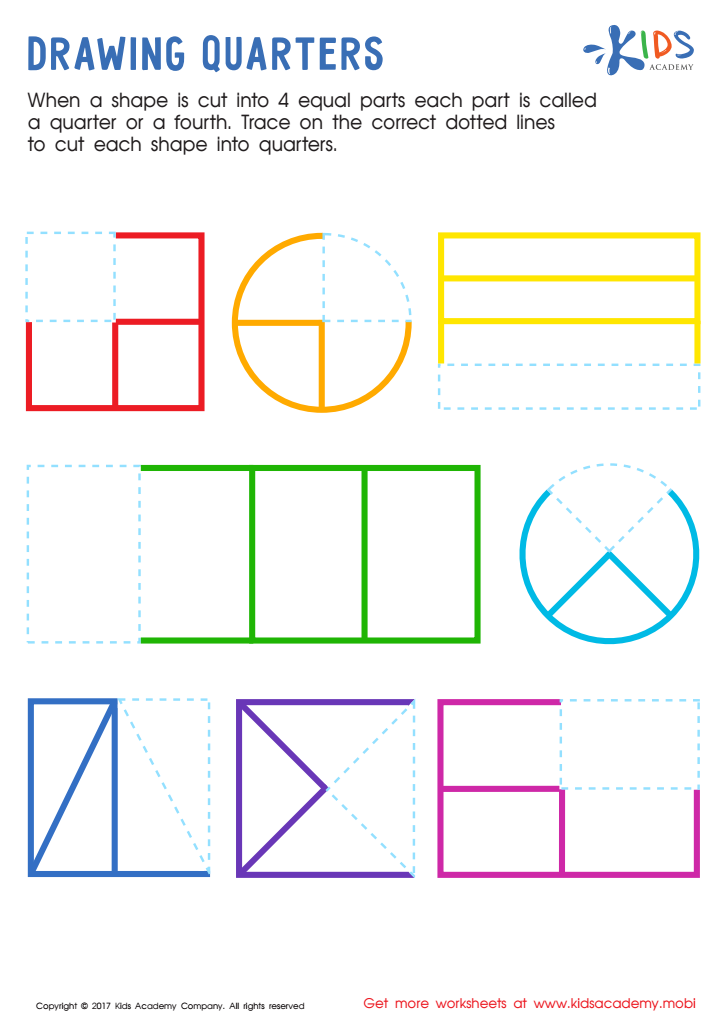
Drawing Quarters Worksheet
Help your kids divide shapes into quarters! Have them trace dotted lines to cut each shape into 4 equal parts. Each of the 4 parts is called a quarter or a fourth. This worksheet will help kids learn more about dividing shapes into four equal parts.
Drawing Quarters Worksheet
Worksheet
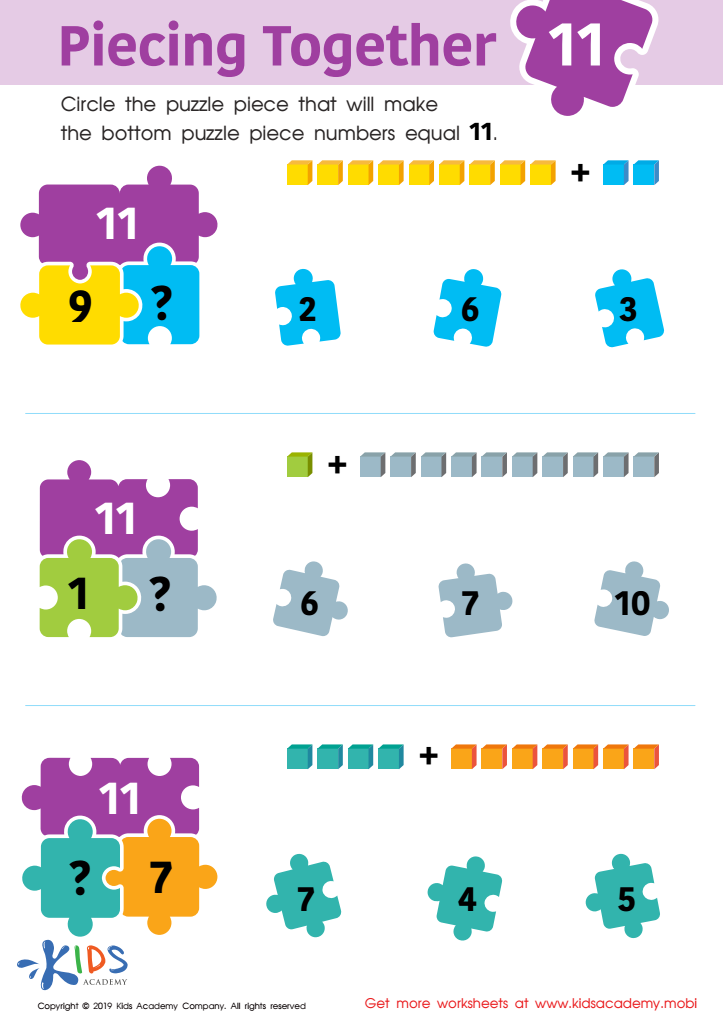
Piecing Together 11 Worksheet
Engage your preschoolers with learning-filled fun! Show them this colorful worksheet, and ask them to identify the figures. Each puzzle piece features an equation, except one which is missing. Help the kids solve the problems and circle the piece that'll make the numbers equal 11. It's a surefire way to make learning enjoyable!
Piecing Together 11 Worksheet
Worksheet
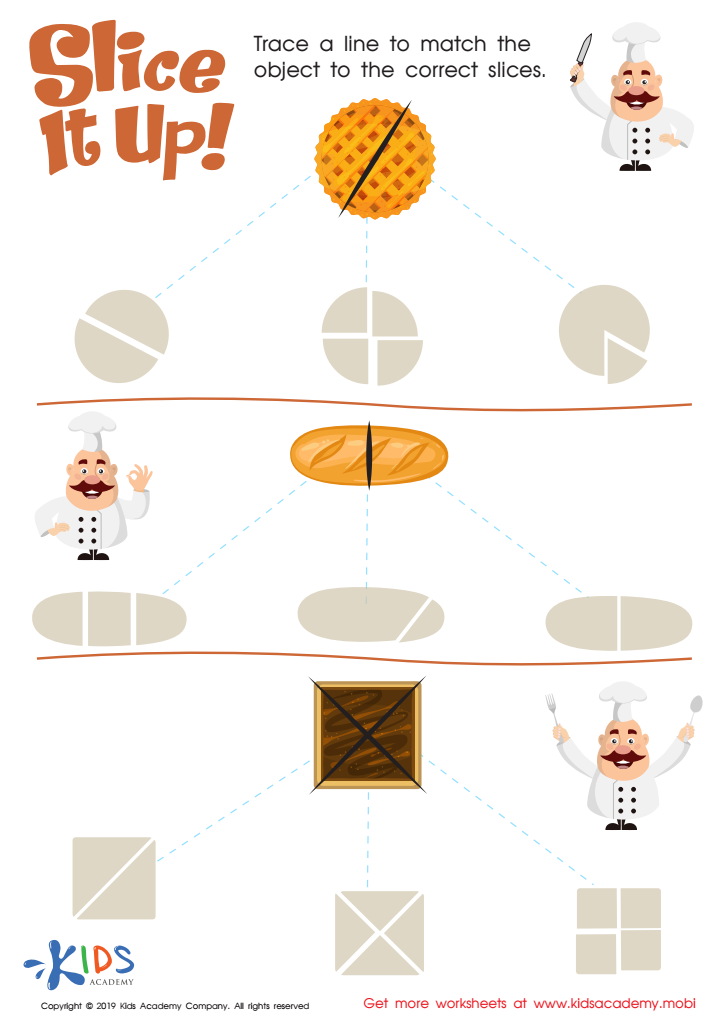
Slice It Up Worksheet
Try this fun math, reading and writing worksheet with your kids! They will love the colorful activities that perfect coordination and tracing. Engaging learning exercises help keep young minds sharp and boost skills. With these worksheets, your kids will be academically ahead of the curve!
Slice It Up Worksheet
Worksheet
Join Kids Academy for Free
Who is primarily going to use this learning content?






Fraction visualization is crucial for children aged 5-6 as it lays the foundation for their mathematical understanding. At this age, children are naturally curious and eager to learn, making it an ideal time to introduce concepts like fractions in a tangible way. Teaching fractions through visual aids, like pie charts, fraction bars, or pizza slices, allows children to see the parts in relation to a whole, facilitating comprehension.
Moreover, visualization reinforces critical thinking and problem-solving skills. When children engage with visuals, they develop the ability to differentiate between equal and unequal sets, enhancing their understanding of quantity and proportion. This early grasp of fractions paves the way for future math concepts, reducing anxiety around mathematics later on.
For parents and teachers, using fraction visualization promotes a variety of learning styles and makes math enjoyable. It encourages interactive learning, where children can manipulate objects and see the results, fostering a positive attitude towards math. In an increasingly numerically-driven world, giving children these foundational skills at an early age prepares them for more complex mathematical concepts and helps build confident, competent learners. Thus, investing time in fraction visualization can yield significant long-term benefits in a child's education.








