
Letter-sound recognition Worksheets for Ages 5-6
4 filtered results
Difficulty Level
Grade
Age
-
From - To
Subject
Activity
Standards
Boost your child's early reading skills with our engaging Letter-Sound Recognition Worksheets designed for ages 5-6. Kids Academy offers a variety of interactive activities that seamlessly blend learning with fun, helping young learners connect letters with their corresponding sounds. Perfect for both classroom and home use, these worksheets support the development of phonemic awareness, a key foundation for successful reading. With colorful visuals and playful exercises, children will explore the alphabet, master letter sounds, and build essential literacy skills. Set your child on the path to reading success with our expertly crafted resources today!
Favorites
With answer key
Interactive
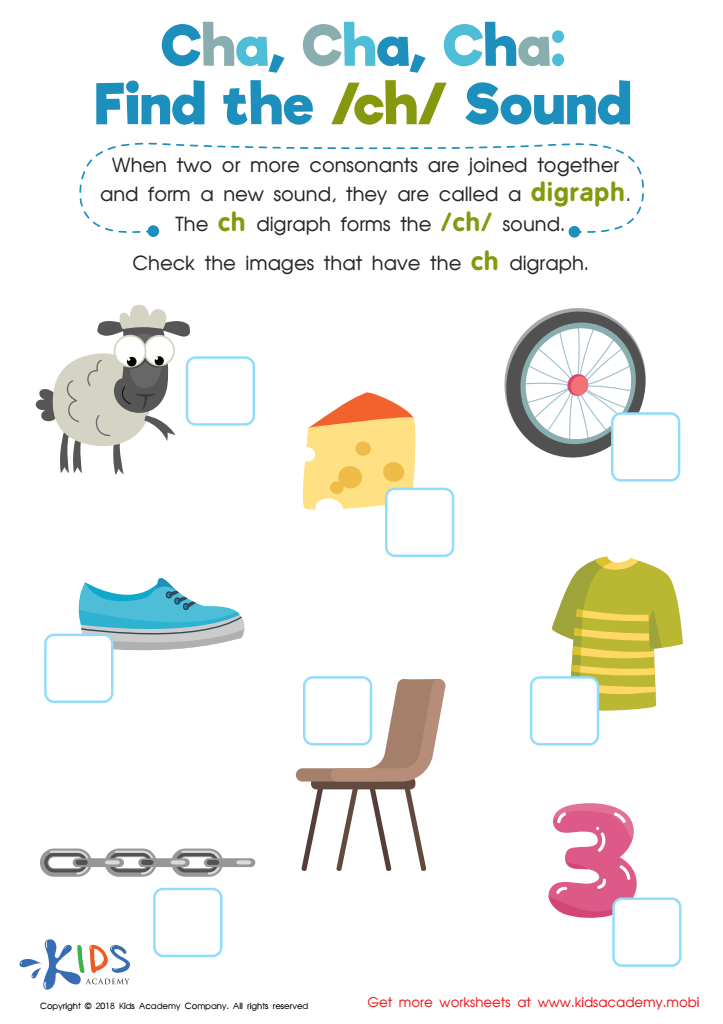
Cha, Cha, Cha: Find the /Ch/ Sound Worksheet
Have your students identify the objects in the images and if they struggle, help them check for the /ch/ digraph. This digraph forms a new sound when two or more consonants are combined, so it can be helpful to point it out to them in the colourful printout.
 Assign to My Students
Cha, Cha, Cha: Find the /Ch/ Sound Worksheet
Worksheet
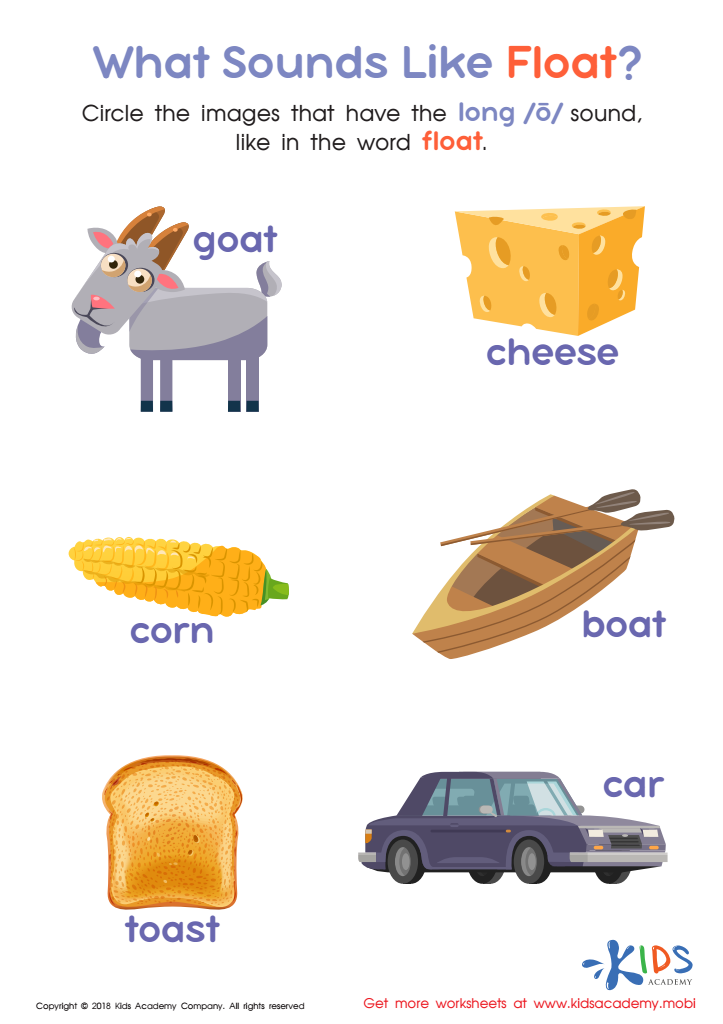
What Sounds Like Float? Worksheet
Help your kids practice the long /o/ sound with words such as 'boat', 'goat' and 'float'. Ask them to identify and circle the images in the worksheet that have the same sound. Award bonus points if they come up with more words with 'oa' spelling!
What Sounds Like Float? Worksheet
Worksheet
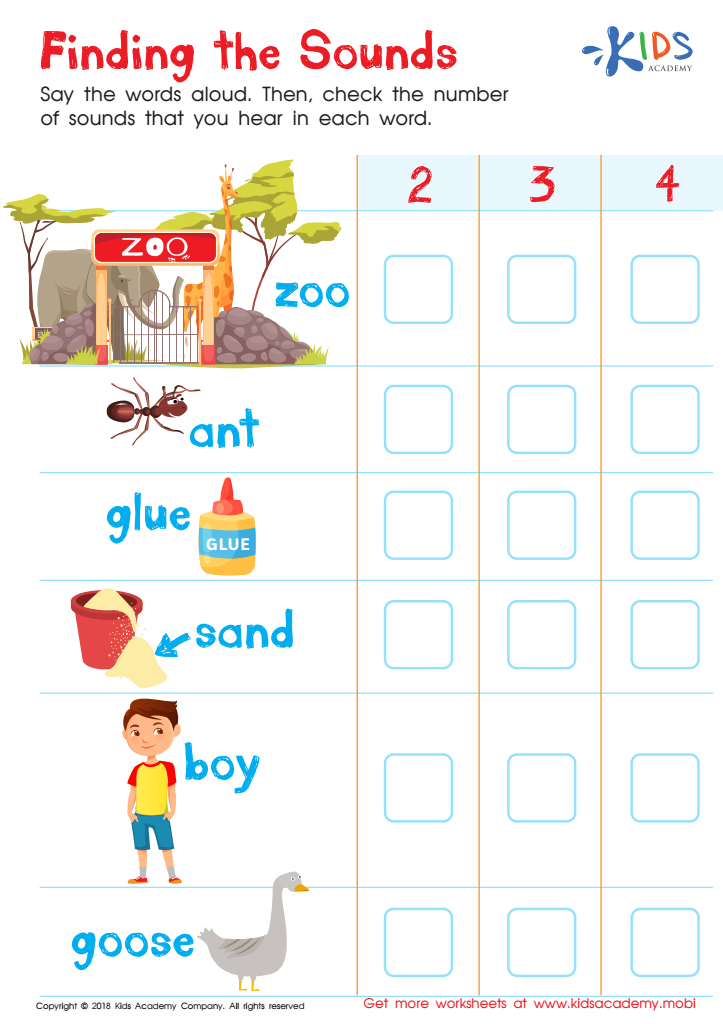
Finding the Sounds Worksheet
This free colorful worksheet assists children in learning words and breaking them down into sounds. It boosts auditory discrimination, phonological awareness and fine motor skills. Picture clues help them read confidently, and they can check the appropriate boxes to practice their reading skills.
Finding the Sounds Worksheet
Worksheet
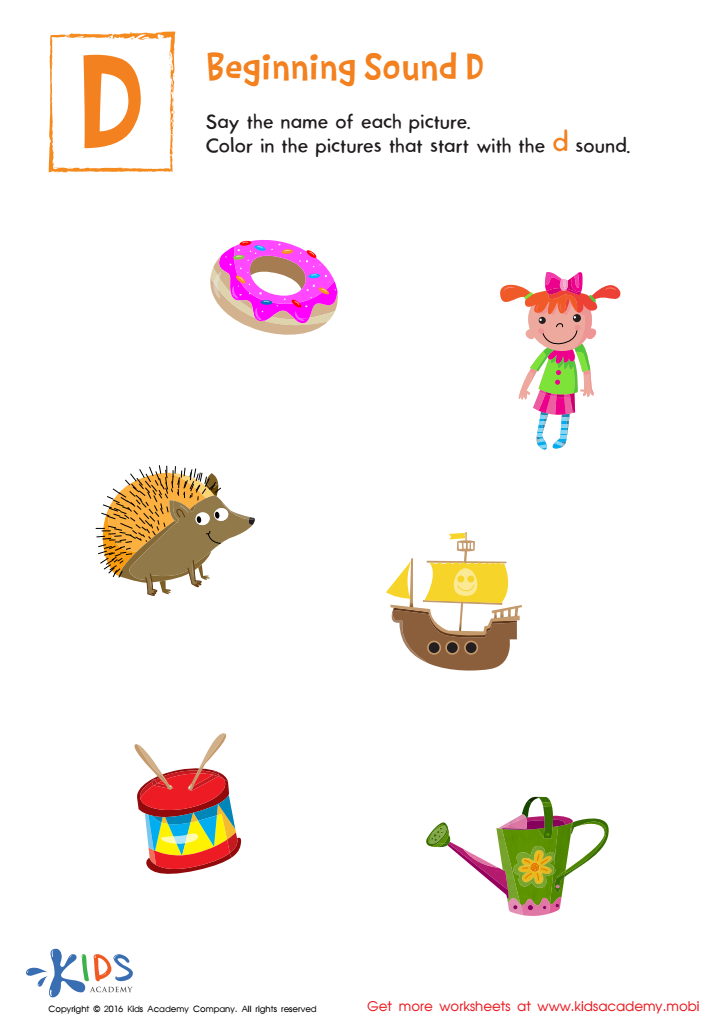
Beginning Sound D Worksheet
Reinforce phonics with this vibrant beginning sound d worksheet! Pictures help kids identify words beginning with 'd' and develop early reading skills. Sounding out each word increases literacy!
Beginning Sound D Worksheet
Worksheet
Join Kids Academy for Free
Who is primarily going to use this learning content?








Letter-sound recognition is a fundamental component of early literacy development for children ages 5-6, and it's crucial for both parents and teachers to understand its importance. At this age, children are typically in kindergarten or entering first grade, and they are at a pivotal stage for developing crucial reading skills.
First and foremost, letter-sound recognition forms the foundation of phonemic awareness—the understanding that words are made up of individual sounds. This awareness is essential for learning to read and spell. When children can identify the sounds associated with each letter, they can begin to decode simple words and read them accurately. This skill helps them progress from recognizing whole words by sight to understanding the phonetic structure of new words, fostering greater reading fluency and comprehension.
Moreover, early mastery of letter-sound relationships boosts a child's confidence and encourages a positive attitude toward reading and learning. It reduces frustration and opens up a world of literature and information, as they can more readily tackle age-appropriate books and written materials.
Parents and teachers play a vital role in this by providing engaging and repetitive practices, such as letter games, reading aloud, and interactive literacy activities. By caring about and actively supporting letter-sound recognition, they set children on a path to academic success and lifelong literacy skills.








