
Logical reasoning development Worksheets for Ages 5-6
3 filtered results
Difficulty Level
Grade
Age
-
From - To
Subject
Activity
Standards
Enhance your child's critical thinking skills with our engaging Logical Reasoning Development Worksheets designed for ages 5-6. These printable worksheets from Kids Academy are crafted to make learning fun and effective, focusing on activities that improve problem-solving abilities. Each worksheet offers diverse exercises, such as pattern recognition, sequencing, and categorization, to help young learners build a strong foundation in logical reasoning. Ideal for both classroom and home use, these educational resources are perfect for keeping children challenged and entertained while ensuring their cognitive development progresses smoothly. Give your child a head start with Kids Academy worksheets!
Favorites
With answer key
Interactive
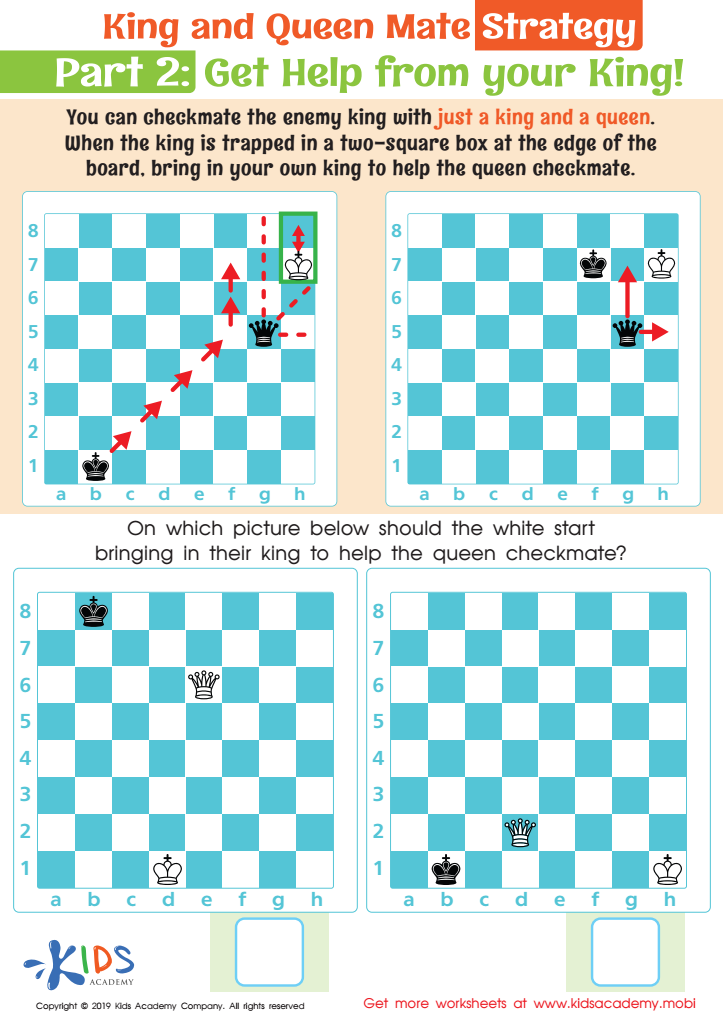
King and Queen Mate Strategy: Part 2 Worksheet
This worksheet helps your child learn to checkmate the opposing king with their king and queen. Descriptive sample boards show the strategy, and more boards help determine which one demonstrates how the king assists the queen.
 Assign to My Students
King and Queen Mate Strategy: Part 2 Worksheet
Worksheet
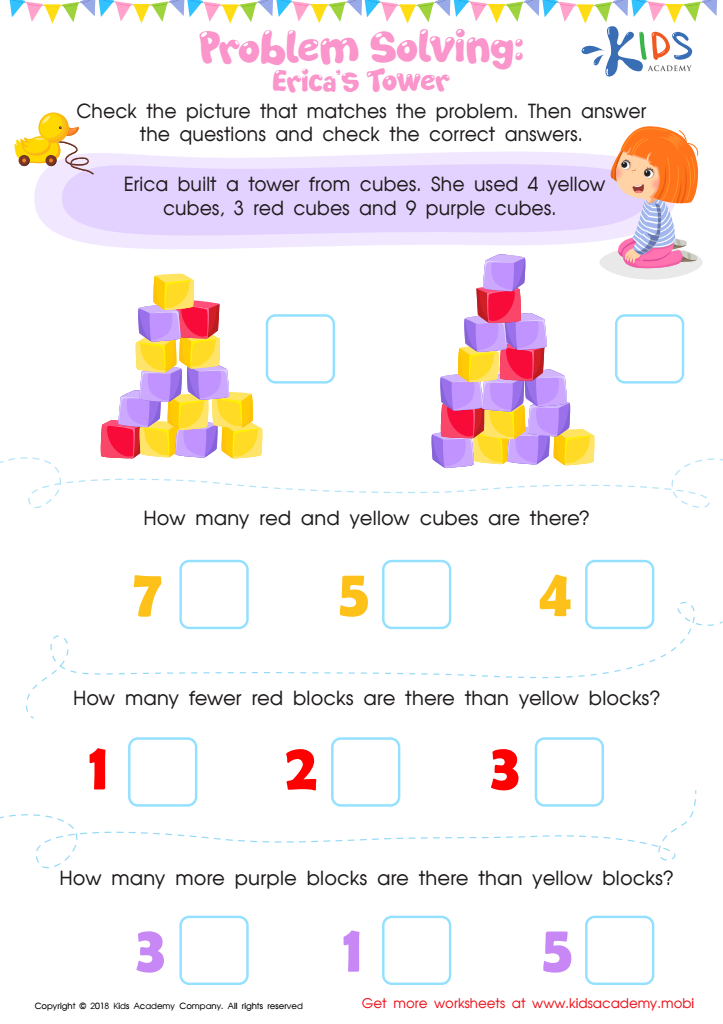
Problem Solving: Erica's Tower Worksheet
Sweet Erica needs your math student's help! Download the PDF worksheet and have your little math whiz read the word problems, match the pictures and solve basic addition/subtraction problems with two/three addends, minuends and subtrahends. They'll be having fun while strengthening their math fact skills!
Problem Solving: Erica's Tower Worksheet
Worksheet
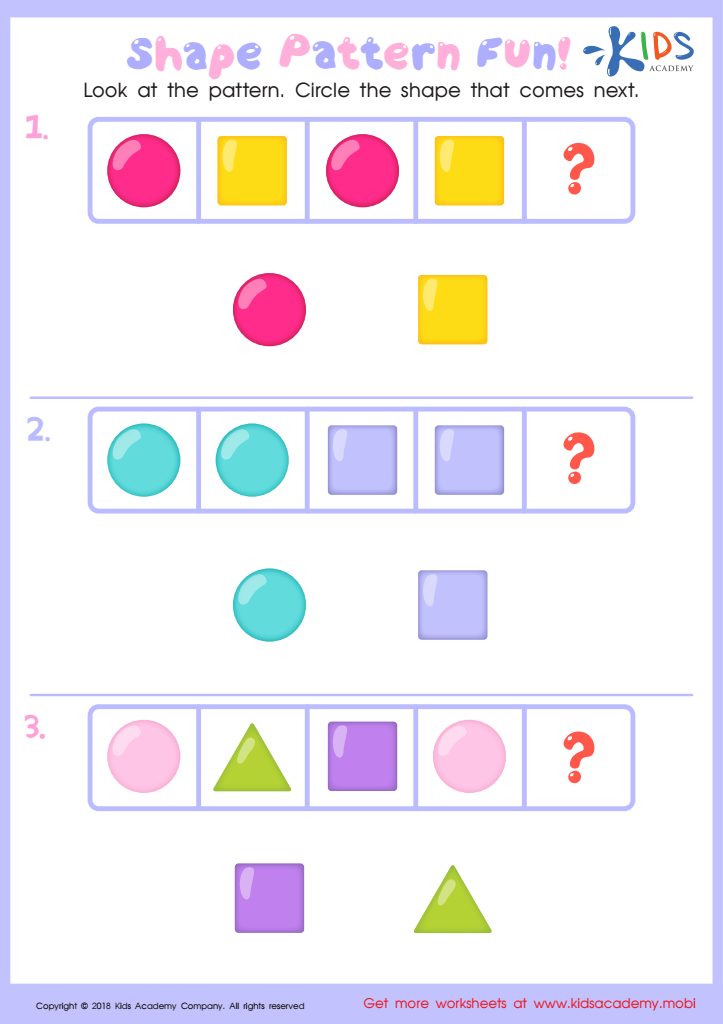
Shape Pattern Fun Worksheet
Challenge your kids to look at the pictures and identify colors, shapes and patterns. Ask them to circle the shapes that follow the sequence. See if they can spot the pattern and stick to it!
Shape Pattern Fun Worksheet
Worksheet
Join Kids Academy for Free
Who is primarily going to use this learning content?








Logical reasoning development in children aged 5-6 is crucial for several reasons, both for academic success and everyday problem-solving. At this stage, children are rapidly expanding their cognitive abilities, and logical reasoning skills are foundational for understanding more complex concepts in later years.
First, strong logical reasoning skills help children excel in core subjects like math and science. For instance, understanding patterns, sequencing, and cause-and-effect relationships form the basis of early math skills. These abilities also translate to organizing information and making predictions, which are essential for science.
Second, fostering logical reasoning aids in social development by enhancing decision-making and problem-solving abilities. Young children frequently encounter scenarios that require them to analyze situations, consider possible outcomes, and choose the best course of action. This could be as simple as figuring out how to share toys or deciding the sequence in which to put on their clothes.
Third, early development of logical reasoning can boost confidence. As children successfully navigate problems and recognize patterns, they feel more competent and become more inclined to take on new challenges, fostering a positive learning attitude.
Teachers and parents are instrumental in providing the right tools and experiences, like puzzles, games, and discussions, that enhance this critical skill. Thus, prioritizing logical reasoning at this age lays a strong foundation for lifelong learning and everyday interactions.








