Lowercase identification Worksheets for Ages 5-6
5 filtered results
-
From - To
Foster early literacy skills with our Lowercase Identification Worksheets designed specifically for children ages 5-6. These engaging and educational worksheets help young learners recognize, identify, and write lowercase letters through fun, interactive exercises. Perfect for home or classroom use, each worksheet combines visually appealing illustrations with activities such as tracing, matching, and coloring to make learning enjoyable and effective. Empower your child’s reading and writing foundation by integrating these expertly crafted tools into their daily learning routine. Support their journey towards mastering the alphabet with our proven resources from Kids Academy.
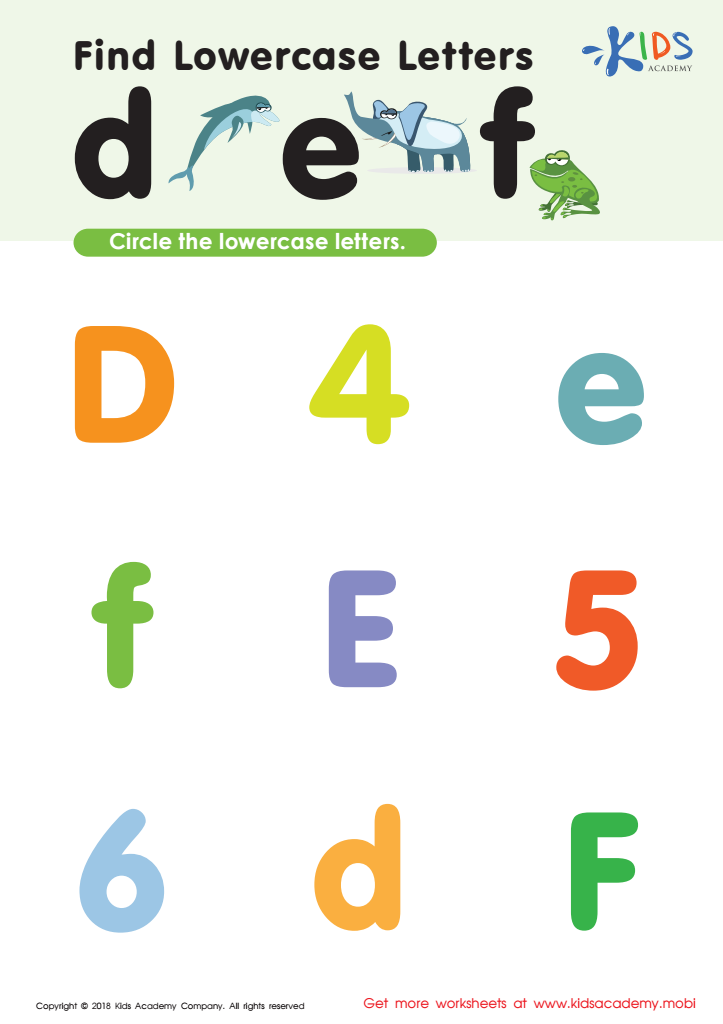
Find Lowercase Letters d e f Worksheet
 Assign to My Students
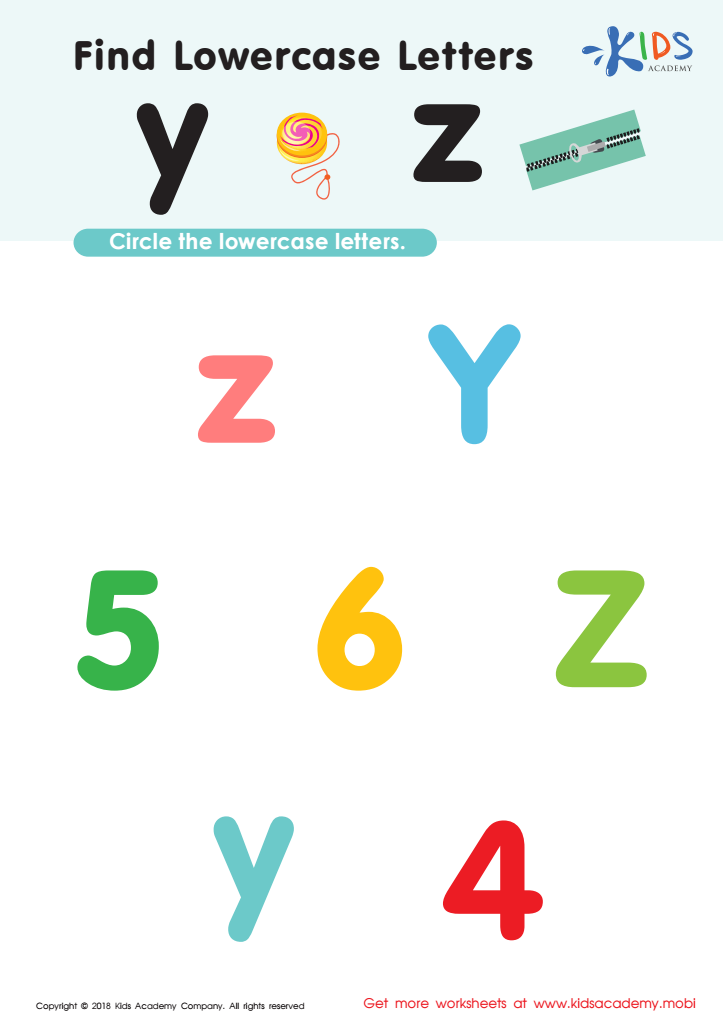
Find Lowercase Letters y z Worksheet

Find lowercase letters a b c Worksheet
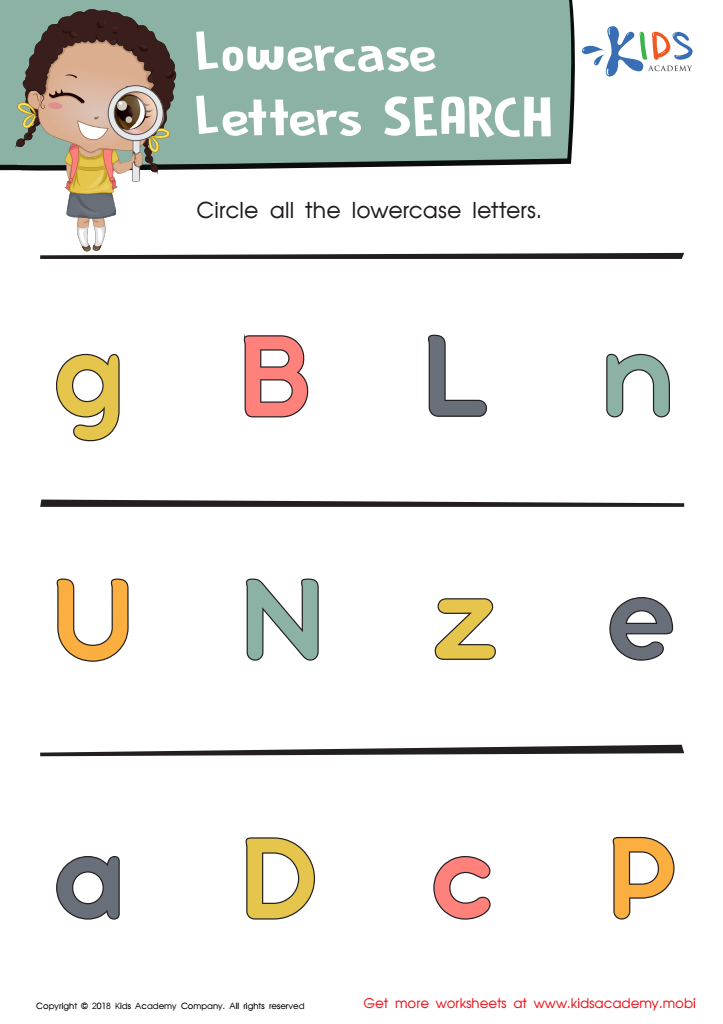
Lowercase Letters Search: Assessment Worksheet

Find Lowercase Letters v w x Worksheet








Identifying lowercase letters at ages 5-6 is crucial for a child's early literacy development. At this formative stage, kids are honing the foundational skills necessary for reading and writing, which are pivotal for their academic success. Many texts, storybooks, and classroom materials predominantly feature lowercase letters, making their recognition essential for young learners to navigate through these resources effectively.
Lowercase identification enhances a child's ability to differentiate between letters, promoting better word recognition and fluency. Without familiarity with lowercase letters, children may struggle with reading, leading to frustration and a lack of confidence. Moreover, knowing lowercase letters assists in developing proper writing skills, as children will need to write these forms the majority of the time.
For teachers, incorporating fun activities focusing on lowercase letters helps build a solid base for future literacy, while for parents, reinforcing these skills at home strengthens what is learned in the classroom. Overall, proficiency in lowercase letter identification primes children for continued educational advancement, self-confidence, and enthusiasm for learning, setting a trajectory for lifelong reading and writing proficiency. Prioritizing this during the ages of 5-6 ensures children are well-equipped to excel in their ongoing educational journey.








