Number comparison skills Worksheets for Ages 5-6
3 filtered results
-
From - To
Enhance your child's arithmetic skills with our Number Comparison Skills Worksheets for Ages 5-6. Designed to make learning fun and effective, our worksheets help kids master comparing numbers through engaging tasks and colorful illustrations. Each worksheet presents simple, age-appropriate exercises that build foundational math skills, fostering a strong understanding of greater than, less than, and equal to concepts. Perfect for early learners, our resources boost confidence and improve academic performance. Download today from Kids Academy to support your child's educational journey and watch them excel in math with ease!
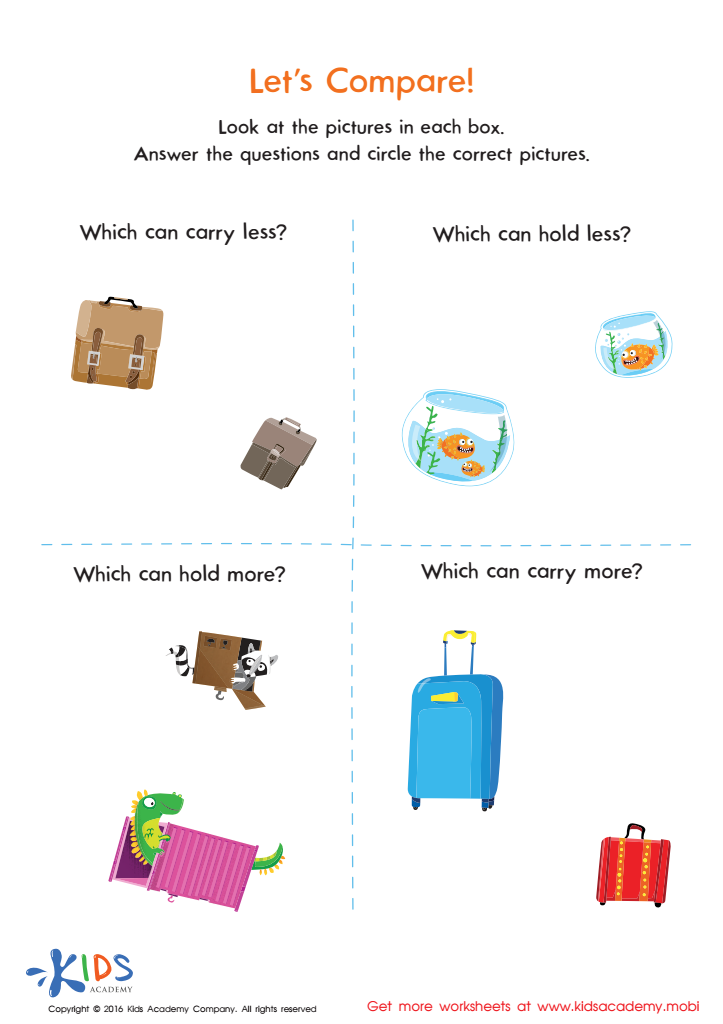
Let's Compare Worksheet: Big or Small
 Assign to My Students
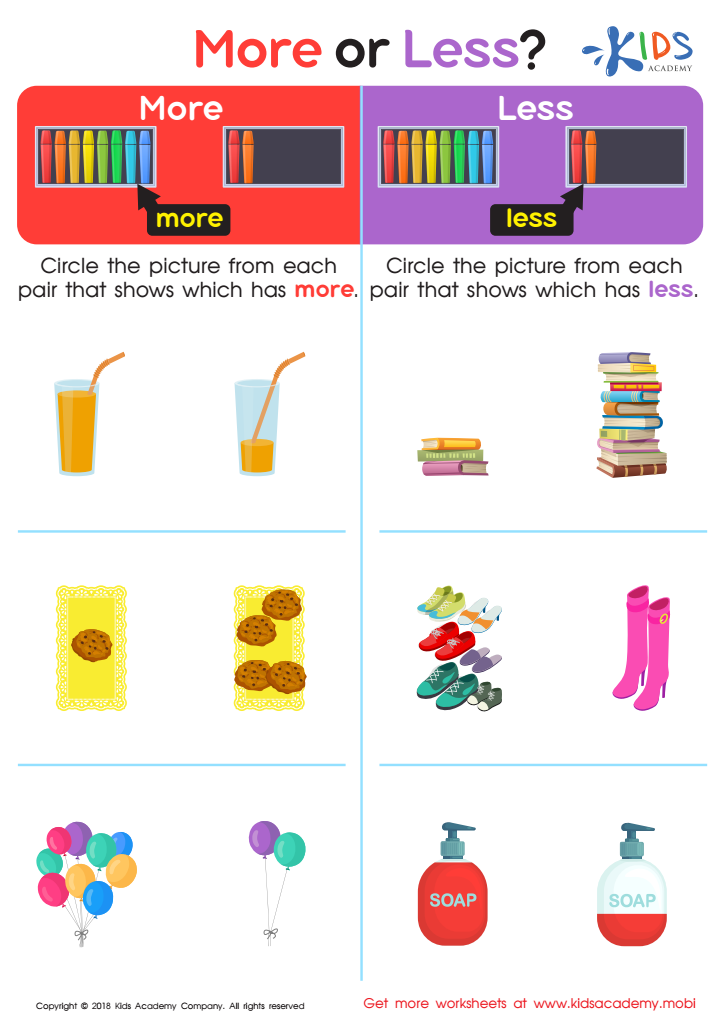
More or Less? Worksheet
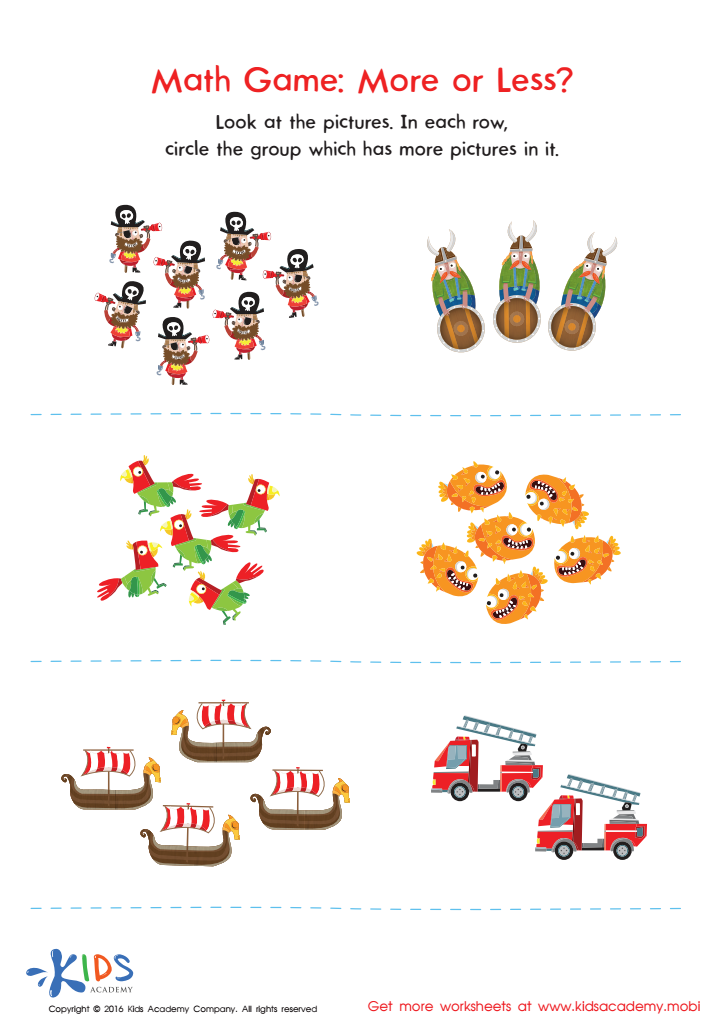
More or Less Worksheet







Number comparison skills are foundational for young children, especially those ages 5 to 6, as they prepare for more advanced mathematical concepts in later grades. At this developmental stage, children begin to form an understanding of number relationships, which is crucial for their cognitive growth and future academic success. Comparing numbers helps kids grasp concepts of greater than, less than, and equal to, enhancing their intuitive sense of quantity.
Building strong number comparison skills aids in developing critical thinking and problem-solving abilities. Children who can compare numbers are better equipped to understand and perform basic arithmetic operations, such as addition and subtraction. These skills also support their understanding of the number line and foster a better grasp of numerical magnitude.
Furthermore, proficiency in number comparison is linked to improved mathematical reasoning and higher overall math achievement. For parents and teachers, nurturing these skills through engaging and interactive activities, like games that involve sorting and comparing objects, provides a stimulating learning experience. It also promotes a positive attitude towards math, reducing anxiety and building confidence. By prioritizing number comparison skills at an early age, parents and teachers lay a strong foundation for a child’s lifelong learning and success in mathematics.








