Number Sequencing Worksheets for Ages 5-6 - Page 2
29 filtered results
-
From - To
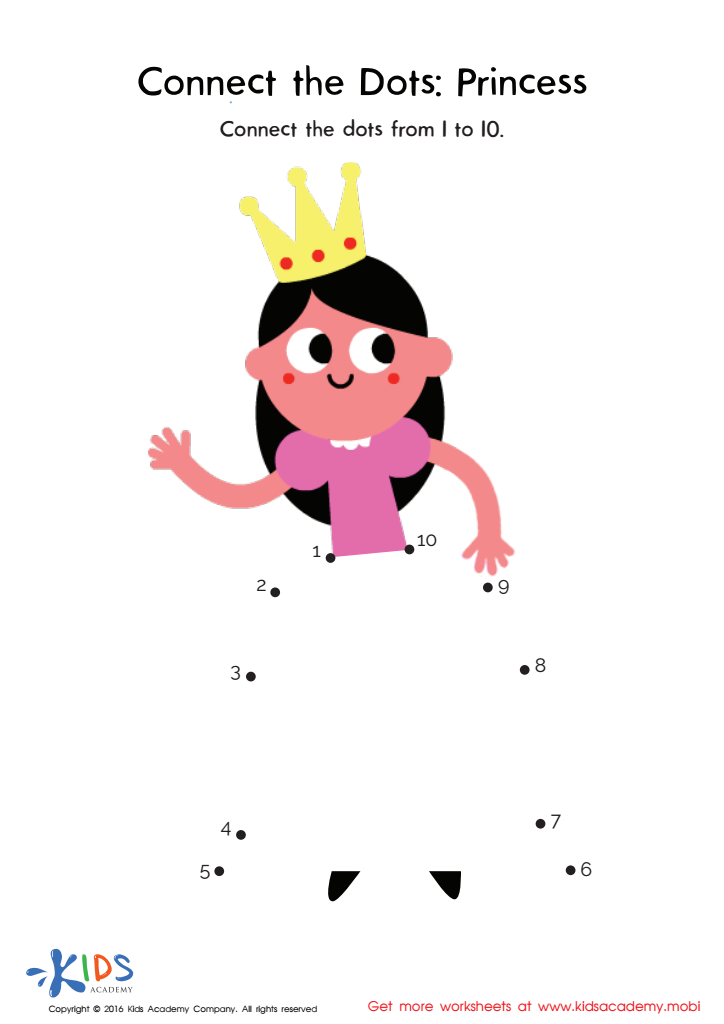
Princess Connect Dots Worksheet
 Assign to My Students
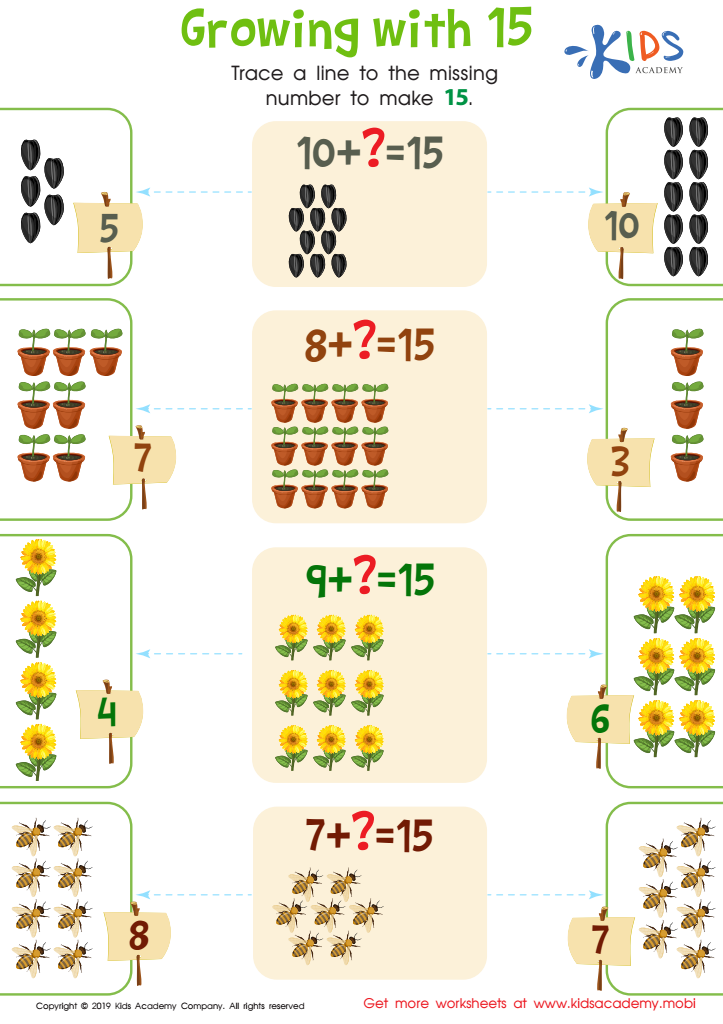
Growing with 15 Worksheet
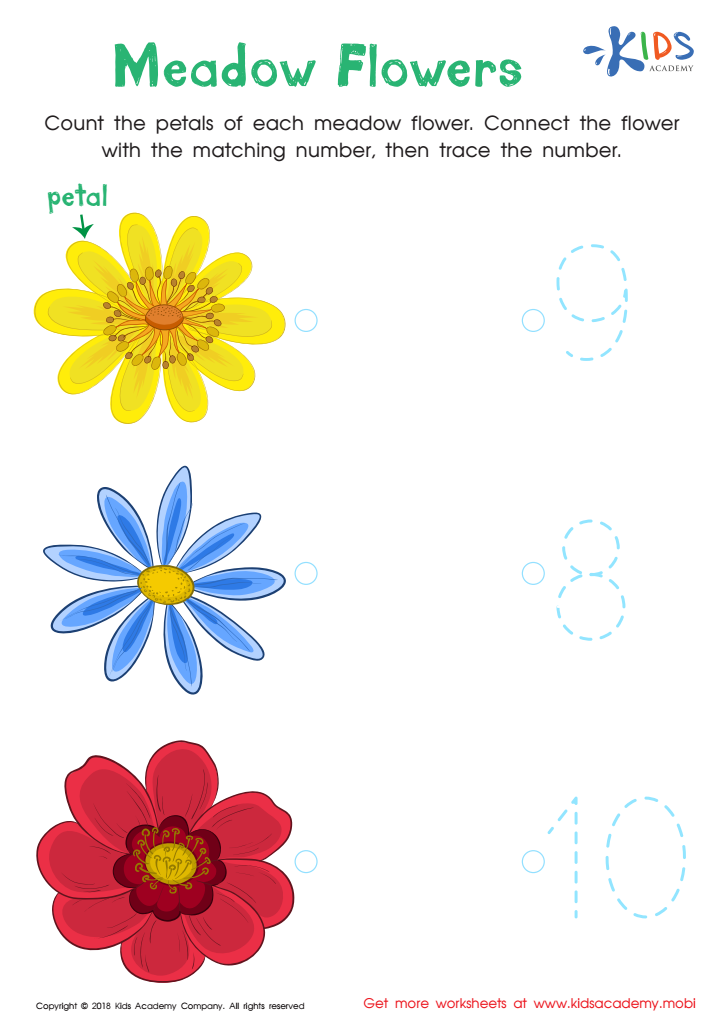
Kindergarten Number Tracing: Medow Flowers Worksheet







Number sequencing is a fundamental aspect of early mathematics that significantly influences a child's overall cognitive development. For children aged 5-6, mastering number sequences lays the groundwork for various mathematical concepts, such as addition, subtraction, and more complex operations later on. Understanding number order helps children develop critical skills such as pattern recognition, logical reasoning, and spatial awareness.
For parents and teachers, fostering number sequencing skills can enhance children's confidence in mathematical abilities, encouraging them to engage more deeply with the subject. When children grasp the concept of counting forwards and backwards or identifying patterns within sequences, it promotes a more profound understanding of numbers and relationships between them.
Moreover, number sequencing exercises can be seamlessly integrated into everyday activities, making learning both fun and relevant. Simple games, songs, and hands-on activities allow children to practice in engaging ways, ensuring they reinforce their learning without pressure.
Ultimately, prioritizing number sequencing not only equips children with essential math skills but also builds a solid foundation for lifelong learning, critical thinking, and problem-solving abilities. This early intervention can lead to increased academic success and a positive attitude toward mathematics in the years to come.








