
Numeracy skills Worksheets for Ages 5-6
5 filtered results
Difficulty Level
Grade
Age
-
From - To
Subject
Activity
Standards
Introduce your child to the exciting world of numbers with our engaging Numeracy Skills Worksheets for ages 5-6. Designed to align with early math curricula, these printable worksheets encompass fundamental concepts including counting, basic addition and subtraction, and number recognition. Developed by education experts, they provide a perfect blend of fun and skill-building activities to foster a strong mathematical foundation. Vibrant illustrations and interactive tasks keep young minds captivated while enhancing their problem-solving abilities. Ideal for both classroom and at-home learning, our resources ensure your child progresses with confidence and enthusiasm in their early math journey.
Favorites
With answer key
Interactive
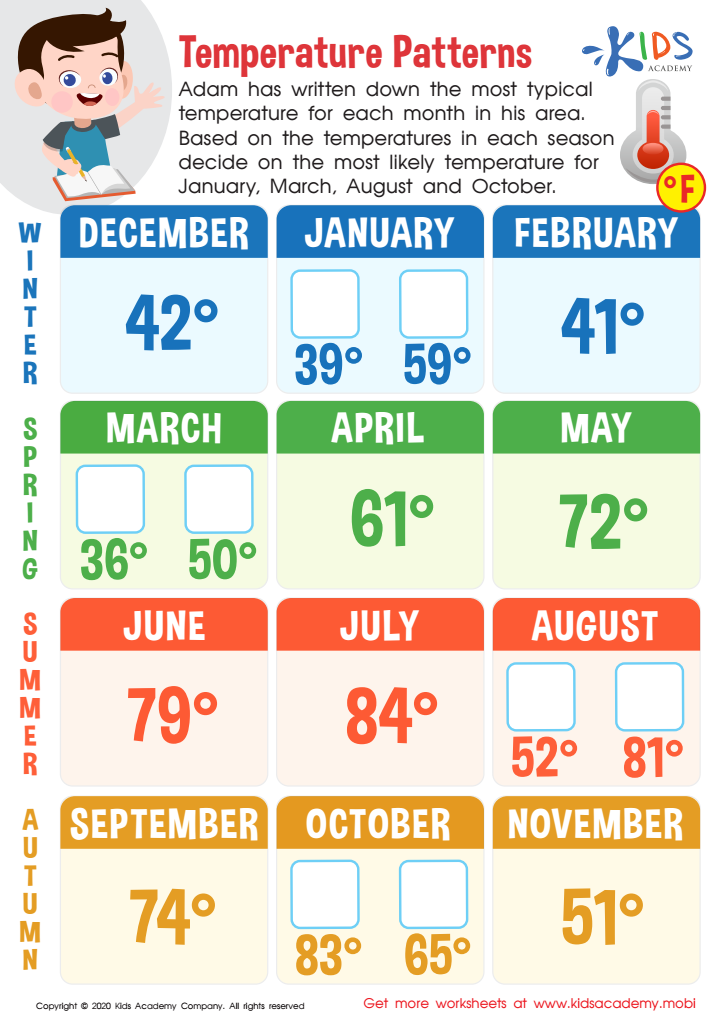
Temperature Patterns Worksheet
Adam has recorded temperatures in his area. Help your child use the data to predict temperatures for one month in each season. Check the box next to the correct temperature for each row in this worksheet. In America, temperatures vary by climate and season - colder in winter, hotter in summer.
 Assign to My Students
Temperature Patterns Worksheet
Worksheet
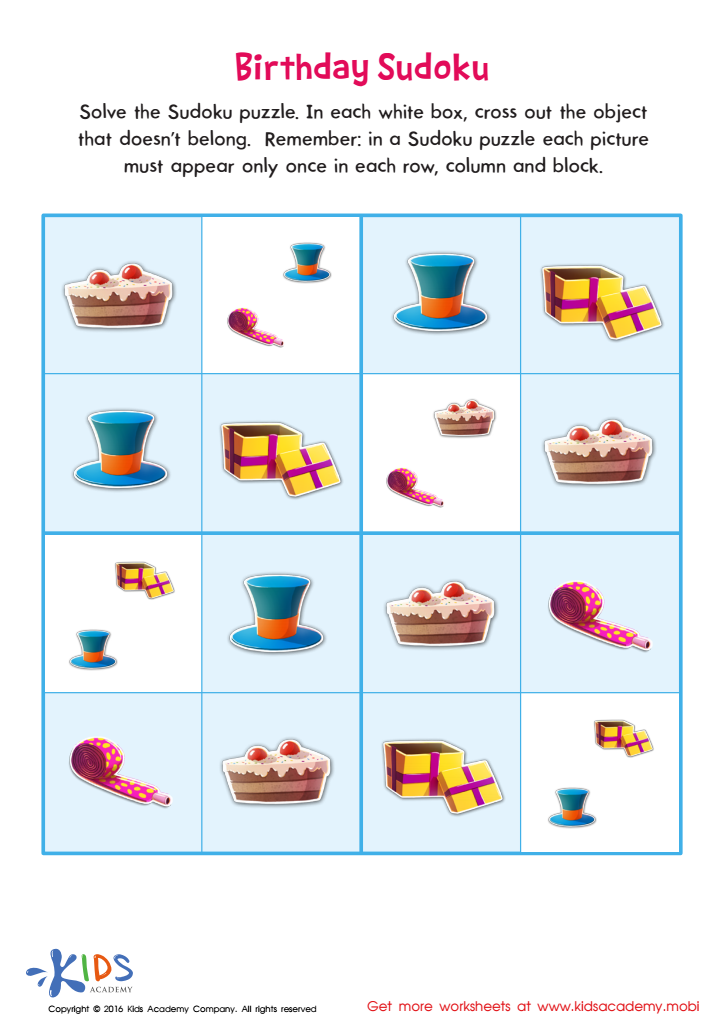
Birthday Sudoku Sorting Worksheet
With this Sudoku printable, your child will have fun and strengthen their problem-solving skills.
Birthday Sudoku Sorting Worksheet
Worksheet
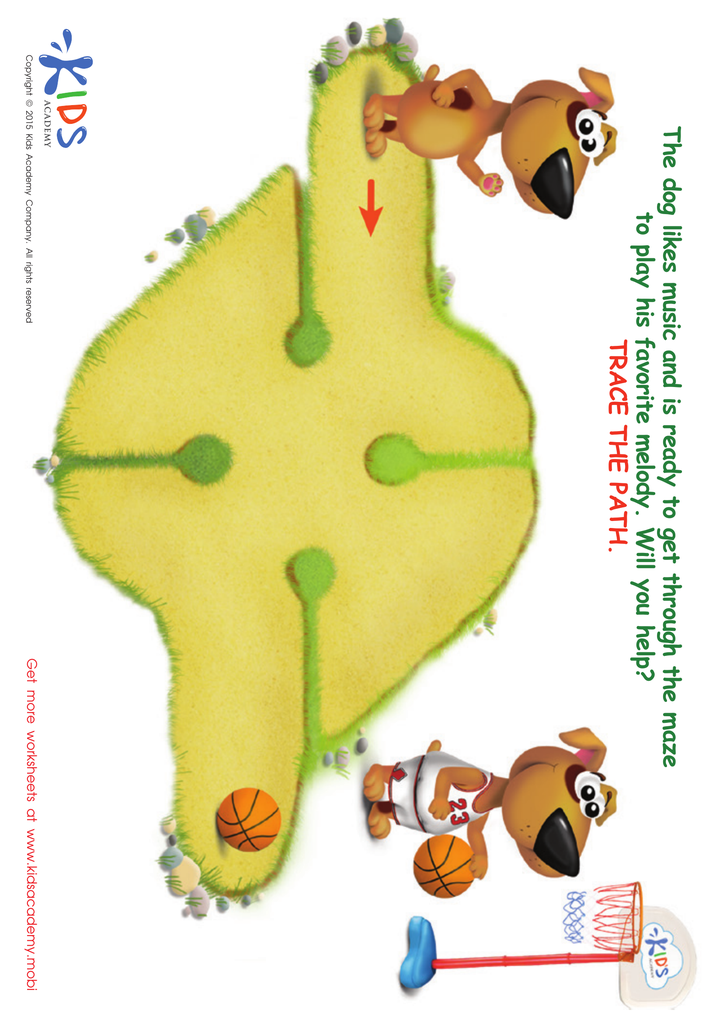
Basketball Player Maze Worksheet
Test your skills with our new printable maze worksheets, and help the little dog get his basketball! Trace the path carefully to get the ball and play together.
Basketball Player Maze Worksheet
Worksheet
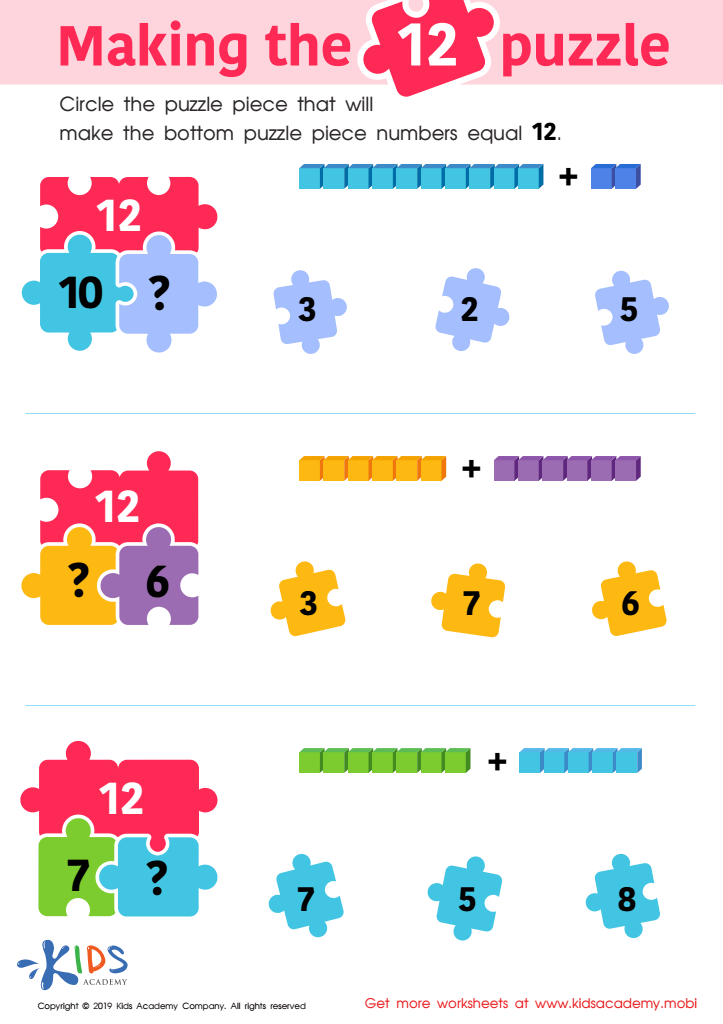
Making the 12 Puzzle Worksheet
Engage preschoolers in learning with this fun and colorful worksheet. Ask them to look at the picture and identify the missing equation on each puzzle piece; then help them solve the problems. When all the puzzle pieces make the bottom numbers equal 12, have them circle it. This is a great way to combine learning and fun!
Making the 12 Puzzle Worksheet
Worksheet
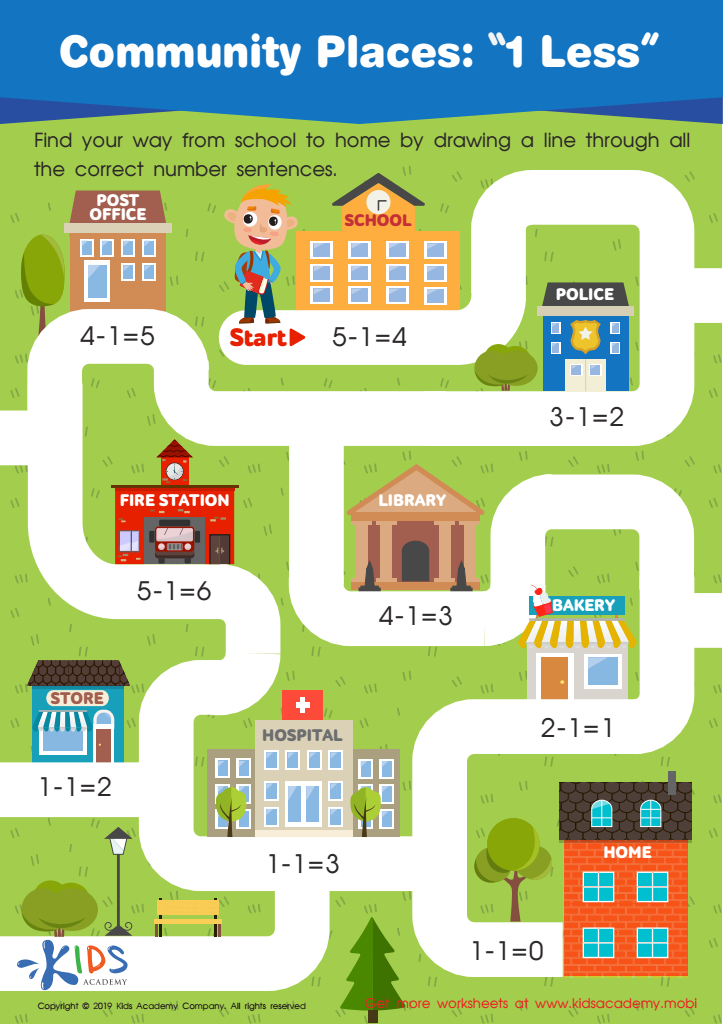
Community Places: 1 Less Worksheet
Have your kindergarteners draw a line through the correct number sentences as they find their way home from school. Ask them to identify the people, places, and buildings in their community and the jobs they do.
Community Places: 1 Less Worksheet
Worksheet
Join Kids Academy for Free
Who is primarily going to use this learning content?







Numeracy skills for children aged 5-6 serve as the foundation for their future learning, and parents or teachers should prioritize these early math skills for several compelling reasons. At this developmental stage, children's brains are highly adaptable and primed for acquiring new knowledge, including fundamental concepts of numbers, counting, and simple arithmetic. Building strong numeracy skills early on helps children grasp patterns, recognize relationships, and solve problems, which are essential cognitive skills that contribute to overall academic achievement.
Beyond academics, numeracy also plays a vital role in everyday life. Activities like measuring ingredients for a recipe, understanding time, and handling money all require basic math skills. By nurturing numeracy, parents and teachers equip children with practical skills necessary for independent living and decision-making.
Furthermore, engaging in math-related activities can boost a child’s confidence and enthusiasm for learning. Positive experiences with math early on can offset the likelihood of developing math anxiety, laying the groundwork for a more positive attitude towards the subject in later years. When children see the relevance and enjoy the process of learning math, they are more likely to excel and pursue STEM (Science, Technology, Engineering, and Math) fields.
Ultimately, fostering numeracy skills in young children helps set the stage for their future academic success and practical problem-solving abilities, making it a crucial component of early childhood education.








