
Pattern identification Worksheets for Ages 5-6
7 filtered results
Difficulty Level
Grade
Age
-
From - To
Subject
Activity
Standards
Discover engaging Pattern Identification Worksheets tailored for children ages 5-6. These fun and interactive activities help young learners develop essential skills in recognizing and creating patterns, a foundational concept in mathematics and cognitive development. Our worksheets feature colorful visuals and a variety of challenges, making learning enjoyable and effective. Ideal for parents and teachers alike, they can be seamlessly integrated into classroom lessons or used for at-home practice. Support your child's growth and confidence with engaging exercises that cultivate critical thinking and enhance observation skills. Explore our collection today and watch your child's learning journey blossom!
Favorites
With answer key
Interactive
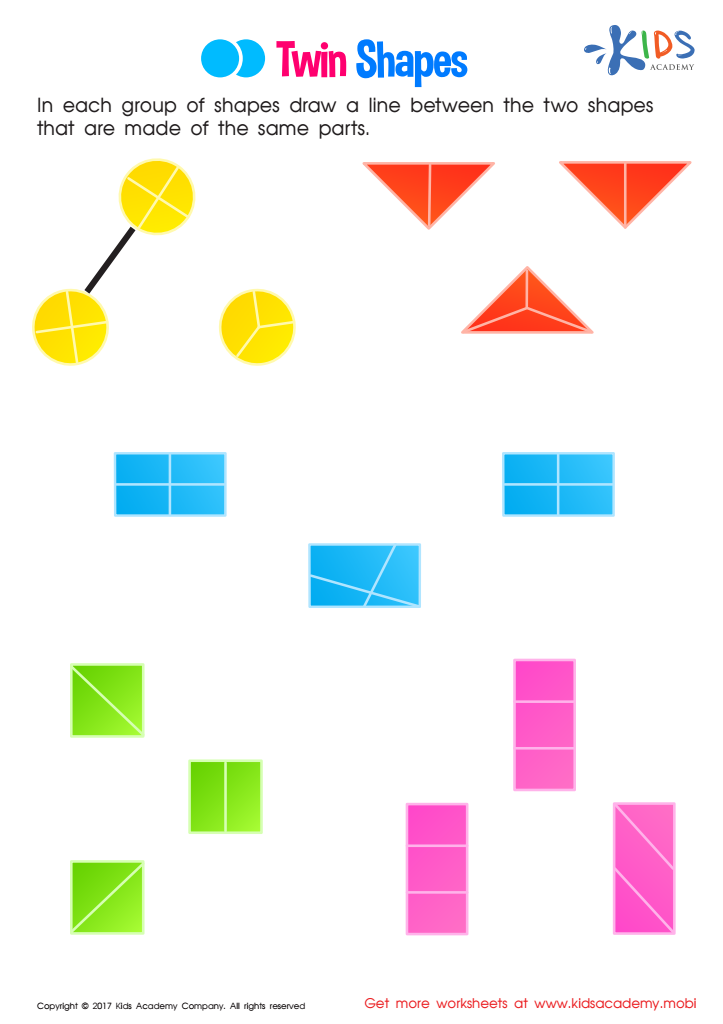
Twin Shapes Worksheet
Your students' goal in this worksheet is to find the twin shapes: drawing a line between two shapes made of the same parts. Likely, the first shapes encountered were circles, triangles, rectangles and squares - examples of which are seen frequently in everyday life. Encourage them to apply what they know and work out which is the twin shape!
 Assign to My Students
Twin Shapes Worksheet
Worksheet
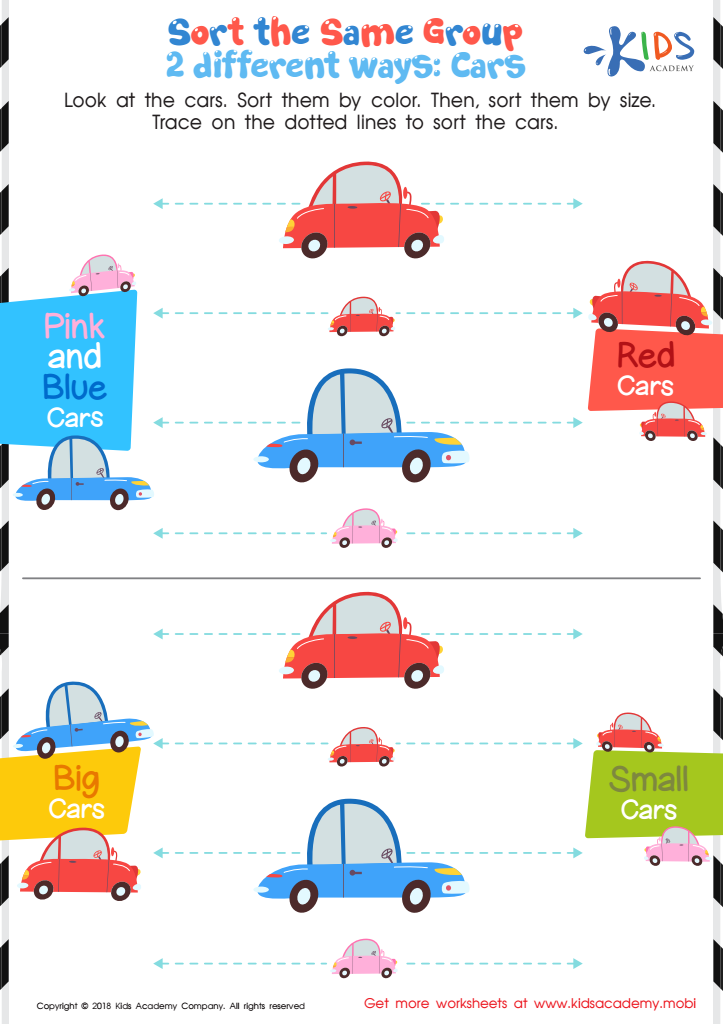
Sort the Same Group 2 Different Ways: Cars Worksheet
Look at the pictures with your child. Can they identify the objects? Ask them to sort the cars first by color and then size. Assist them to trace the dotted lines to sort the cars by color and size. This worksheet lets you easily assess your child's color and size organization skills.
Sort the Same Group 2 Different Ways: Cars Worksheet
Worksheet
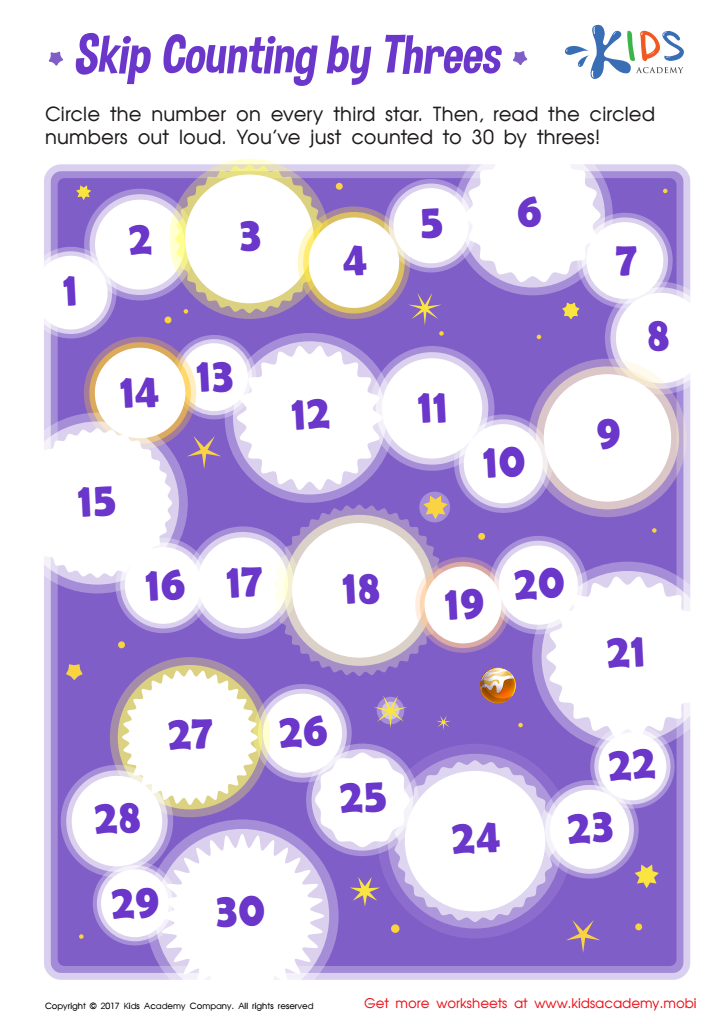
Skip Counting By Three Printable
Inspire your child with this star-themed skip counting worksheet! It offers a fun way to learn while providing a foundation for more advanced math skills, like adding, subtracting, and multiplication. It will help your child gain a sense of numeracy, practice problem solving, and stay ahead in math.
Skip Counting By Three Printable
Worksheet
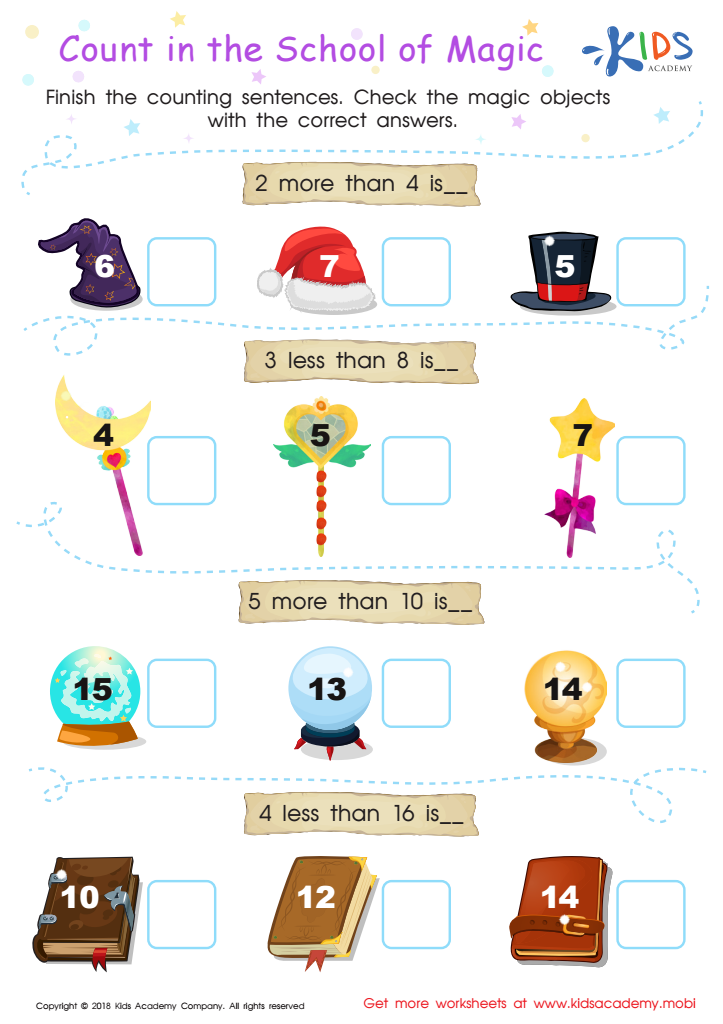
Count in the School of Magic Worksheet
Your math learners can explore the School of Magic with this worksheet. They'll read equations with addition and subtraction numbers under 20, count back and forth to find the answer, then complete the counting sentences. Fun pictures and easy accuracy make it an enjoyable and successful learning experience.
Count in the School of Magic Worksheet
Worksheet
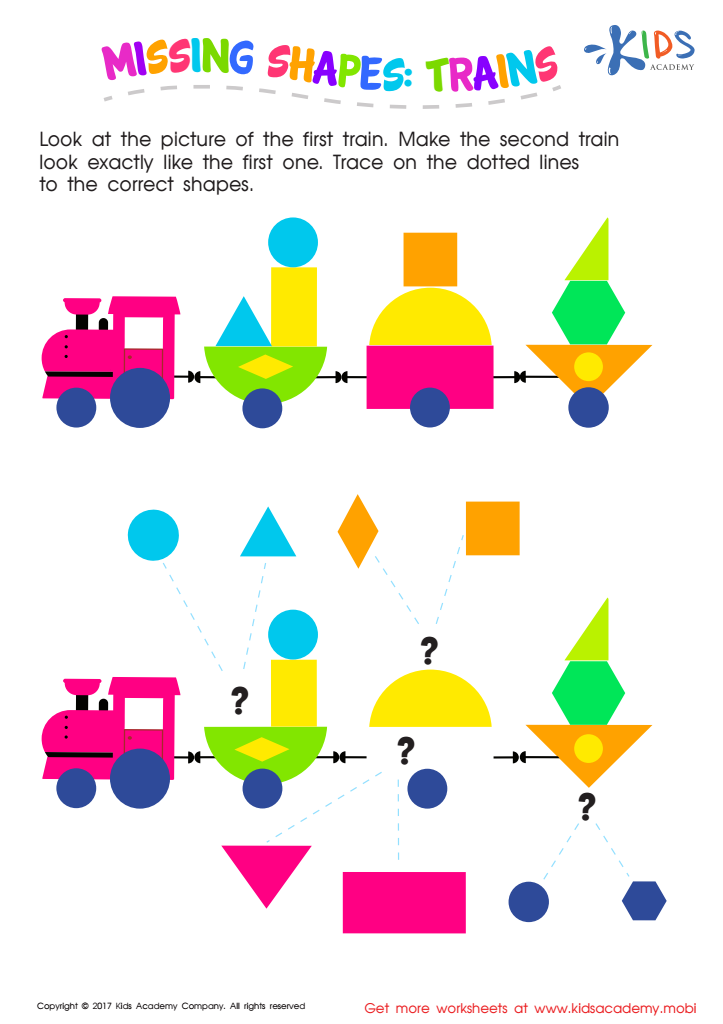
Missing Shapes: Trains Worksheet
Before beginning, ask your child what the object in the picture is, the sound it makes and where it can be found. If they know, confidently move on. Help them make the second train look like the first by tracing dotted lines. Hold their hand for guidance.
Missing Shapes: Trains Worksheet
Worksheet
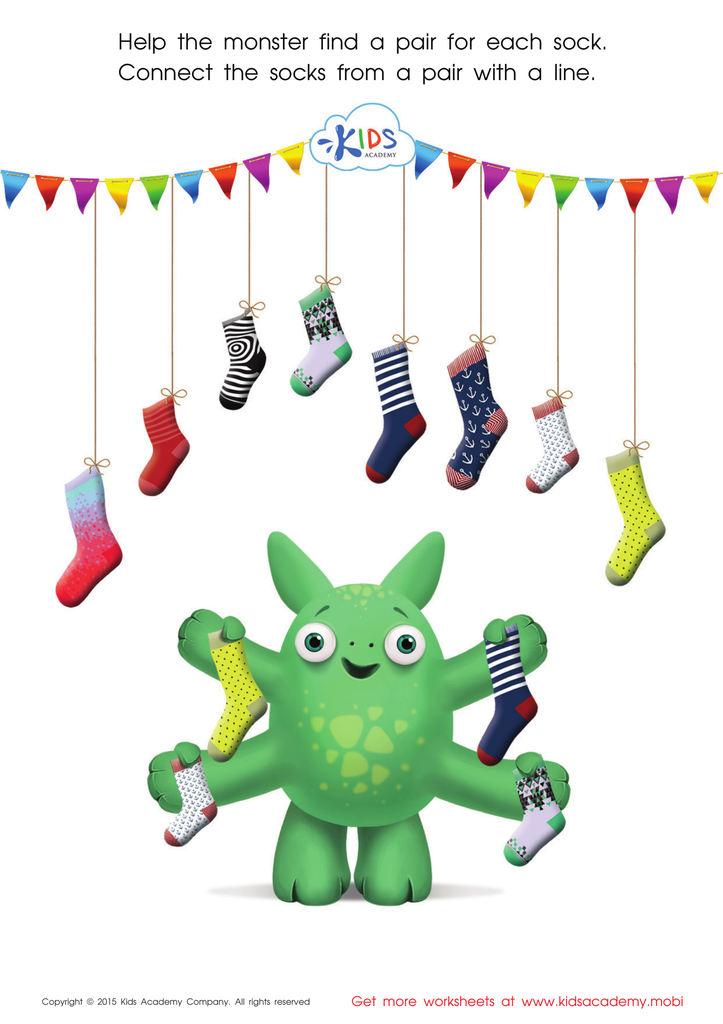
Math Matching Pairs Game: Monsterв's Socks Worksheet
Let your child learn, concentrate and practice sorting skills with this fun kindergarten worksheet. Matching polka dots, anchors, geo shapes and stripes on Monster's socks will help improve fine motor skills. Download and print this free worksheet and several others on different topics.
Math Matching Pairs Game: Monsterв's Socks Worksheet
Worksheet
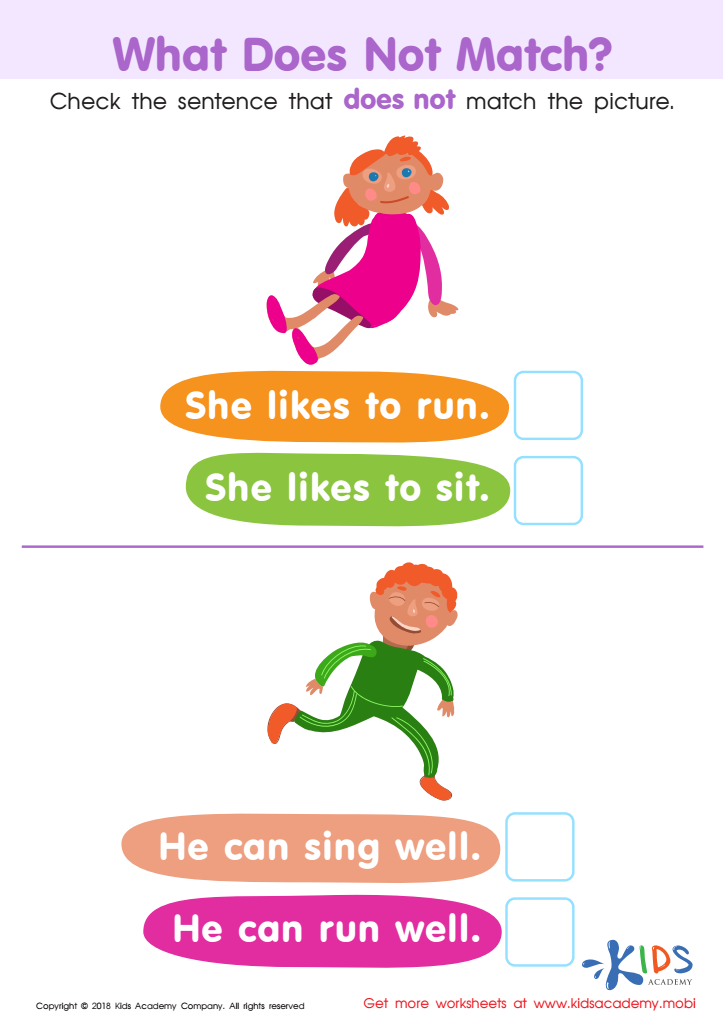
What Does Not Match? Worksheet
Emerging readers need to practice using visual cues and repetitive text. This colorful PDF provides them with an opportunity to look at pictures, use discrimination and discern which phrase does not match. It also enables them to gain familiarity with high-frequency words to aid decoding longer sentences.
What Does Not Match? Worksheet
Worksheet
Join Kids Academy for Free
Who is primarily going to use this learning content?




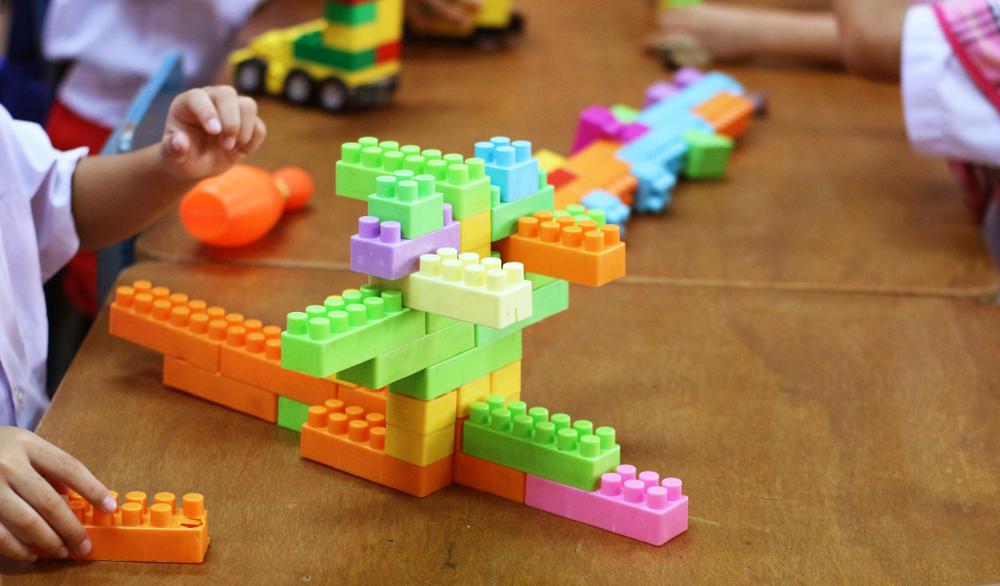
Pattern identification is a fundamental cognitive skill that plays a crucial role in early childhood development. For children aged 5-6, recognizing patterns lays the groundwork for essential math and critical thinking skills. Understanding patterns helps children make predictions, solve problems, and establish connections between concepts, which fosters a deeper comprehension of mathematics and science.
When parents or teachers focus on pattern identification, they enhance children's ability to categorize information and notice similarities and differences in their surroundings. This skill is not limited to math but extends to reading, as recognizing patterns in phonics and letter combinations aids in literacy development. Additionally, pattern recognition supports social-emotional growth; children who can identify and understand patterns in behavior and routines feel more secure and confident in their environment.
Moreover, engaging in pattern identification activities encourages creativity and exploration. It allows children to express themselves and builds their resilience through trial and error in discovering new patterns. By nurturing these skills early on, parents and teachers equip children with the necessary tools for future academic success, enhancing their lifelong learning and problem-solving abilities. In fostering pattern identification, adults are investing in a child's cognitive, social, and emotional development for the long run.








