
Phonics application Worksheets for Ages 5-6
3 filtered results
Difficulty Level
Grade
Age
-
From - To
Subject
Activity
Standards
Discover our engaging Phonics Application Worksheets designed specifically for children ages 5-6! These interactive and colorful resources help young learners develop essential phonemic awareness and decoding skills through fun activities. Our worksheets cover a variety of topics, including letter sounds, blending, and word recognition, ensuring a comprehensive phonics foundation. Each activity is crafted to enhance reading confidence and encourage a love for learning. With easy-to-follow instructions and appealing designs, these worksheets are perfect for teachers and parents looking to support early literacy development. Explore our collection now to make phonics practice enjoyable and effective for your little learners!
Favorites
With answer key
Interactive
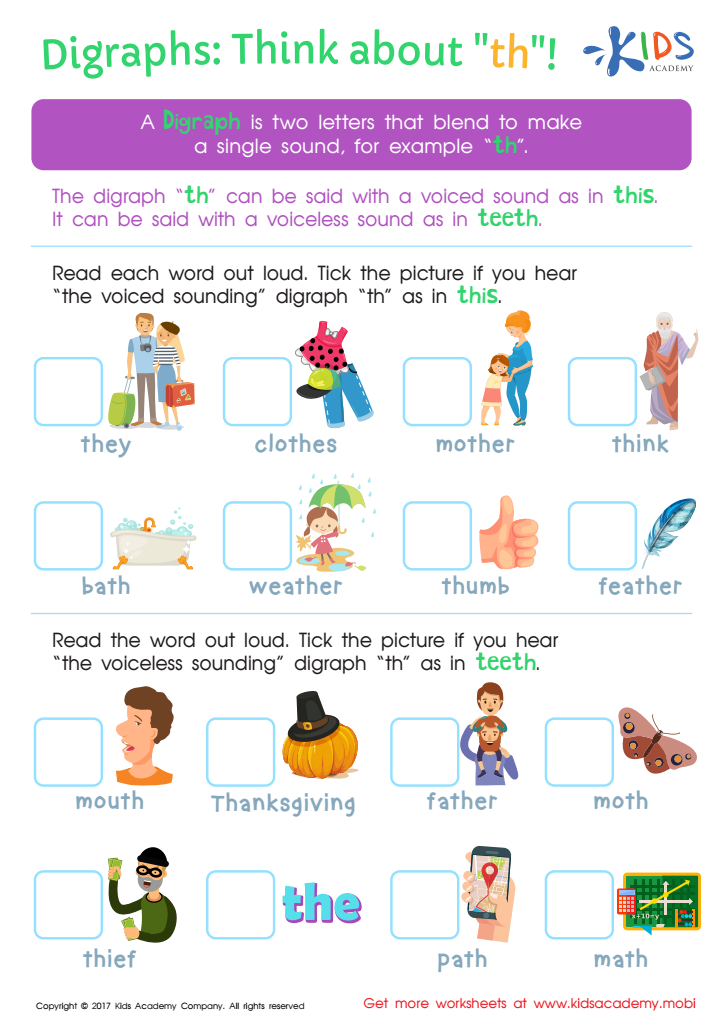
Digraphs: Think About "th" Worksheet
Help your child master phonics with this illustrated digraph Th printable worksheet. It will help recognize "Th" words, differentiate voiced and voiceless sounds and understand key concepts. Use similar words while they work to reap its full benefits!
 Assign to My Students
Digraphs: Think About "th" Worksheet
Worksheet
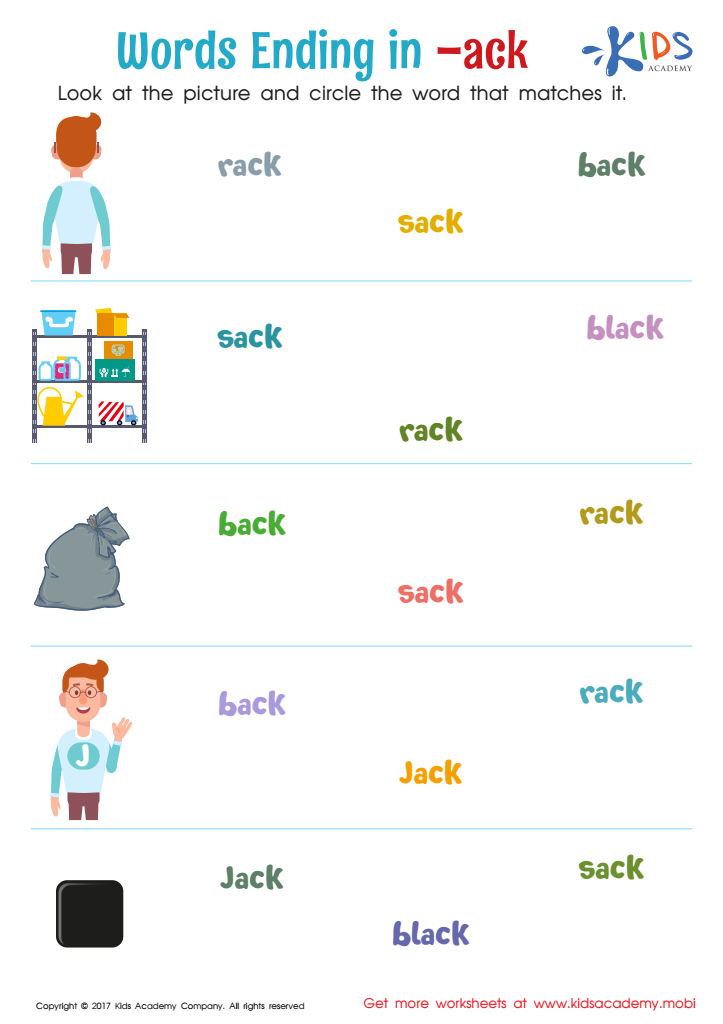
Words Ending in "ack" Spelling Worksheet
Worksheet
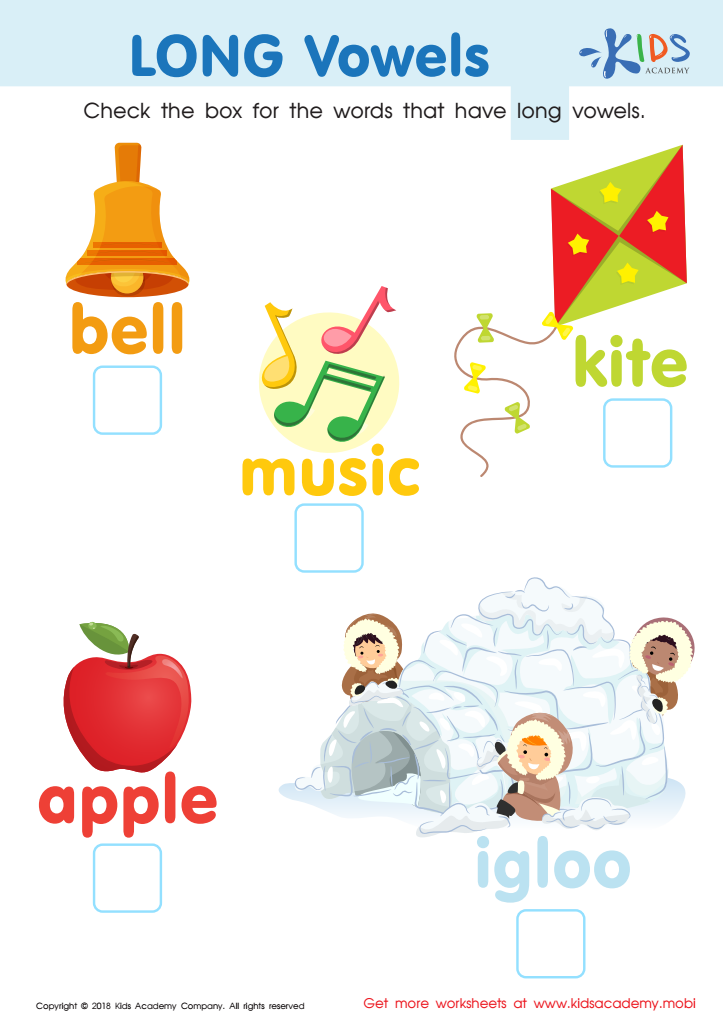
long vowels Worksheet
Have your early learner identify long vowels with this quick review. Ask them to name each picture aloud and listen out for the long vowel sounds to separate them from the shorter ones. Circle the ones that are long! Watch out for words with two vowels - they can be tricky!
long vowels Worksheet
Worksheet
Join Kids Academy for Free
Who is primarily going to use this learning content?







Phonics application is crucial for children aged 5-6, as it lays a solid foundation for reading and writing. At this developmental stage, young learners are beginning to explore language, and phonics plays a vital role in their literacy journey. By understanding the relationship between sounds and letters, children can decode words more effectively, fostering confidence as they start reading independently.
Parents and teachers should care about phonics instruction because it not only enhances literacy skills but also supports cognitive development. Mastery of phonics helps children become proficient readers, which is essential for academic success. Early readers are more likely to engage with texts, improving their vocabulary and comprehension skills.
Moreover, phonics provides an accessible approach for all learners, including those who may struggle with traditional reading methods. Interactively teaching phonics reinforces learning through play and exploration, making literacy enjoyable and less intimidating.
Involving parents in phonics activities at home can create a supportive environment that extends learning beyond the classroom. Ultimately, prioritizing phonics application helps equip children with crucial tools they need to navigate their educational journey, fostering a lifelong love for reading.








