Reading analog clocks Worksheets for Ages 5-6
4 filtered results
-
From - To
Discover our engaging Reading Analog Clocks Worksheets designed specifically for children ages 5-6. These worksheets provide a fun way for early learners to develop their time-telling skills using analog clocks. Featuring colorful visuals and age-appropriate exercises, kids will practice identifying hours and half-hours, enhancing their understanding of time. Each worksheet promotes hands-on learning, reinforcing essential math concepts while encouraging critical thinking. Perfect for homeschooling or classroom use, these resources make learning about time enjoyable and accessible. Get your little ones excited about clocks and help them master this vital life skill with our interactive worksheets today!
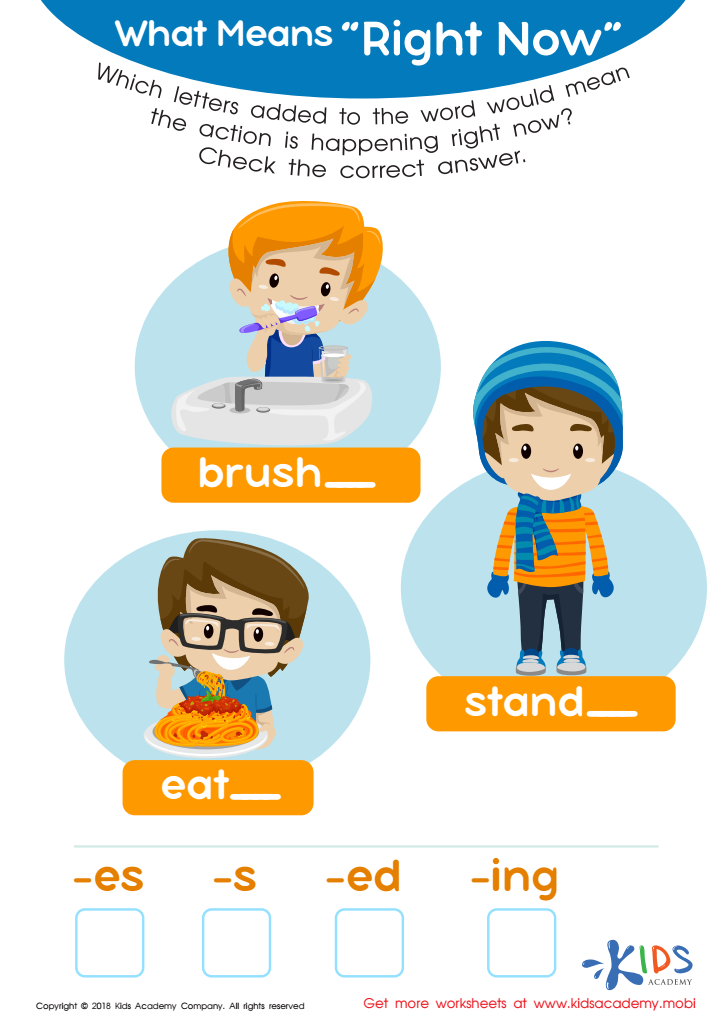
What Means "Right Now" Worksheet
 Assign to My Students
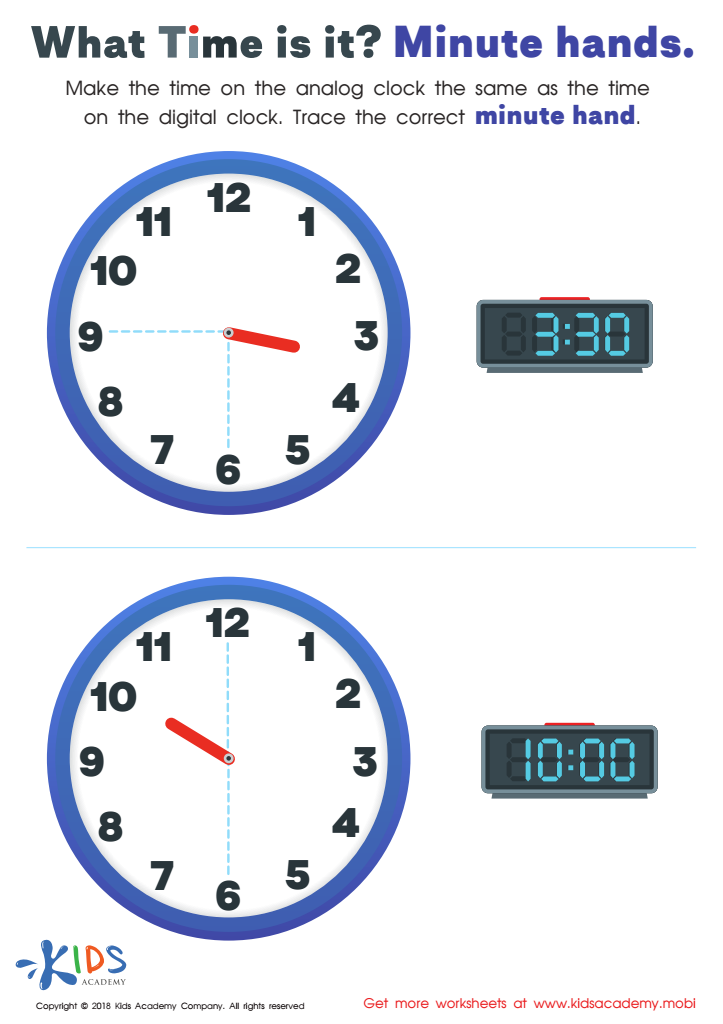
What Time Is it? Minute Hands Worksheet
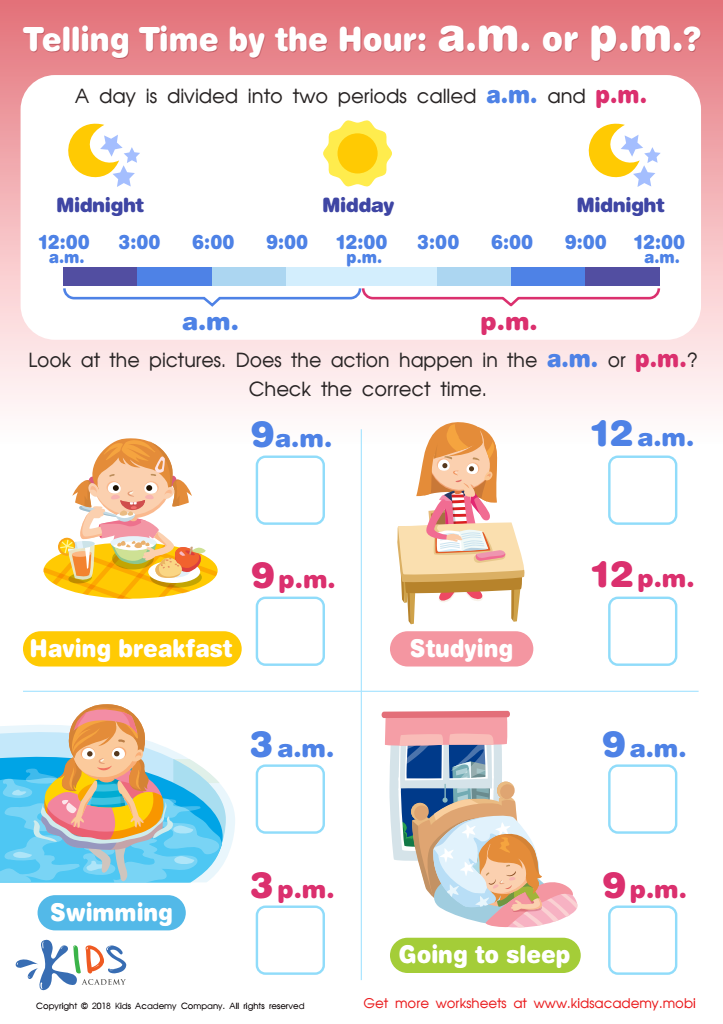
Tilling Time by the Hour: a.m. or p.m.? Worksheet
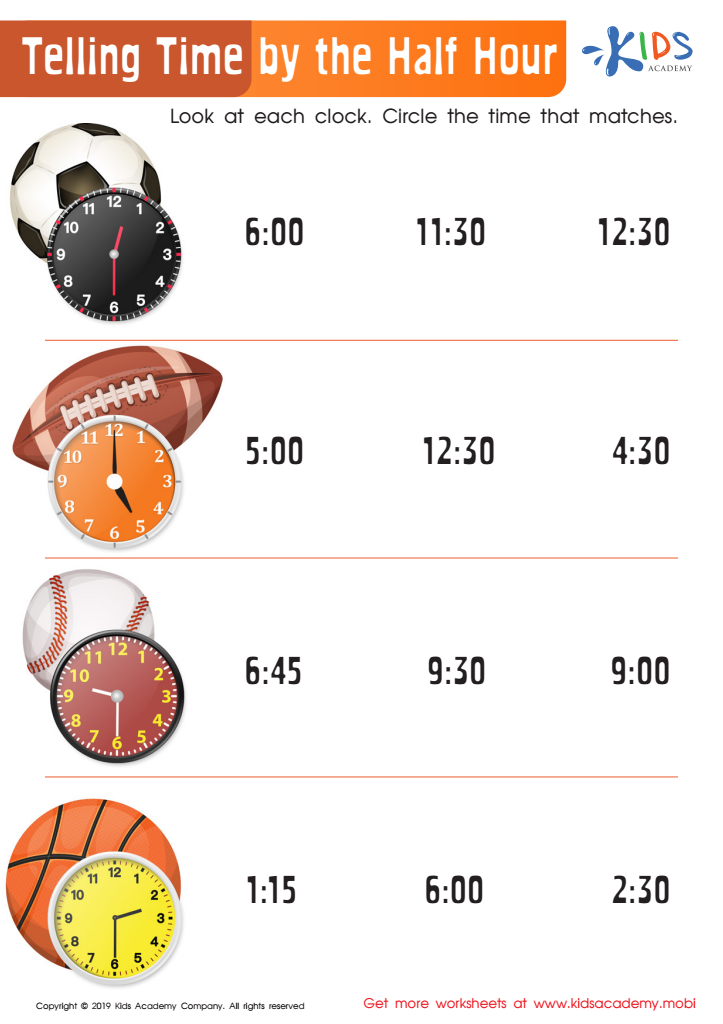
Telling Time by the Half Hour Worksheet








Reading analog clocks is a vital skill that supports young learners' cognitive and motor development. For parents and teachers of children aged 5-6, understanding how to read an analog clock goes beyond telling time; it enhances critical thinking and problem-solving abilities. By engaging with the circular face, children not only learn about numbers and time but also develop spatial awareness as they interpret the position of minute and hour hands.
Moreover, digital clocks are everywhere, yet the traditional analog clock still holds a significant place in our daily lives. Teaching children to read analog clocks helps them grasp the concept of time in a physical format, promoting a deeper understanding of daily schedules and routines. This skill fosters responsibility and time management as they begin to plan their activities and understand the sequence of events.
Additionally, the process can be made fun and interactive through games and hands-on activities, reinforcing learning in an enjoyable way. By prioritizing this exposure, parents and teachers can help cultivate a lifelong appreciation for learning, along with essential mathematical and analytical skills. Overall, learning to read an analog clock is an enriching experience that lays the groundwork for future academic success.








