
Rhyming skills development Worksheets for Ages 5-6
5 filtered results
Difficulty Level
Grade
Age
-
From - To
Subject
Activity
Standards
Nurture your child's phonetic abilities with our engaging Rhyming Skills Development Worksheets for Ages 5-6. These activities, available at Kids Academy, are expertly designed to enhance early literacy. Children will delight in identifying and creating rhymes while building a foundation for reading fluency. Each worksheet encourages playful learning through colorful illustrations and fun exercises that boost memory retention and phonemic awareness. Ideal for kindergarteners, these worksheets are suited for both classroom and at-home use, promoting confidence and a love for reading. Explore our collection today and watch your child's literacy skills flourish!
Favorites
With answer key
Interactive
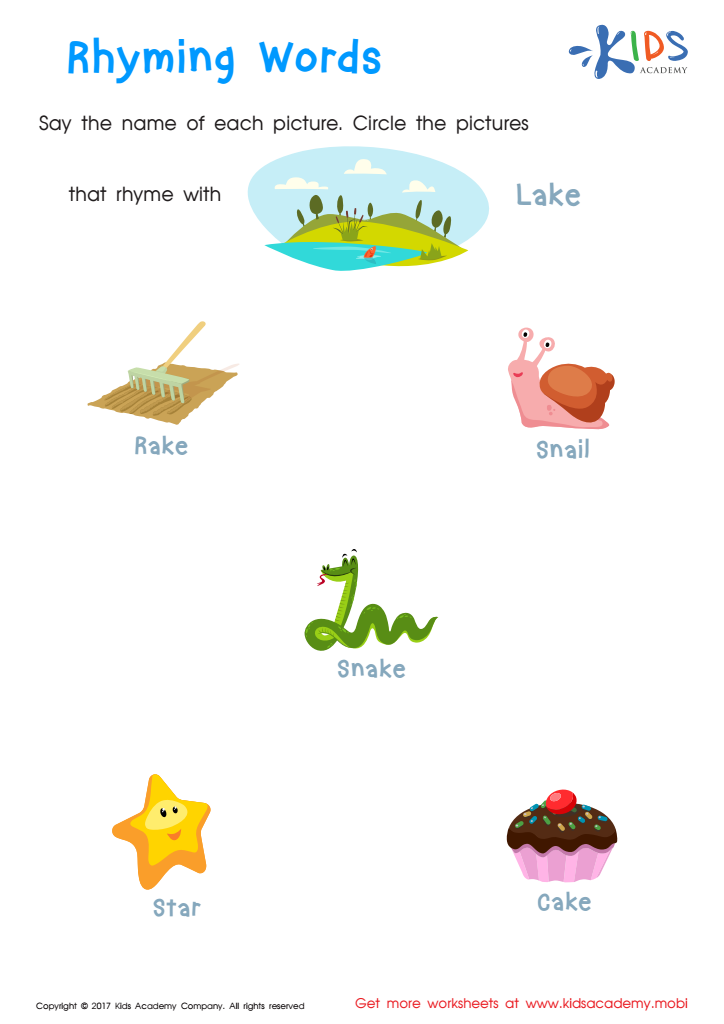
Rhyming Words Rhyming Worksheet
This worksheet is great for honing pre-reading skills. It helps kids make connections between pictures and written words, use problem-solving, and recognize sounds and words that rhyme. Have fun exploring rhyming words with your child, and they'll be rhyming in no time!
 Assign to My Students
Rhyming Words Rhyming Worksheet
Worksheet
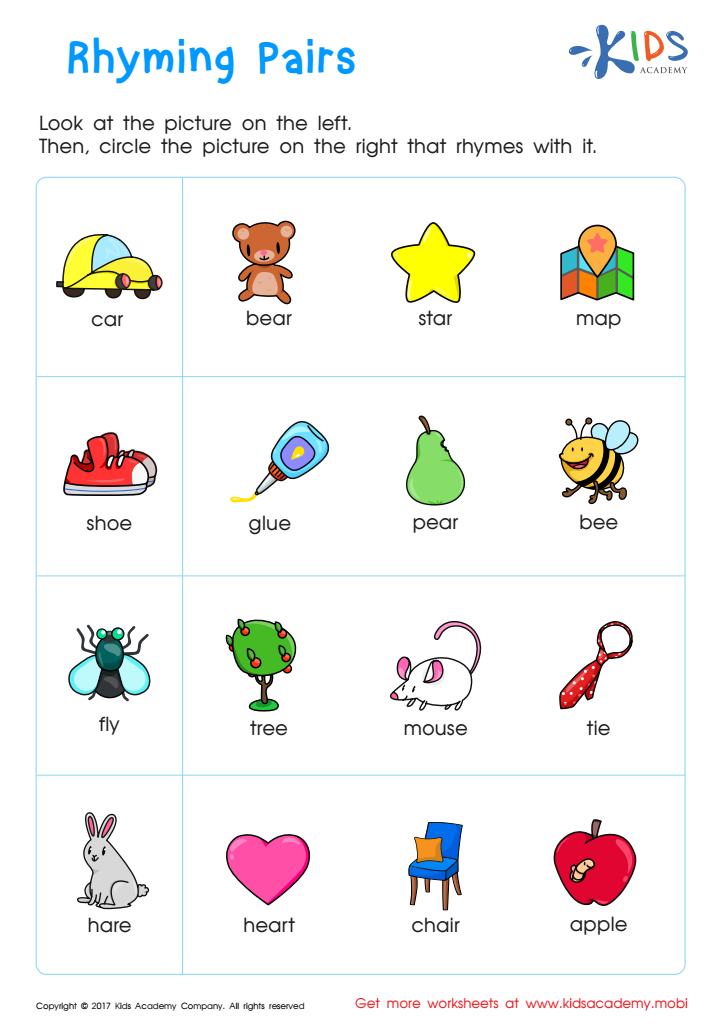
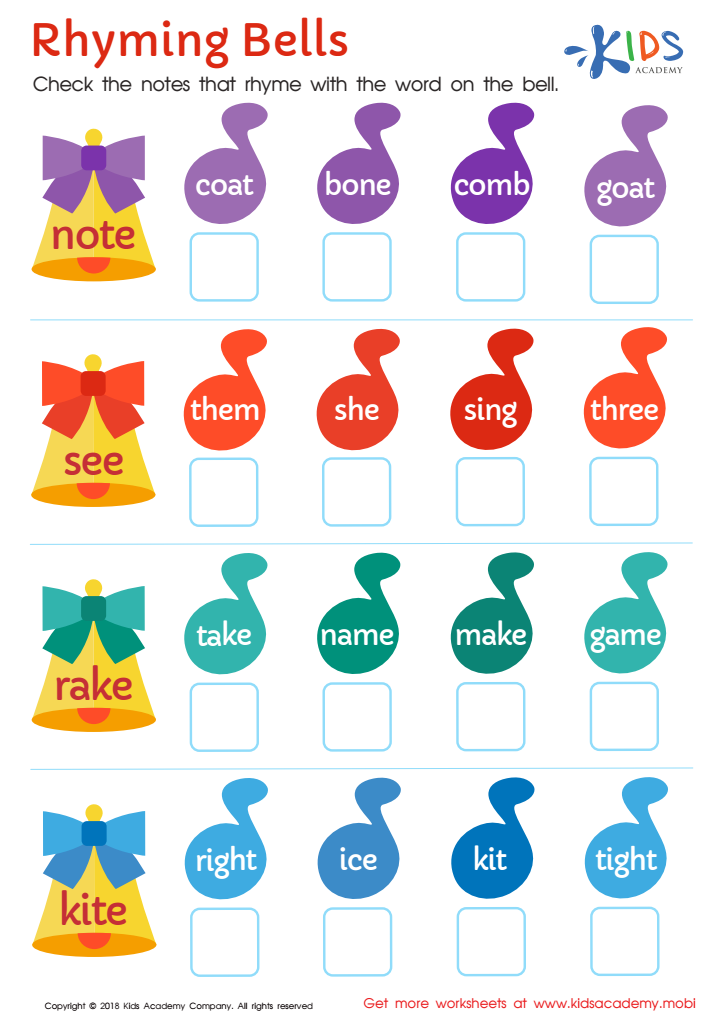
Rhyming Bells Worksheet
This printable worksheet helps students recognize rhyming words. Read a word, then pick the 4 words that rhyme. Look out for words with different spellings but same ending sound. It's a great exercise to improve understanding of rhyming words.
Rhyming Bells Worksheet
Worksheet
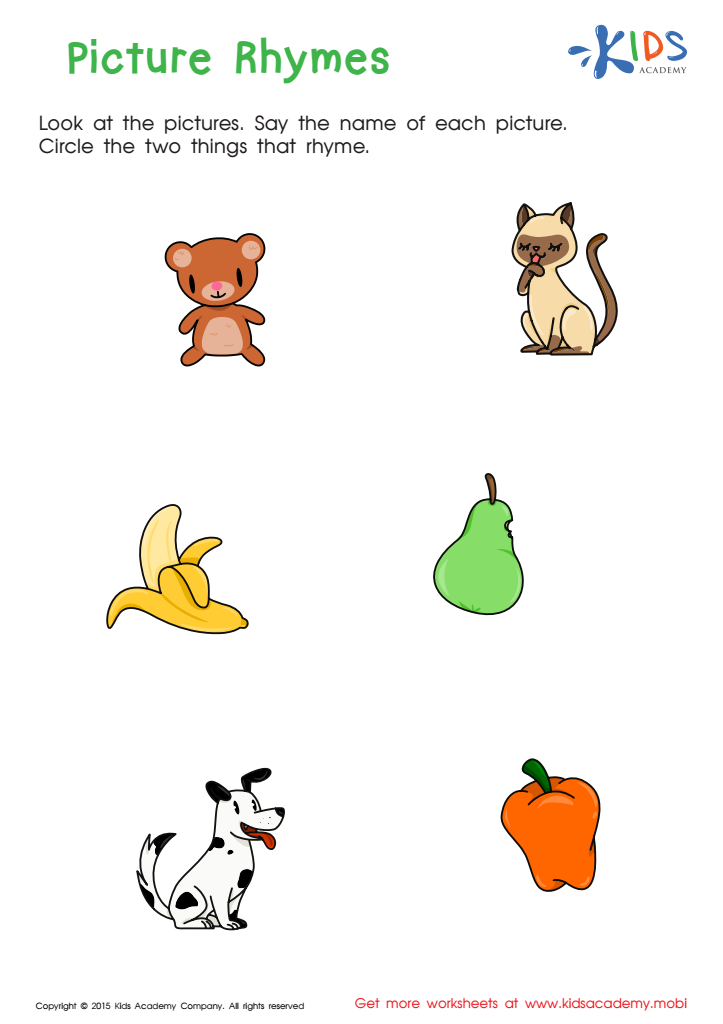
First Words: Picture Rhymes Worksheet
Rhyming helps kids understand language, read and write better. This printable worksheet boosts problem-solving and cognitive skills with vibrant pictures. It teaches kids to identify words, recognize rhymes, complete mental tasks and write words. An extra activity: show them how rhyming words share some of the same letters.
First Words: Picture Rhymes Worksheet
Worksheet
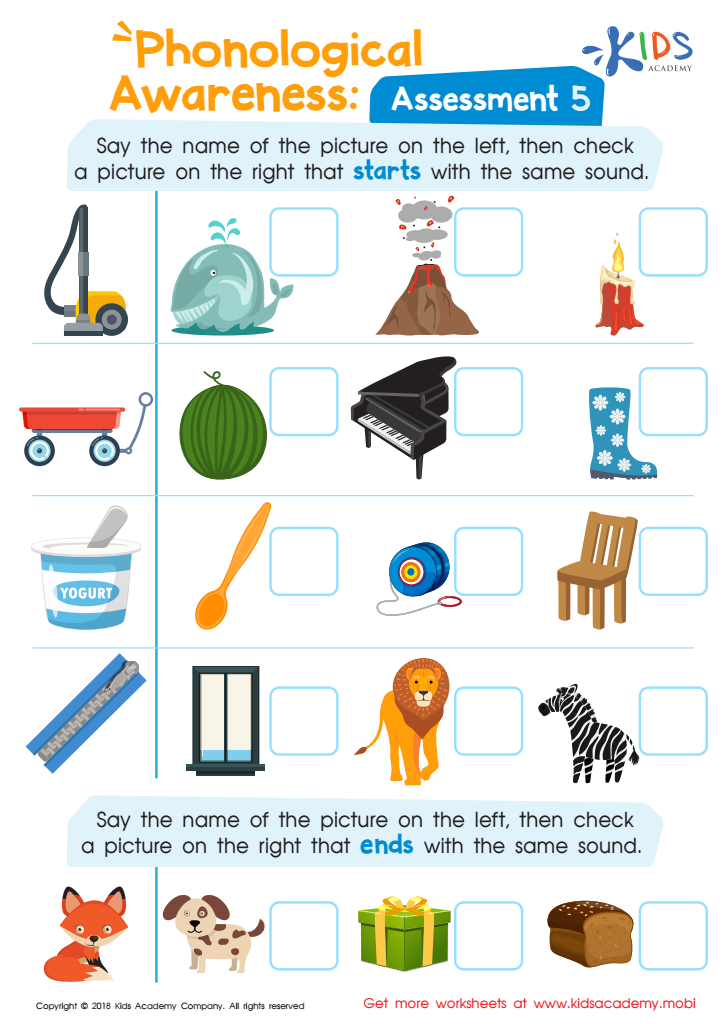
Phonological Awareness: Assessment 5 Worksheet
Repetition is key to success! This worksheet tests kids' ability to match beginning and ending sounds in words. Instruct them to say each word and listen closely to the sounds they make. Focus on the starting sounds for the first four pics, then the last one to hear ending sounds and find the right match!
Phonological Awareness: Assessment 5 Worksheet
Worksheet
Join Kids Academy for Free
Who is primarily going to use this learning content?







Parents and teachers should place importance on rhyming skills development for children ages 5-6 because it plays a crucial role in their early literacy foundation. Rhyming helps children understand how language works by allowing them to notice patterns and sounds within words. This phonological awareness—recognizing and manipulating sounds within spoken language—is a key predictor of reading success. When children learn to identify and create rhymes, they practice listening skills, sound discrimination, and sound-pattern recognition, which feed into their ability to decode words when reading.
Moreover, rhyming activities make learning engaging and fun, which can increase a child's motivation and interest in literacy from a young age. Teachers and parents can use nursery rhymes, rhyming books, and playful rhyming games to make these learning experiences more enjoyable and memorable. Additionally, rhyming helps expand a child's vocabulary; as children are exposed to a variety of rhyming words, they learn new terms and meanings within enjoyable, contextual settings.
Therefore, by actively fostering rhyming skills, parents and teachers provide a strong building block for future reading abilities, improved linguistic intuition, and a lifelong love of learning. Engaging children with rhymes supports cognitive development and offers a joyful pathway to becoming confident, literate individuals.








