Sound-letter correlation Worksheets for Ages 5-6
4 filtered results
-
From - To
Introduce your child to the magical world of letters and sounds with our "Sound-Letter Correlation Worksheets" tailored for ages 5-6. These engaging and educational worksheets help young learners connect speech sounds with printed letters, ensuring a strong foundation for reading and writing. Each worksheet is designed to be fun and interactive, featuring activities such as matching, tracing, and identifying different sounds. Perfect for early grade teachers and parents who want to support their child's literacy journey, these worksheets make learning enjoyable and effective. Download today to start building crucial phonemic awareness skills!
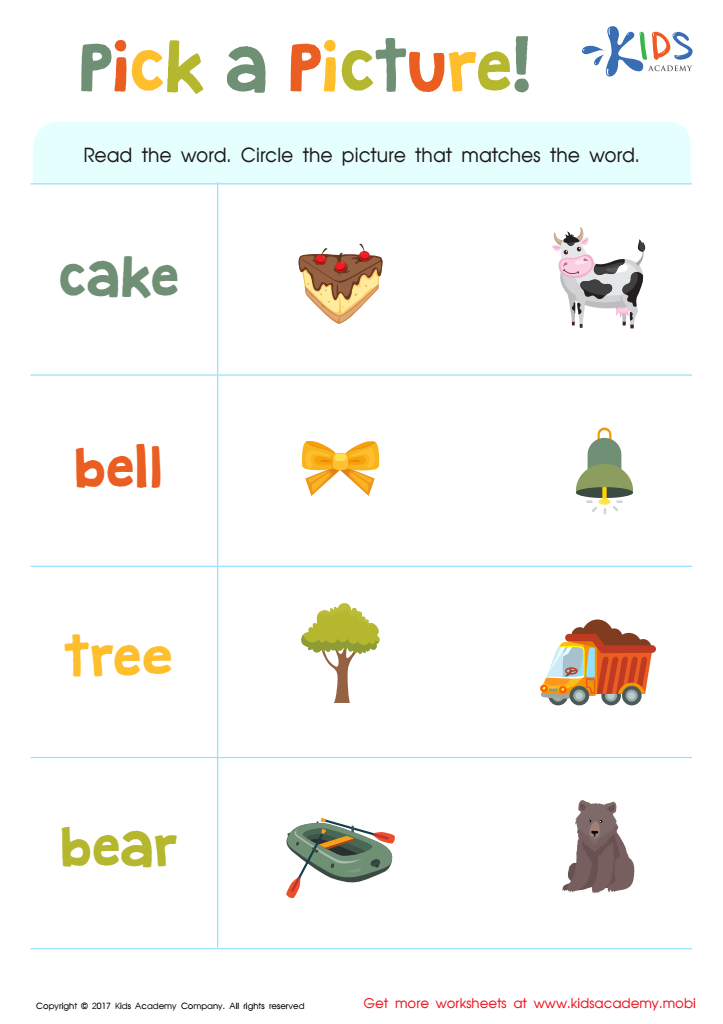
Pick a Picture Word Recognition Worksheet
 Assign to My Students
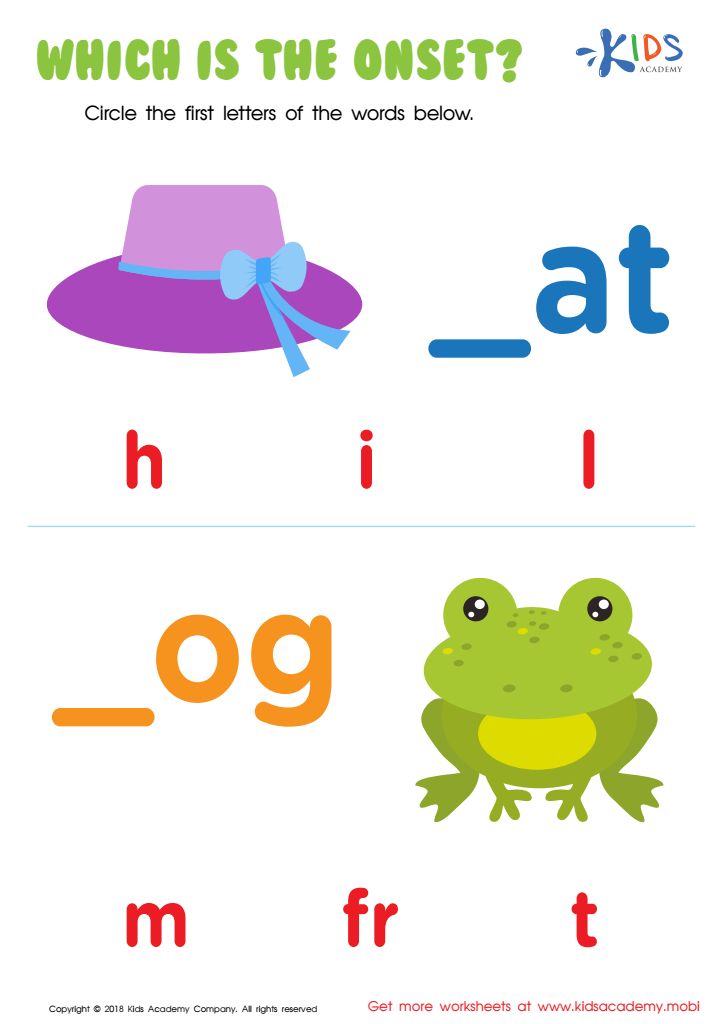
Which Is the Onset? Worksheet
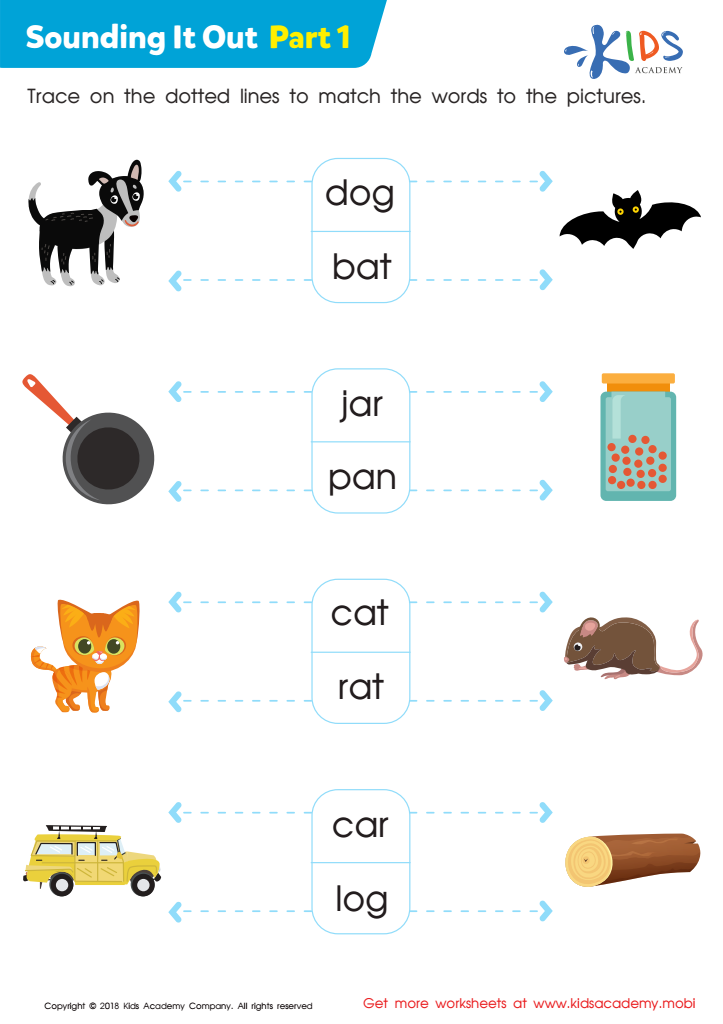
Sounding it Out: Part 1 Worksheet
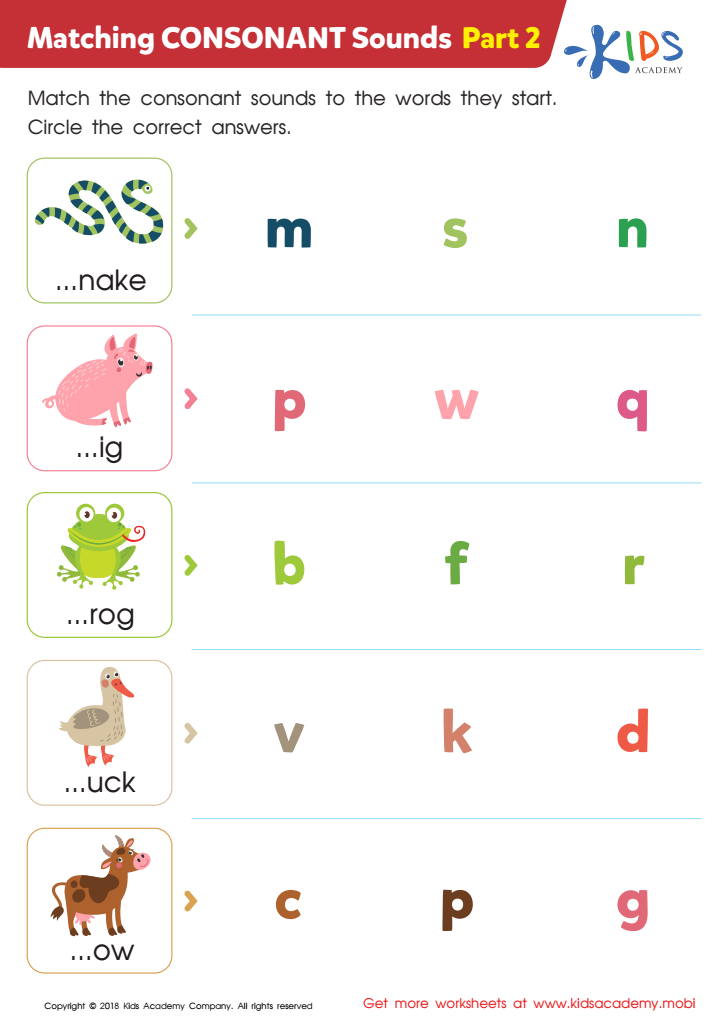
Matching Consonant Sounds: Part 2 Worksheet





Sound-letter correlation, or phonics, is crucial for ages 5-6 because it forms the foundation for reading and writing—a skill critical for academic and life success. At this age, children are at a pivotal developmental stage where their ability to grasp language intricacies is at its peak. Understanding the relationship between sounds (phonemes) and letters (graphemes) enables them to decode words, which is the first step toward fluent reading.
Parents and teachers must emphasize this because early phonics instruction can prevent future reading difficulties. Kids who develop sound-letter correlation skills early become more confident readers, enhancing their overall literacy. Effective phonics education aids in comprehension since students can decode words independently, fostering a sense of achievement and instilling a love of reading.
Moreover, strong phonics skills benefit writing proficiency, allowing children to phonetically spell new words. This dual enhancement—reading and writing—builds a robust vocabulary and better communication skills.
Finally, focusing on phonics lays the groundwork for more advanced literacy skills, ensuring that children are not only ready for the expected academic demands but are also setting themselves up for a lifelong journey of learning and curiosity. By prioritizing sound-letter correlations, parents and teachers invest in their children's future educational efforts.








