Spatial Orientation Worksheets for Ages 5-6
4 filtered results
-
From - To
Welcome to our Spatial Orientation Worksheets for Ages 5-6! Designed to help young learners understand their physical space, these engaging worksheets provide a fun and interactive way to develop essential spatial awareness skills. Through colorful activities and simple instructions, children will explore concepts such as direction, position, and movement. Our worksheets encourage creativity and critical thinking while supporting cognitive development. Perfect for homeschooling, classroom use, or individual practice, these resources foster a foundational understanding of spatial relationships, setting the stage for future learning in math and problem-solving. Unlock your child’s potential with our expertly crafted spatial orientation activities today!
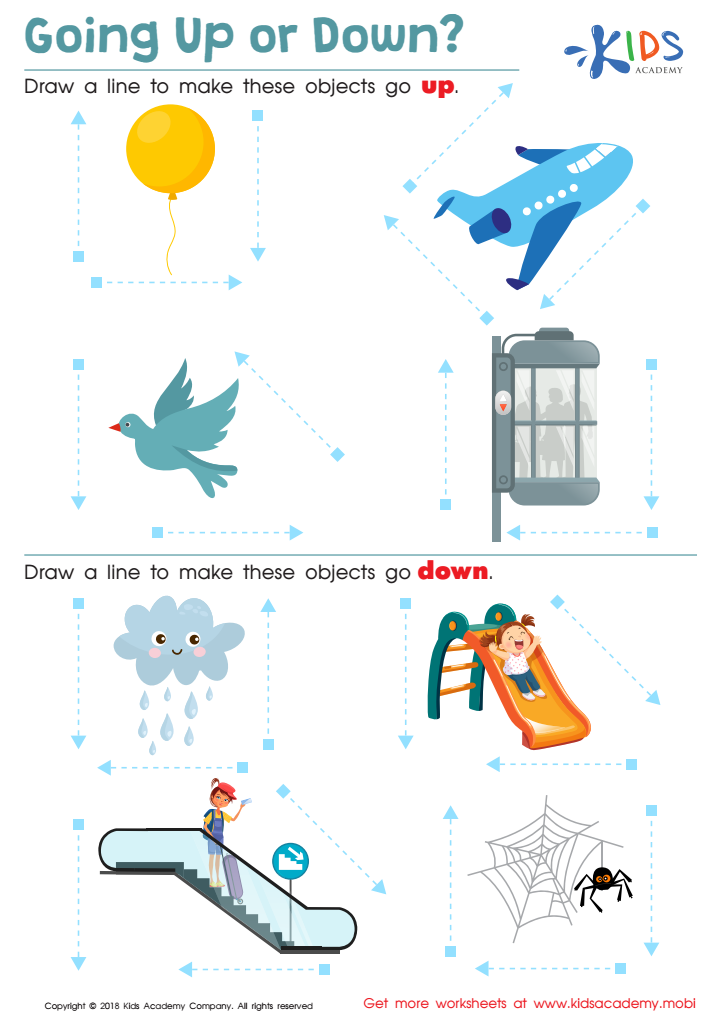
Going up or Down? Worksheet
 Assign to My Students
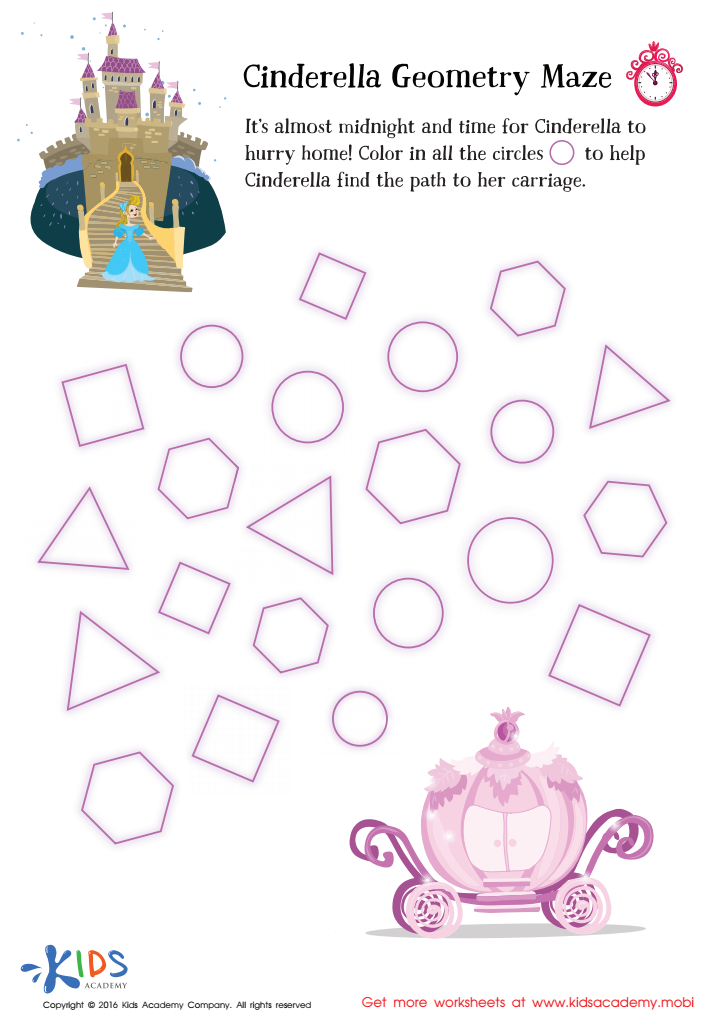
Cinderella Geometry Maze Worksheet
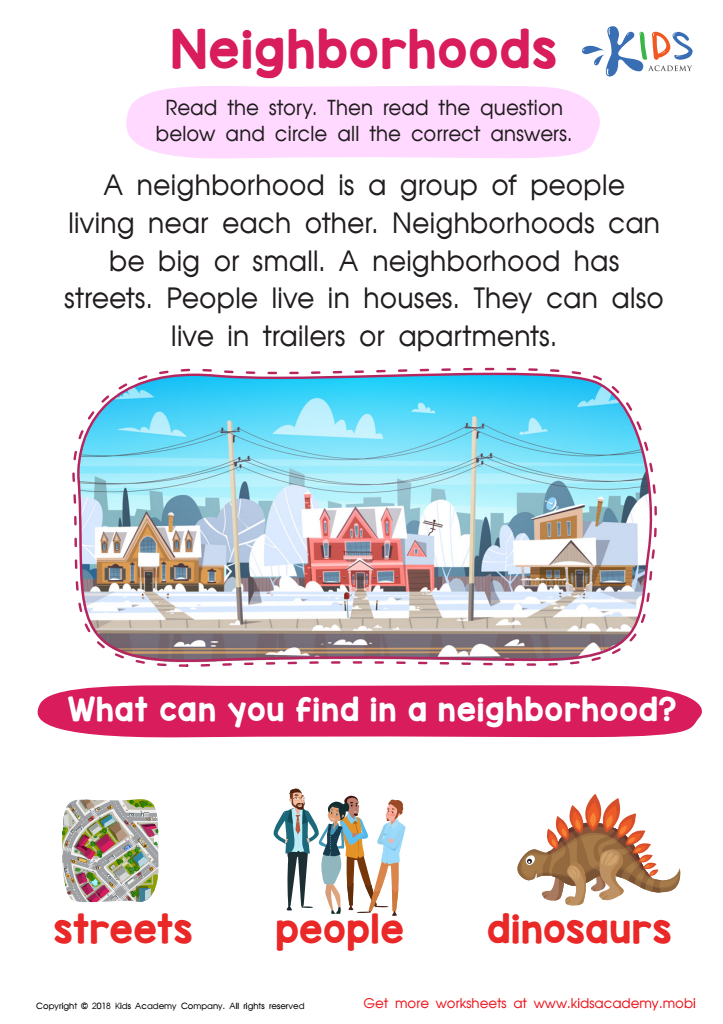
Neighborhoods Worksheet
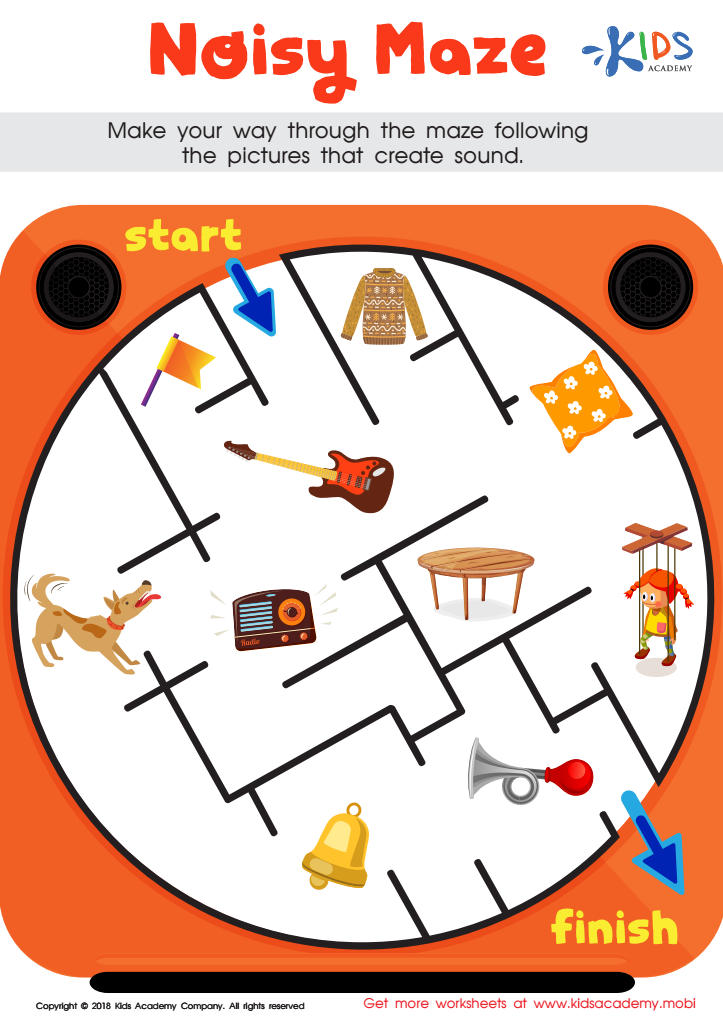
Noisy Maze Worksheet


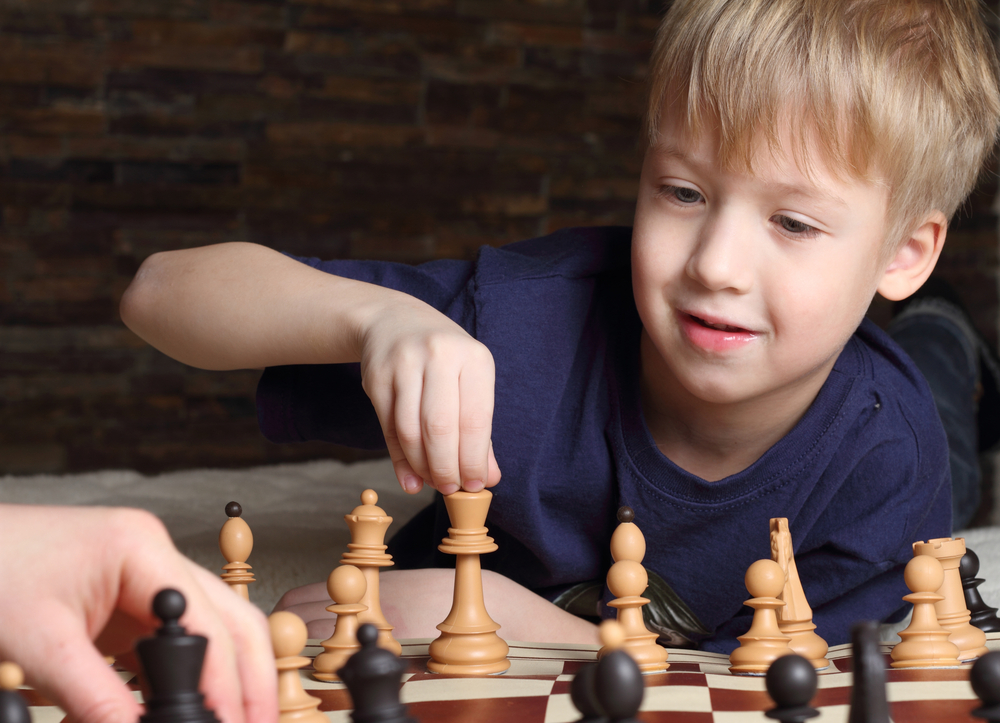





Spatial orientation is a crucial skill for young children, particularly for those aged 5-6, as it impacts their everyday learning and activities. It's the ability to understand where they are in space and how objects relate to one another. This skill lays the foundation for various developmental areas, including mathematics, reading, and critical thinking. For instance, recognizing directions and distances helps children understand geometric concepts and develop strong problem-solving skills.
Parents and teachers should prioritize spatial orientation because it also boosts a child’s confidence and independence. Proficient spatial skills enable children to navigate physical spaces safely and effectively, whether it's moving through a classroom, playground, or any environment. Moreover, engagement in games and activities that enhance spatial awareness can foster teamwork and communication among peers.
Additionally, spatial orientation impacts future academic success. Children with strong spatial skills often excel in subjects like science and math, where visualization and logic are key. Encouraging activities such as building with blocks, puzzles, or even outdoor exploration helps refine these essential abilities. By nurturing spatial skill development during these formative years, parents and teachers set their children on a path toward confident learning and problem-solving, valuable assets in both academic and everyday life.








