Spatial understanding Worksheets for Ages 5-6
3 filtered results
-
From - To
Discover engaging Spatial Understanding Worksheets designed specifically for children ages 5-6! Our carefully crafted activities help young learners develop essential spatial awareness skills through fun exercises. These worksheets include colorful images and interactive tasks that encourage kids to explore concepts like directions, shapes, and spatial relationships. Perfect for enhancing problem-solving abilities and critical thinking, our resources are ideal for homeschooling or supplementing classroom learning. Parents and educators alike will find our printable worksheets user-friendly and aligned with early learning standards. Foster your child's cognitive development in an enjoyable way—unlock the world of spatial understanding today!
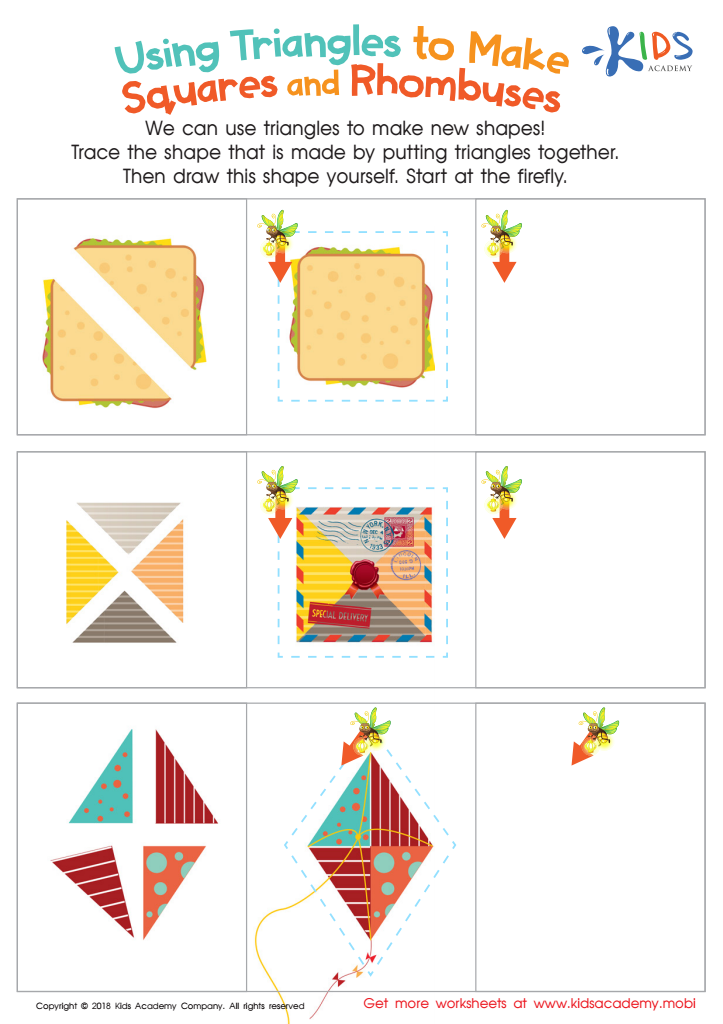
Using Triangles to Make Squares and Rhombuses Worksheet
 Assign to My Students
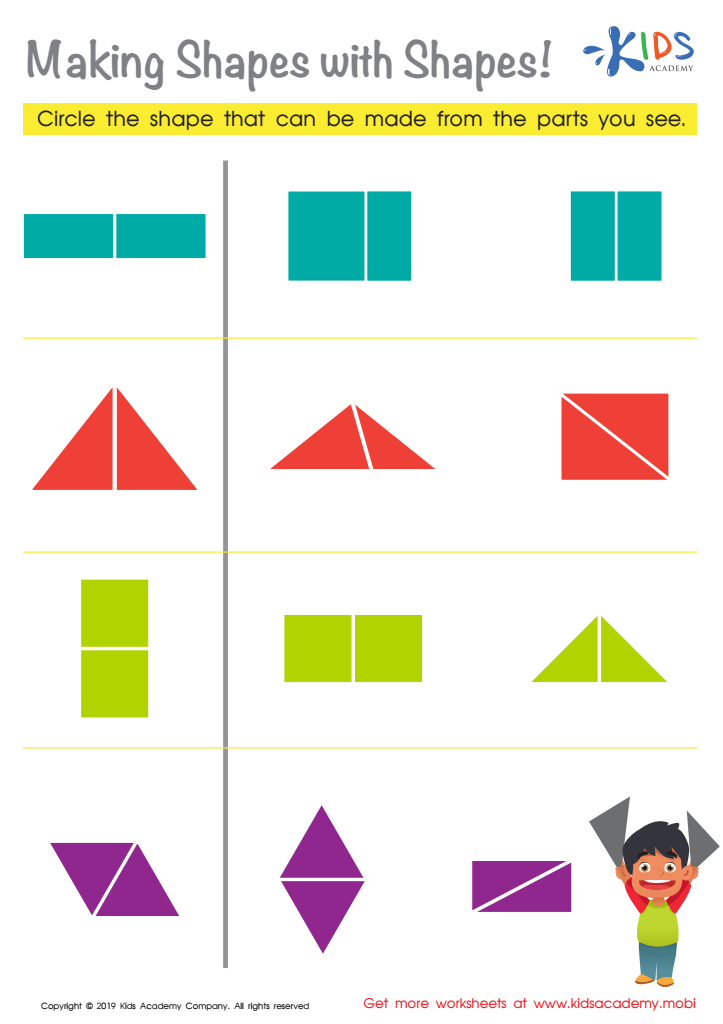
Making Shapes with Shapes Worksheet
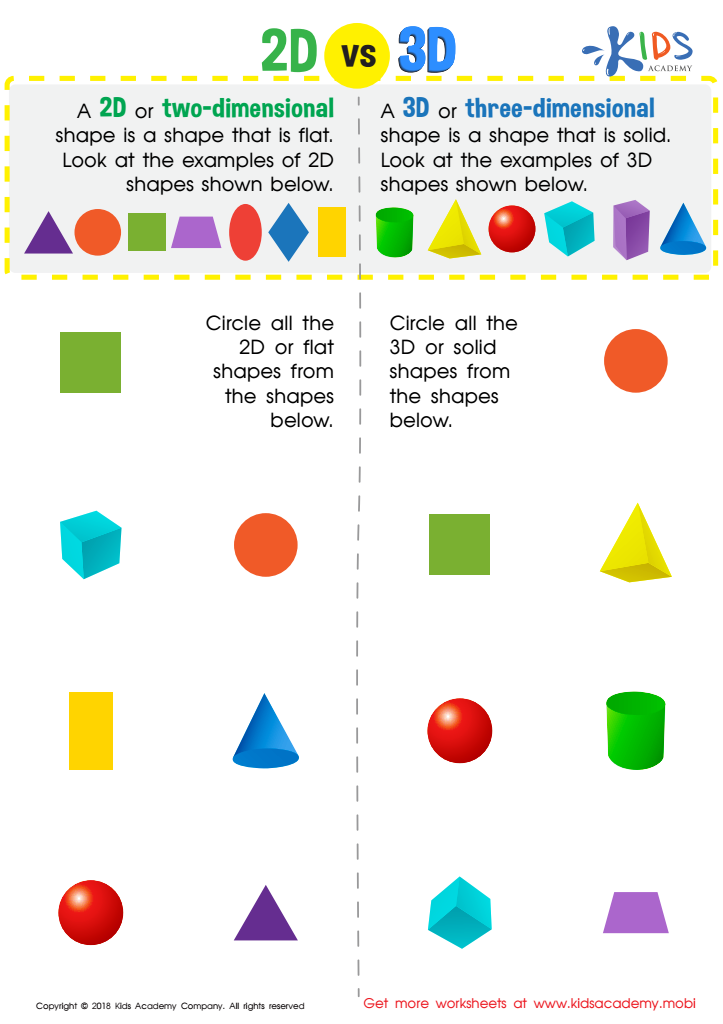
2D vs 3D Shapes Worksheet








Spatial understanding is a crucial aspect of early childhood development, particularly for children aged 5-6. At this age, children are developing foundational cognitive skills that underpin their ability to navigate the world around them. Spatial understanding helps them comprehend concepts such as shapes, sizes, directions, and distances, which are essential for many everyday tasks and future learning in subjects like math and science.
When parents and teachers prioritize spatial understanding, they are laying the groundwork for critical thinking and problem-solving skills. For instance, children who can visualize the arrangement of objects are better equipped to tackle math problems involving geometry or measurement later on. Moreover, enhancements in spatial skills have been linked to improved performance in STEM (science, technology, engineering, and mathematics) fields, widening their future educational and career opportunities.
Additionally, activities that stimulate spatial understanding, such as building blocks, puzzles, and map reading, also foster creativity and fine motor skills. Encouraging these types of play in early childhood can promote resilience and confidence as they learn to approach challenges from various angles. Ultimately, nurturing spatial understanding is not just beneficial for academic success; it’s essential for holistic development and extracting joy from exploration and learning.








