Understanding comparisons Worksheets for Ages 5-6
5 filtered results
-
From - To
Enhance your child's critical thinking with our "Understanding Comparisons Worksheets for Ages 5-6". Specially designed for young learners, these engaging worksheets help kids grasp key concepts such as size, length, weight, and more through fun activities. With colorful illustrations and age-appropriate tasks, these worksheets make learning comparisons an enjoyable experience. Perfect for developing essential cognitive skills, our printable resources will boost your child’s confidence and prepare them for future academic success. Download now from Kids Academy and watch your child master the art of comparison, one worksheet at a time!
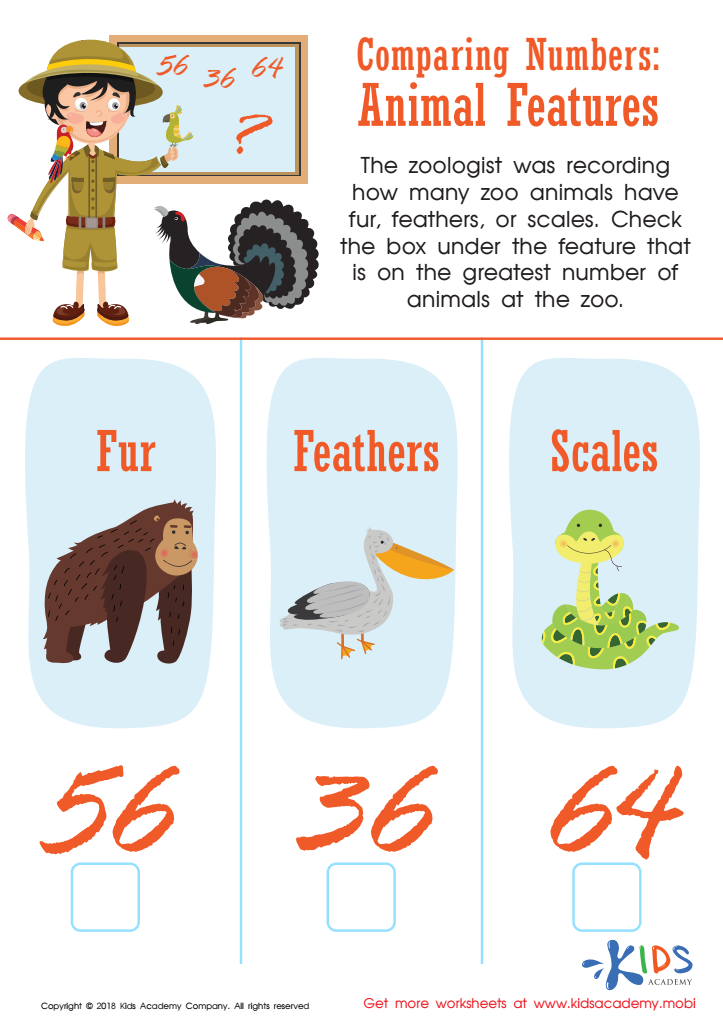
Animal Features Worksheet
 Assign to My Students
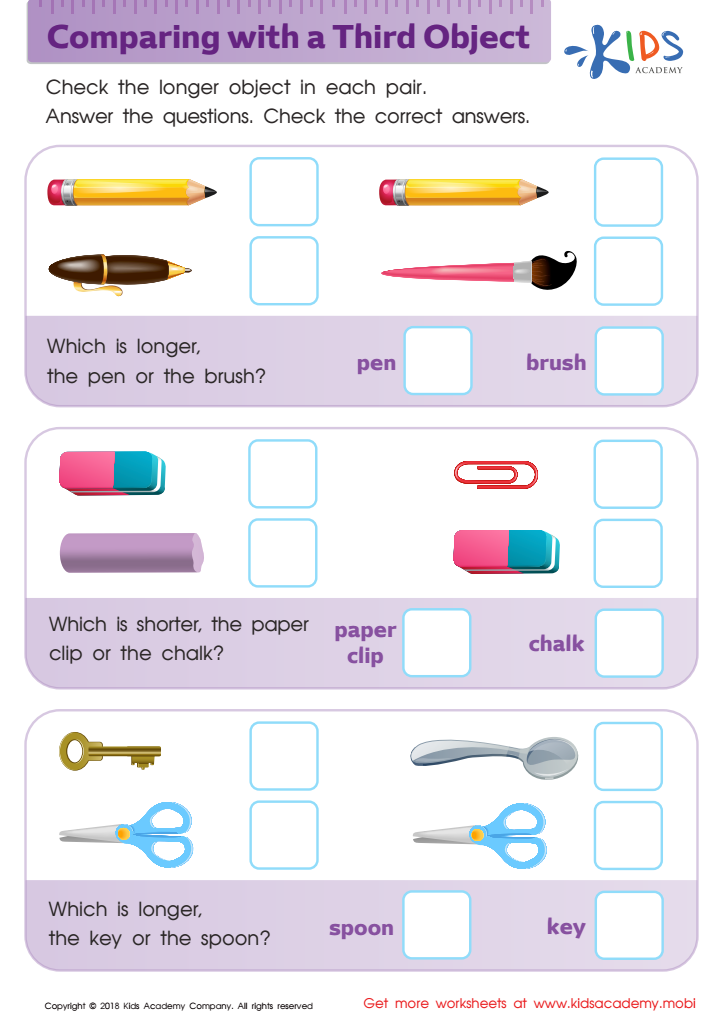
Comparing with a Third Object Worksheet
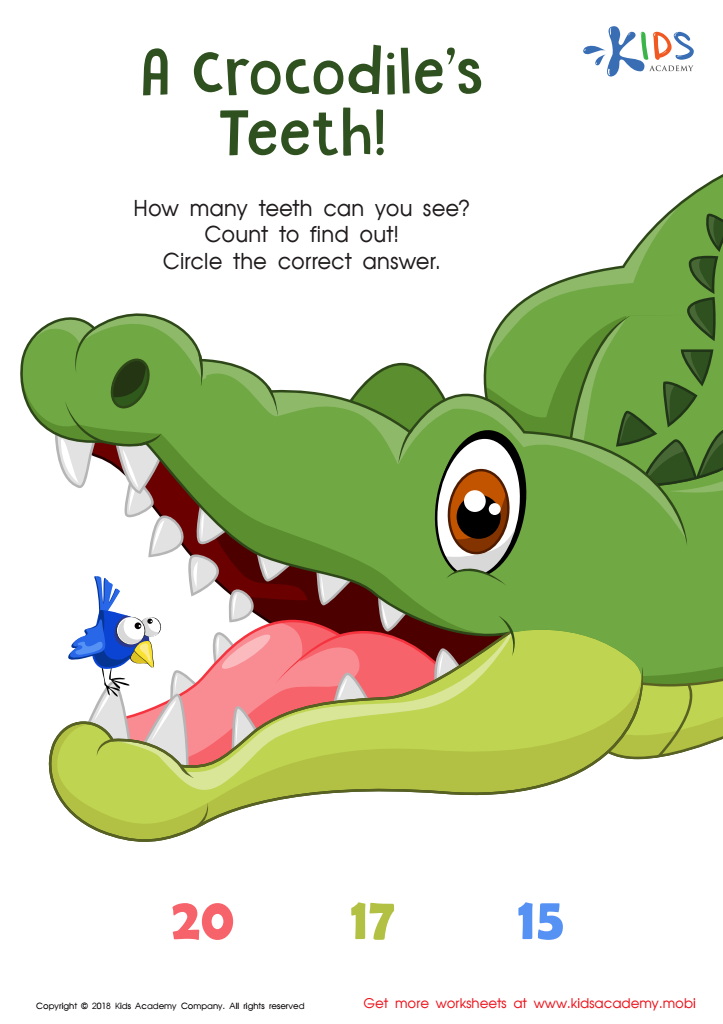
A Crocodile's Teeth Worksheet
Matching: Classifying Toys by Size Worksheet
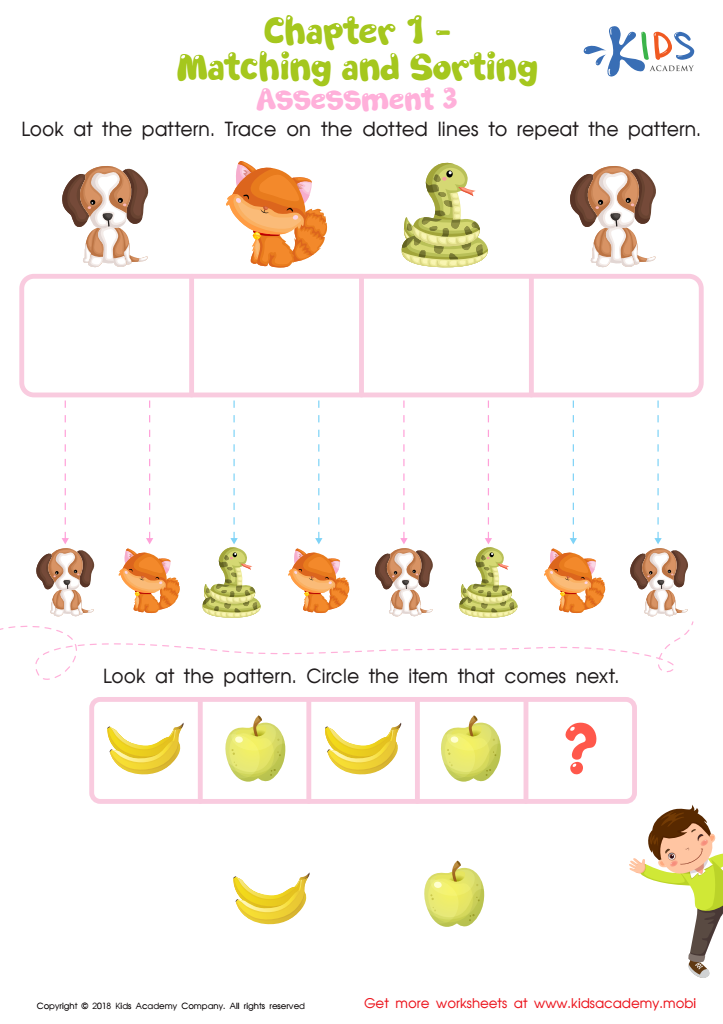
Matching and Sorting for Preschool: Assessment 3 Worksheet






Understanding comparisons is a foundational skill for children ages 5-6 and is crucial for their cognitive and social development. Firstly, grasping comparisons like "bigger vs. smaller" or "heavier vs. lighter" paves the way for mathematical learning. Children use these basic comparisons to understand more complex concepts of measurement and order, enhancing their numerical and spatial reasoning skills, which are essential for STEM education.
In everyday life, comparisons help kids make sense of their environment. For instance, knowing that an apple is smaller than a watermelon helps them categorize and organize objects, building their general knowledge and confidence in making decisions. This also supports language development; being able to articulate and understand comparative concepts enriches their vocabulary and boosts their communication skills.
Moreover, social understanding is another key reason. Children who grasp comparative concepts are better at understanding fairness—like sharing toys equally or noticing differences in abilities without feelings of unfairness. This knowledge helps them interact more harmoniously with peers.
Thus, when parents and teachers focus on teaching comparisons, they are not merely teaching words but are equipping children with tools for mathematical readiness, enriched vocabulary, decision-making, and improved social interactions. Through everyday activities, stories, and targeted questions, this abstract idea becomes tangible, building a solid educational foundation.








