Understanding life cycles Worksheets for Ages 5-6
4 filtered results
-
From - To
Discover our engaging "Understanding Life Cycles" worksheets designed specifically for ages 5-6! These interactive resources are perfect for young learners to explore the fascinating journey of living organisms, from plants to animals. Each worksheet features vibrant illustrations and simple instructions, making learning about growth, change, and life stages fun and accessible. Encourage critical thinking and creativity as children match, sort, and label their way through life cycles. With these worksheets, teachers and parents can foster a deeper appreciation for nature and its processes, while supporting essential cognitive skills. Dive into the world of life cycles today and inspire young minds!
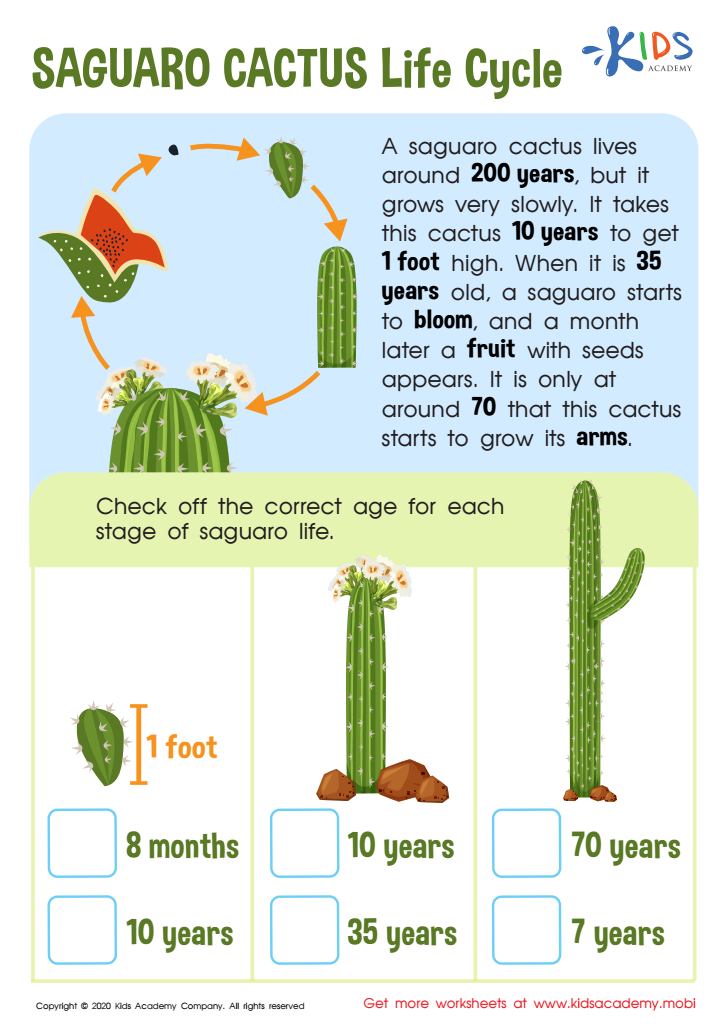
Saguaro Cactus Life Cycle Worksheet
 Assign to My Students
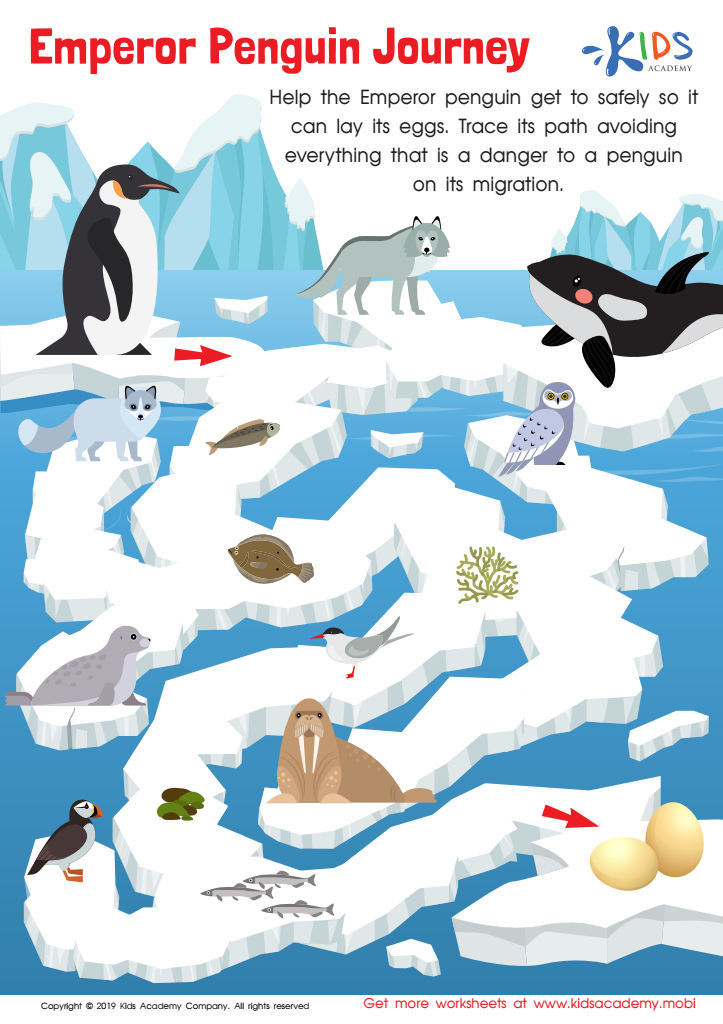
Emperor Penguin Journey Worksheet
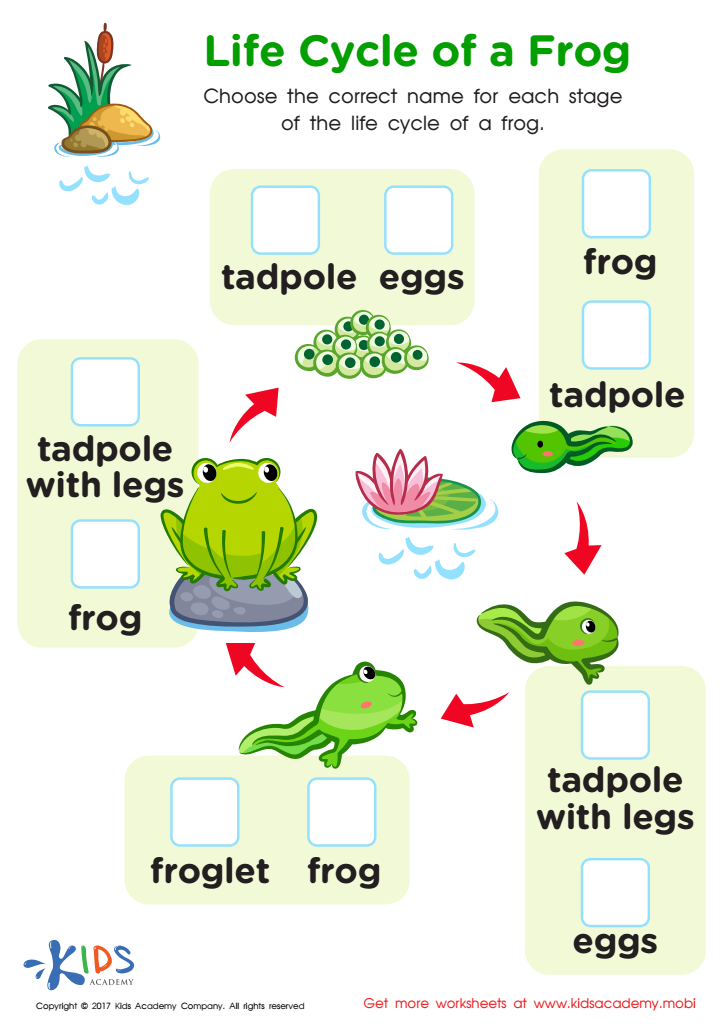
Life Cycle Frog Printable
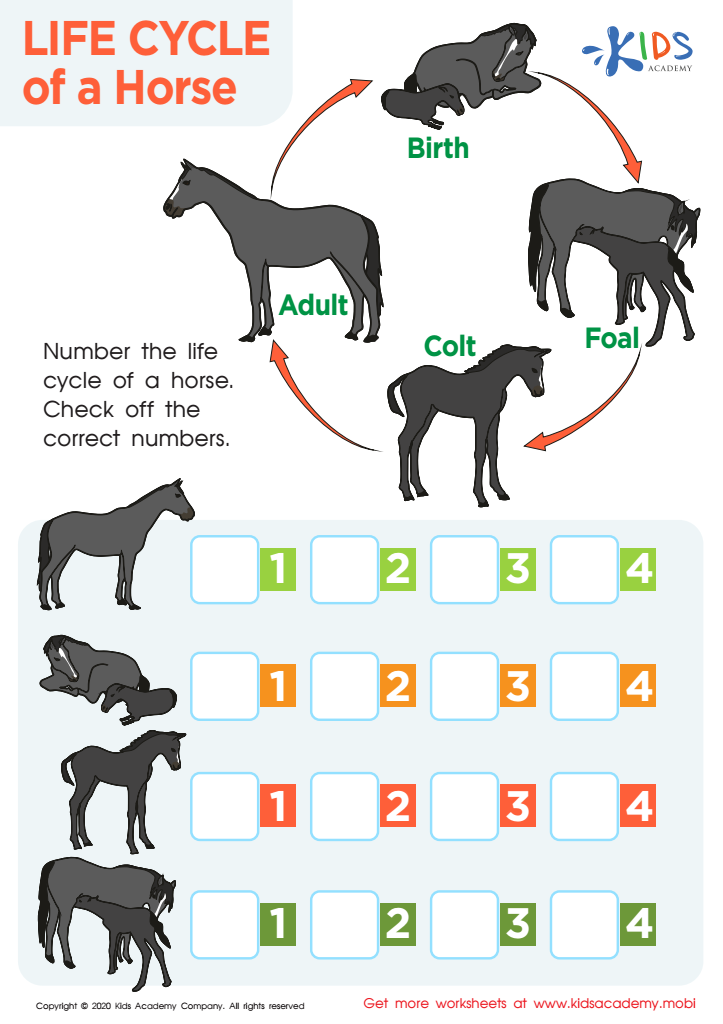
Life Cycle of a Horse Worksheet







Understanding life cycles is crucial for children aged 5-6, as it plays a significant role in their cognitive and emotional development. At this age, children are naturally curious about the world around them, and introducing them to life cycles can cultivate that curiosity into a deeper appreciation for nature, science, and the environment.
Firstly, learning about life cycles—such as those of butterflies, plants, and frogs—enables young learners to comprehend the concepts of growth, change, and time. This foundational understanding of cause and effect enhances critical thinking skills. Furthermore, knowledge of life cycles fosters empathy. As children see the stages of life in living things, from birth to growth to reproduction and death, they start to recognize the interconnectedness of ecosystems and develop respect for all living organisms.
Additionally, introducing life cycles through hands-on activities can engage multiple learning styles. While parents and teachers engage children through discussions, art projects, or outdoor explorations, these activities improve observation and communication skills. Overall, understanding life cycles enriches young learners' experiences and supports their growth as informed, compassionate individuals mindful of their environment. By fostering this understanding, parents and teachers can inspire a love for learning that lasts a lifetime.








