
Understanding moon phases Worksheets for Ages 5-6
3 filtered results
Difficulty Level
Grade
Age
-
From - To
Subject
Activity
Standards
Help your young learners explore the magical world of moon phases with our engaging worksheets designed for ages 5-6! These resources introduce children to the cycles of the moon in a fun and easy-to-understand way. Through colorful illustrations and interactive activities, kids will learn about the different phases of the moon, including new moon, waxing crescent, first quarter, and more. Our worksheets encourage creativity and critical thinking, fostering a love for science and astronomy. Perfect for home or classroom use, these activities provide an enriching experience that aligns with early educational standards. Discover the wonders of the night sky today!
Favorites
With answer key
Interactive
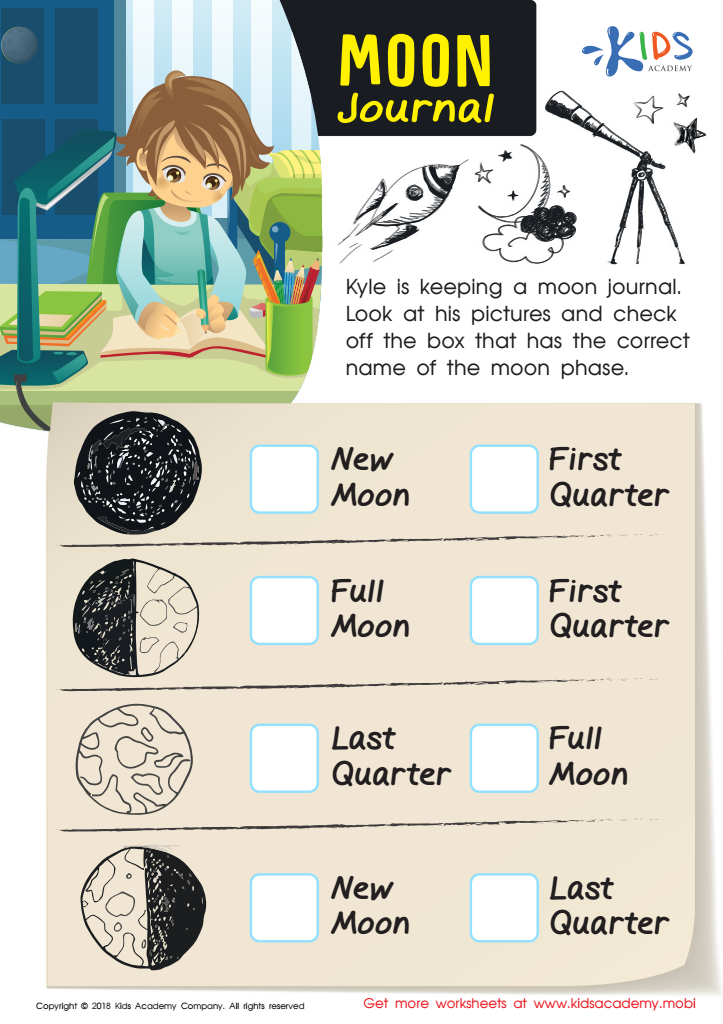
Moon Journal Worksheet
Observe the moon and its 8 phases with your child by downloading this free PDF worksheet from Kids Academy! Review the moon phases with them then help them label Kyle's moon journal. Select the right moon phase for each picture to complete the page!
 Assign to My Students
Moon Journal Worksheet
Worksheet
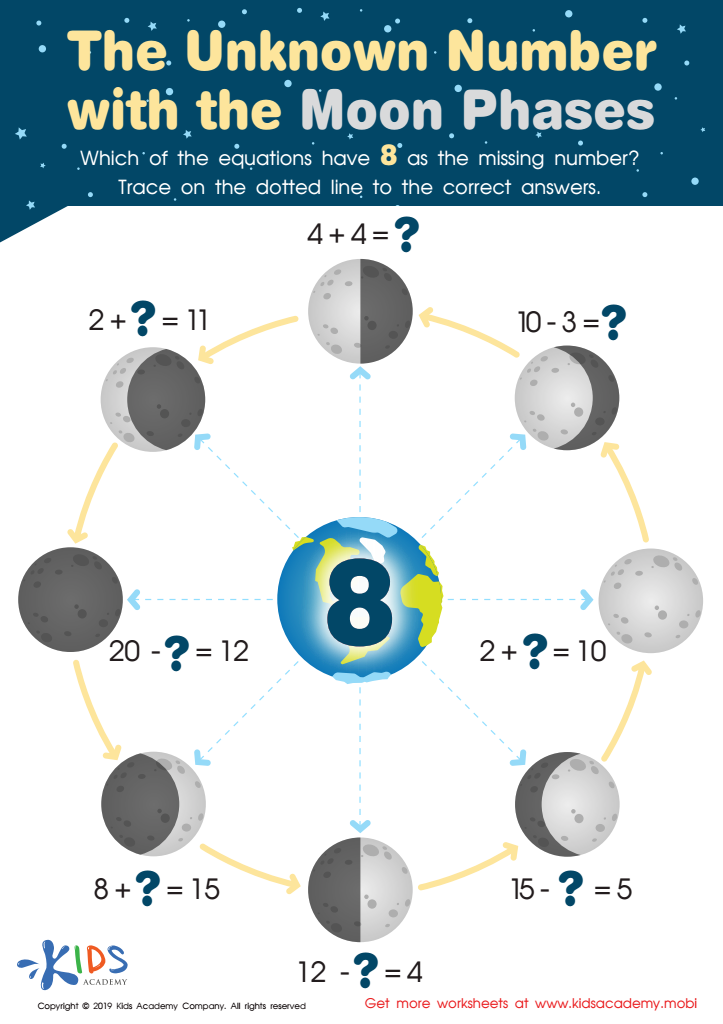
The Unknown Number with the Moon Phases Worksheet
Show your kids the moon one night! Explain why its shape changes during the month with a worksheet. Then, help them to solve math equations and trace the answer, where the missing number is '8'.
The Unknown Number with the Moon Phases Worksheet
Worksheet
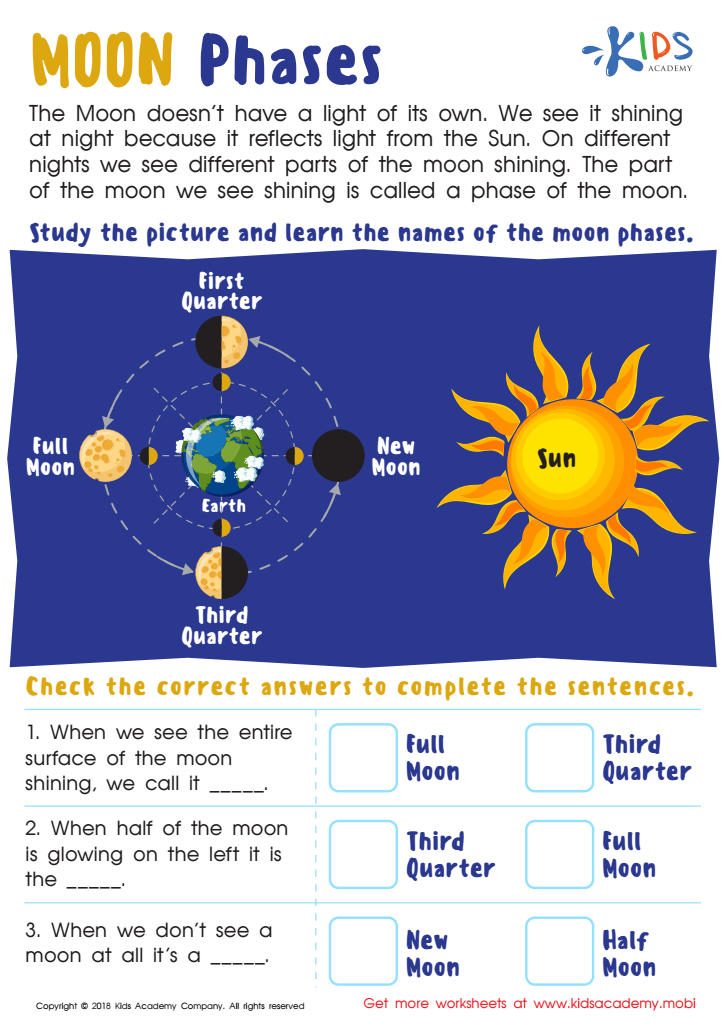
Moon Phases Worksheet
Gaze up at the night sky and the moon's appearance may change from night to night. Encourage your child to learn more about the sun, the moon, and space with this science worksheet. Have them read the text then study the picture. Finally, read the sentences and check the answers to identify the moon's phases.
Moon Phases Worksheet
Worksheet
Join Kids Academy for Free
Who is primarily going to use this learning content?





Understanding moon phases is important for children ages 5-6 for several reasons. First, it fosters curiosity about the natural world, encouraging a sense of wonder about the universe. At this age, children are naturally inquisitive, and learning about the moon's phases can engage their imaginations. Studies show that when children relate what they learn to their daily lives, they retain information better.
Additionally, moon phases can help develop essential skills such as observation and critical thinking. Children can visualize how the moon changes shape and learn to identify different phases—new moon, crescent, first quarter, full moon, and so on. This hands-on approach enhances cognitive development as they practice interpreting patterns and engaging in discussions.
Furthermore, learning about the moon can connect to various subjects such as art, science, and literature. Parents and teachers can incorporate moon-themed activities, like storytelling and crafts, making learning interactive and fun. Lastly, shared experiences of watching the moon can foster bonding and encourage a lifestyle of exploration—creating memorable learning moments that shape children's views on science and nature. In essence, understanding moon phases offers educational, social, and emotional benefits that enrich children's early learning experiences.








