Understanding seasons Worksheets for Ages 5-6
6 filtered results
-
From - To
Discover the perfect resource for young learners with our "Understanding Seasons Worksheets for Ages 5-6." Designed to spark curiosity, these engaging activities help children grasp the concepts of different seasons through fun and interactive exercises. Each worksheet focuses on seasonal changes, weather patterns, and related clothing and activities, fostering critical thinking and observational skills. Ideal for home or classroom use, these thoughtfully created materials support early science education, making learning about seasons both enjoyable and educational. Empower your child's understanding of the world around them with our expertly crafted seasonal worksheets.
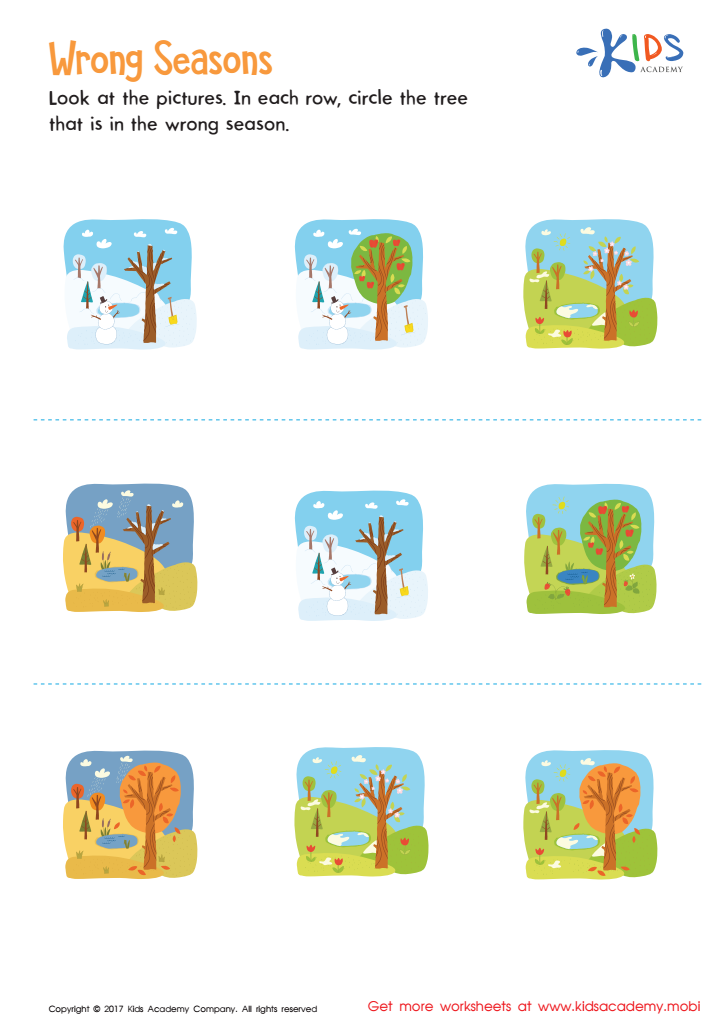
Wrong Seasons Worksheet
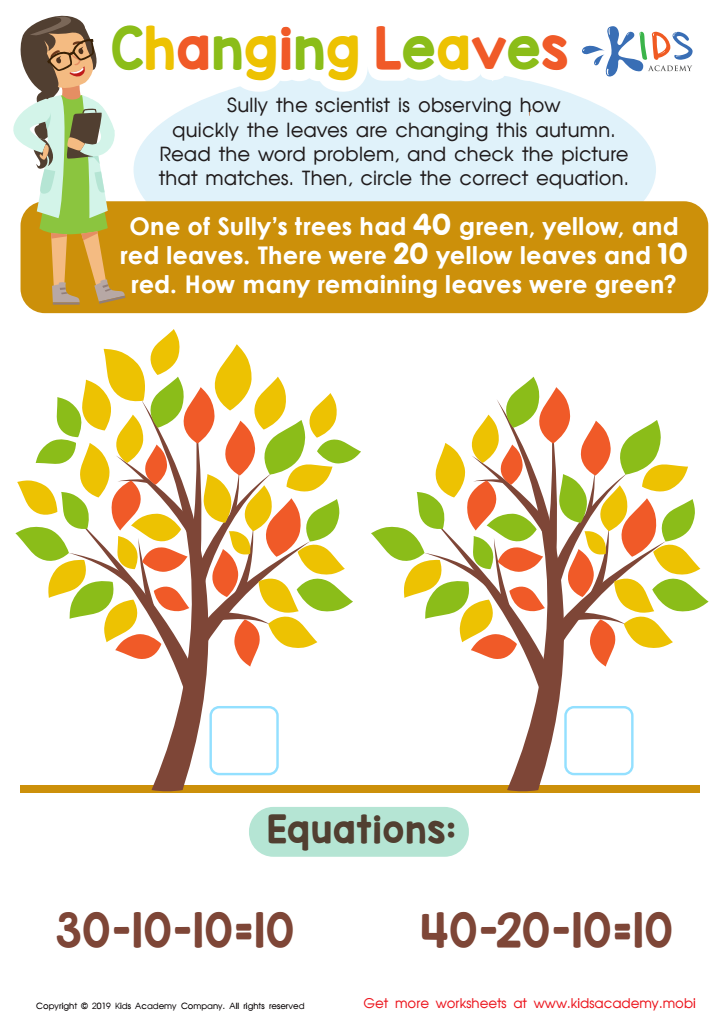
Changing Leaves Worksheet
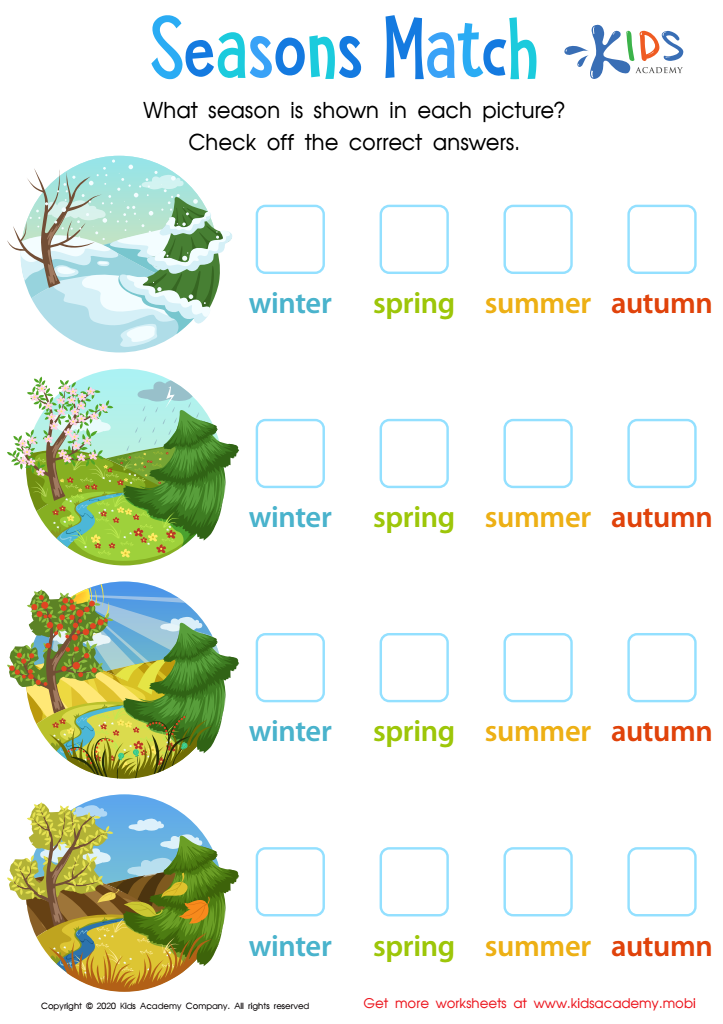
Seasons Match Worksheet
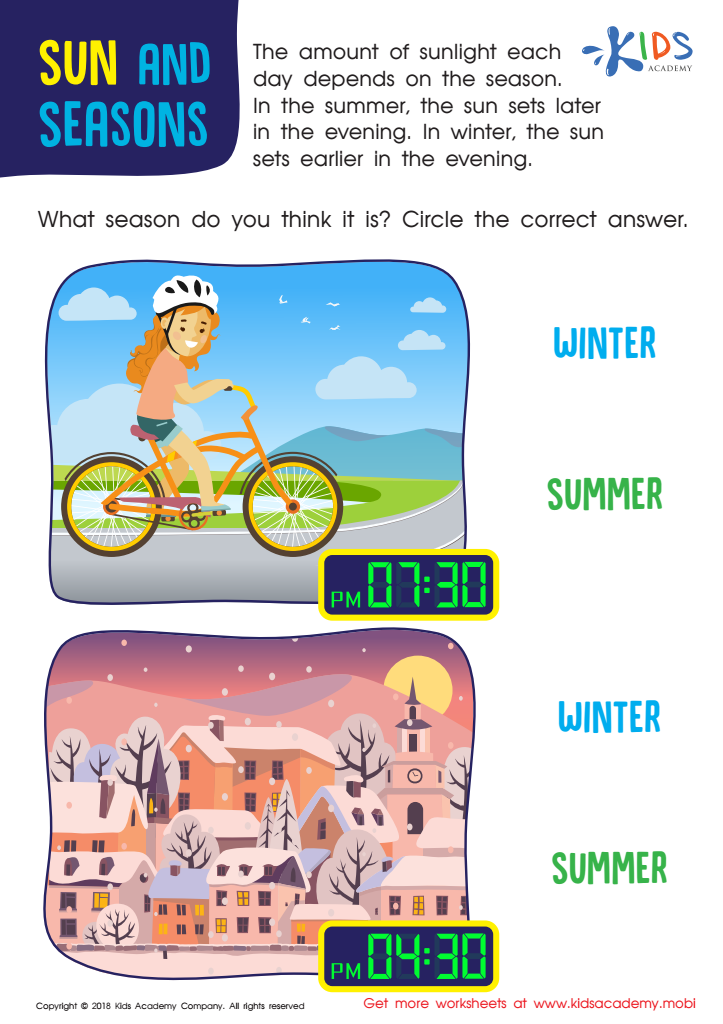
Sun and Seasons Worksheet
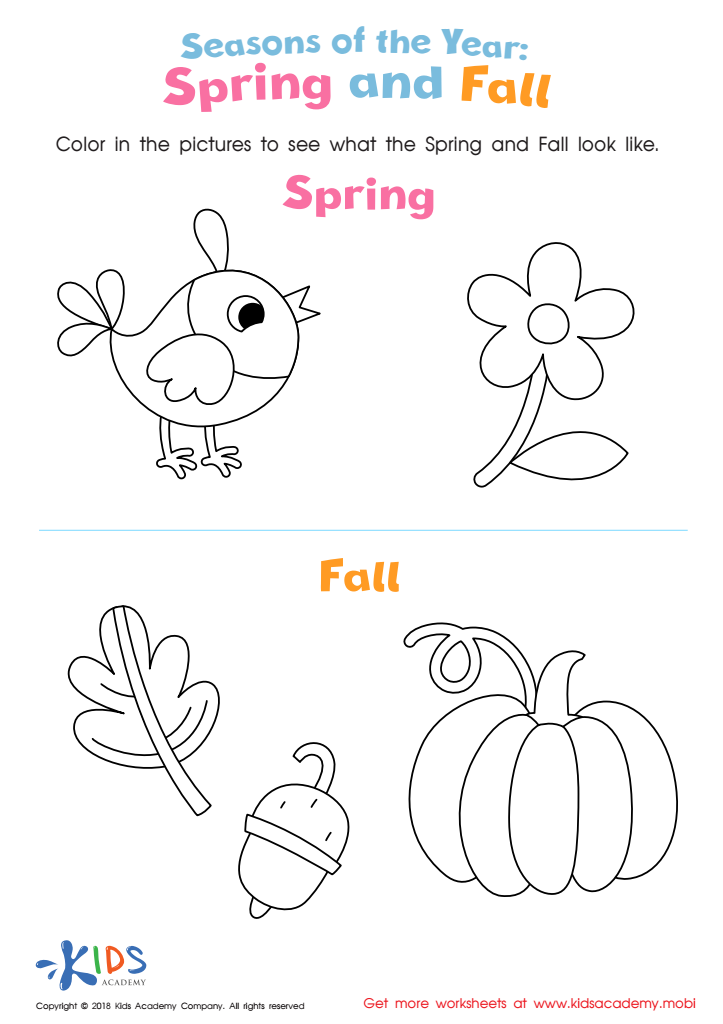
Spring and Fall Worksheet
 Assign to My Students
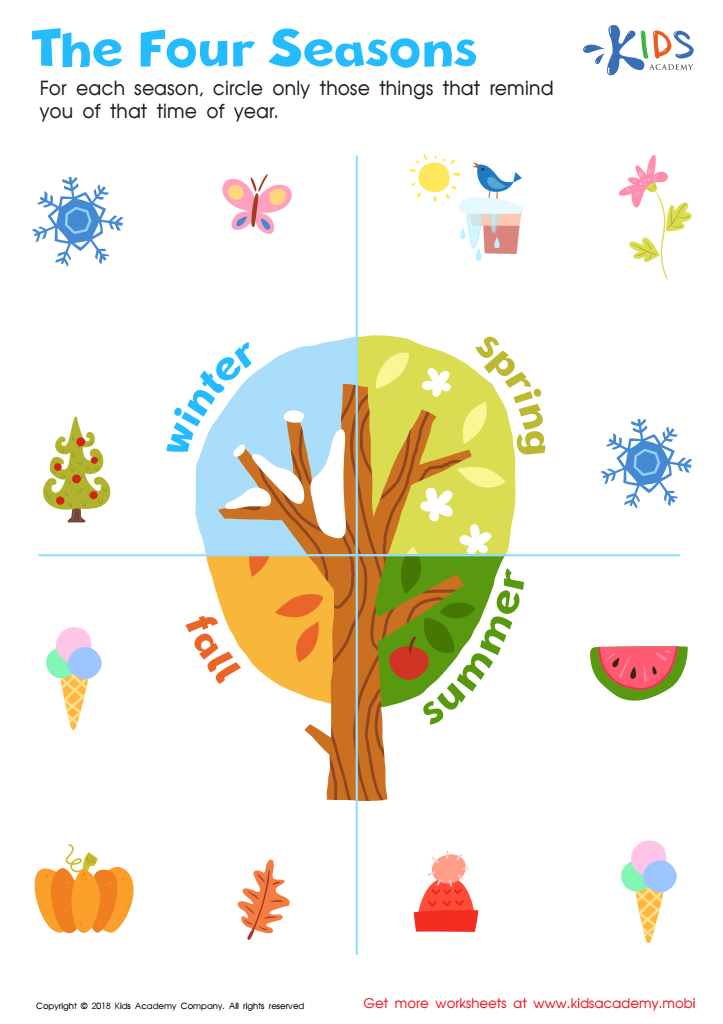
The Four Seasons Worksheet








Understanding seasons is fundamental for young children aged 5-6 because it lays the groundwork for broader scientific learning and daily life skills. Firstly, an awareness of seasons cultivates their curiosity about the natural world. They learn to notice patterns and changes in their environment, such as temperature differences, plant life cycles, and varying daylight hours. This simple observation nurtures their exploratory mindset and critical thinking skills.
Secondly, recognizing seasonal shifts helps children better understand and participate in daily routines, including appropriate clothing choices and activities. It connects practical knowledge with real-world applications, enhancing their ability to adapt and respond autonomously to changing conditions.
Thirdly, seasons play a crucial role in cultural and community events, such as holidays and festivals. Grasping these concepts makes children more engaged and connected to their communal traditions, helping them to develop a sense of belonging and stability.
Finally, learning about seasons introduces basic scientific concepts like weather, geography, and time in a context that is tangible for young minds. This foundation supports future education in subjects like Earth Science, promoting continual academic growth.
In essence, understanding seasons at an early age equips children with valuable insights into nature, practical life skills, a sense of community, and foundational academic knowledge.








