
Understanding weather conditions Worksheets for Ages 5-6
3 filtered results
Difficulty Level
Grade
Age
-
From - To
Subject
Activity
Standards
Our "Understanding Weather Conditions Worksheets for Ages 5-6" provide a fun and educational way for young learners to explore different weather phenomena. These engaging, teacher-designed worksheets help children recognize and comprehend various weather situations, such as sunny, rainy, cloudy, and snowy days. Through age-appropriate activities, kids will develop essential observation and critical-thinking skills. Perfect for both classroom and at-home learning, these worksheets incorporate colorful illustrations and interactive tasks to make learning about weather an enjoyable experience. Spark curiosity and inspire a love for science with our easy-to-use, printable worksheets tailored specifically for early learners.
Favorites
With answer key
Interactive
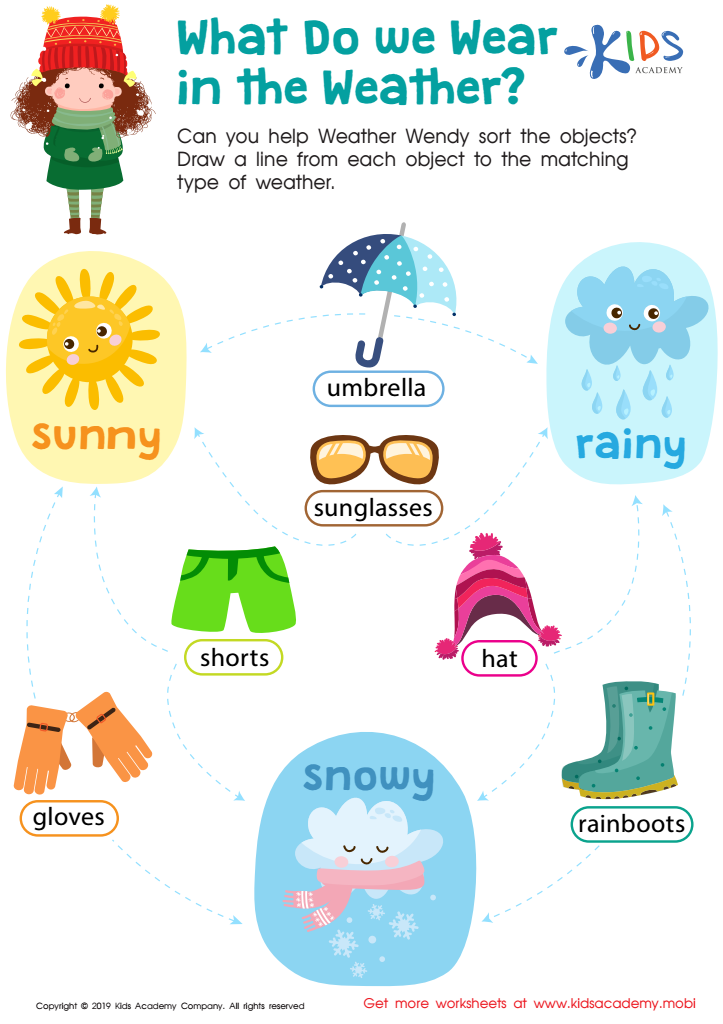
What Do We Wear in the Weather? Worksheet
This worksheet boosts young learners' everyday vocab with fun high-frequency weather words. They'll see and match familiar pictures to the words they read. Plus, it helps them develop fine motor skills. Perfect for preschoolers.
 Assign to My Students
What Do We Wear in the Weather? Worksheet
Worksheet
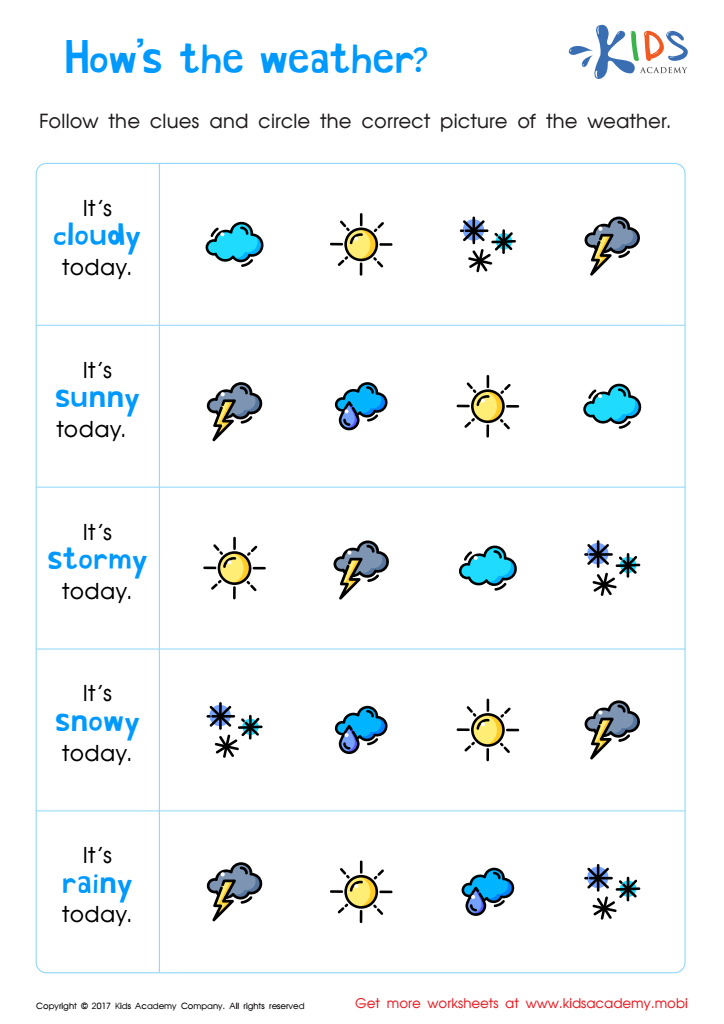
Hows the Weather Worksheet
Teaching kids about weather is a fun way to start science learning. This worksheet helps recognize symbols, literacy skills and make real world connections. Your child will love it!
Hows the Weather Worksheet
Worksheet
Join Kids Academy for Free
Who is primarily going to use this learning content?








Understanding weather conditions is essential for young children aged 5-6 as it directly impacts their safety, daily routines, and educational experiences. For parents and teachers, being attuned to weather conditions facilitates better planning of appropriate clothing and outdoor activities. For example, knowing if it's going to be cold or rainy ensures that children are dressed in warm, waterproof clothing, thus preventing the risk of illnesses.
Furthermore, weather-related discussions offer rich, real-world learning experiences that engage young minds. By talking about clouds, rain, or sunshine, children enhance their vocabulary and cognitive understanding. They also start recognizing patterns and cause-and-effect relationships, essential foundations for scientific thinking.
Moreover, integrating weather observations into daily routines can foster a sense of responsibility and empathy in children. They learn to appreciate the natural world and understand the importance of taking care of the environment. Engaging with weather concepts, such as discussing how rainfall helps plants grow, helps to cultivate a sense of curiosity and respect for nature.
Overall, understanding weather conditions for young children goes beyond the practicalities of safety and comfort. It opens doors to valuable educational opportunities, fosters critical thinking skills, and instills environmental awareness, making it a crucial aspect of early childhood education and parenting.








