Check out this FREE "Visual Learning" Trial Lesson for age 5-6!

Match Objects that Fit Together

Favorites
With answer key
Interactive
  • 5-6
  • Visual Learning
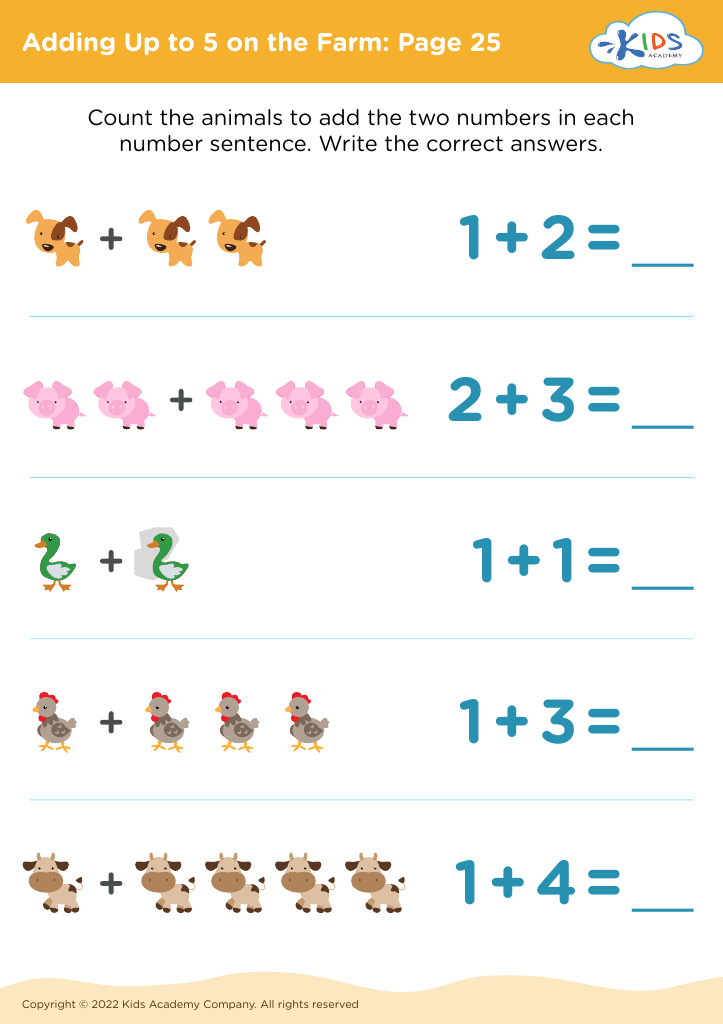
Adding Up to 5 on the Farm: Page 25
Worksheet
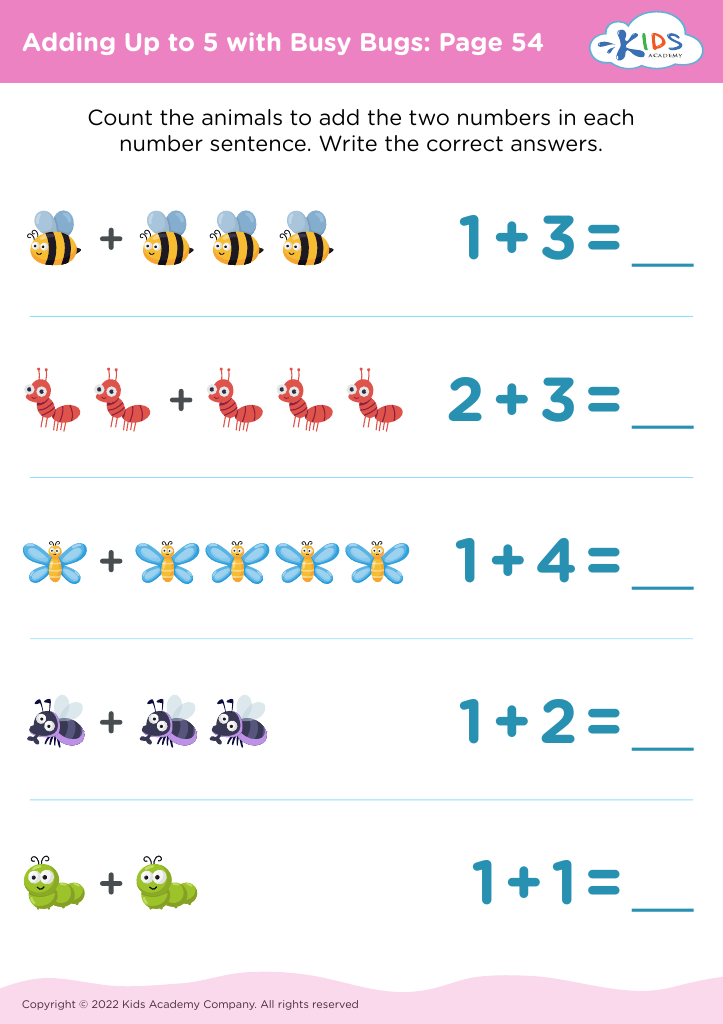
Adding Up to 5 with Busy Bugs: Page 54
Worksheet
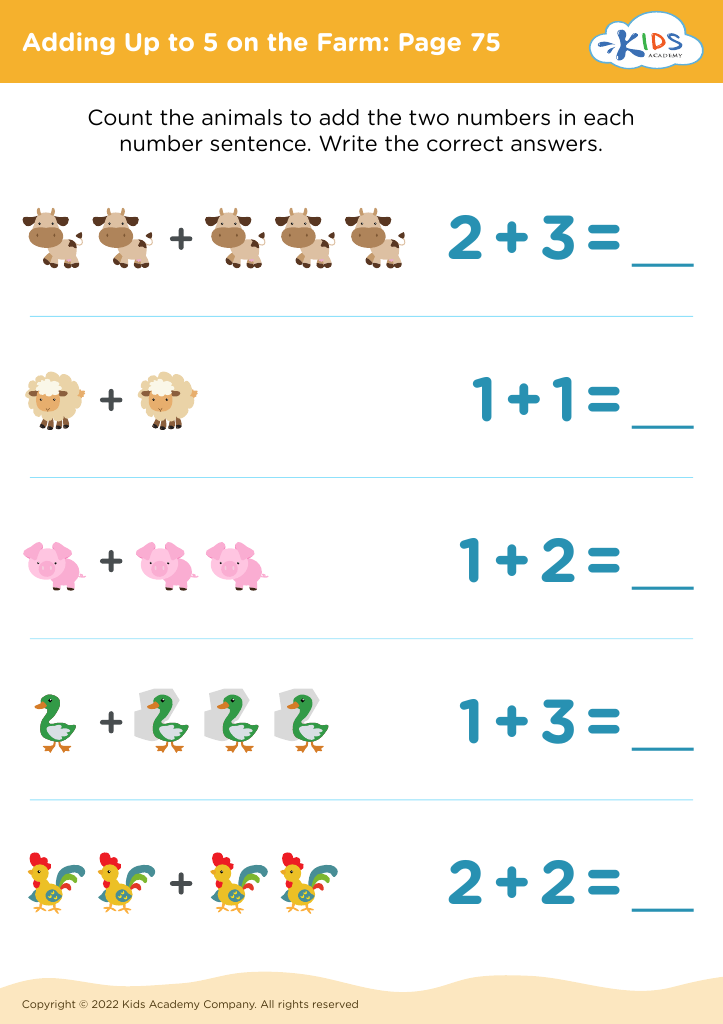
Adding Up to 5 on the Farm: Page 75
Worksheet
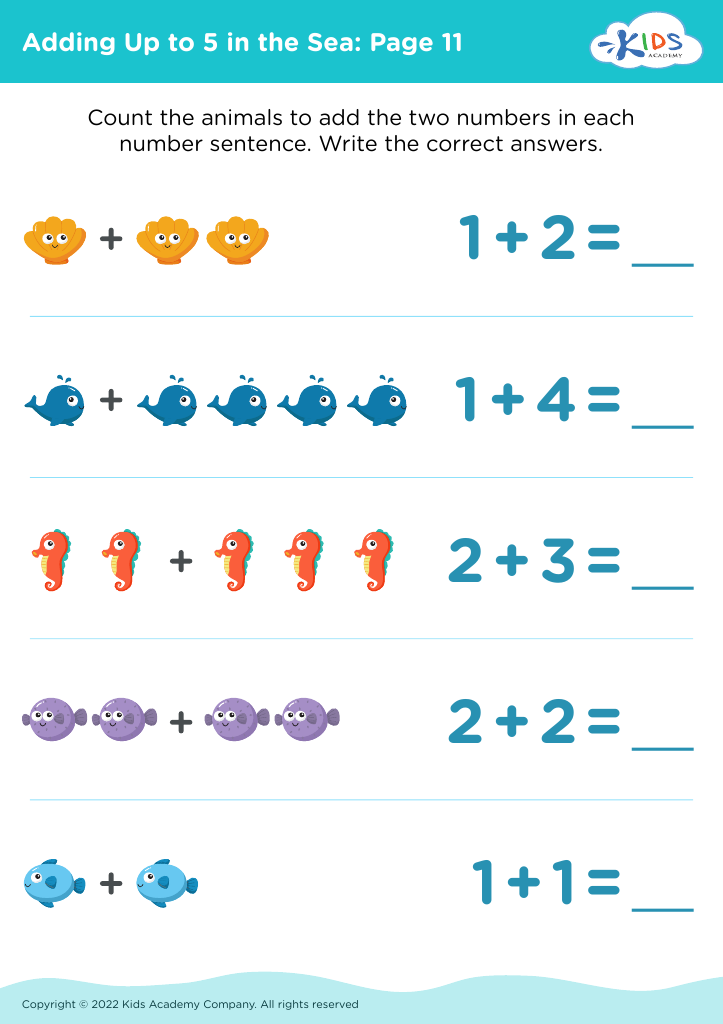
Adding Up to 5 in the Sea: Page 11
Worksheet
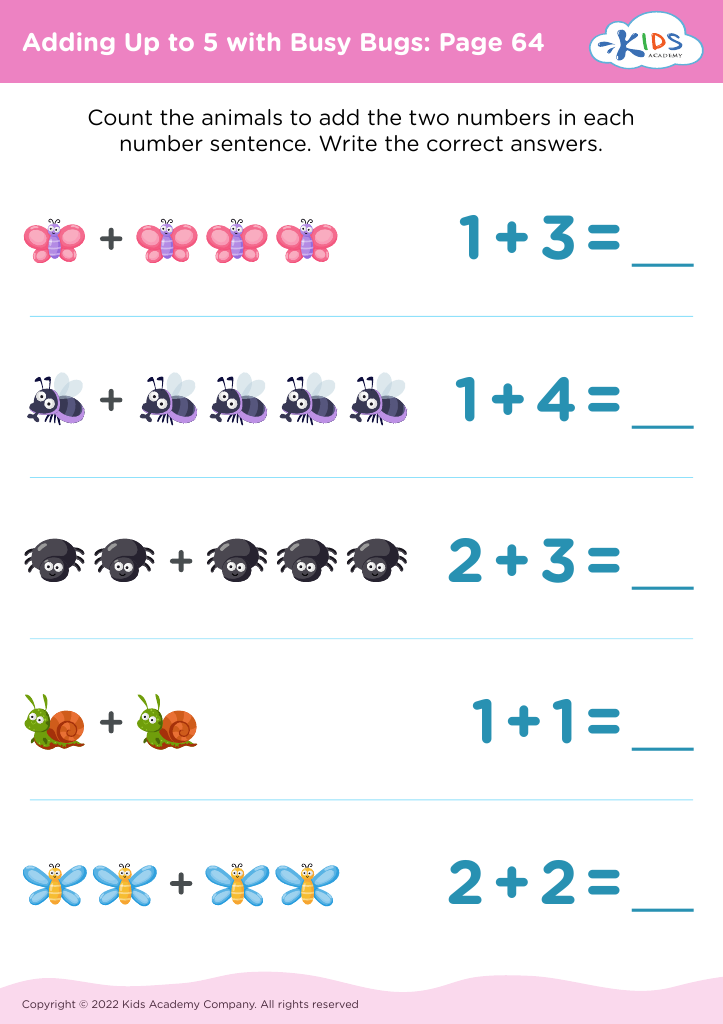
Adding Up to 5 with Busy Bugs: Page 64
Worksheet
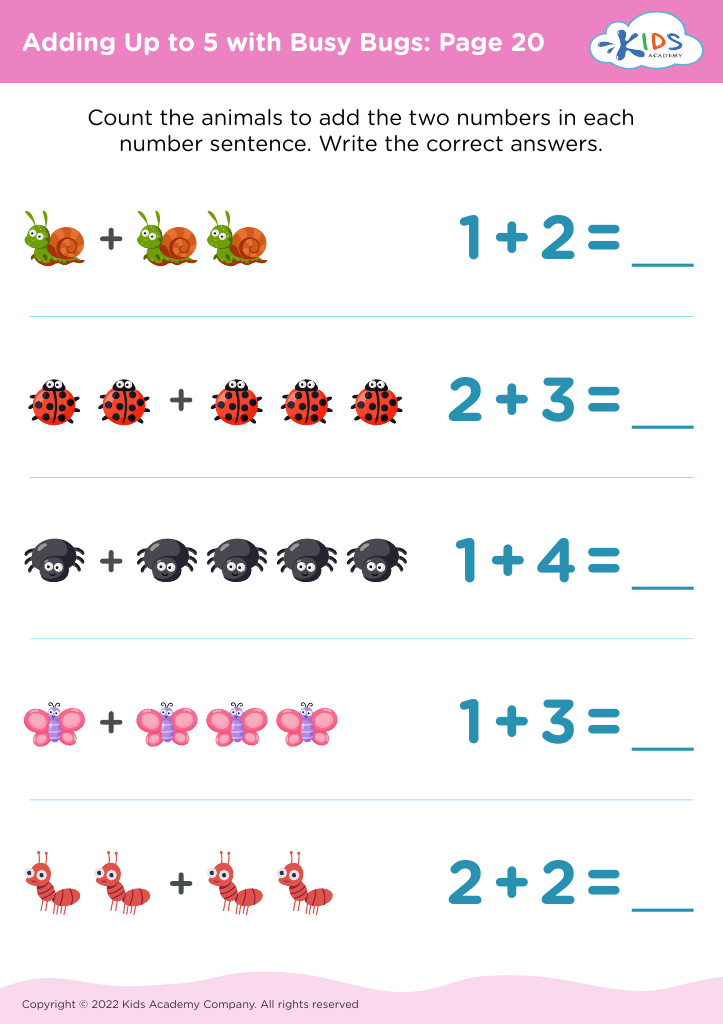
Adding Up to 5 with Busy Bugs: Page 20
Worksheet
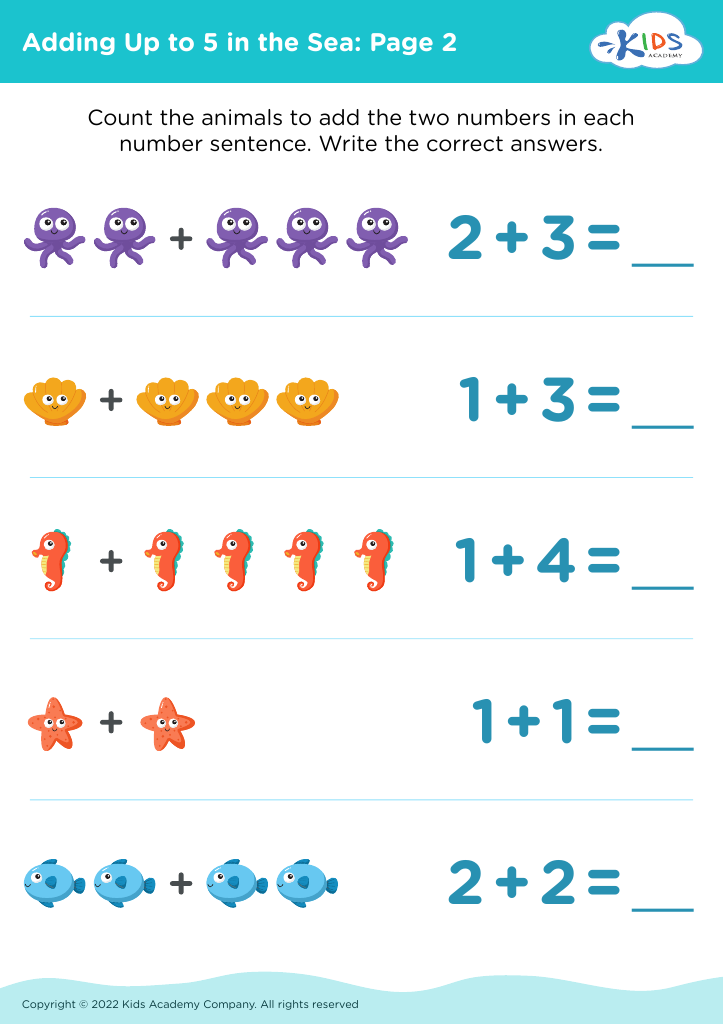
Adding Up to 5 in the Sea: Page 2

Adding Up to 5 in the Sea: Page 2

Adding Up to 5 in the Sea: Page 2
Worksheet
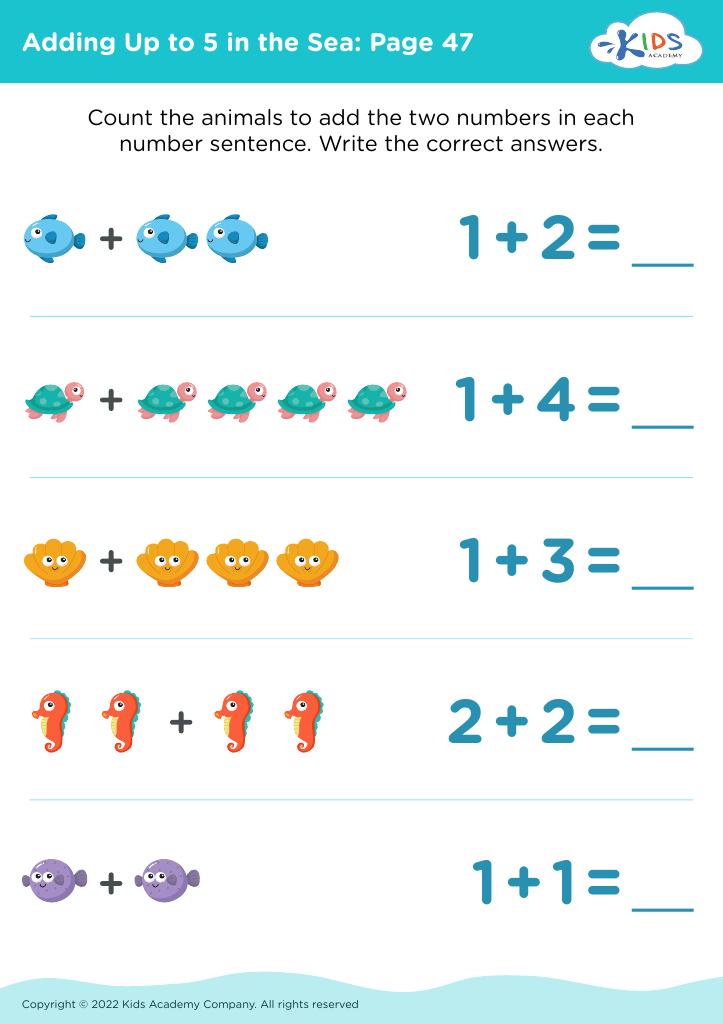
Adding Up to 5 in the Sea: Page 47
Worksheet
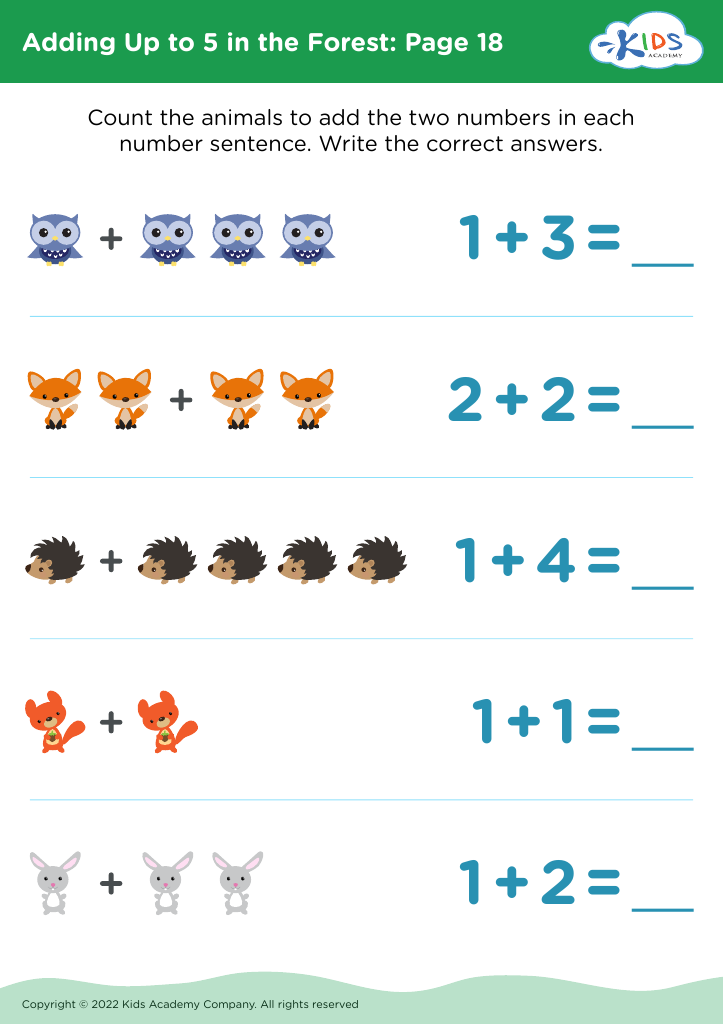
Adding Up to 5 in the Forest: Page 18
Worksheet
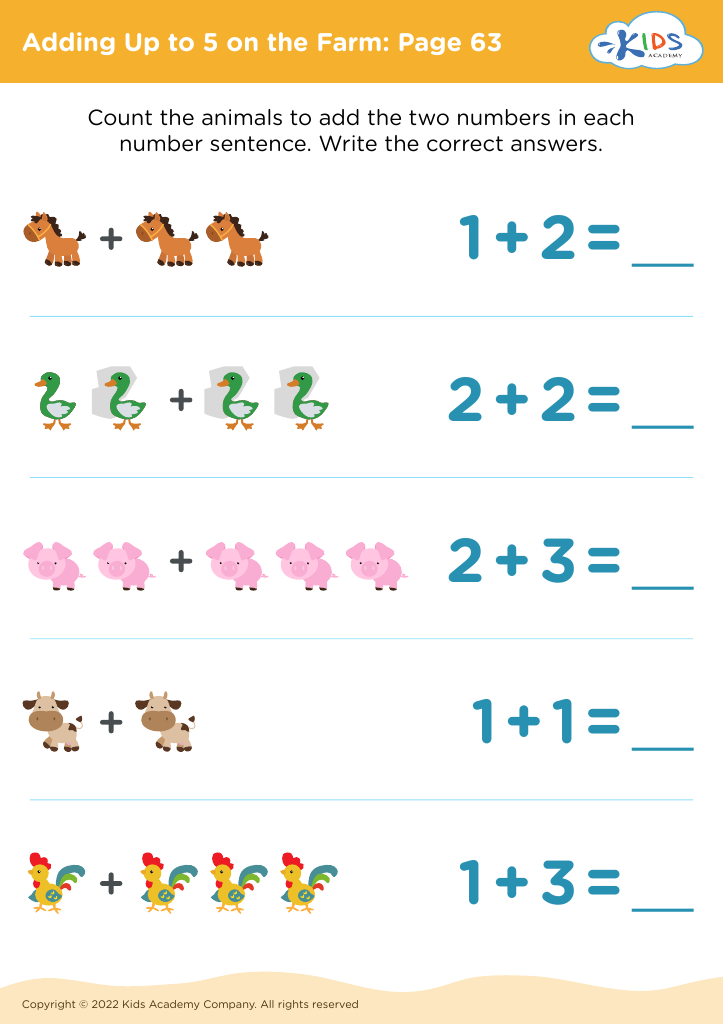
Adding Up to 5 on the Farm: Page 63
Worksheet
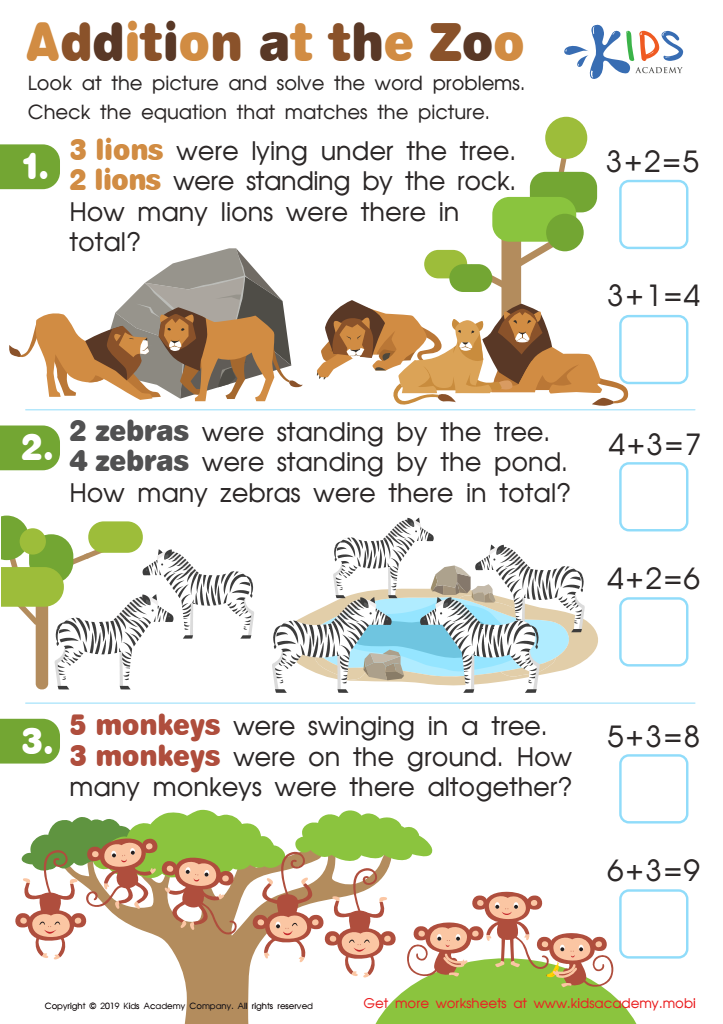
Addition at the Zoo Worksheet

Addition at the Zoo Worksheet

Visit the zoo with your kids and point out all the different animals. Ask them to name their favorites and identify animals on a worksheet. Challenge them to solve word problems related to the pictures. Ask them for the equation that fits the picture and check the answer.
Addition at the Zoo Worksheet
Worksheet
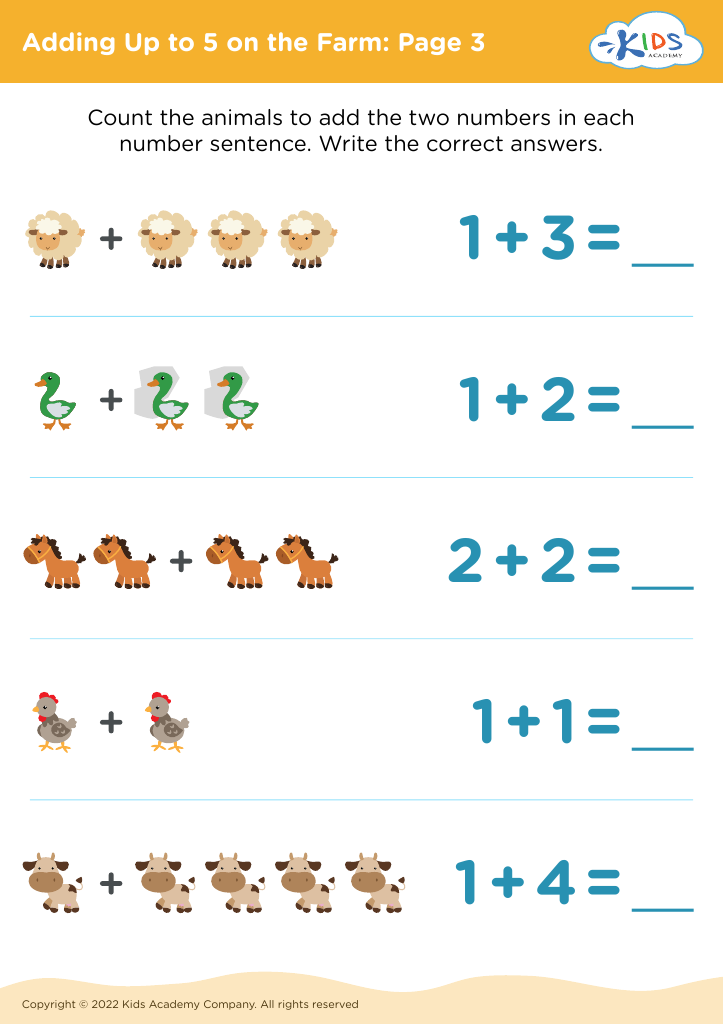
Adding Up to 5 on the Farm: Page 3
Worksheet
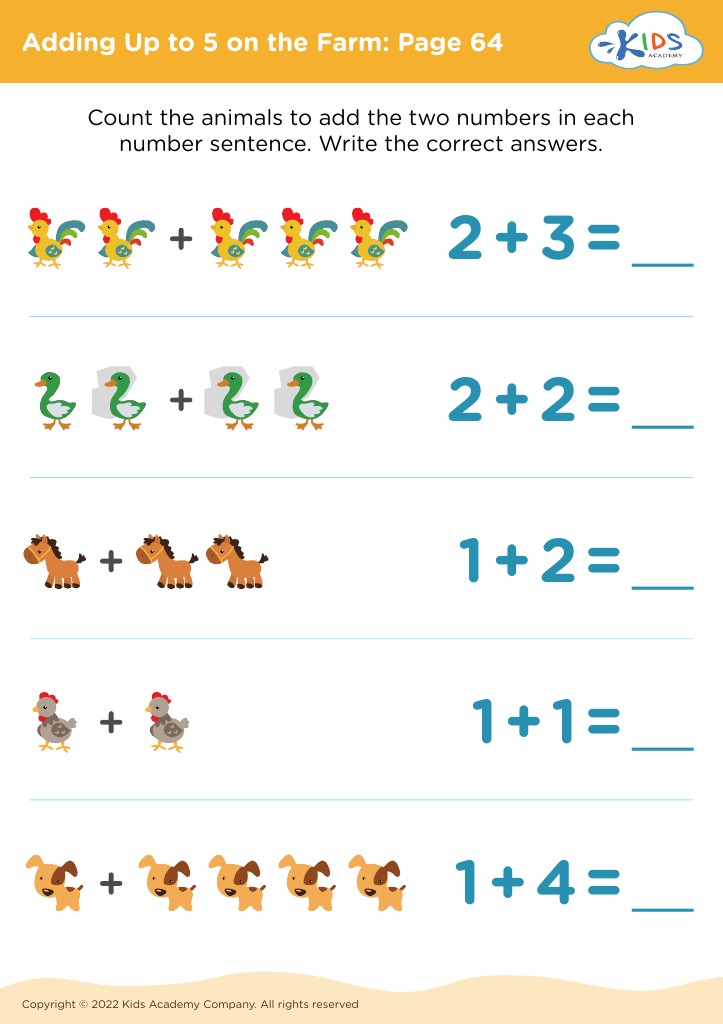
Adding Up to 5 on the Farm: Page 64
Worksheet
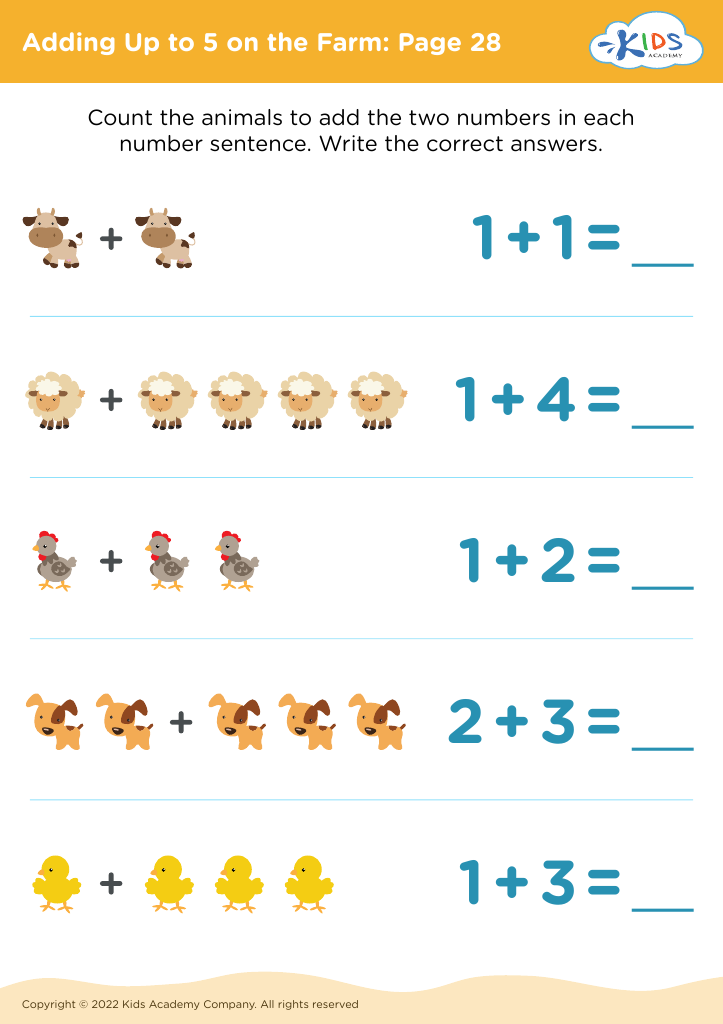
Adding Up to 5 on the Farm: Page 28
Worksheet
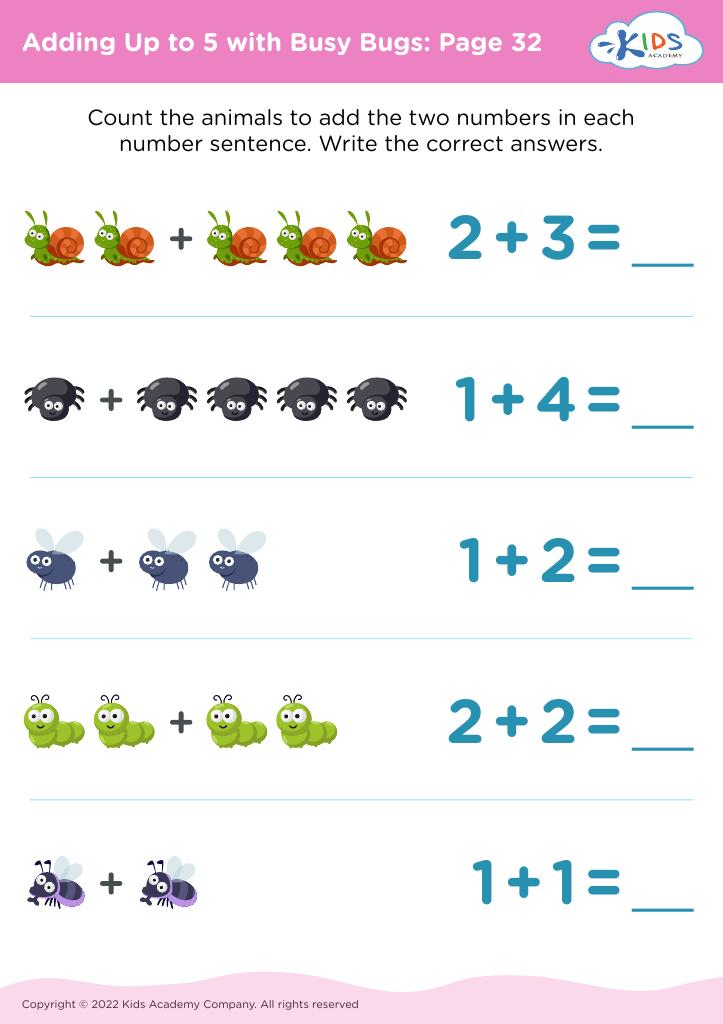
Adding Up to 5 with Busy Bugs: Page 32
Worksheet
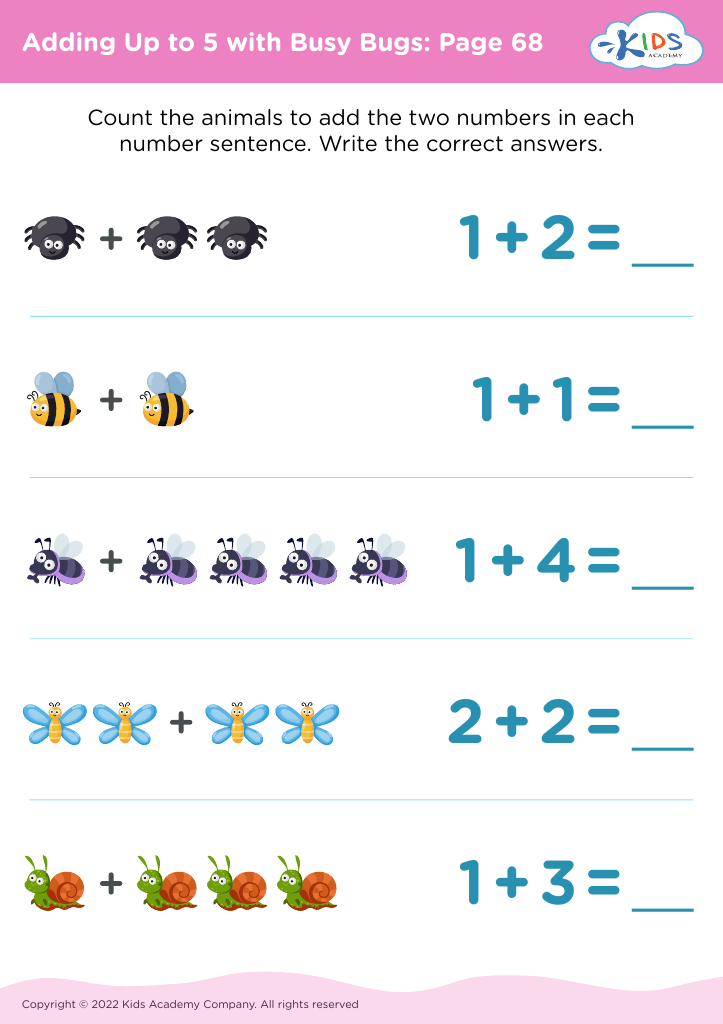
Adding Up to 5 with Busy Bugs: Page 68
Worksheet
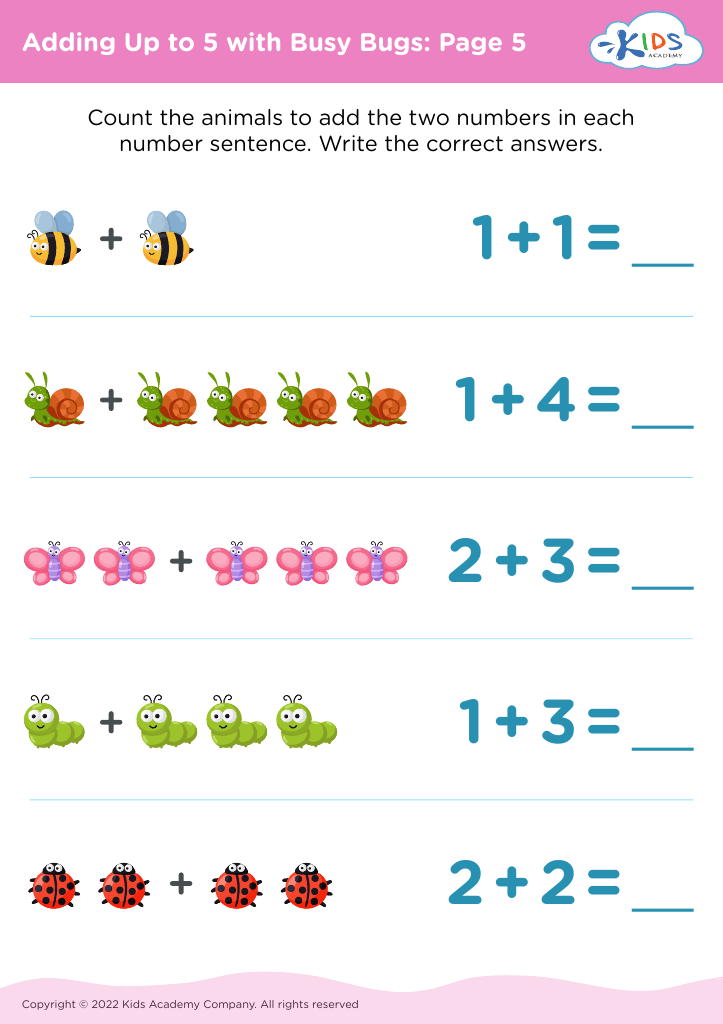
Adding Up to 5 with Busy Bugs: Page 5
Worksheet
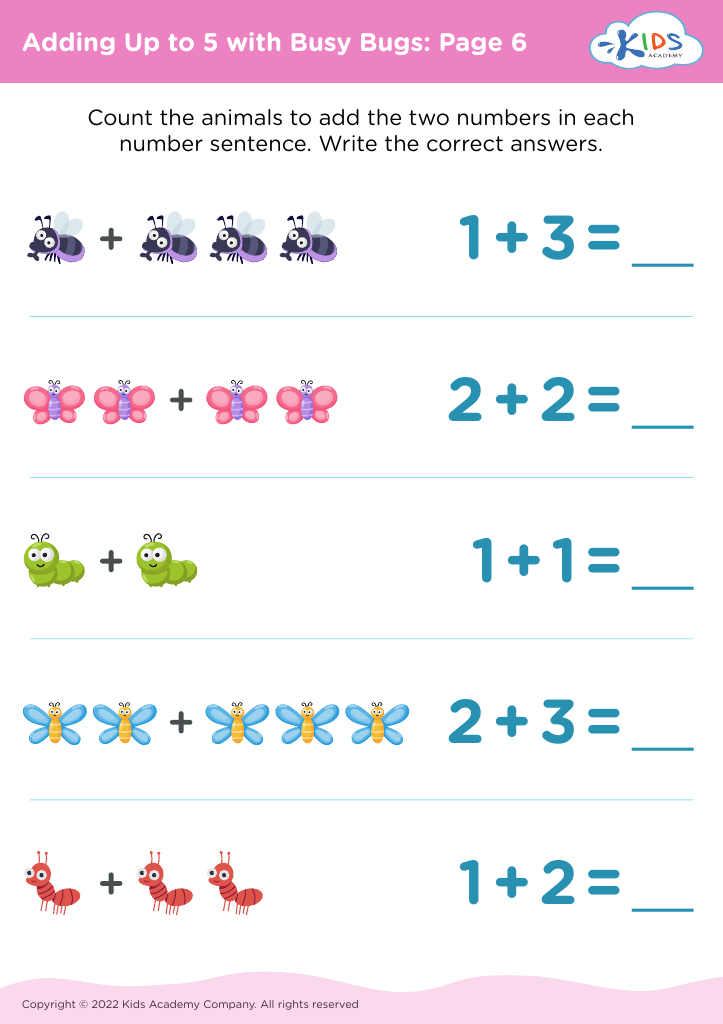
Adding Up to 5 with Busy Bugs: Page 6
Worksheet
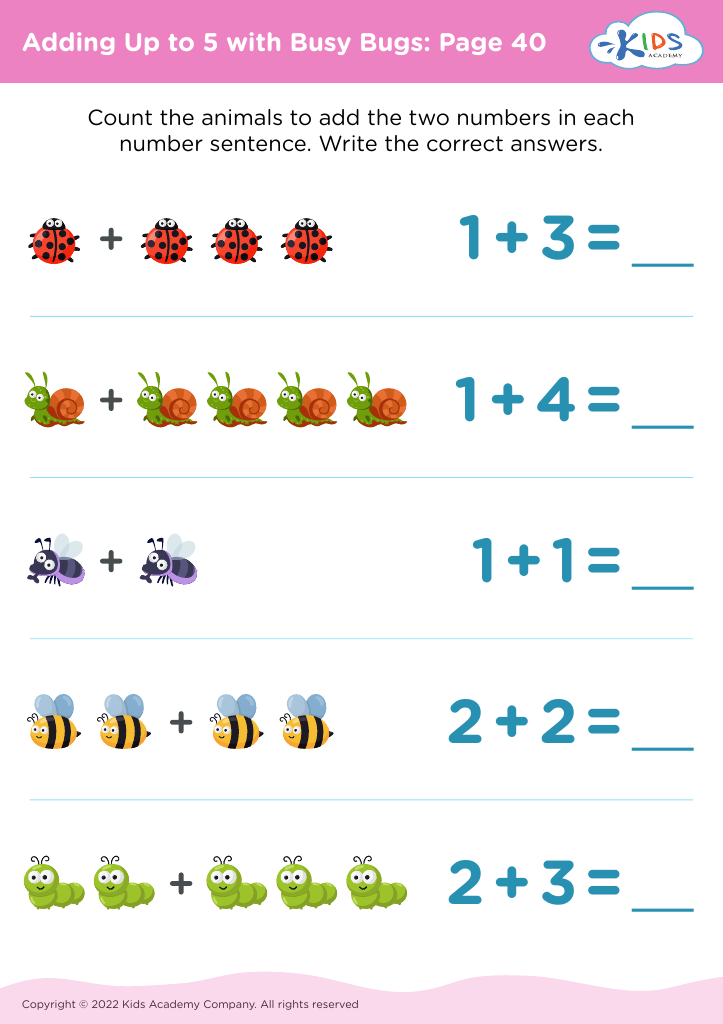
Adding Up to 5 with Busy Bugs: Page 40
Worksheet
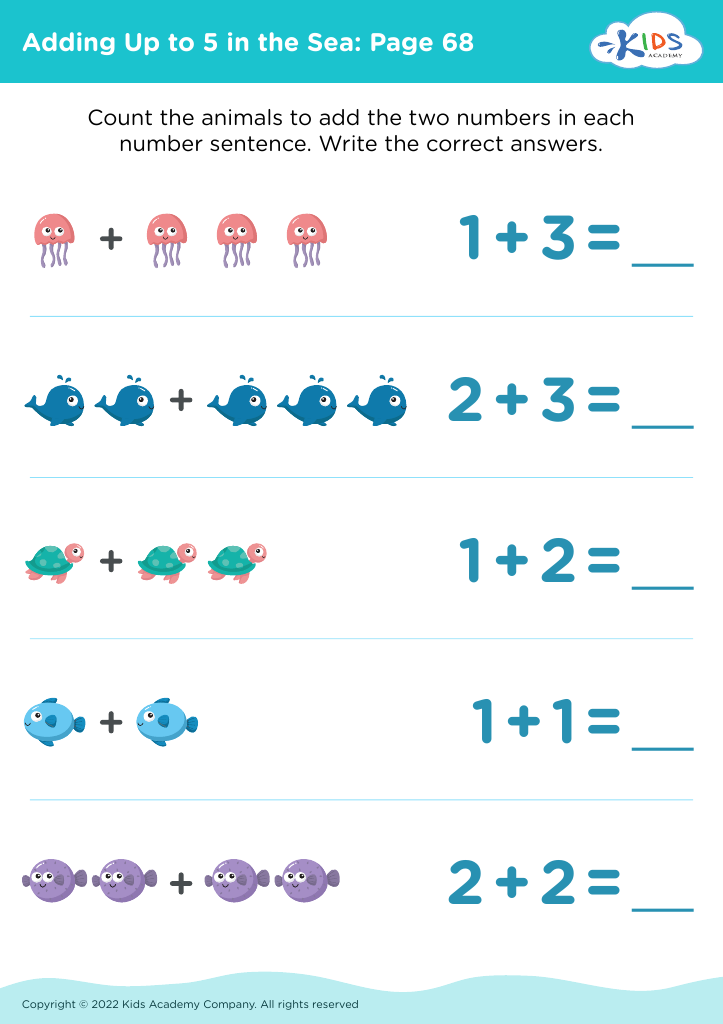
Adding Up to 5 in the Sea: Page 68
Worksheet
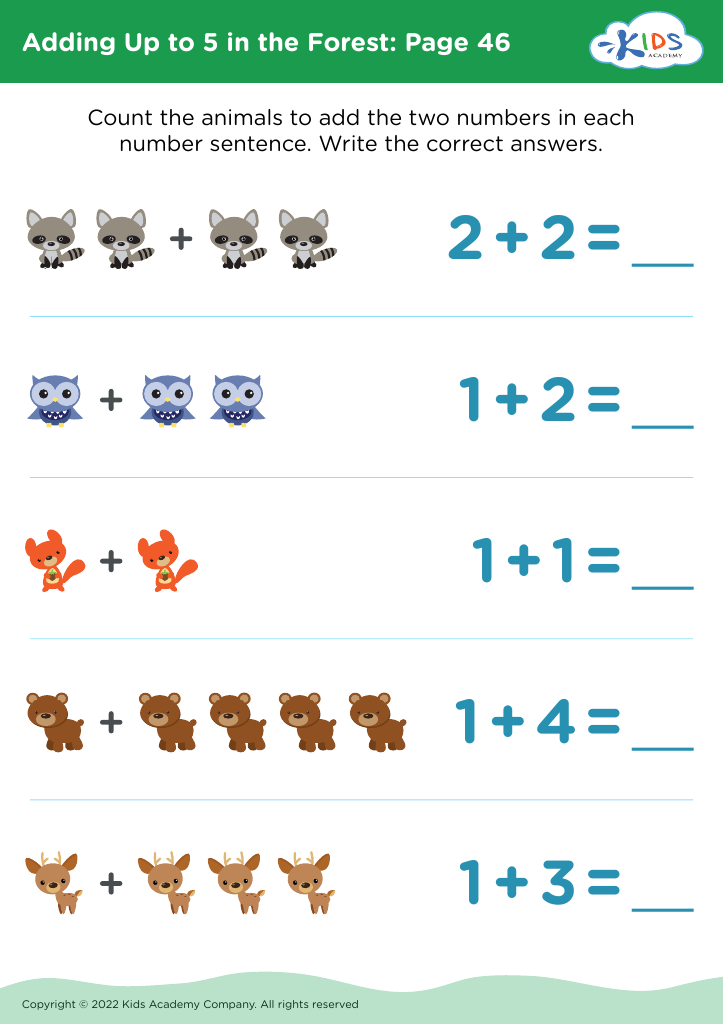
Adding Up to 5 in the Forest: Page 46
Worksheet
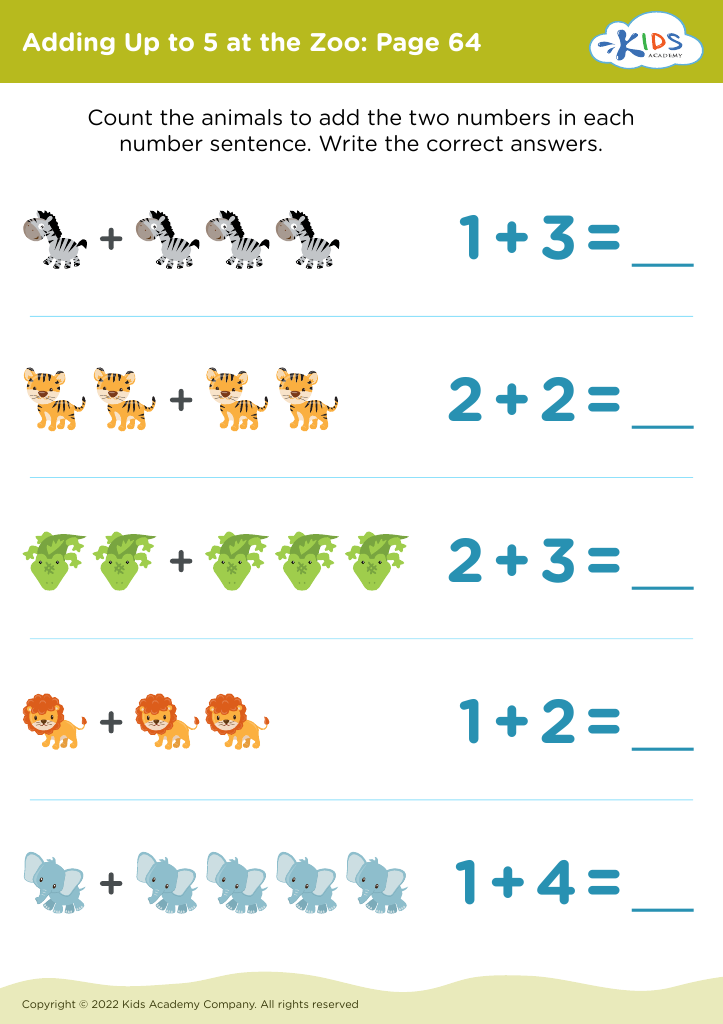
Adding Up to 5 at the Zoo: Page 64
Worksheet
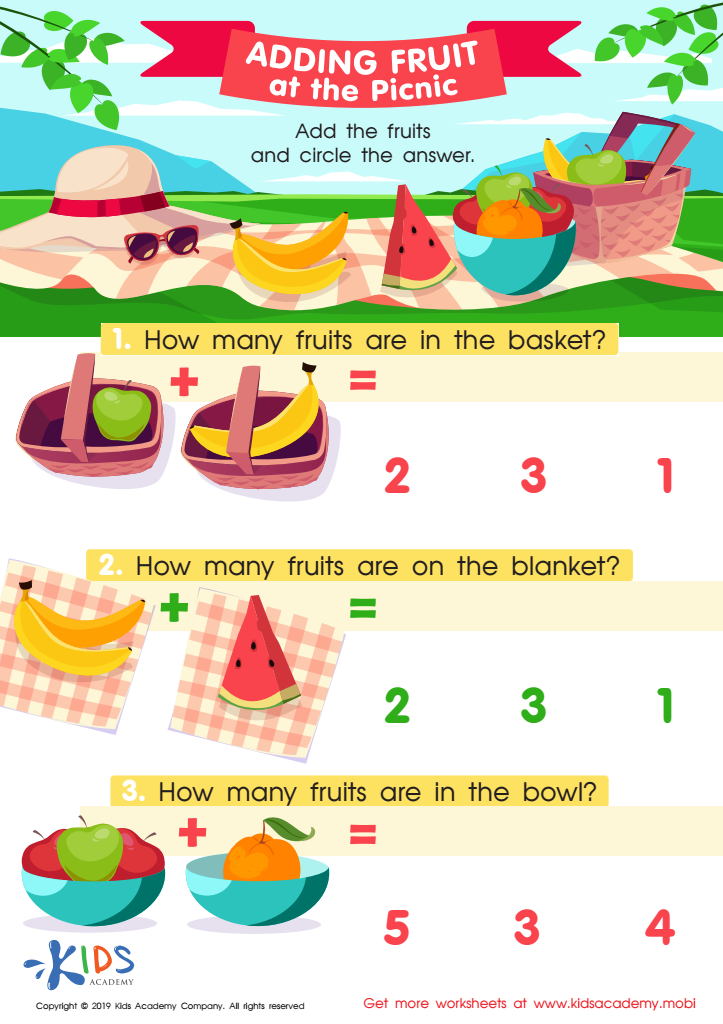
Adding Fruit at the Picnic Worksheet

Adding Fruit at the Picnic Worksheet

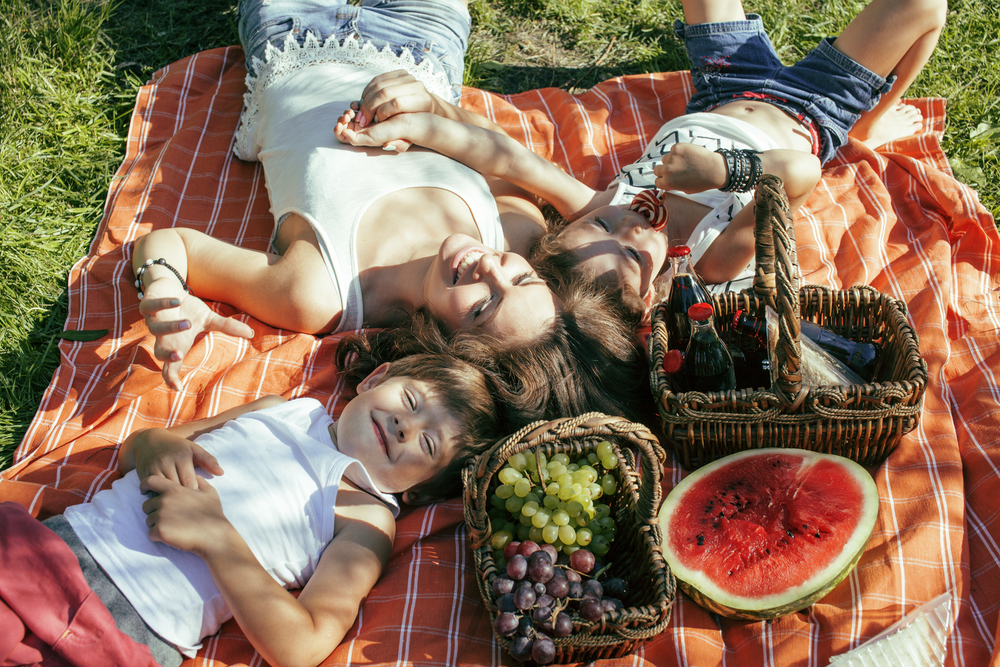
Picnics are a great way for the family to enjoy a fun day in the sun! Get your kids involved by having them help load the picnic basket and do this worksheet to practice their math skills while they get ready. Identify the fruits in the picture, add them up, and circle the correct answer.
Adding Fruit at the Picnic Worksheet

Worksheet
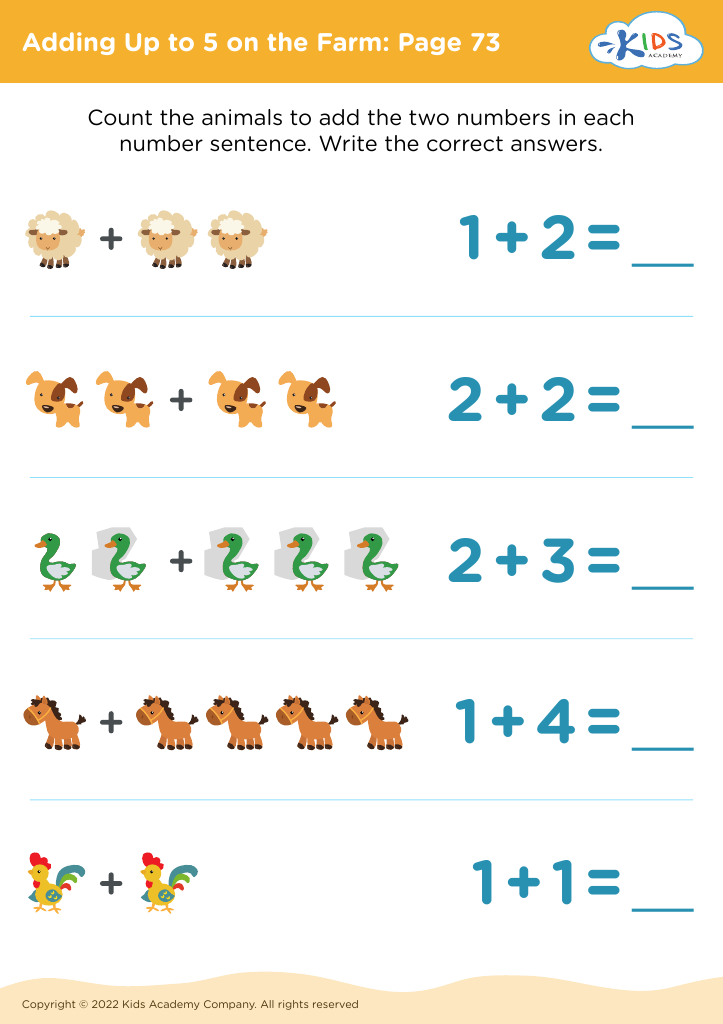
Adding Up to 5 on the Farm: Page 73
Worksheet


Visual learning is a crucial aspect of education for children aged 5-6, as it harnesses their natural inclination to process information visually. At this age, children's brains are rapidly developing, and they are highly receptive to visual stimuli, making learning through pictures, diagrams, and videos particularly effective.

Engaging with visual content can enhance comprehension and memory retention. For example, using colorful illustrations in storybooks helps children envision narratives, thereby improving their understanding and enjoyment of reading. Similarly, visual aids in math, like charts or block manipulatives, can simplify complex concepts, fostering a stronger grasp of fundamental skills.

Moreover, visual learning supports diverse learning styles. Many children may struggle with traditional text-based instruction, but visuals can bridge those gaps, encouraging participation and motivation. This approach fosters creativity and critical thinking as children analyze images and relate them to real-world contexts.

By investing in visual learning strategies—through interactive lessons, storytelling, and art—parents and teachers can nurture a love for learning, building a solid foundation for future academic success. In a visually-oriented world, teaching children to interpret and create visuals equips them with essential skills for effective communication and problem-solving as they grow.