Check out this FREE "Visual perception" Trial Lesson for age 5-6!

Match Numerals to Quantities

Favorites
With answer key
Interactive
  • 5-6
  • Visual perception
Rhyming Words PDF Worksheets, Bee

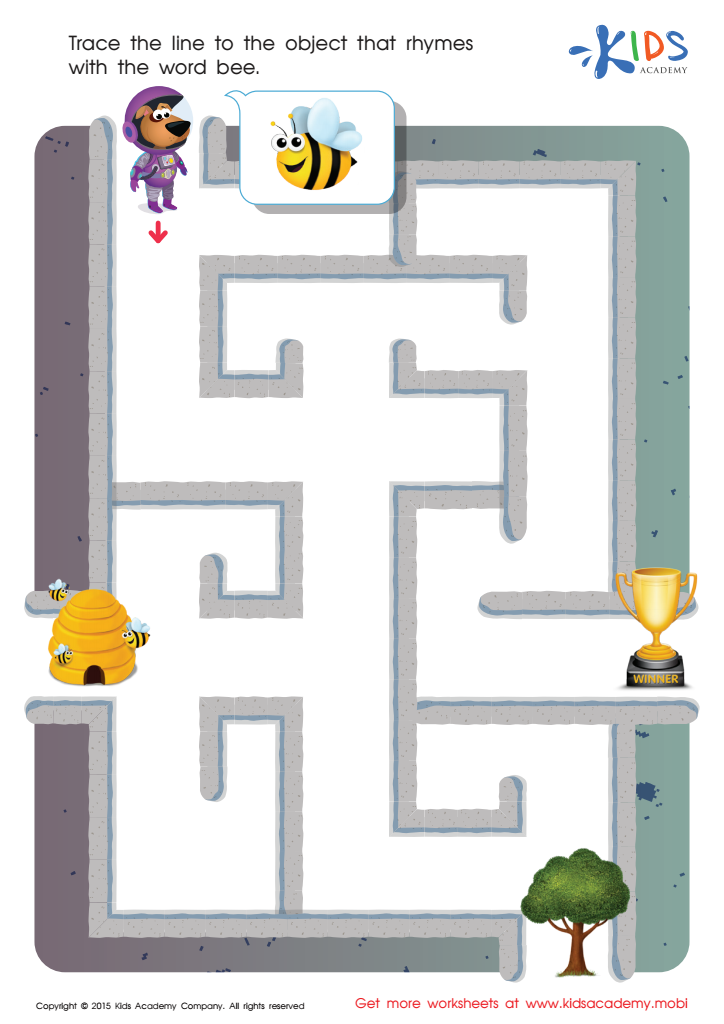
Bee Rhyming Words Worksheet

Download our new vocab builder worksheet and help our pup find rhymes. See how easy it is to trace the root between words! Make learning fun with our collection of English materials and worksheets. Get them now on our web site.
Bee Rhyming Words Worksheet
Worksheet
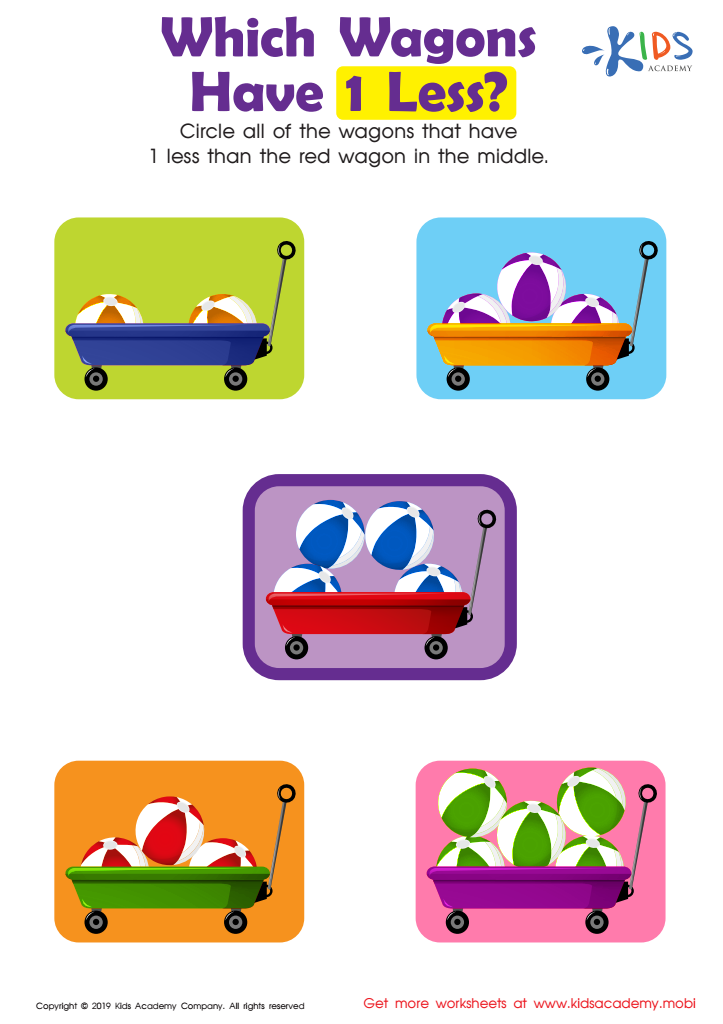
Which Wagons Have 1 Less? Worksheet

Which Wagons Have 1 Less? Worksheet

Test your kid's counting skills with a simple exercise. Ask them to count the balls in the five wagons shown and to circle the wagons with one less than the red wagon in the middle. This will give their brains a simple task that tests their knowledge of numbers.
Which Wagons Have 1 Less? Worksheet
Worksheet
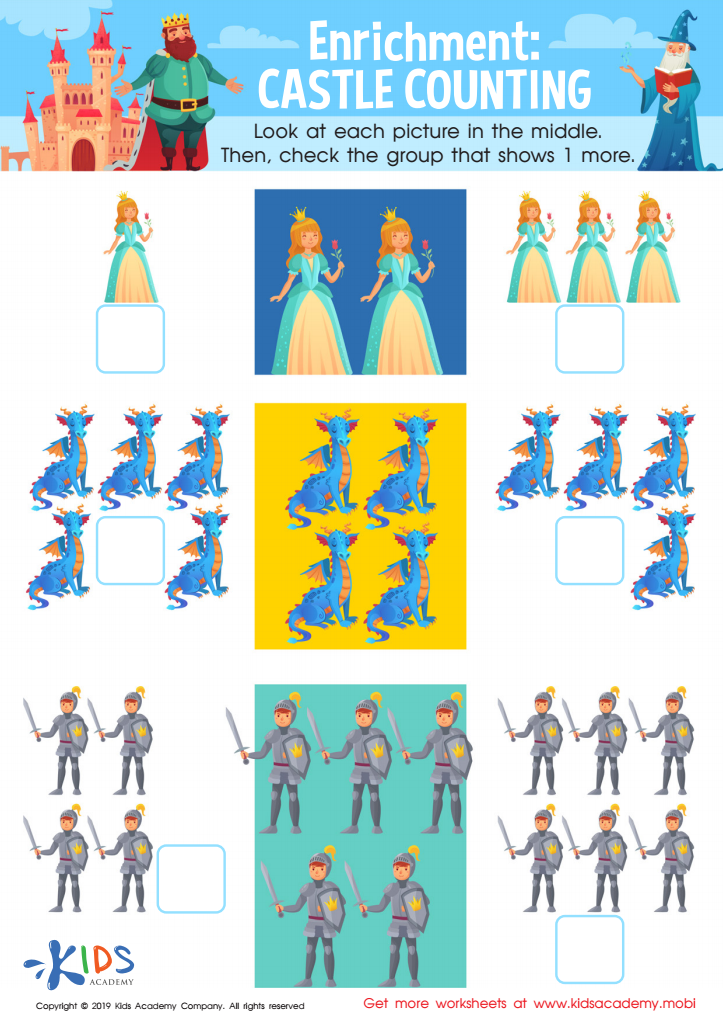
Enrichment: Castle Counting Worksheet

Enrichment: Castle Counting Worksheet

Help your kids learn to count. Start with easy counting of numbers as high as possible. Use the pictures in this printout. Point to the middle one, help them identify it and then count one more than it. Do this to help them get ready for more difficult math concepts like addition, subtraction and multiplication.
Enrichment: Castle Counting Worksheet
Worksheet
Math PDF Worksheets - Count and Match Vegetables: 1 – 5

Count and Match Vegetables 1 – 5 Math Worksheet
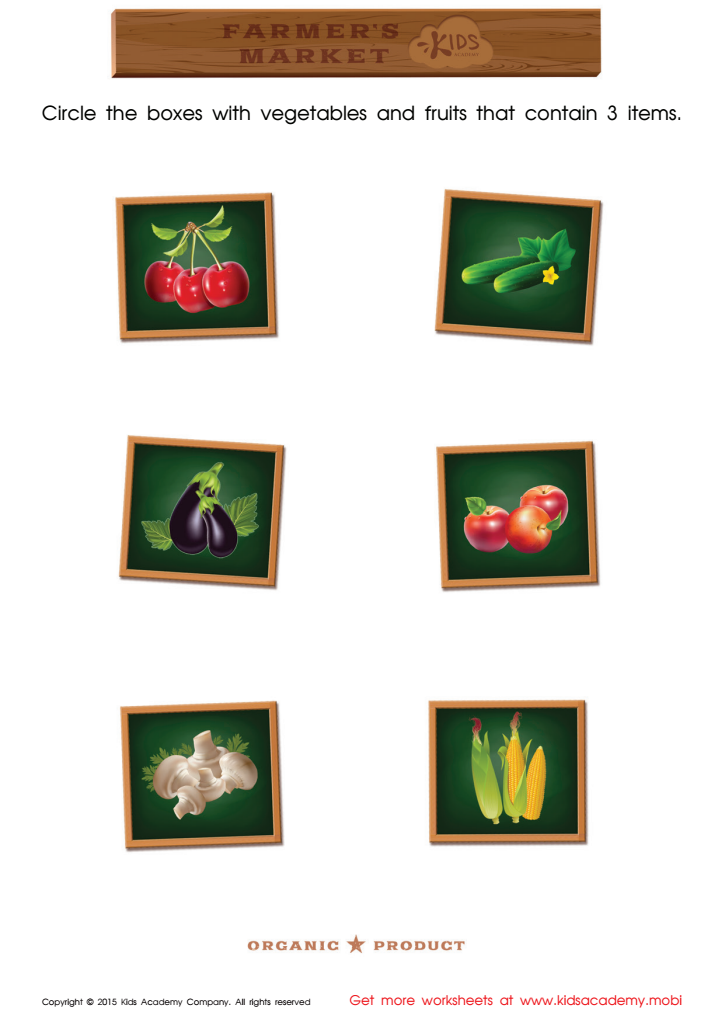
Get your kindergartener to match the same number of vegetables with the boxes using this fantastic math worksheet. Using the Singapore approach, this printable worksheet makes math problems easy and fun for kids. Want more free worksheets? Click here for Kids Academy's selection!
Count and Match Vegetables 1 – 5 Math Worksheet
Worksheet
Size Comparison Worksheet

Classifying by Size Sorting Worksheet
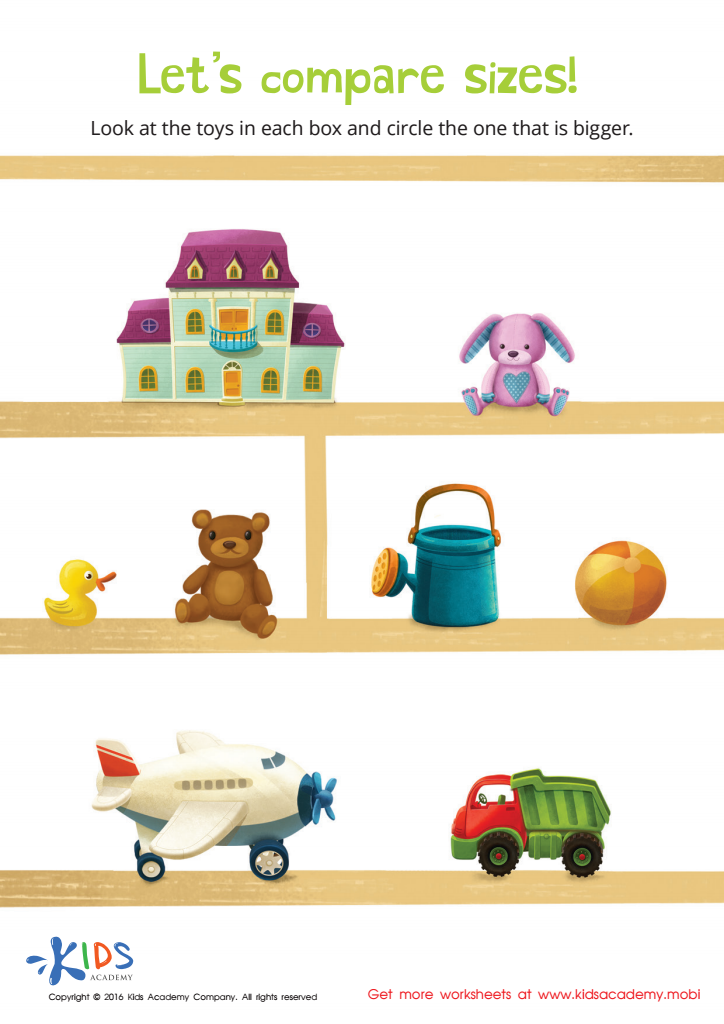
Help your preschooler recognize differences in size using this fun worksheet! Your child will engage in important spatial recognition and problem-solving skills while talking with you about objects that can be small or large. Enjoy the vibrant pictures together!
Classifying by Size Sorting Worksheet
Worksheet
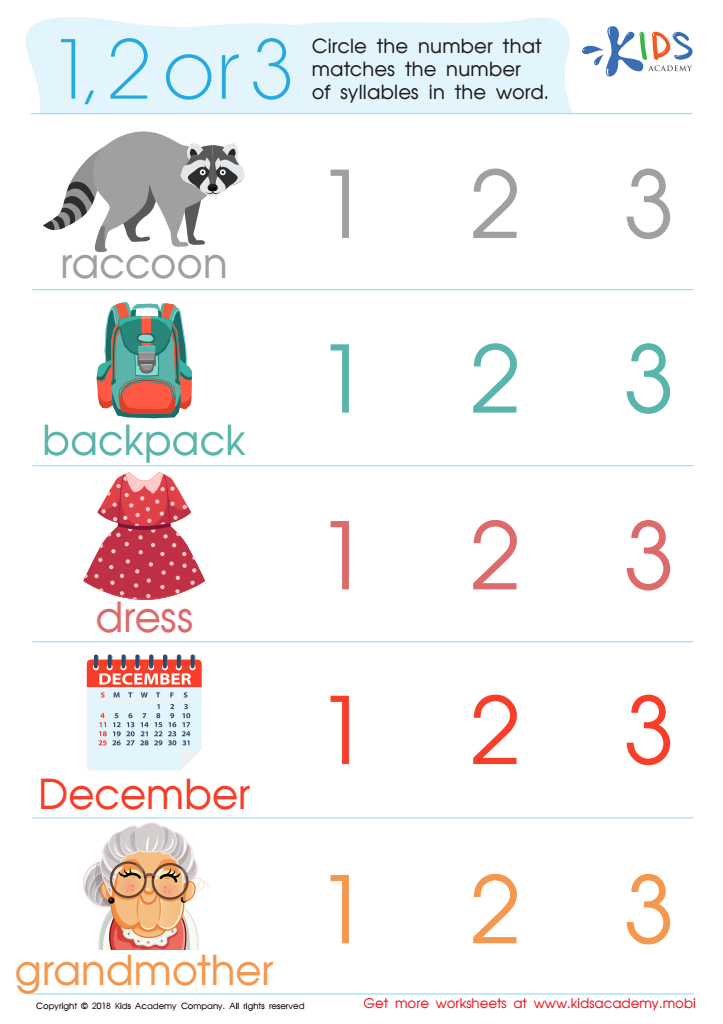
1, 2 or 3? Worksheet


1, 2 or 3? Worksheet

Do your kids know about syllables? Test their understanding with this worksheet. Read the words aloud and ask them to say them with you. Help them circle the number that matches the number of syllables in each word. Perfect for expanding knowledge or testing how much they've already learned.
1, 2 or 3? Worksheet
Worksheet
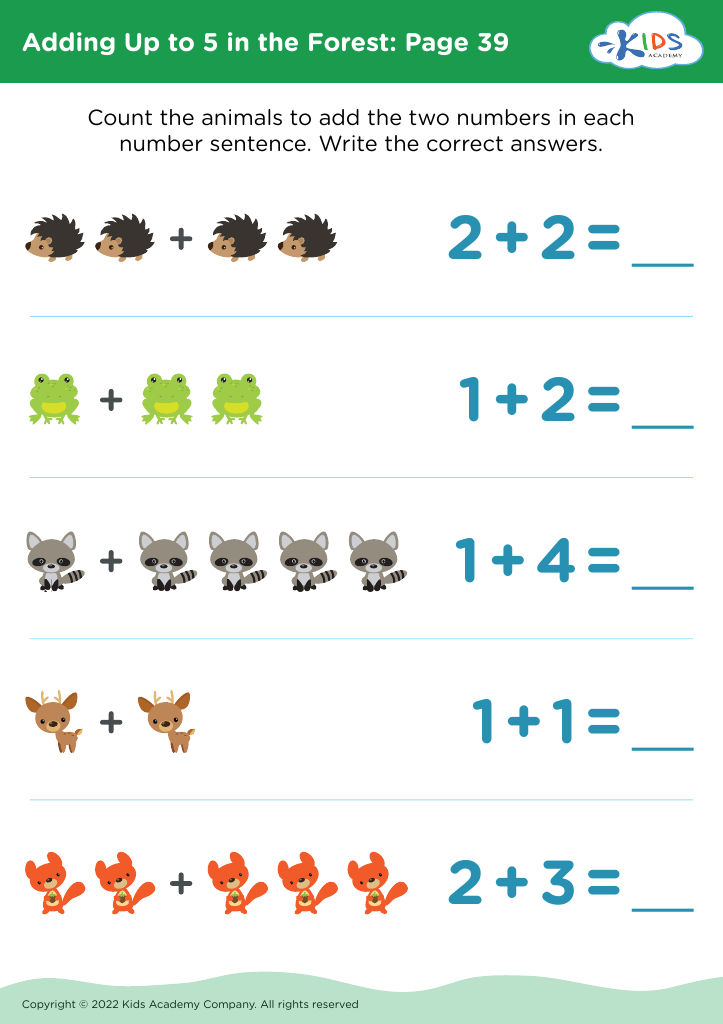
Adding Up to 5 in the Forest: Page 39
Worksheet
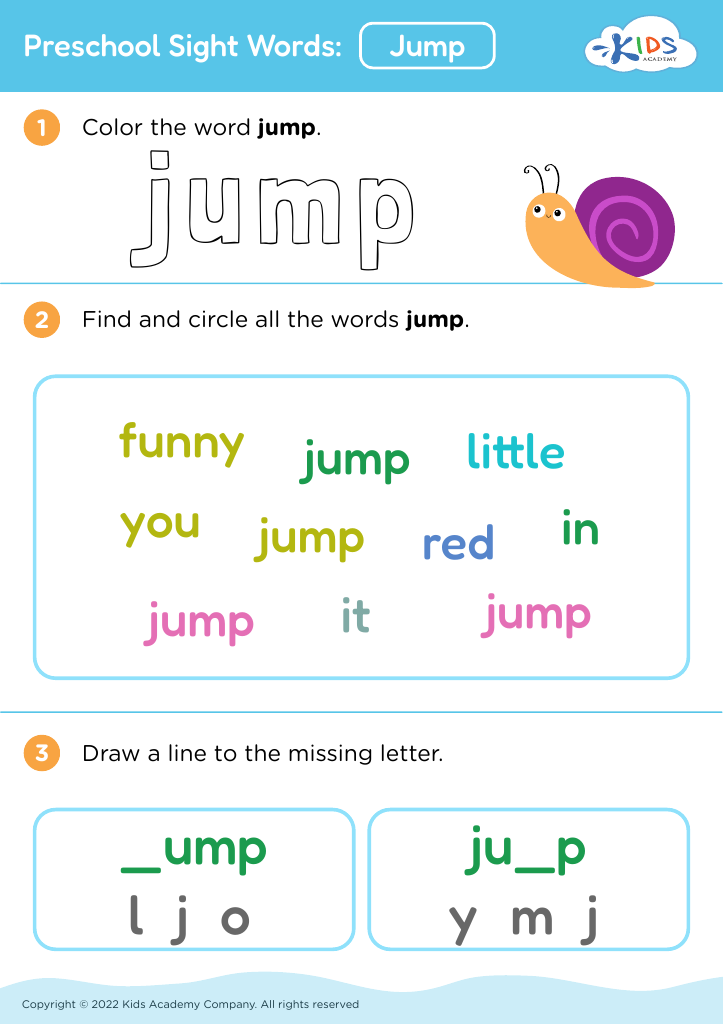
Preschool Sight Words: Jump

Preschool Sight Words: Jump

Preschool Sight Words: Jump
Worksheet


... 2 3

Visual perception is crucial for children ages 5-6 as it's the foundation for essential emergent learning and development. At this age, kids are transitioning from the basic sensory explorations of early childhood into more complex cognitive tasks. Visual perception involves skills such as recognizing shapes, patterns, spatial relationships, and object consistency, which underpin early literacy and numeracy.

For instance, distinguishing between shapes and letters helps children learn to read and write. If a child cannot visually differentiate between a "b" and a "d," they might struggle with reading and writing activities, leading to frustration and a reduced interest in learning. Similarly, recognizing numerical symbols and patterns assists in early math competency.

Moreover, good visual perception skills are necessary for daily life activities. Tasks like dressing, sorting toys, or navigating spaces demand spatial awareness and coordinated eye movements. Poor visual perception can result in clumsiness or difficulty in these activities, affecting a child’s self-esteem and willingness to participate.

Teachers and parents should care about cultivating visual perception because it underpins learning and daily functioning. Early interventions, such as specific games or tailored activities, can improve these skills, promoting better learning outcomes and more positive experiences during these formative years. Proactive support ensures children like and are capable in their learning environments.