Addition Practice Adding Up to 5 Worksheets for Ages 5-6 - Page 2
50 filtered results
-
From - To
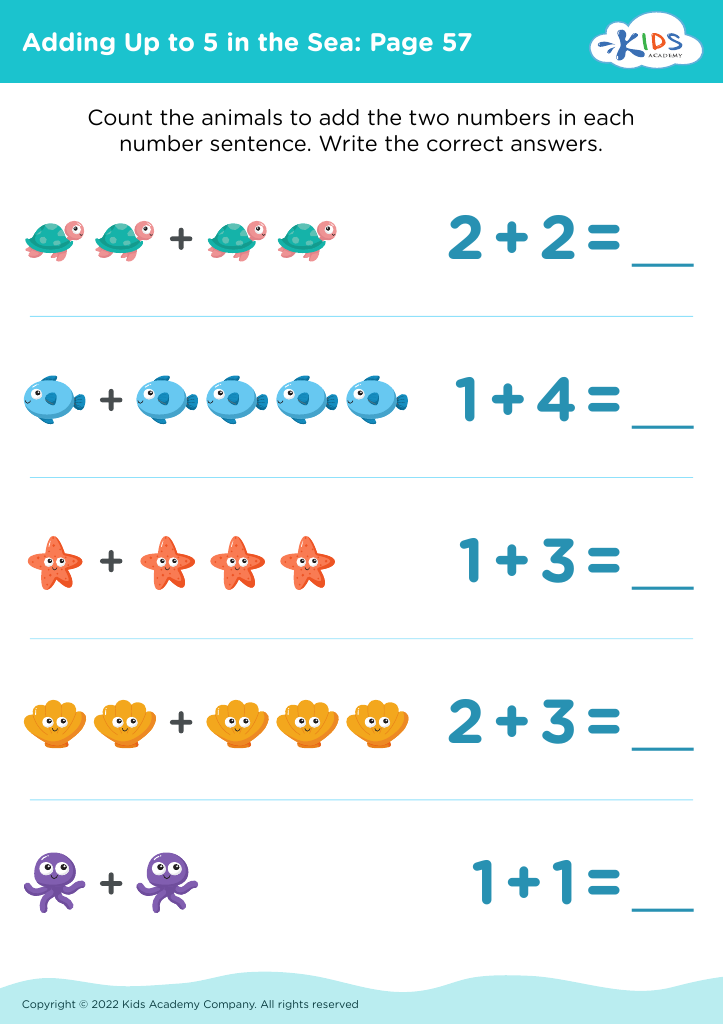
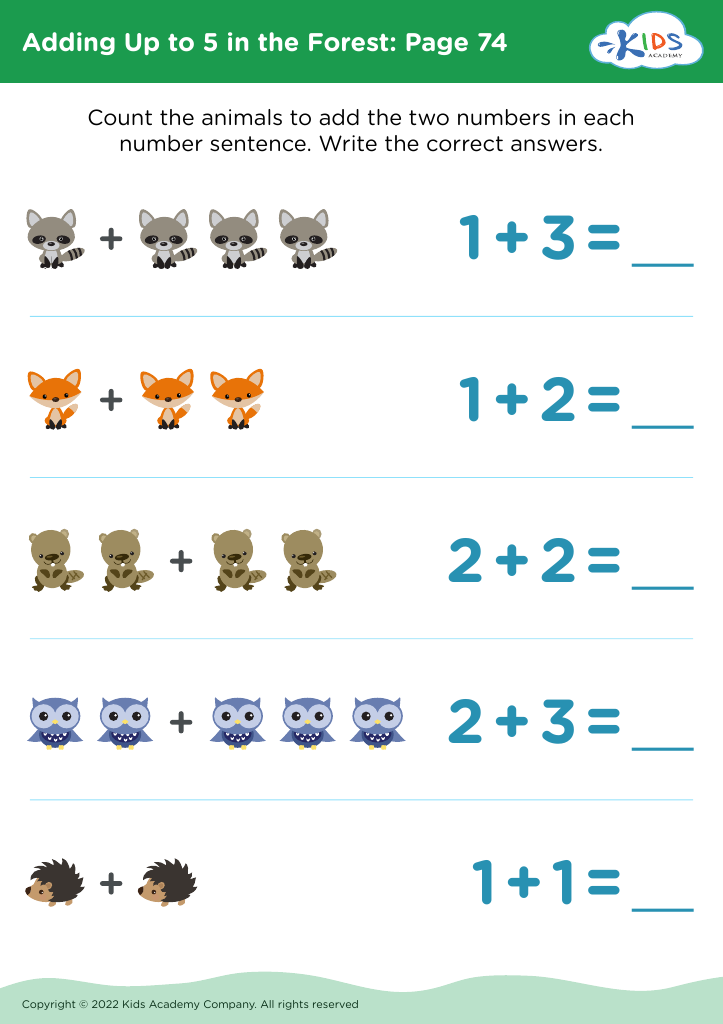
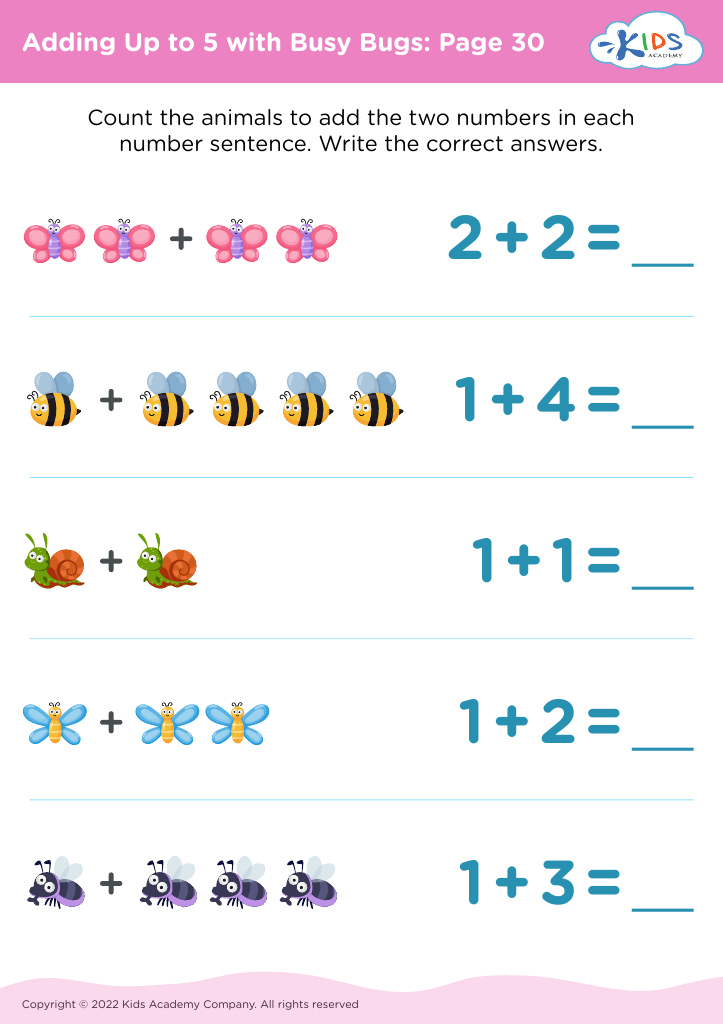
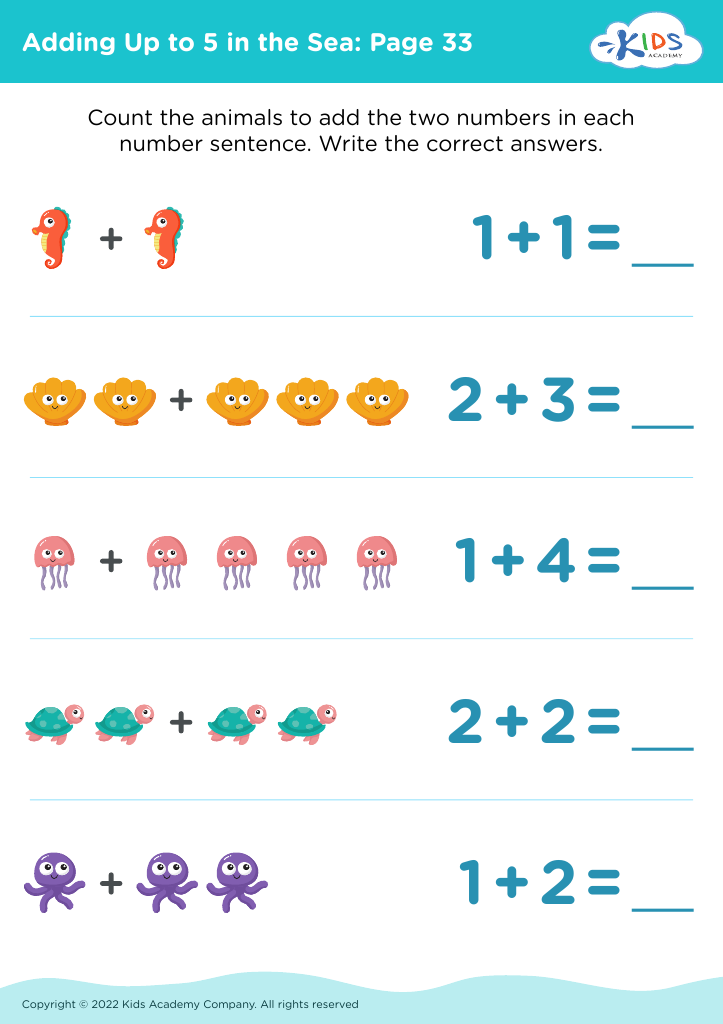
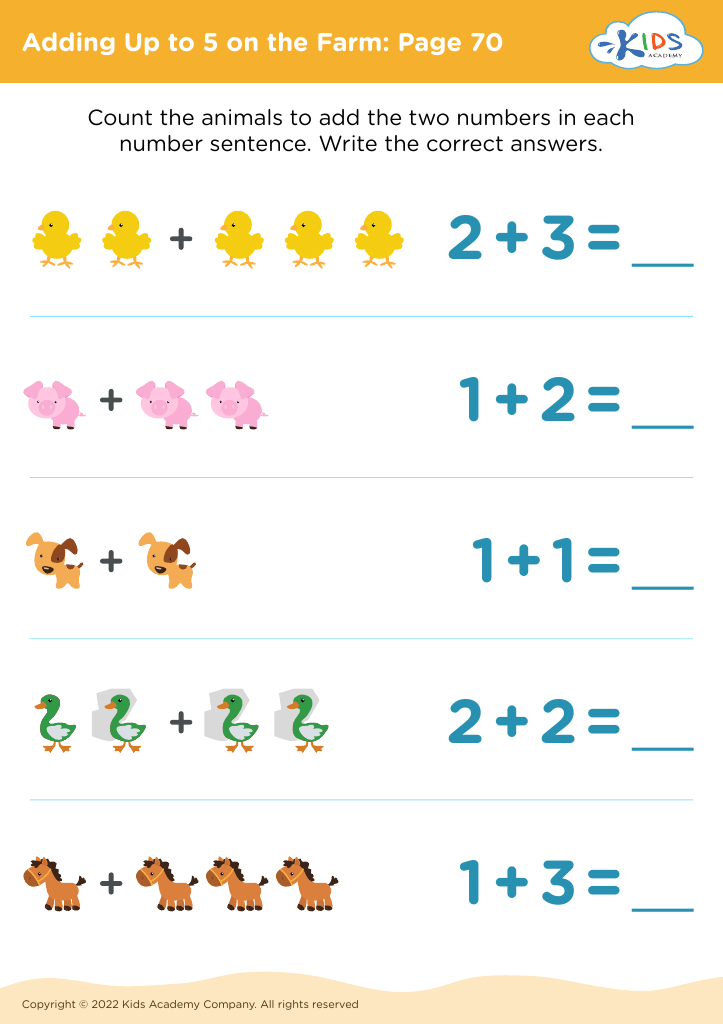
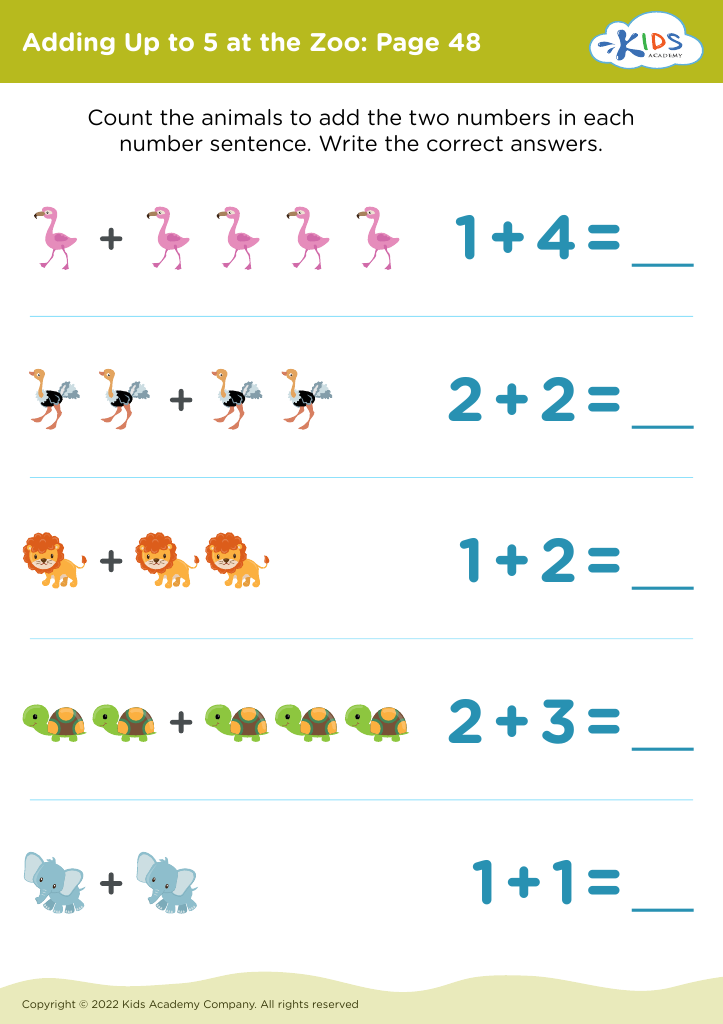
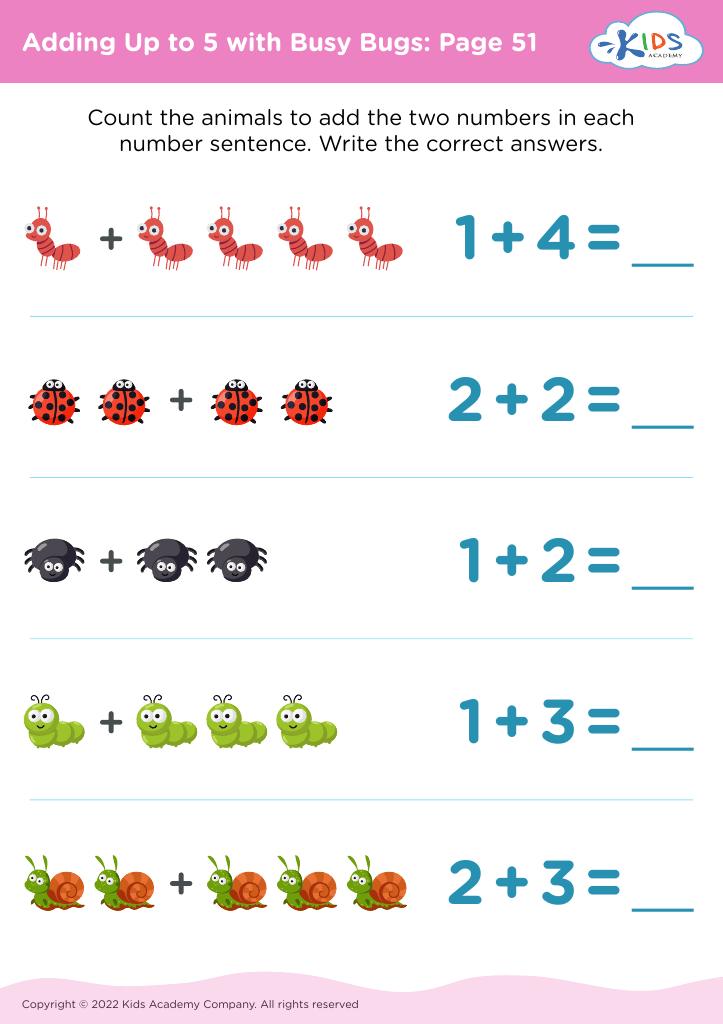
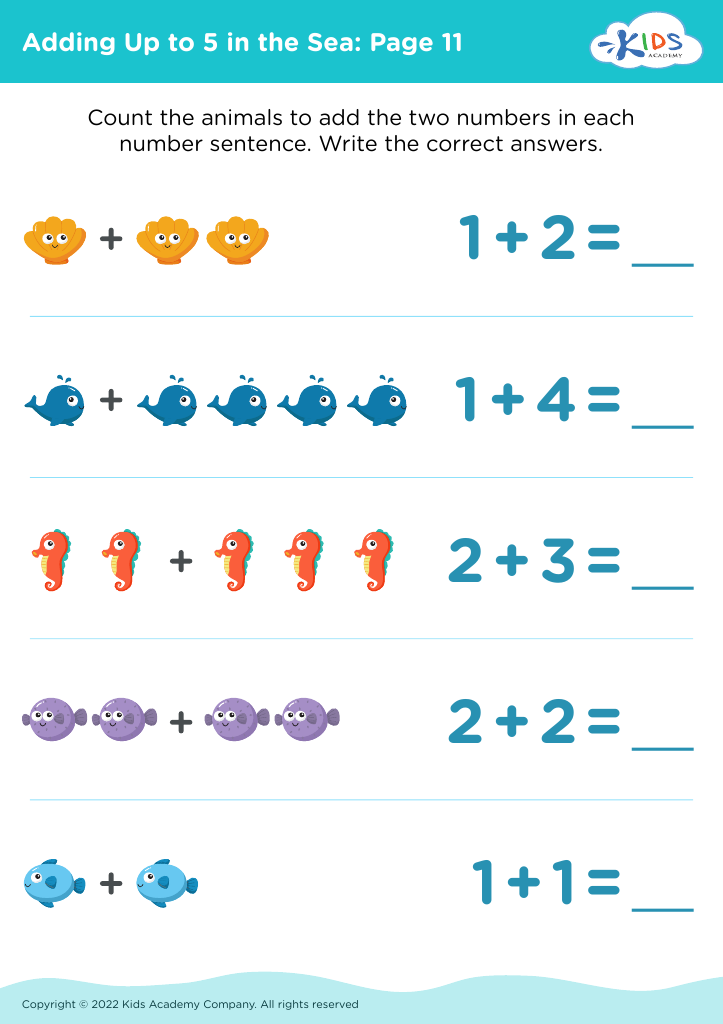
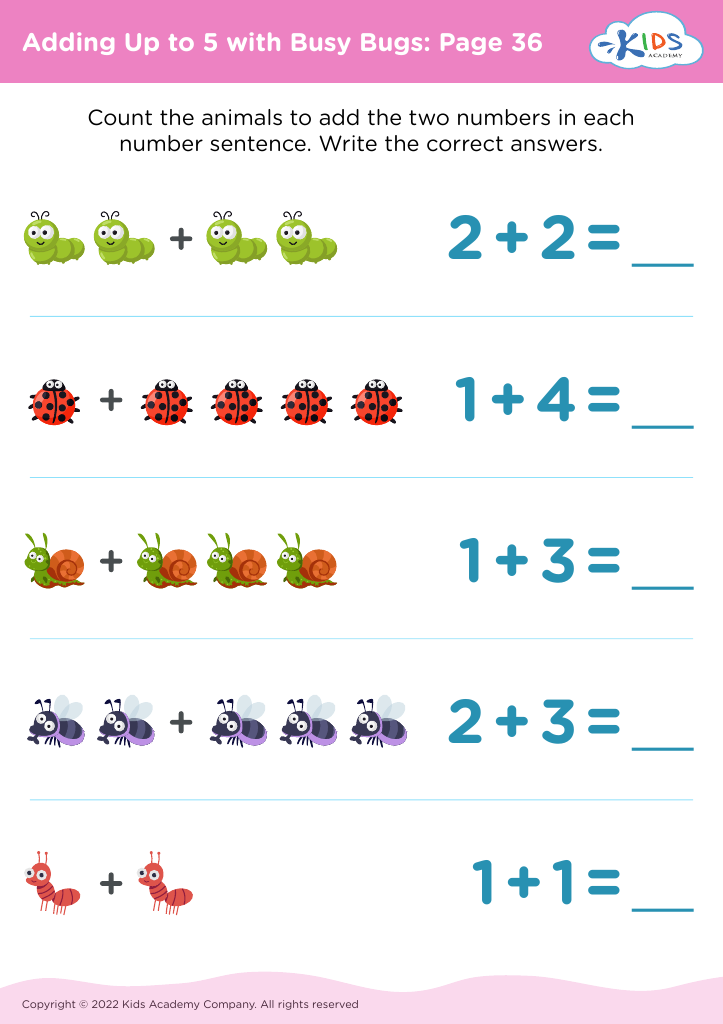
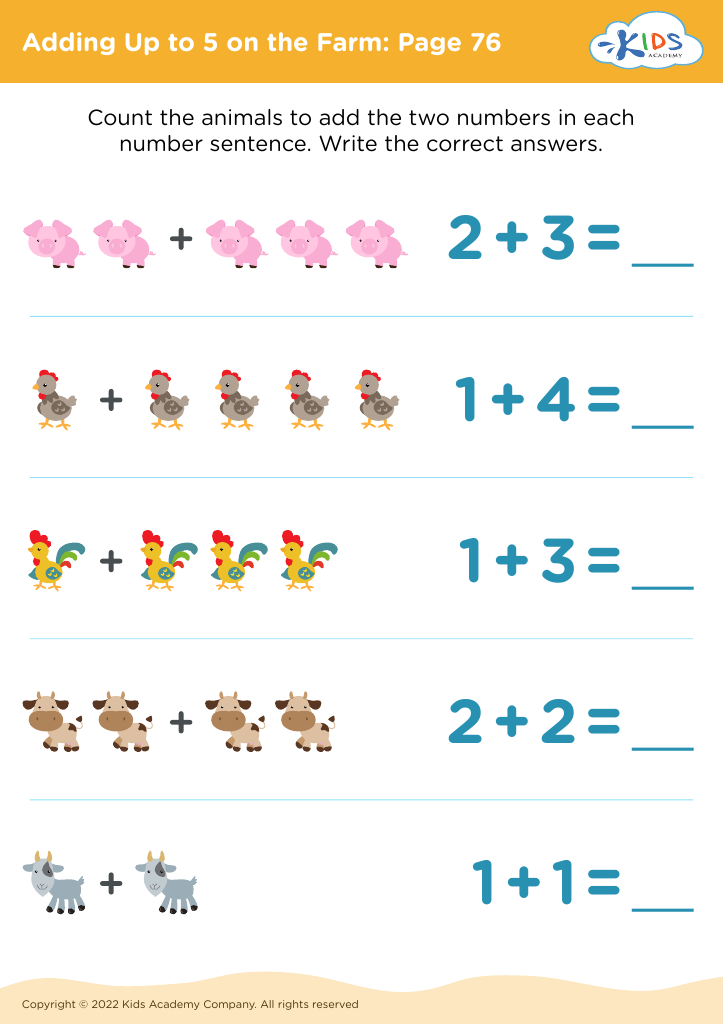
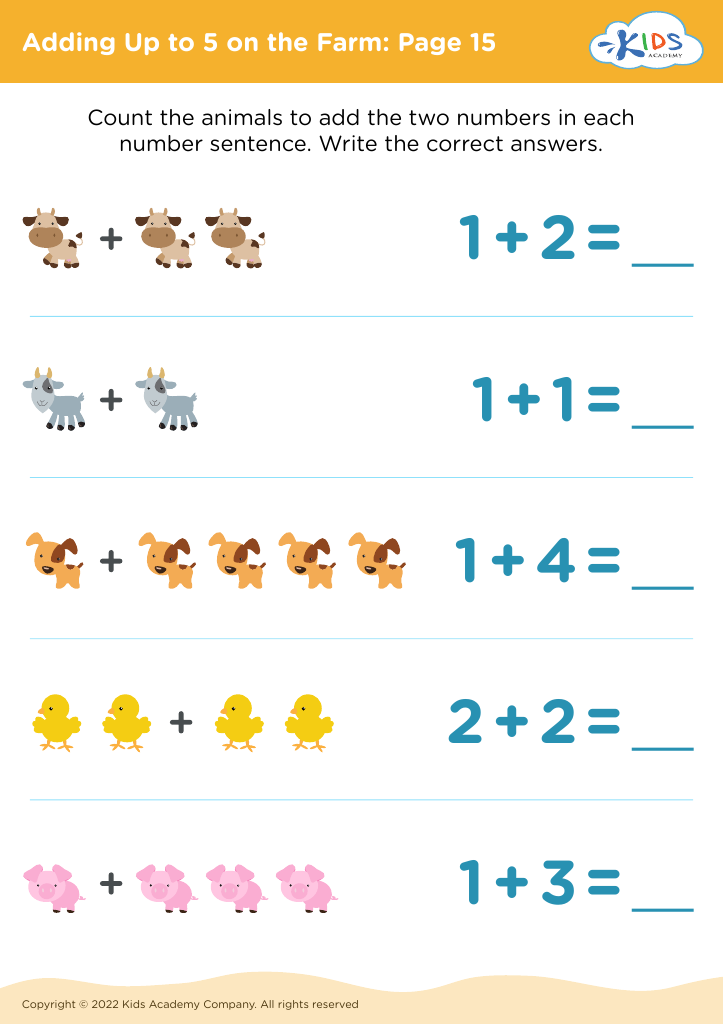
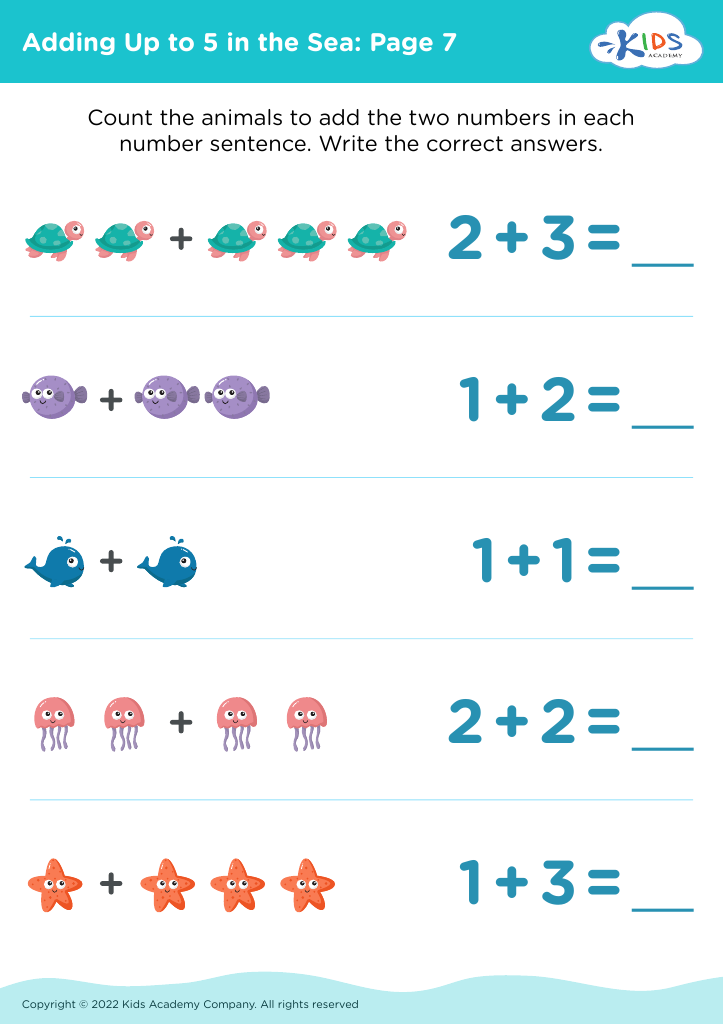
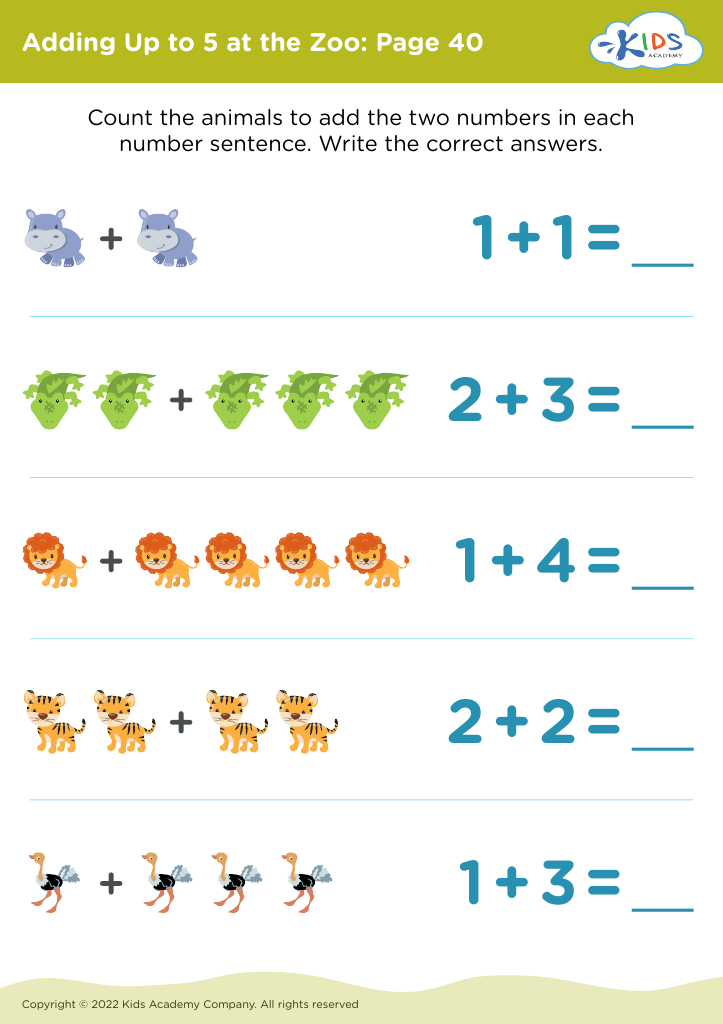
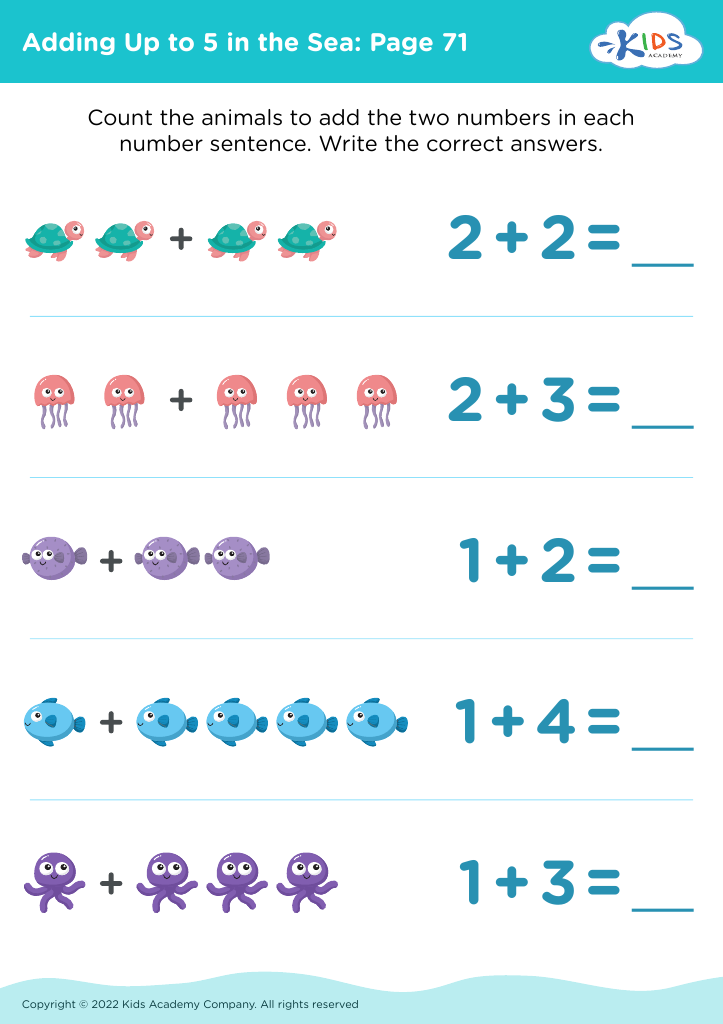
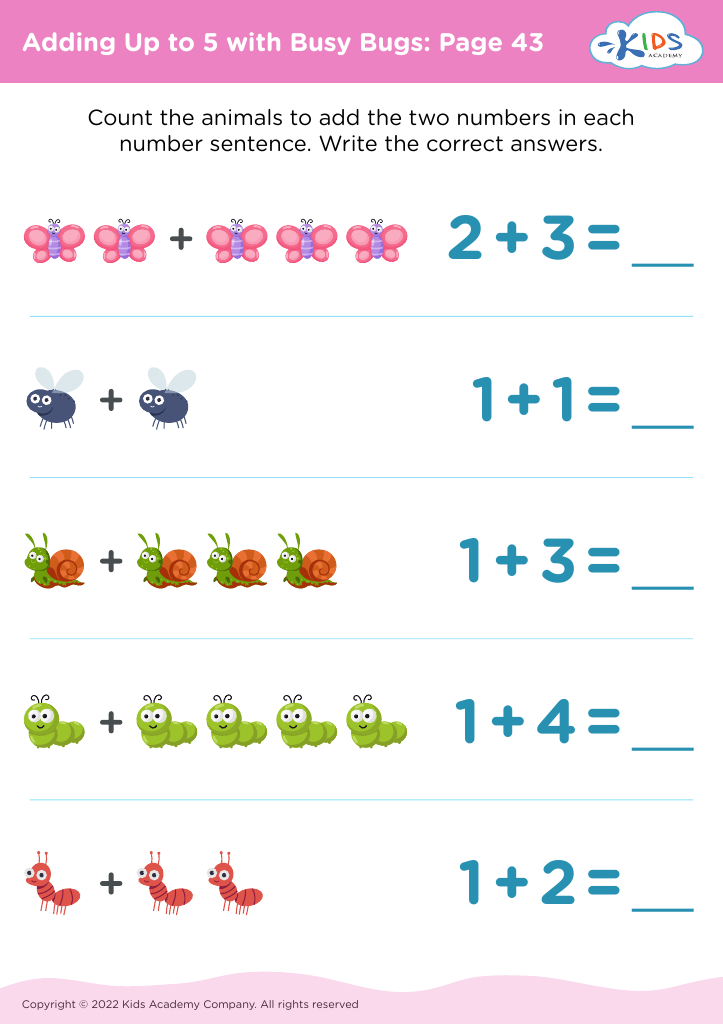
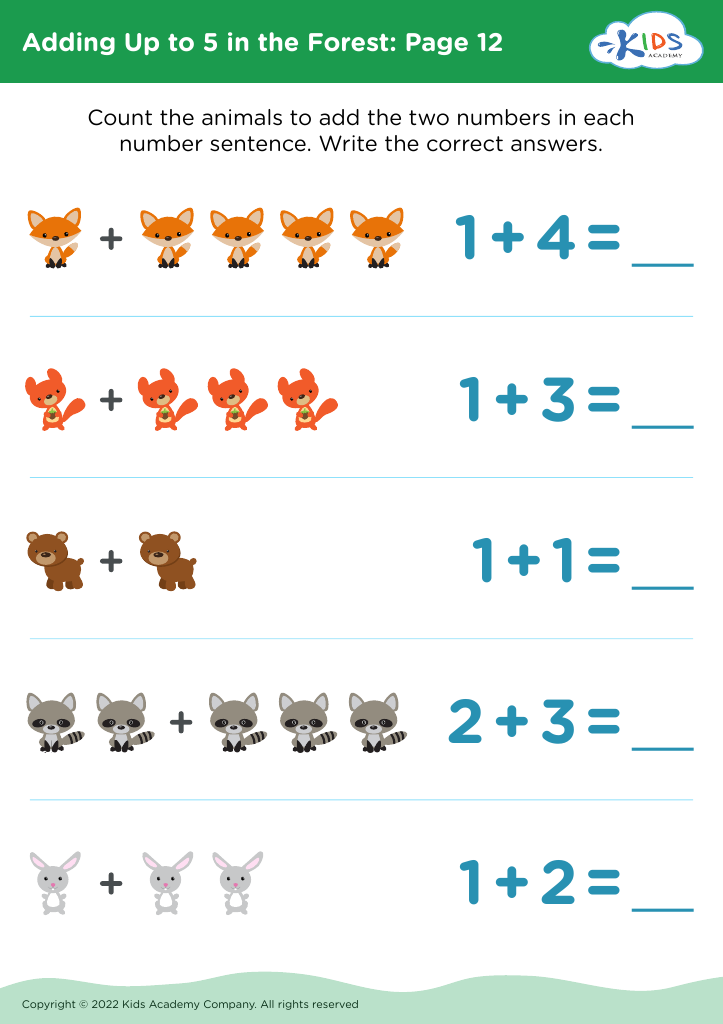
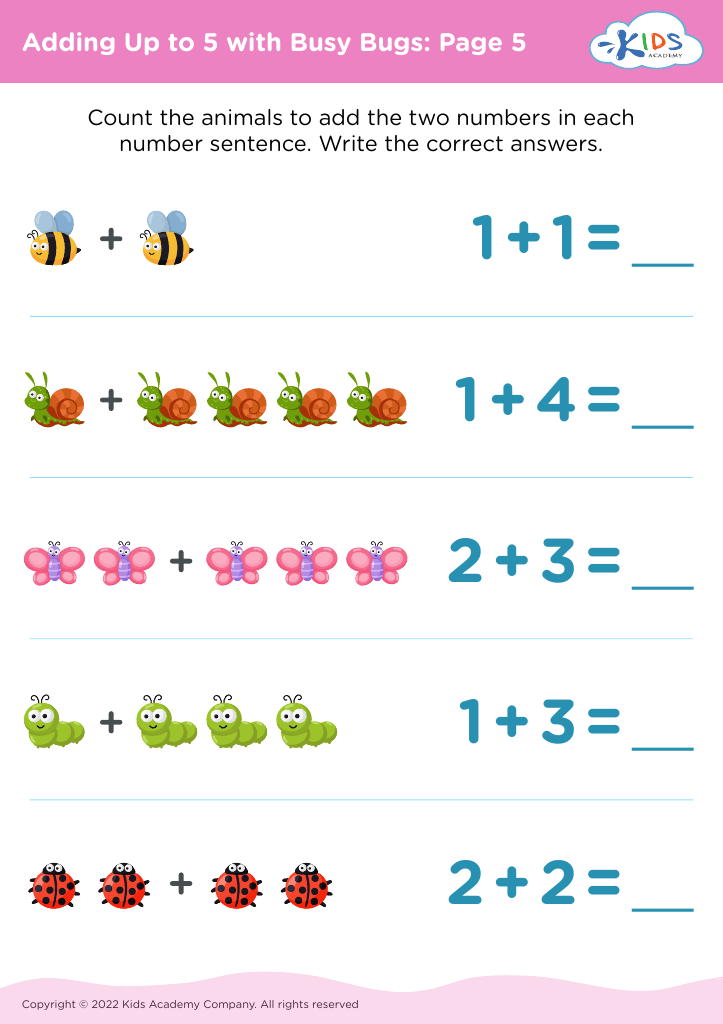
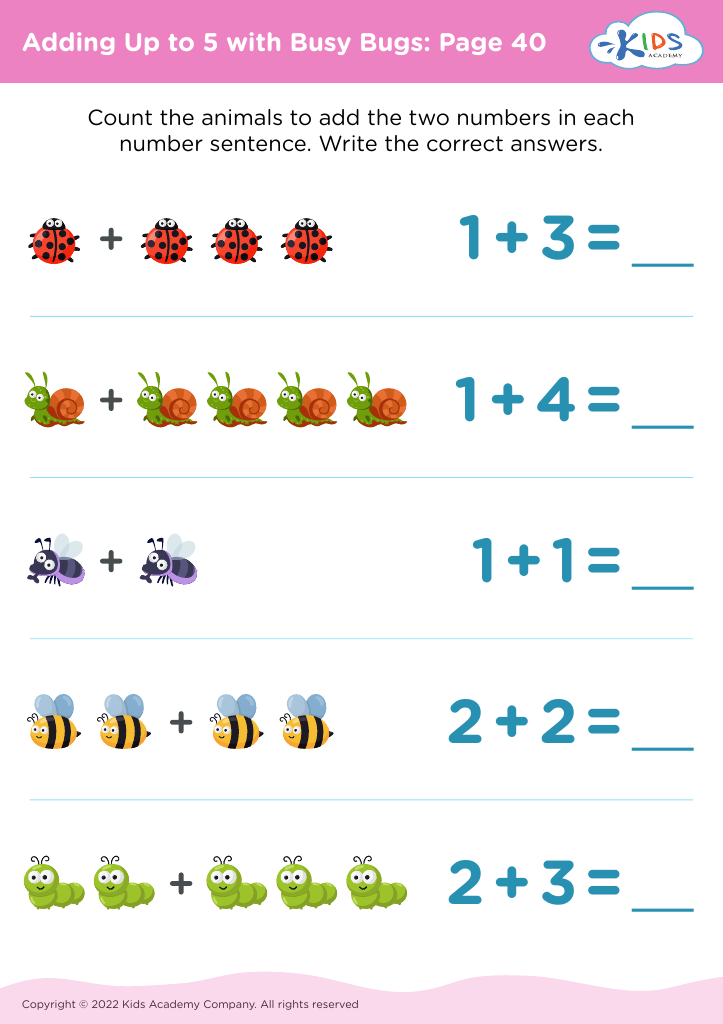
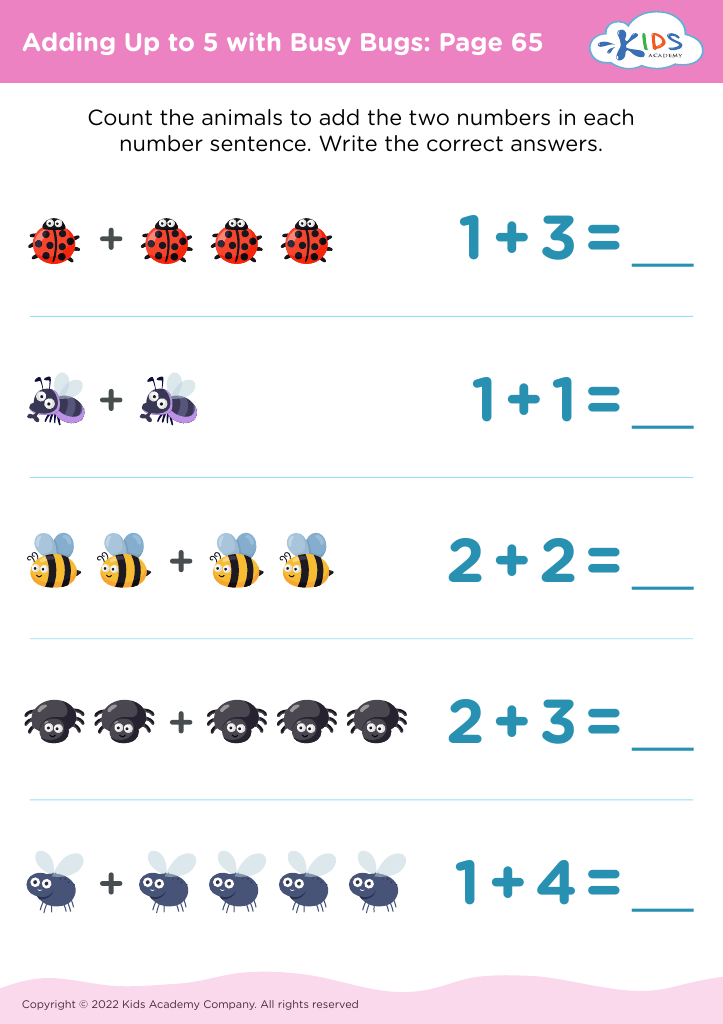
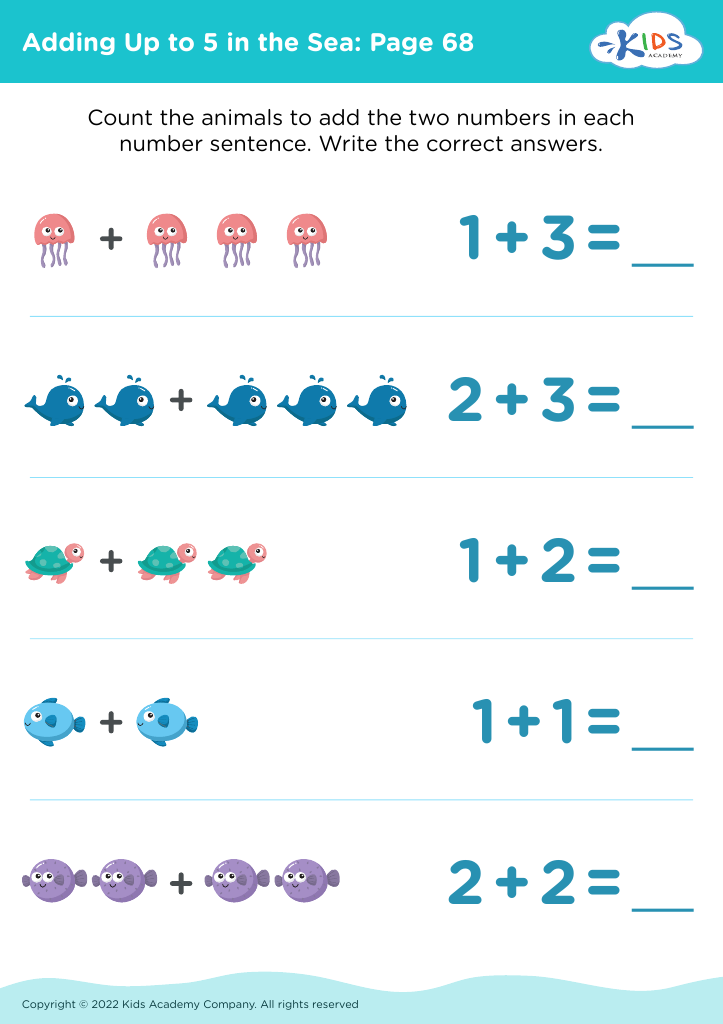
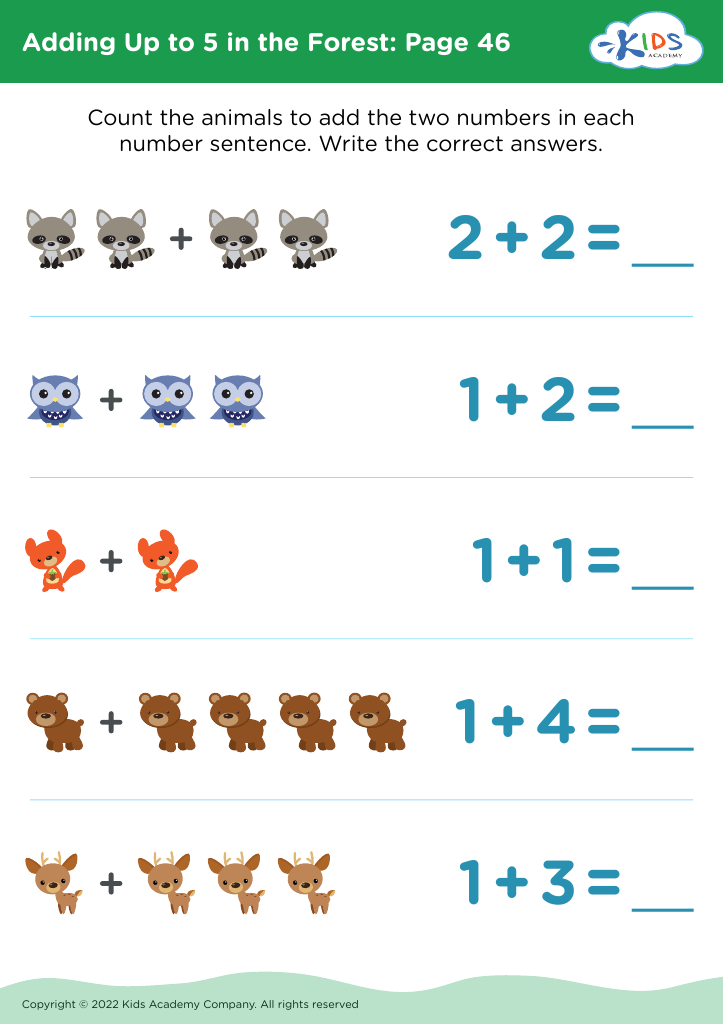
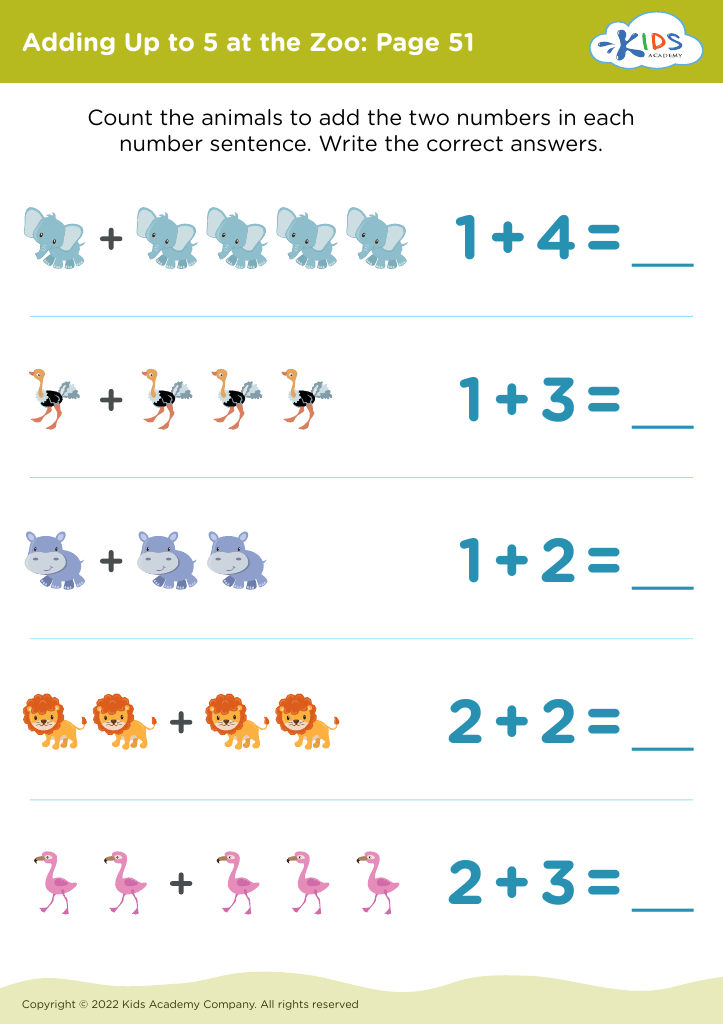
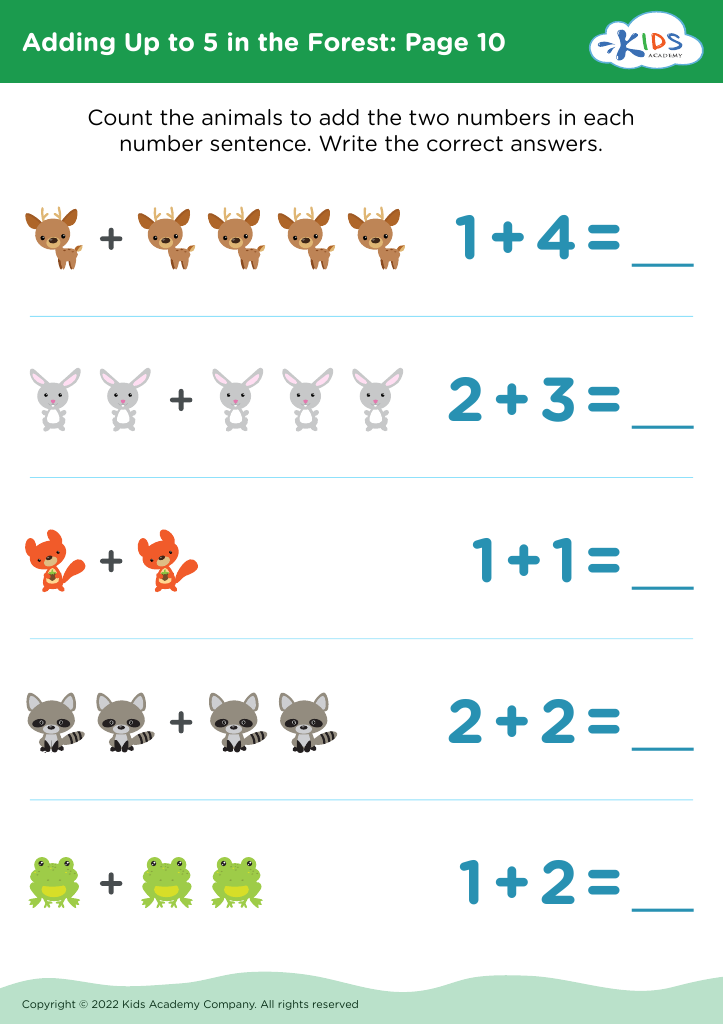
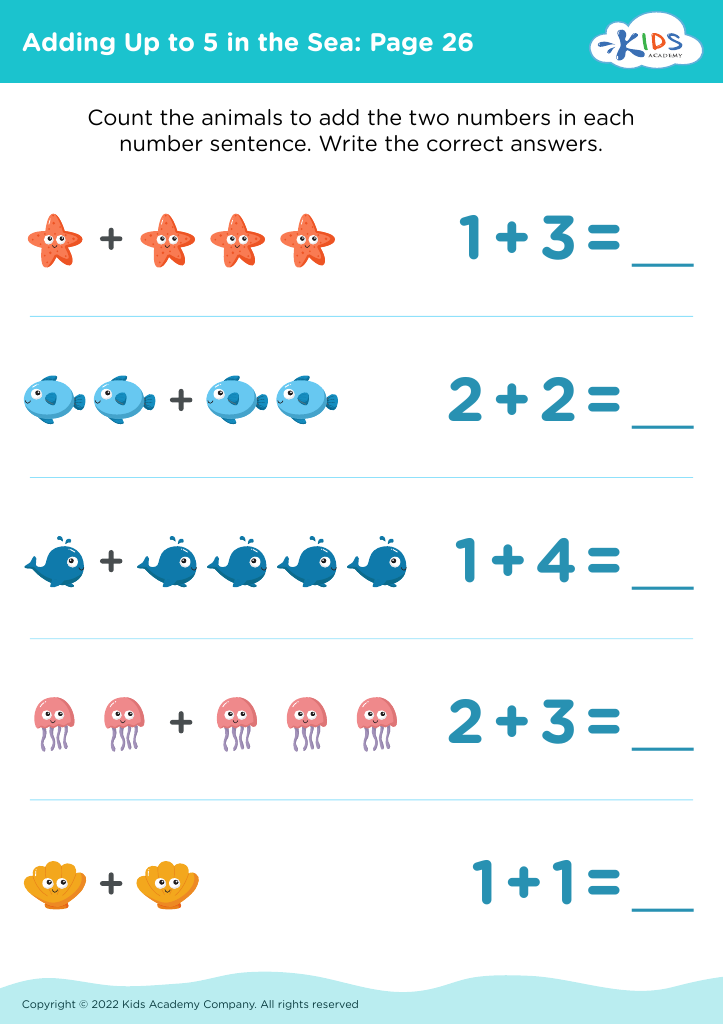








Ensuring young learners practice addition within a manageable range, like adding up to 5, is crucial for several foundational reasons. Firstly, mastering this basic computation enhances number sense, helping children to understand quantity relationships and properties of numbers, which is instrumental for advanced math concepts later on. At ages 5-6, children's cognitive abilities are developing rapidly, allowing them to grasp these simple operations with ease when given practice.
Practicing addition up to 5 aligns with the developmental stage of early learners, as these small sums are less likely to overwhelm them. This builds their confidence and fosters a positive attitude towards mathematics. Frequent practice helps solidify neural pathways, ensuring that simple addition becomes almost instinctual, providing a strong base upon which more complex arithmetic can be built.
Additionally, engaging in these basic exercises can enhance children's problem-solving skills and logical thinking. For parents and teachers, this practice provides an opportunity to observe a child’s grasp of concepts and identify those who may struggle, allowing for timely intervention and additional support.
Beyond math skills, mastering early addition helps with everyday tasks and enhances readiness for more formal schooling. Thus, emphasizing addition practice up to 5 is a critical step in a child's early education journey that sets the stage for lifelong numeracy skills.








