Basic Arithmetic Adding Up to 5 Worksheets for Ages 5-6 - Page 2
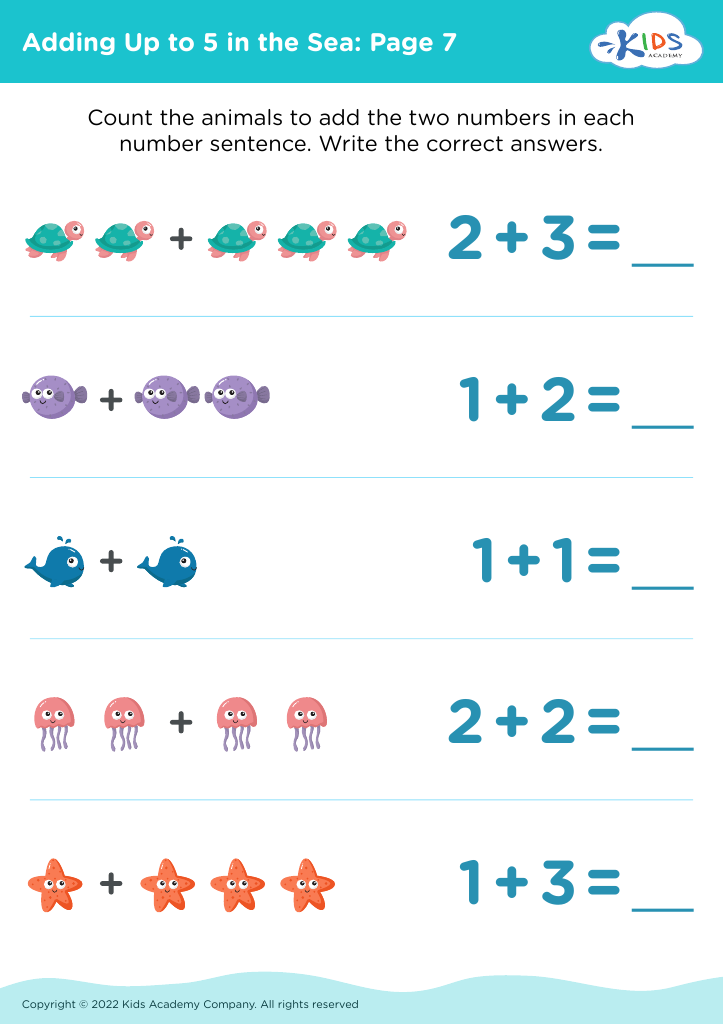
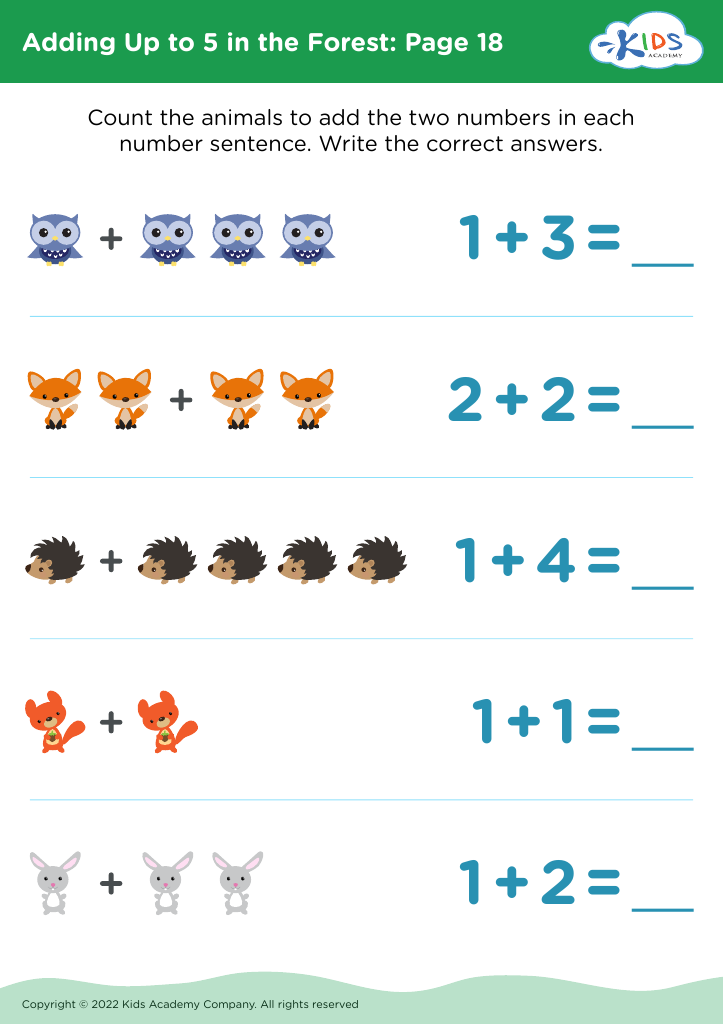
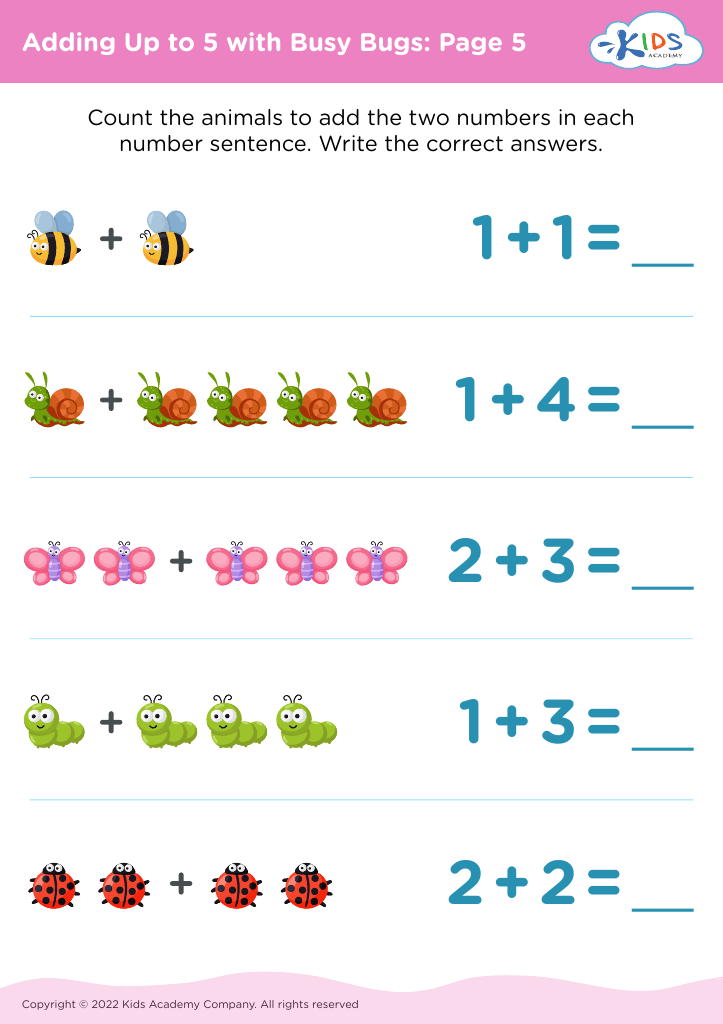
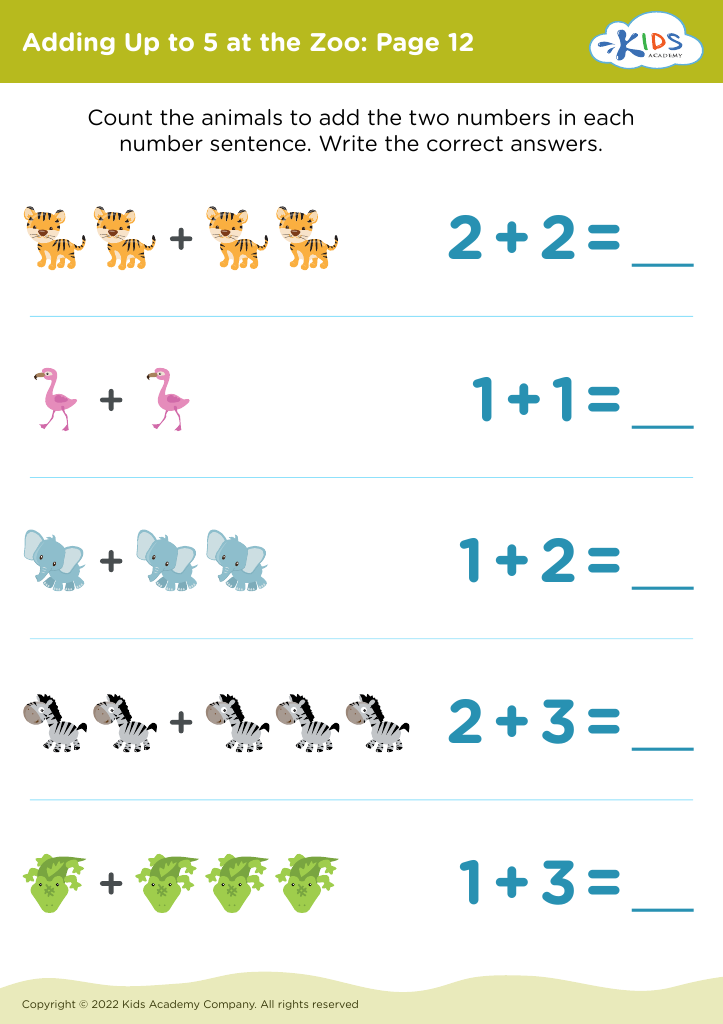
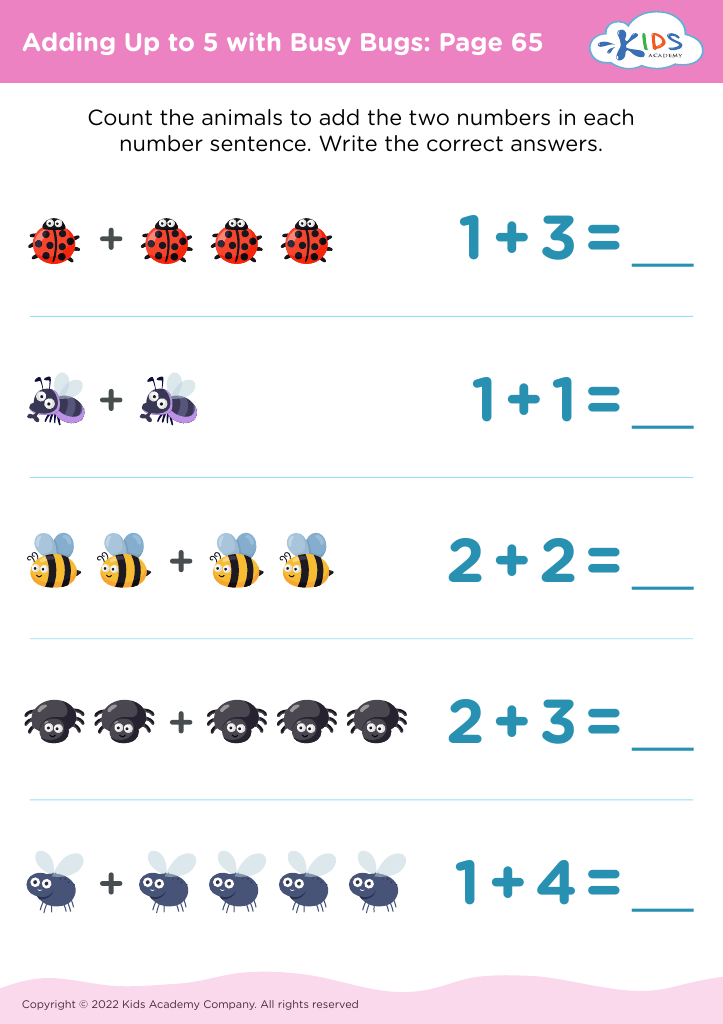
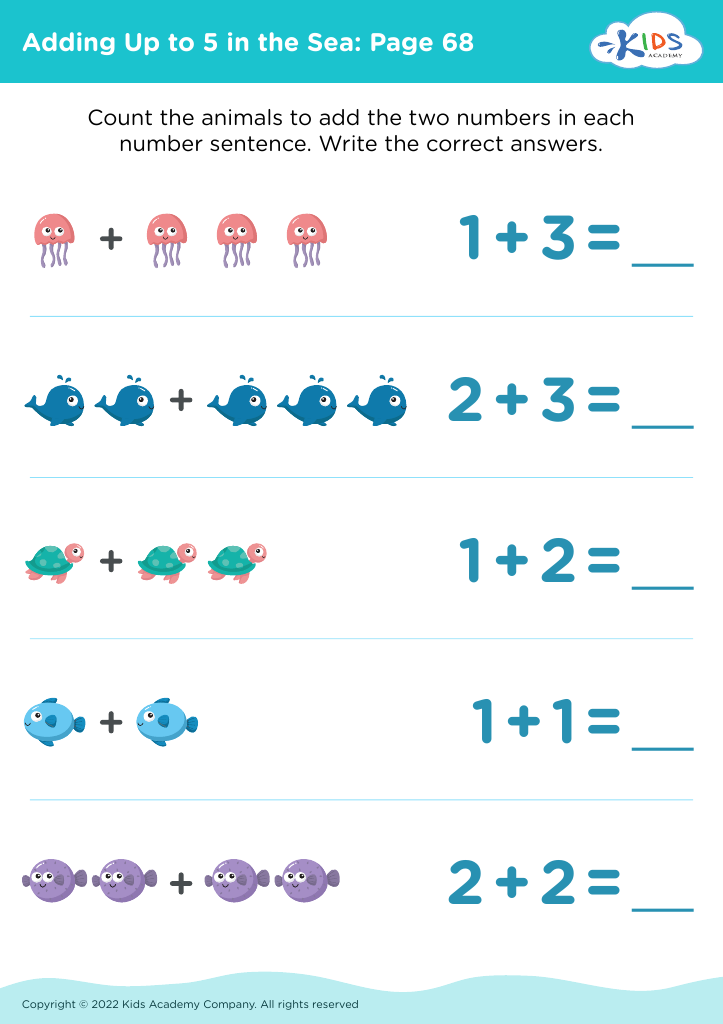
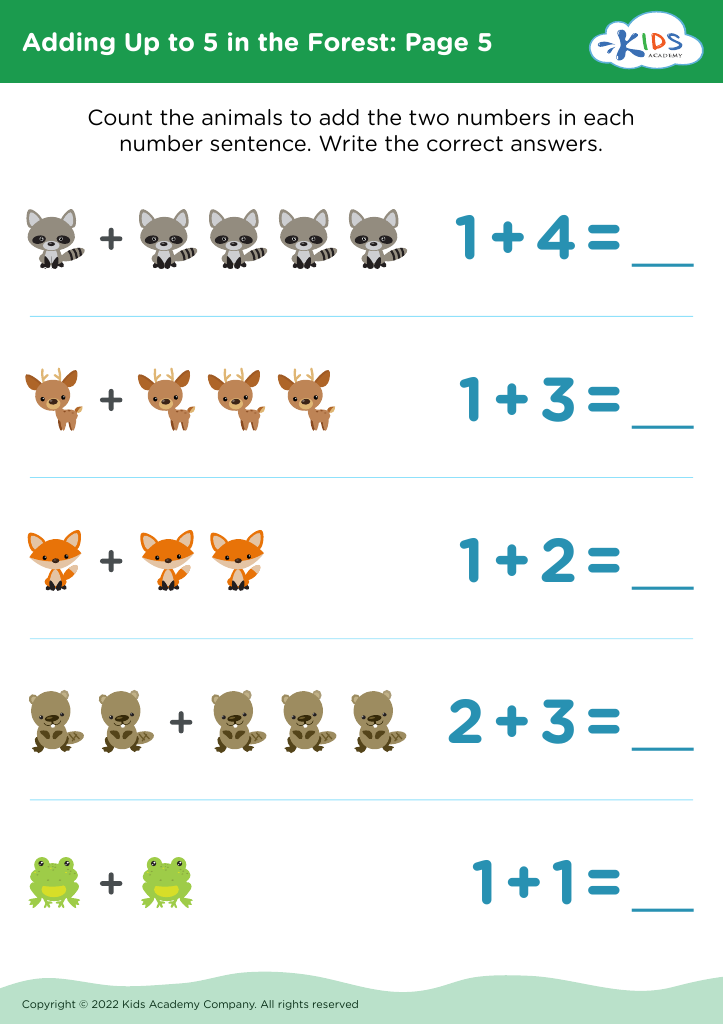
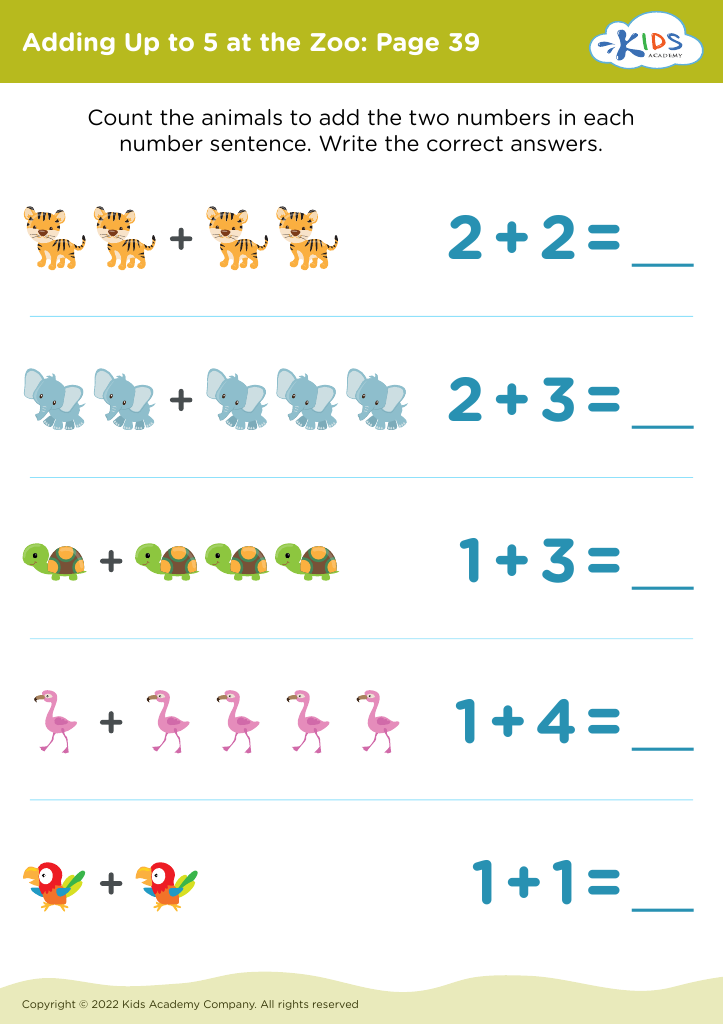
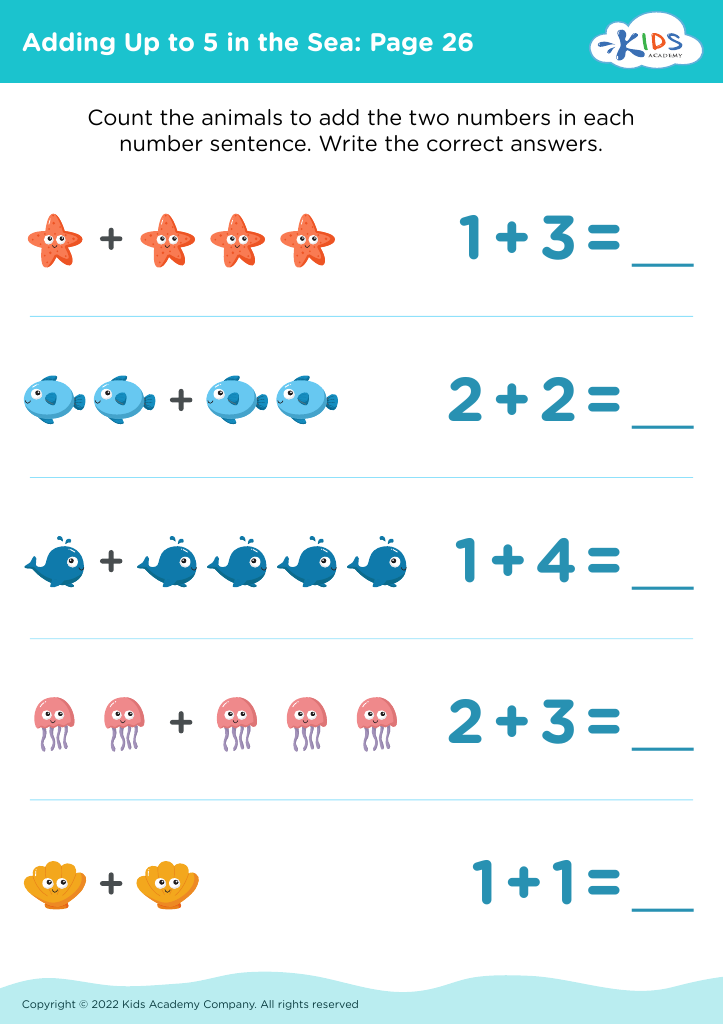
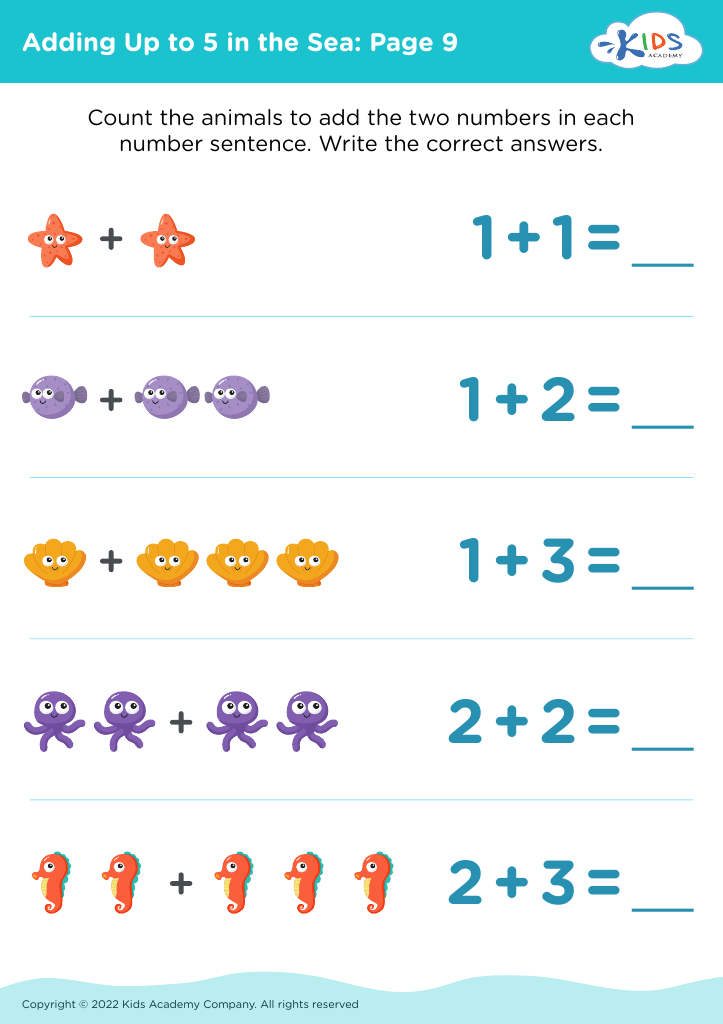








Basic arithmetic, especially adding up to 5, lays a crucial foundation for young learners aged 5-6. At this developmental stage, children are naturally curious and eager to engage with numbers. Understanding how to add up to 5 equips them with essential skills that foster mathematical fluency and confidence.
Parents and teachers should prioritize this knowledge as it enhances cognitive development and critical thinking. Mastering simple addition encourages problem-solving skills, helping children recognize patterns and relationships among numbers. This foundational understanding enables them to progress to more complex concepts in mathematics as they advance.
Moreover, practicing addition up to 5 supports early literacy in math by introducing key vocabulary, such as "add," "sum," and "total." These terms are essential for effective communication and understanding in all future mathematical endeavors.
Additionally, engaging in playful activities and games that involve counting and adding can strengthen the parent-child or teacher-student bond. This shared experience not only makes learning enjoyable but also instills a lifelong love for mathematics.
In summary, ensuring children grasp basic addition up to 5 is vital. It nurtures foundational math skills, boosts self-esteem, and fosters a positive learning environment that can significantly impact their future academic success.








