Understanding quantity Adding Up to 5 Worksheets for Ages 5-6
17 filtered results
-
From - To
Welcome to our "Understanding Quantity: Adding Up to 5 Worksheets" for kids aged 5-6! Designed to boost early math skills, these engaging worksheets introduce young learners to the concept of quantity through hands-on activities. Kids will explore simple addition while developing their number sense, visual counting skills, and understanding of quantities. Each worksheet features colorful illustrations and fun exercises that keep learning enjoyable and interactive. Ideal for classroom use or at-home practice, our resources pave the way for future math success. Dive into a world of numbers and help your child strengthen their foundational math abilities today!
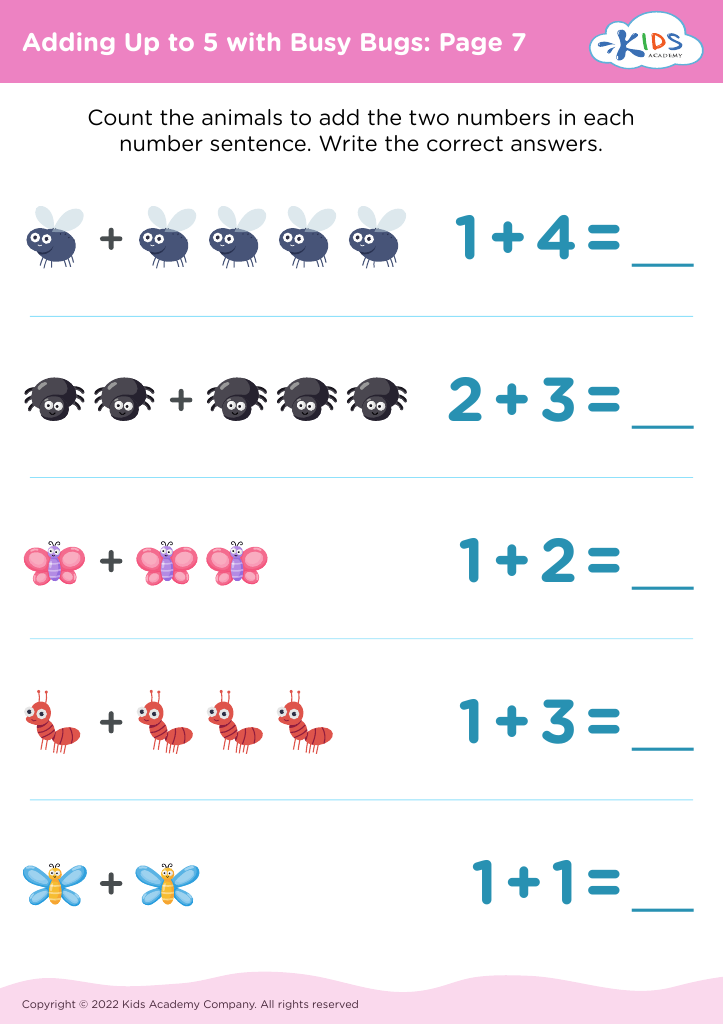
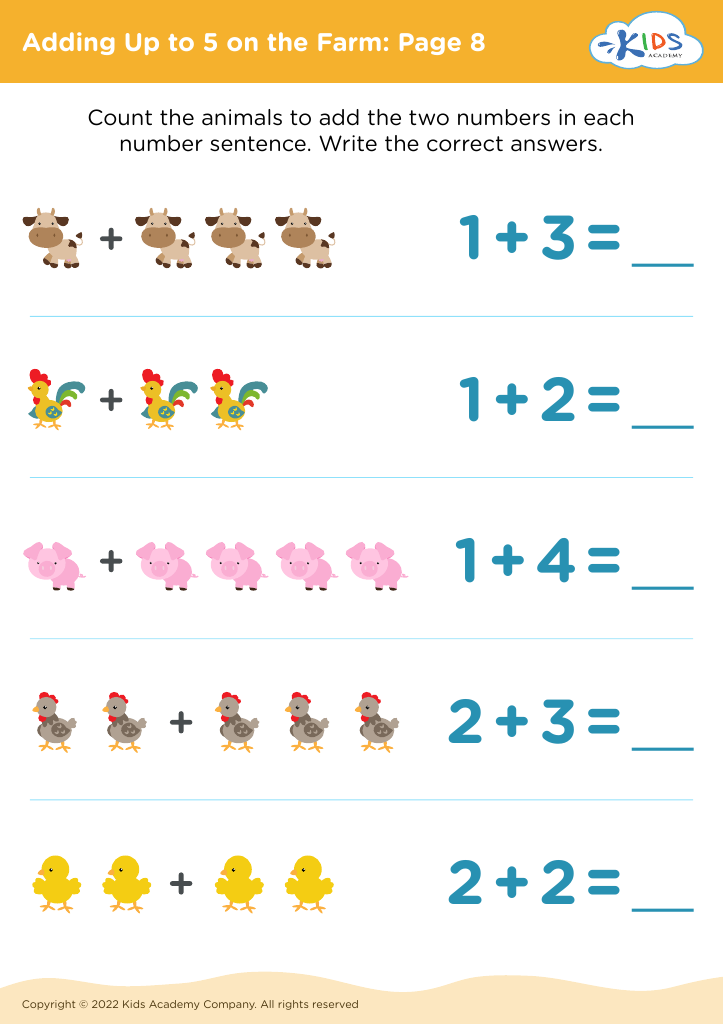
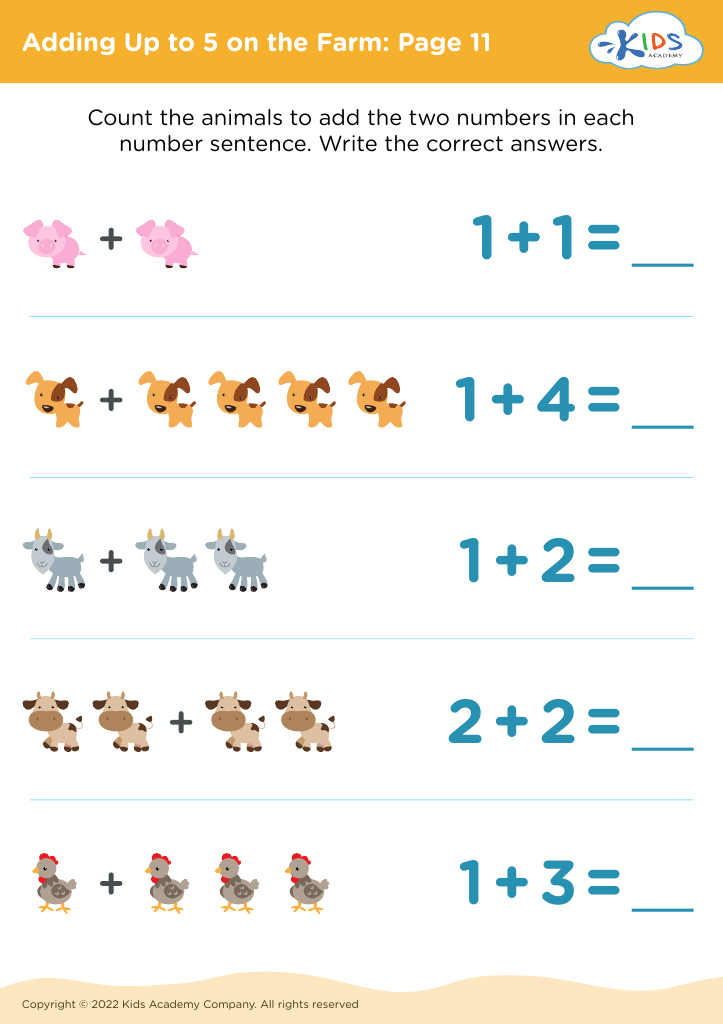
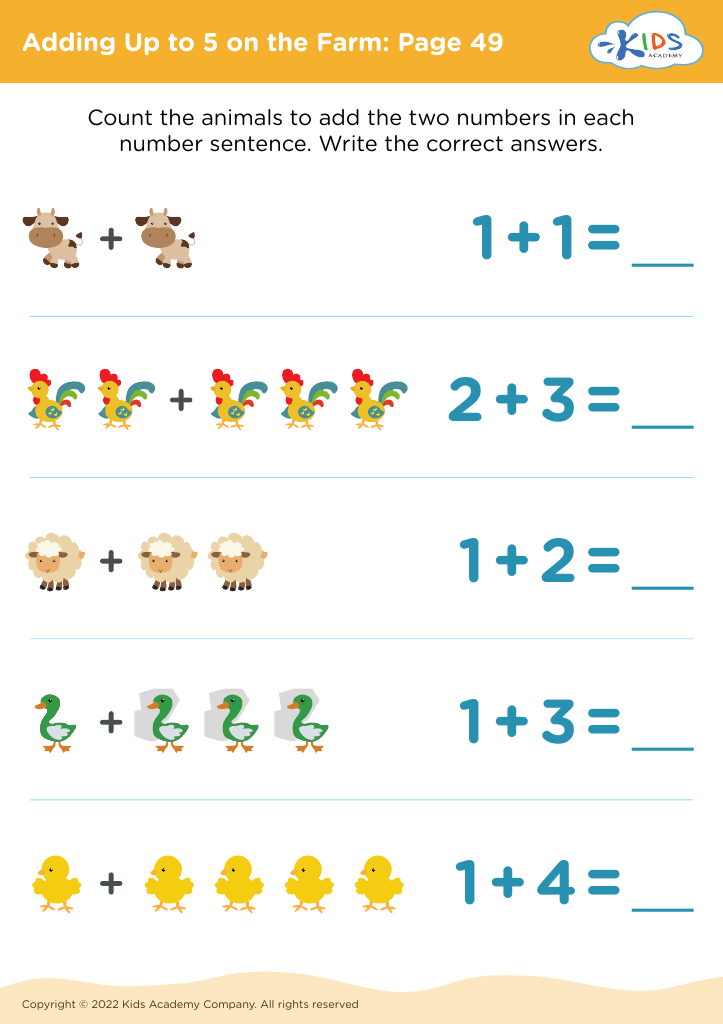
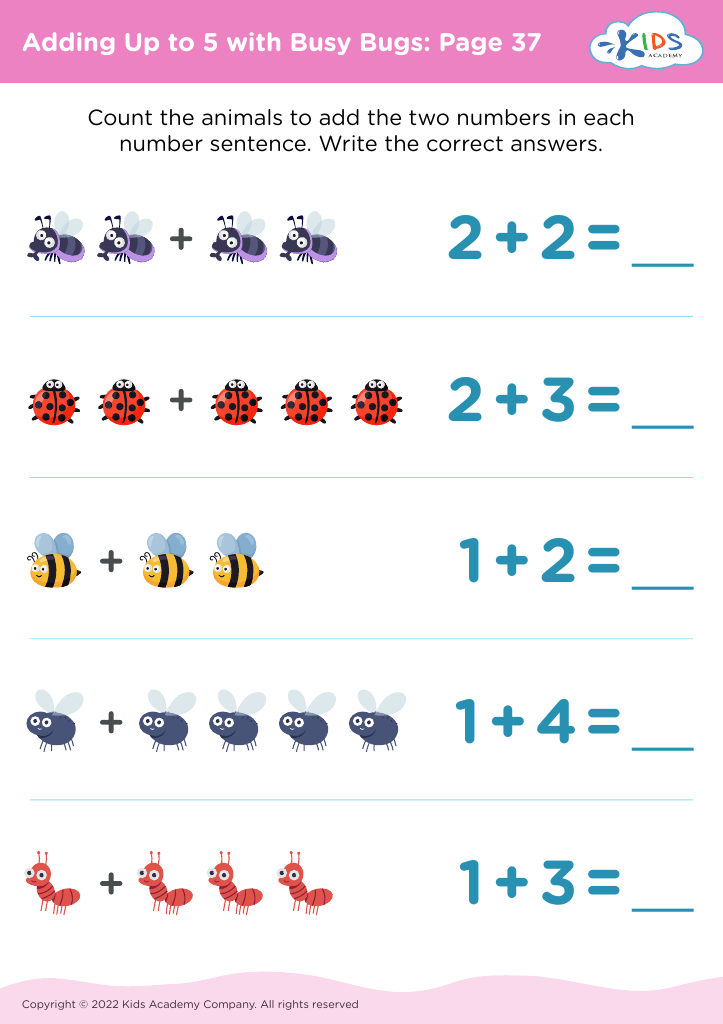
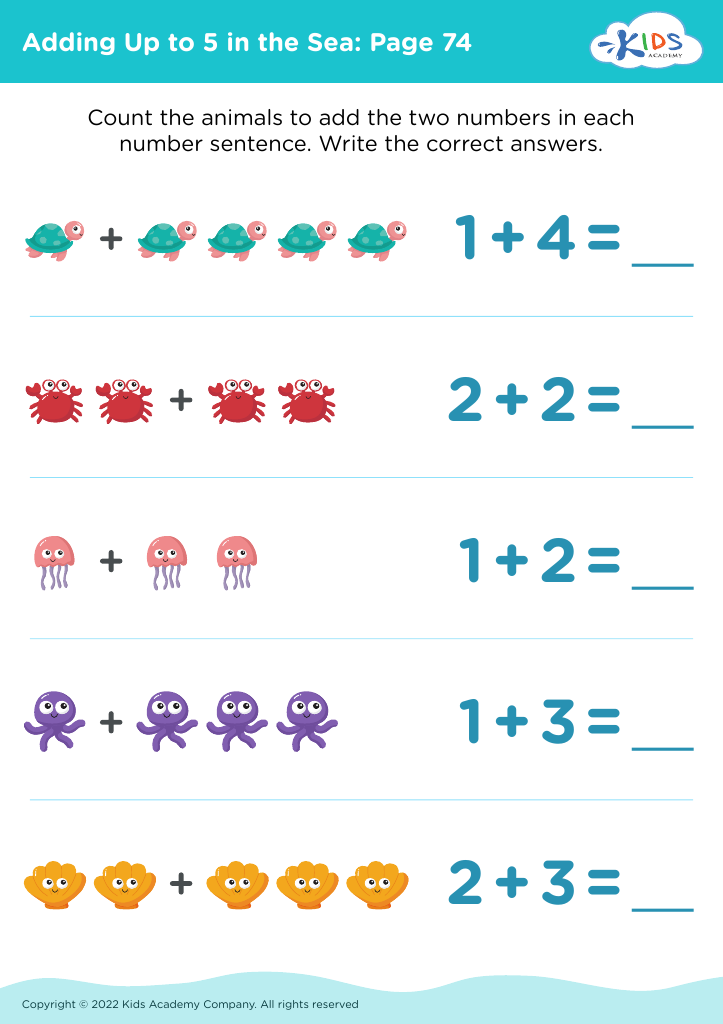
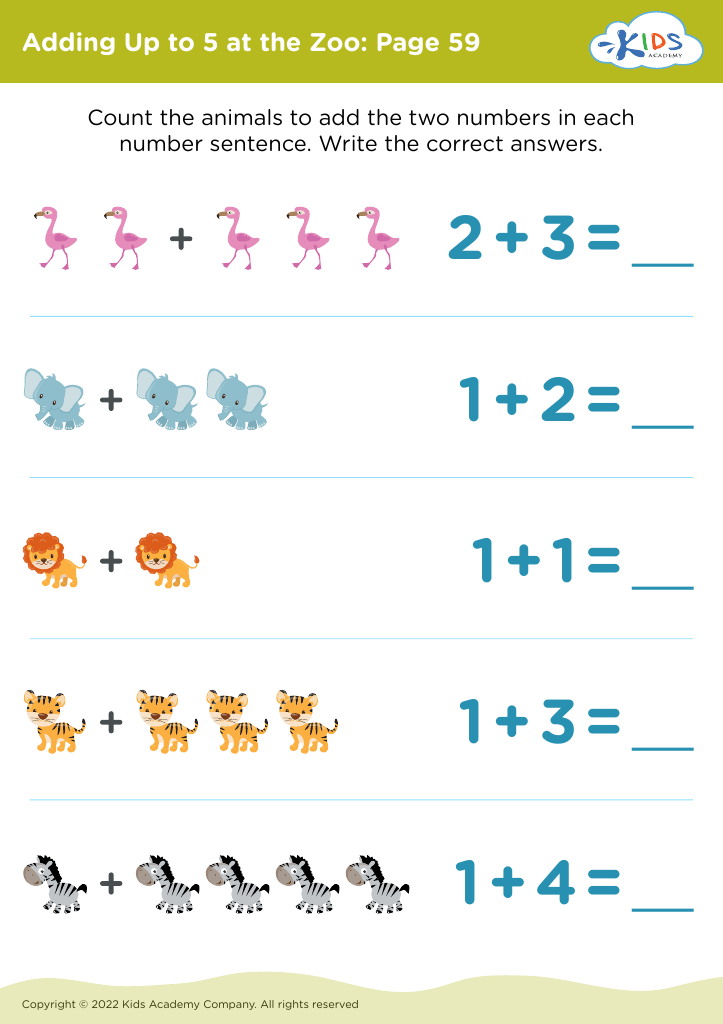
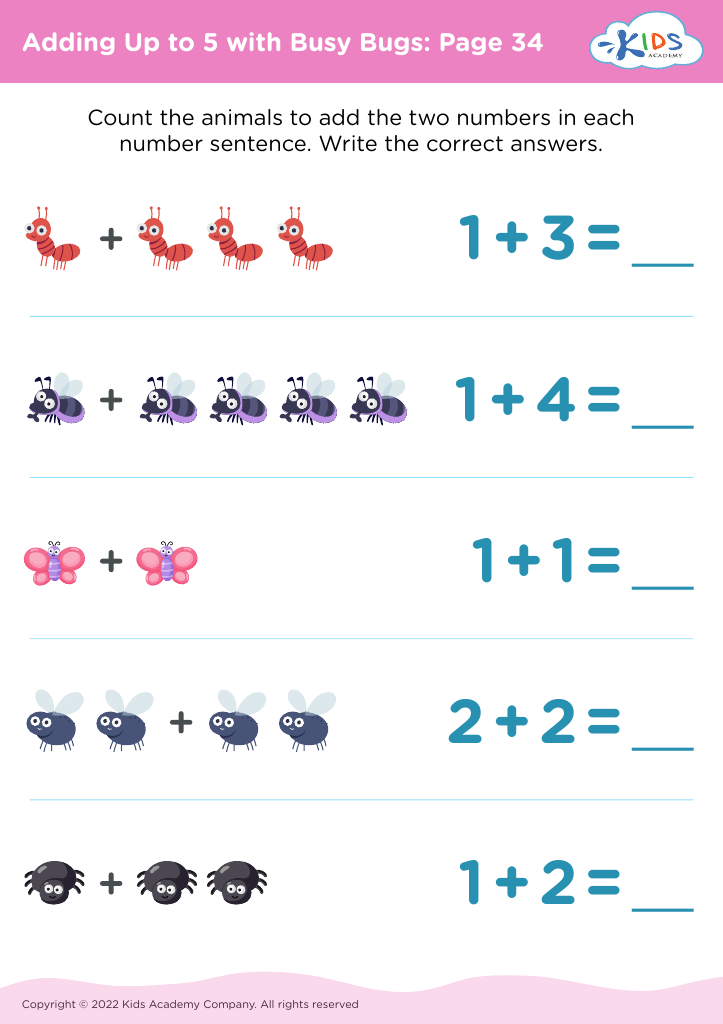
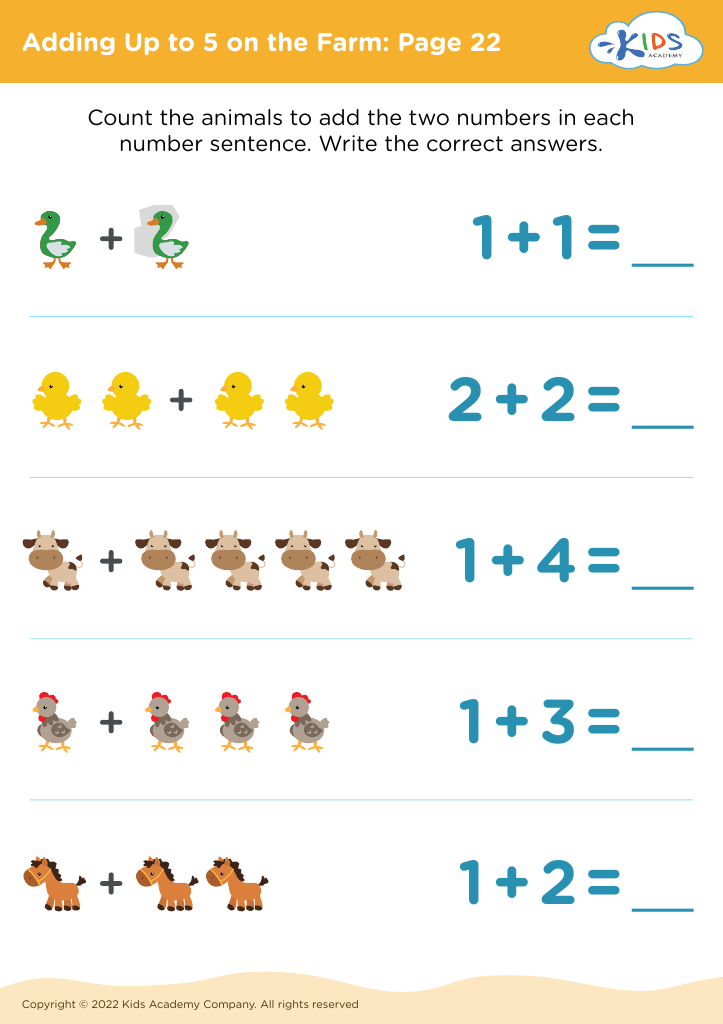
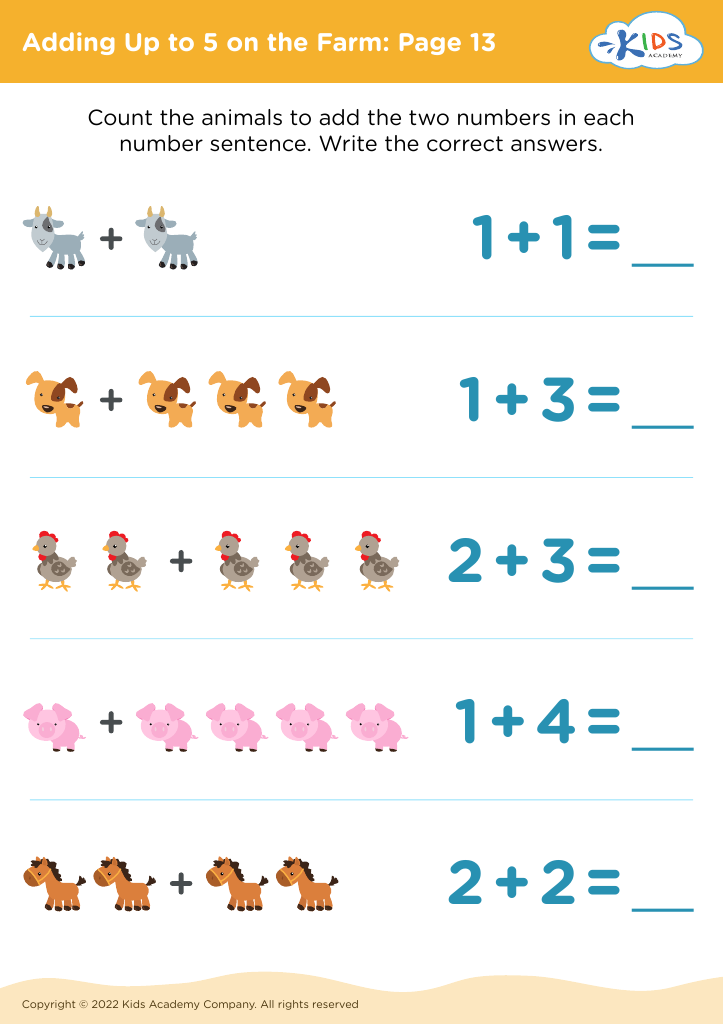
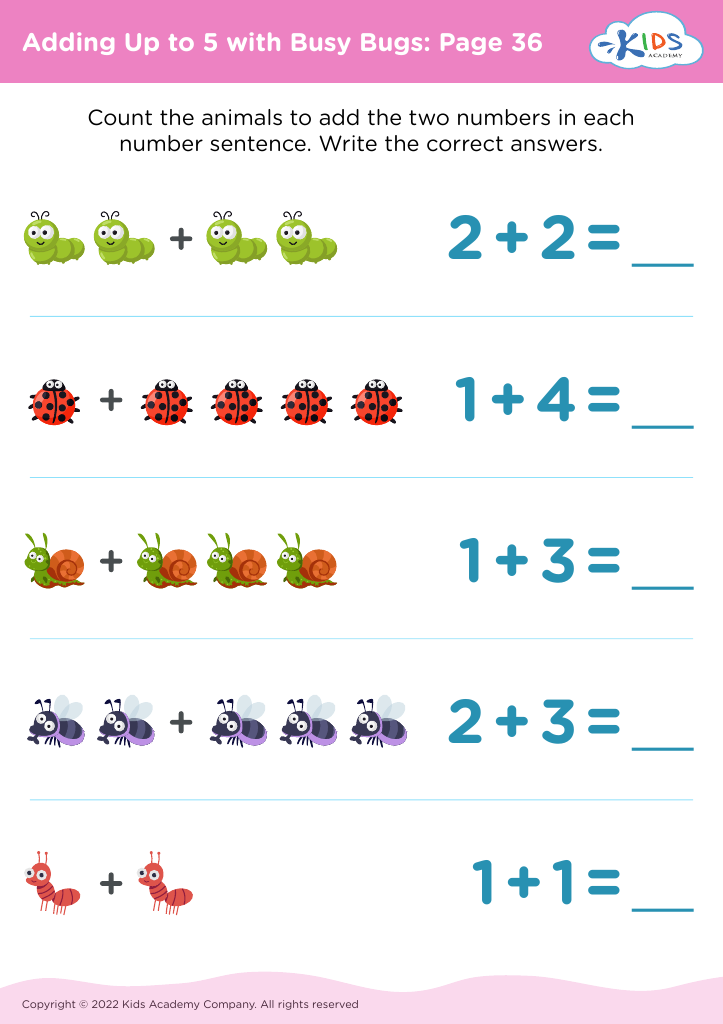
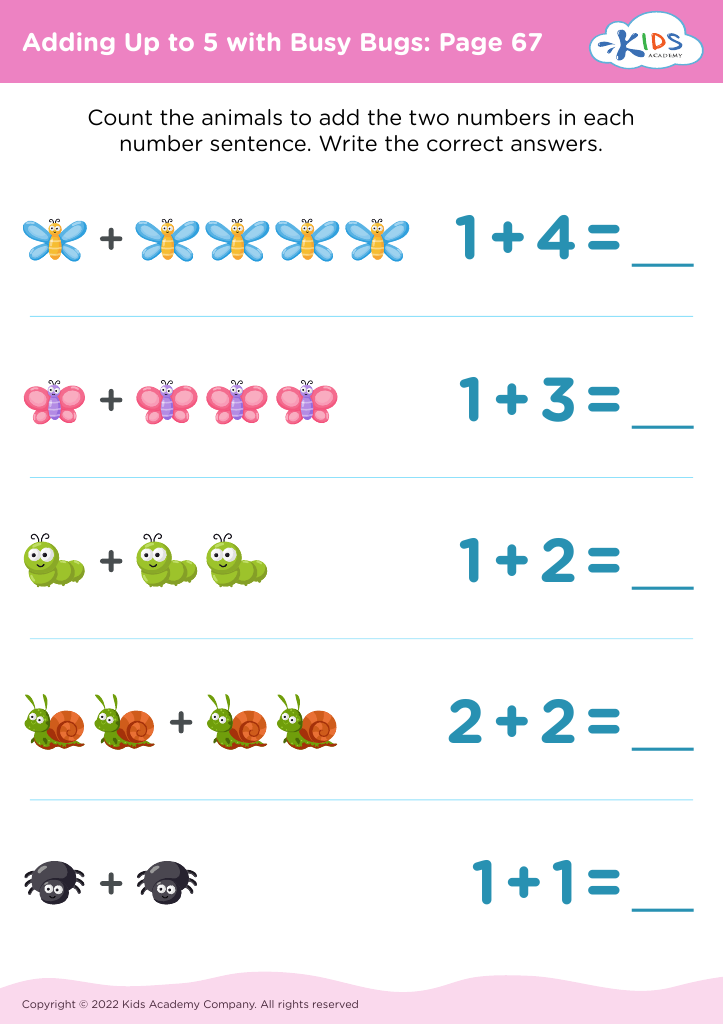
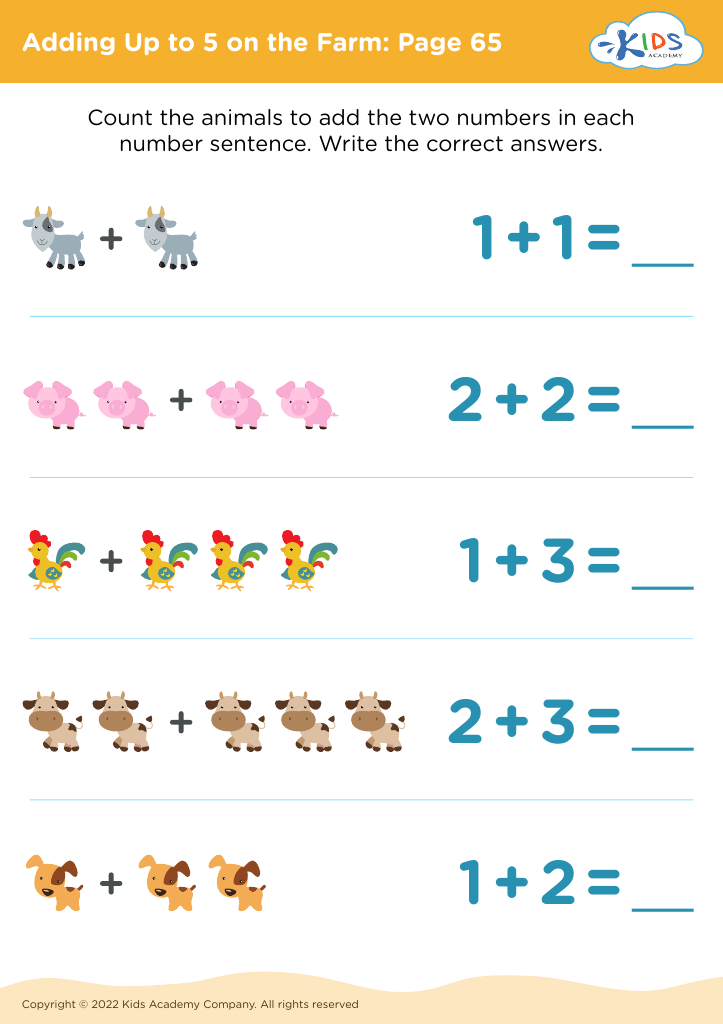
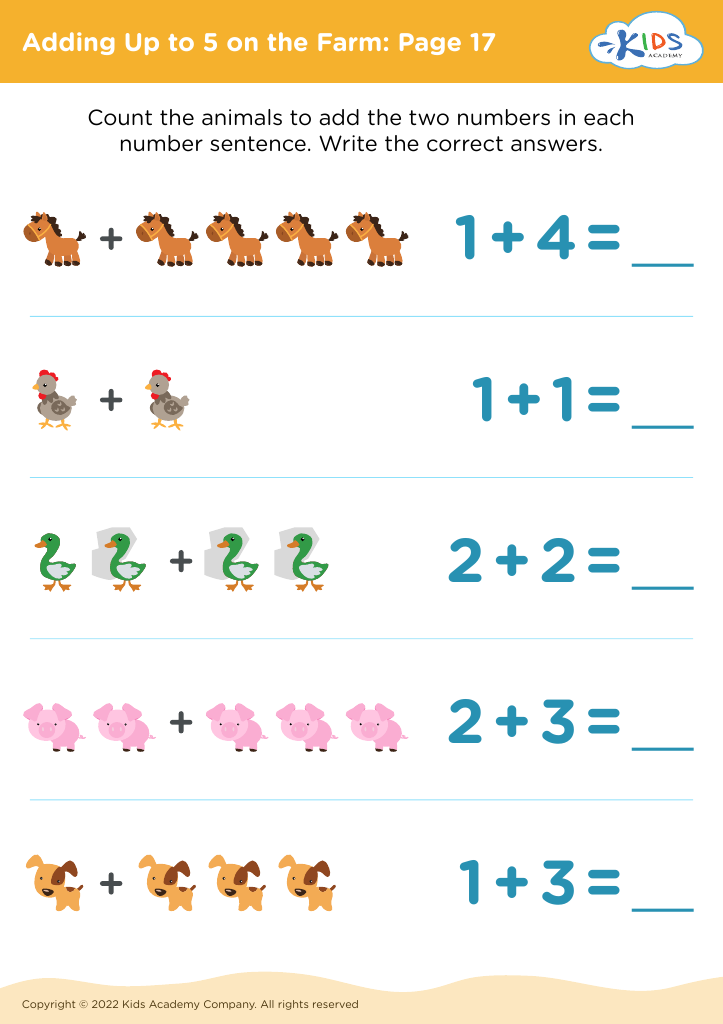
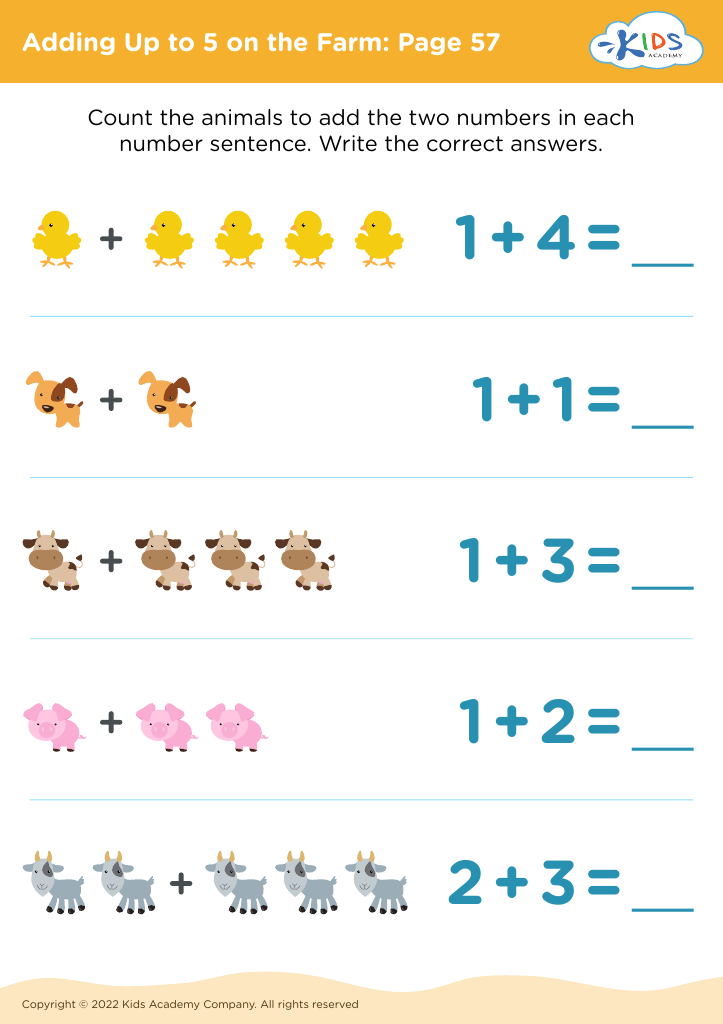
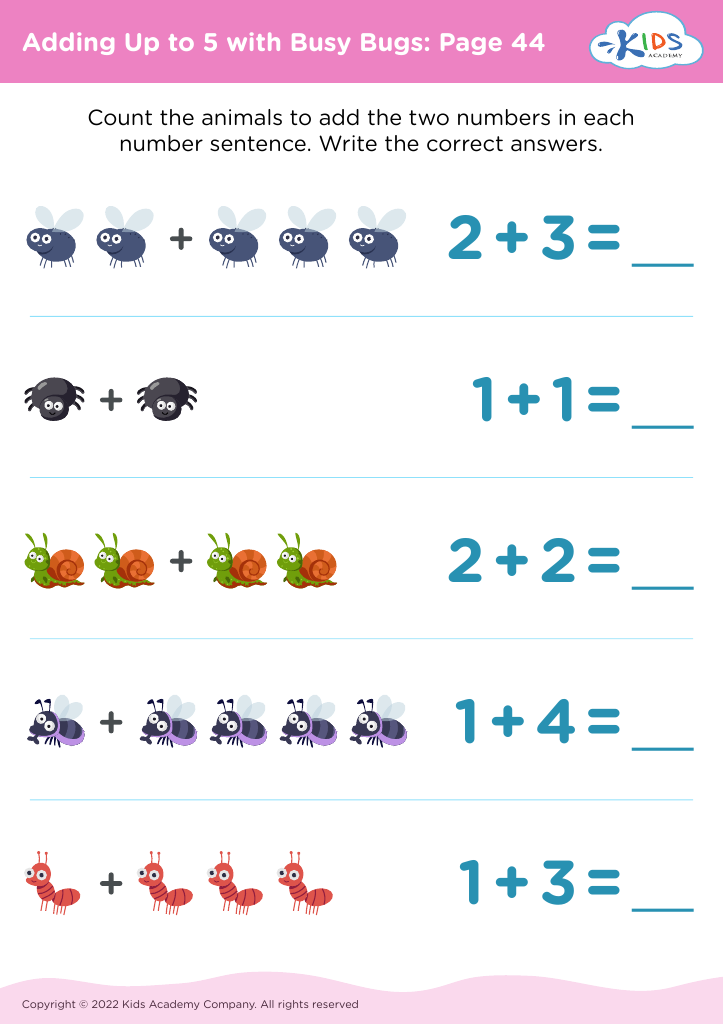
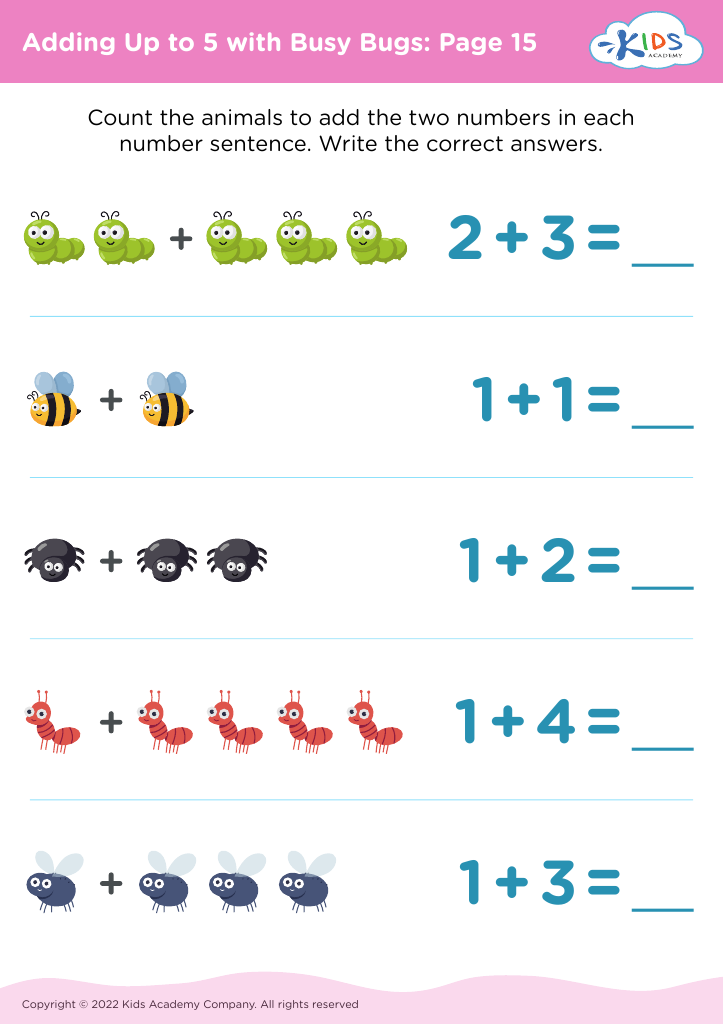








Understanding quantity and the concept of addition, especially when adding up to 5, is crucial for children ages 5-6, and it's essential for parents and teachers to prioritize this learning. At this age, children are in a vital stage of cognitive development, where they learn to make sense of numbers and how they relate to the world around them. Mastering the concept of quantity through tasks like adding up to 5 provides a strong foundation for later, more complex mathematical skills.
Furthermore, early success in these basic math skills can boost a child's confidence and encourage a positive attitude towards math, helping to alleviate math anxiety later on. By engaging with simple addition games or activities, parents and teachers can create a fun learning environment that fosters exploration and curiosity.
Additionally, integrating understanding of quantity and addition into everyday activities, like cooking or playing with blocks, makes math relevant and practical, helping children to make connections between abstract concepts and real life. Involving children in this early mathematical journey ensures they grasp essential skills, which form the bedrock for their ongoing education and promote lifelong learning attitudes. Thus, early attention to addition capabilities plays a significant role in their overall development.








