Animal recognition Addition and Subtraction Word Problems Worksheets for Ages 5-6
4 filtered results
-
From - To
Introducing our fun and engaging "Animal Recognition Addition and Subtraction Word Problems Worksheets" designed specifically for children aged 5-6. These worksheets help young learners develop their math skills while enjoying the vibrant world of animals. Each problem encourages children to identify various animals while solving addition and subtraction challenges, making learning interactive and entertaining. Perfect for parents and teachers alike, these resources foster critical thinking and improve literacy and numeracy skills. Watch your child gain confidence in their mathematical abilities while having a blast with these captivating worksheets. Explore the joy of learning with us today!
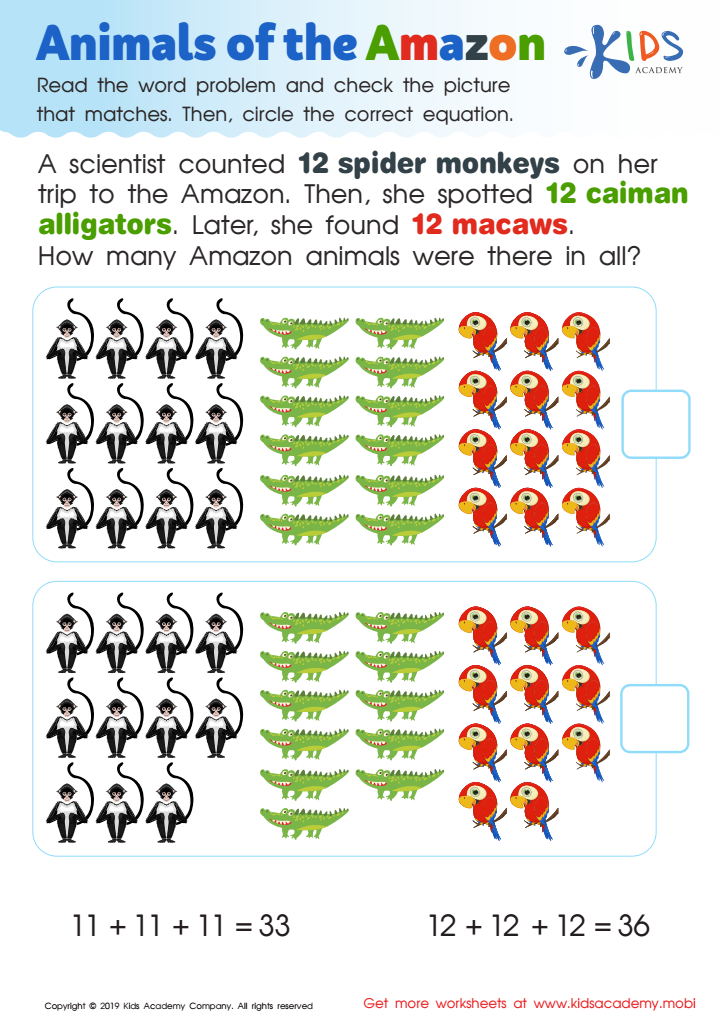
Animals of Amazon Worksheet
 Assign to My Students
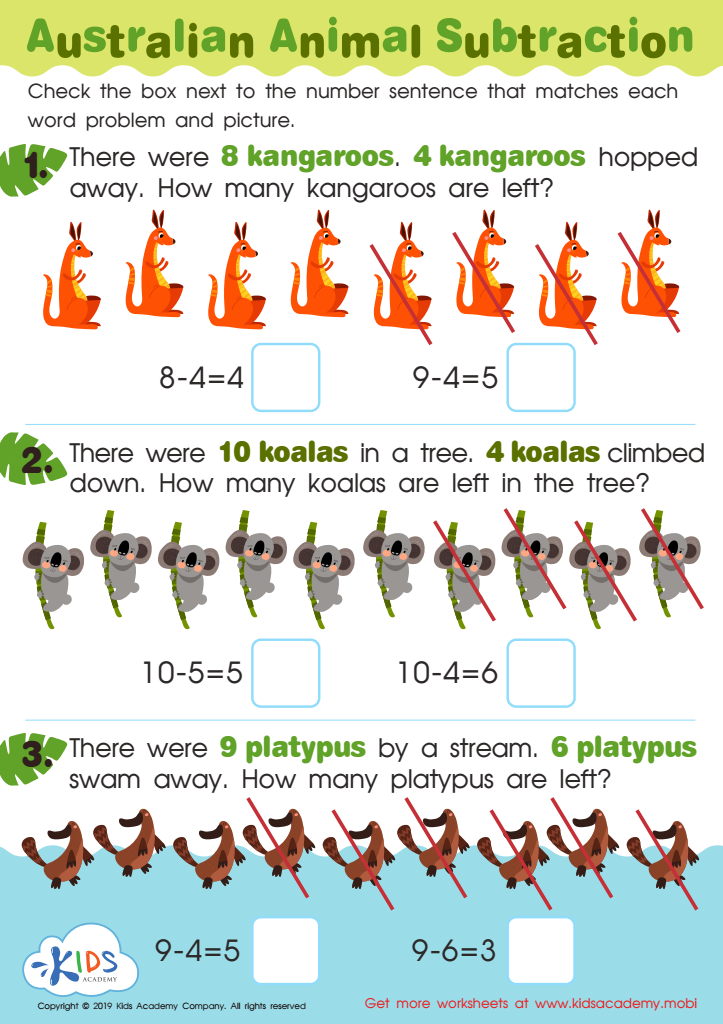
Australian Animal Subtraction Worksheet
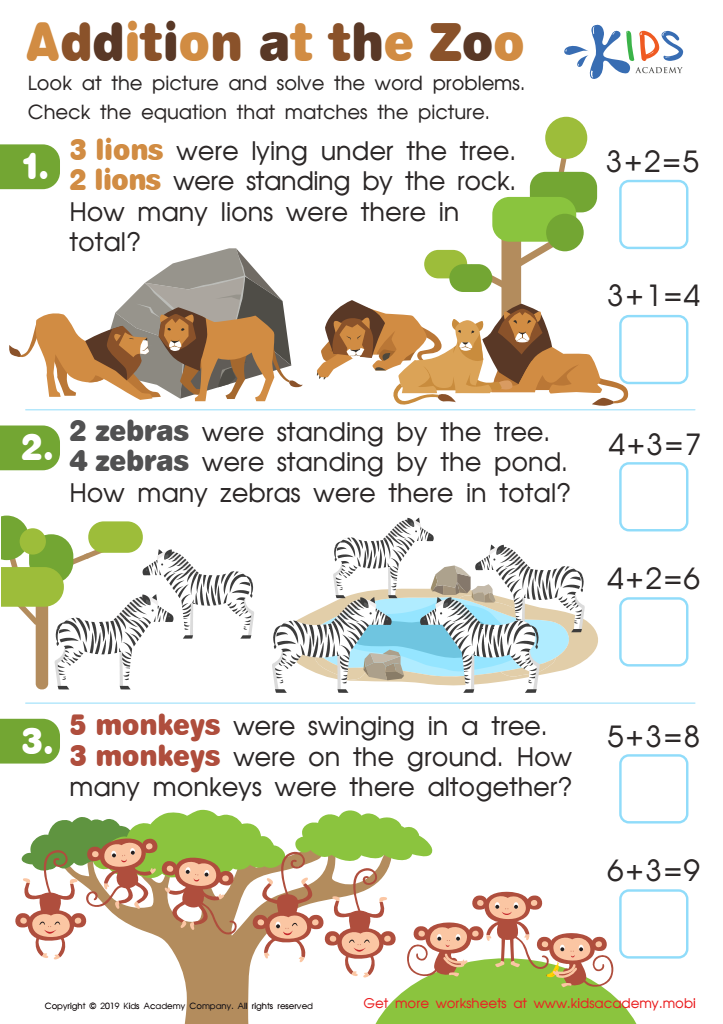
Addition at the Zoo Worksheet
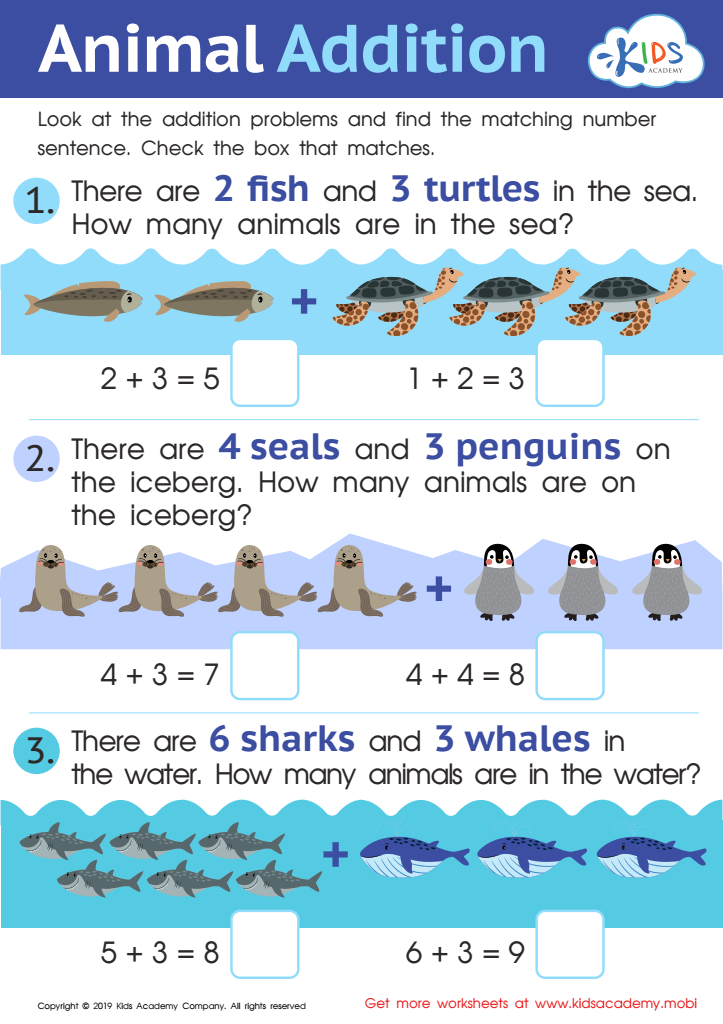
Animal Addition Worksheet








Animal recognition addition and subtraction word problems are vital for early mathematical development in children aged 5-6. At this age, children not only learn basic arithmetic but also enhance their reading and comprehension skills, making these word problems a multifaceted educational tool.
Integrating animals into math activities captures children's interest and enables them to relate mathematical concepts to real-world situations. When problems involve animals they are familiar with, children are more likely to engage with the content and retain information. For instance, visualizing scenarios involving favorite animals can make addition and subtraction concepts easier to grasp.
Furthermore, solving word problems fosters critical thinking and problem-solving skills. Children learn to analyze the narrative, identify relevant information, and apply mathematical operations confidently. Teachers and parents should encourage discussions around these problems to enhance comprehension, vocabulary, and reasoning skills.
Additionally, incorporating animal-friendly themes instills compassion and awareness of the environment. This creates opportunities for broader discussions on wildlife and ecology, linking math, literacy, and social values.
Overall, animal recognition addition and subtraction word problems are not merely academic exercises; they shape engaged, well-rounded learners equipped with essential life skills. Investing in such fun, interactive problems at a young age lays the foundation for future success in math and beyond.