Hand-eye Coordination Addition and Subtraction Word Problems Worksheets for Ages 5-6
3 filtered results
-
From - To
Enhance your child's math skills and hand-eye coordination with our engaging Addition and Subtraction Word Problems Worksheets for Ages 5-6. These worksheets are designed to make learning fun and interactive, helping young learners develop critical math abilities while improving their hand-eye coordination through writing and problem-solving activities. Each worksheet offers diverse scenarios that encourage strategic thinking and precision, aiding in fine motor control. Ideal for early graders, these expertly crafted resources support both classroom learning and at-home practice, ensuring your child builds a strong mathematical foundation in an enjoyable and effective way. Download today and watch their confidence soar!
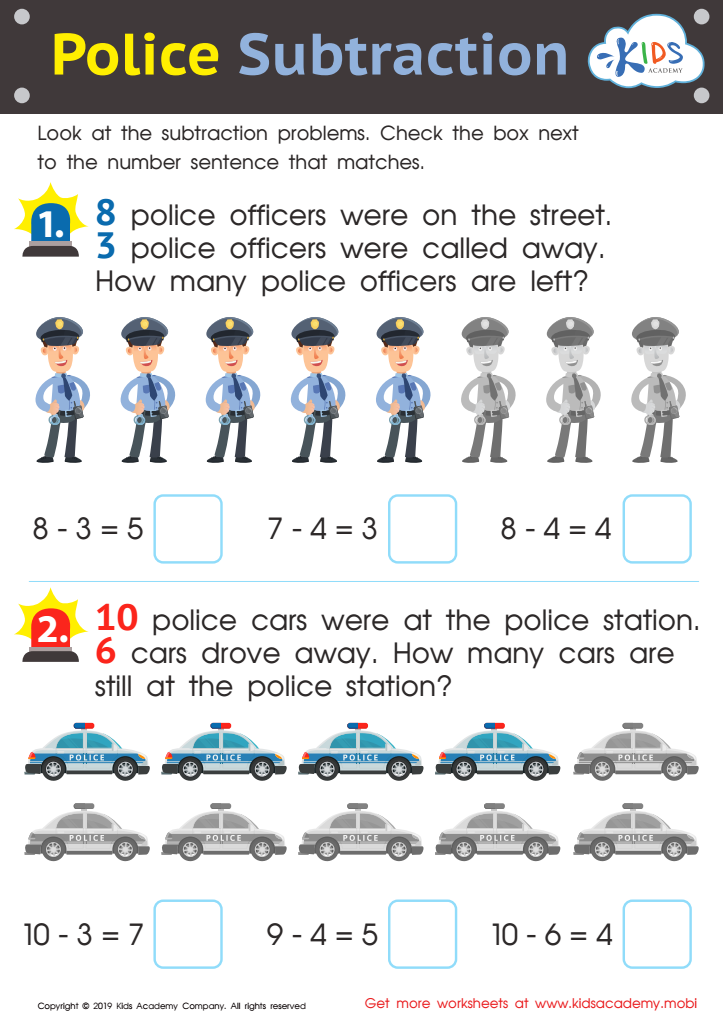
Police Subtraction Worksheet
 Assign to My Students
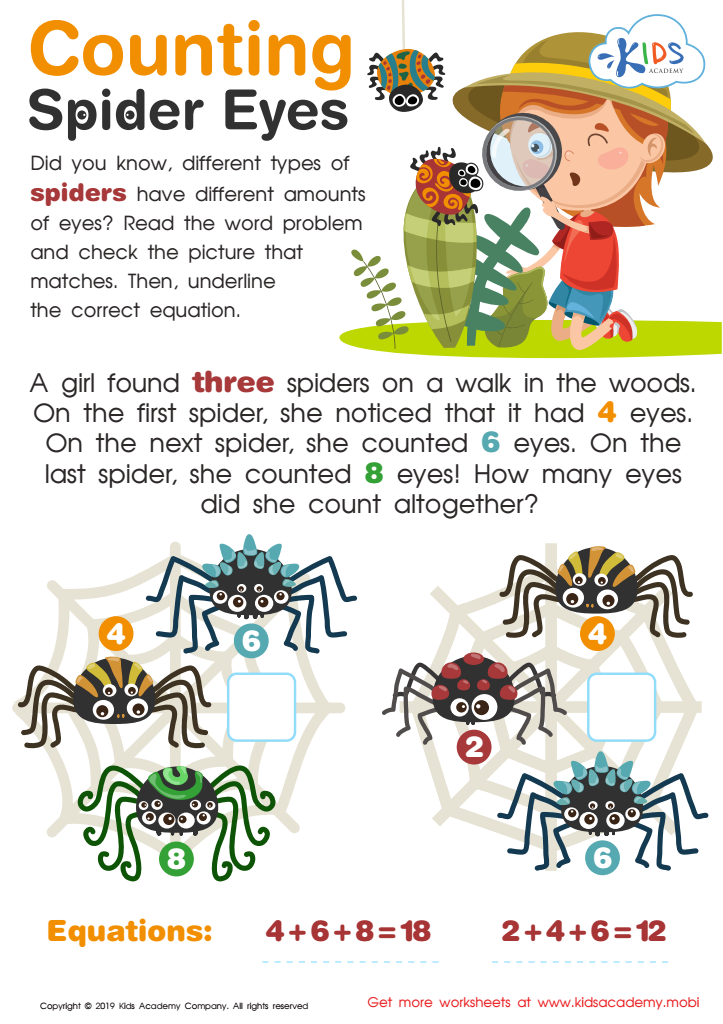
Counting Spider Eyes Worksheet
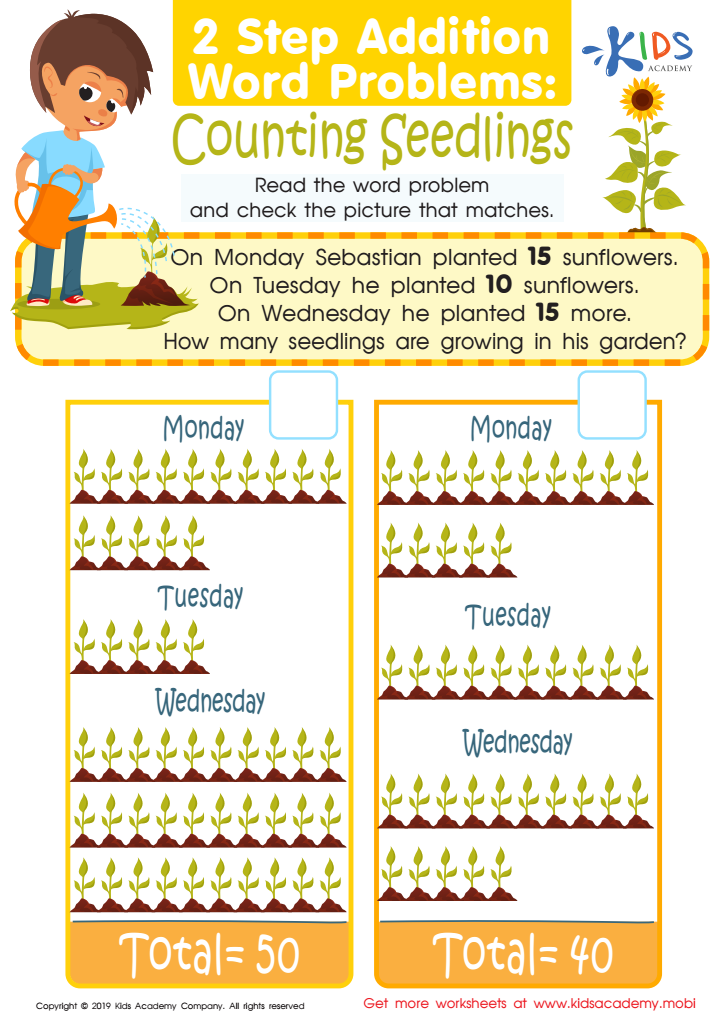
Counting Seedlings Worksheet








Hand-eye coordination is a fundamental skill that is pivotal for a variety of tasks in early childhood development, and integrating it with addition and subtraction word problems for ages 5-6 offers a multifaceted approach to learning. Firstly, these combination activities enhance cognitive skills by encouraging children to process numerical information while physically interacting with objects, like counting blocks or tracing numbers. This dual engagement helps solidify understanding because it activates multiple areas of the brain simultaneously.
Moreover, hand-eye coordination is crucial for the development of motor skills, which are important for everyday tasks such as writing, cutting with scissors, and even dressing themselves. When children are tasked with solving word problems that require them to physically manipulate objects or draw solutions, they refine their coordination abilities. This not only helps in mathematics by building a concrete understanding of addition and subtraction but also prepares them for future academic activities.
Additionally, children develop patience, focus, and persistence through these exercises. Solving word problems that involve hands-on activities requires careful attention and perseverance, traits that are significant for academic success and beyond. Therefore, incorporating hand-eye coordination into word problems molds well-rounded learners who excel in both cognitive and physical aspects of their development. By fostering these skills early on, parents and teachers set children up for both academic success and practical life skills.