Filters

111 filtered results

Clear all filters
Favorites
With answer key
Interactive

111 filtered results

Difficulty Level

Grade


Check out this FREE Trial Lesson on Addition & Subtraction for age 5-6!

Drawing for Addition

Favorites
With answer key
Interactive
  • 5-6
  • Addition Practice
  • Addition & Subtraction
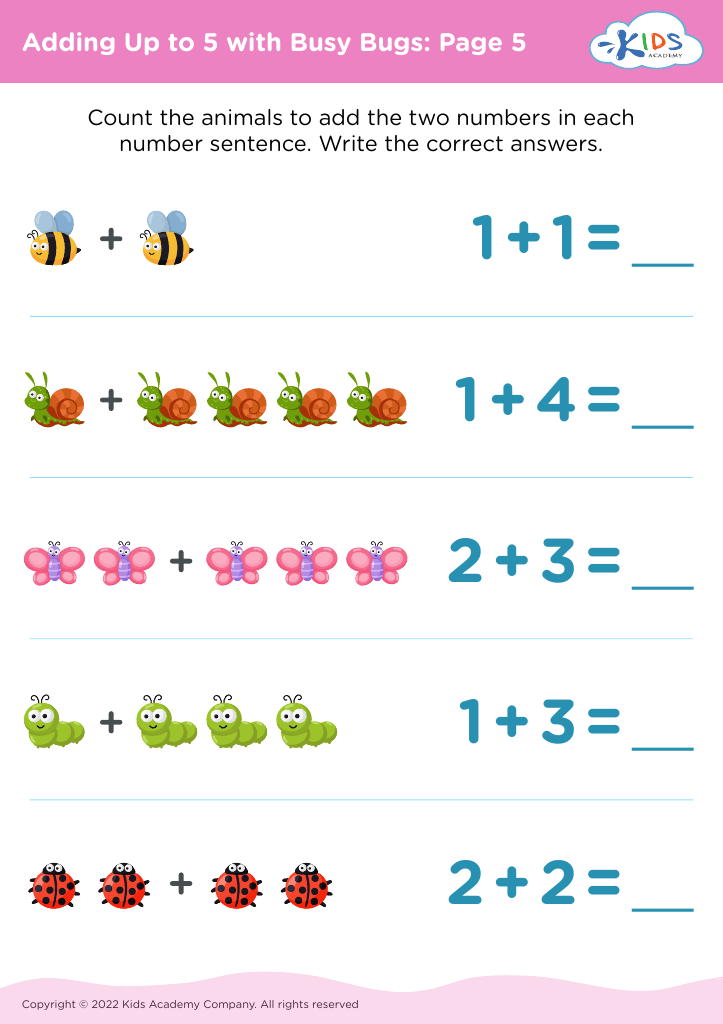
Adding Up to 5 with Busy Bugs: Page 5
Worksheet
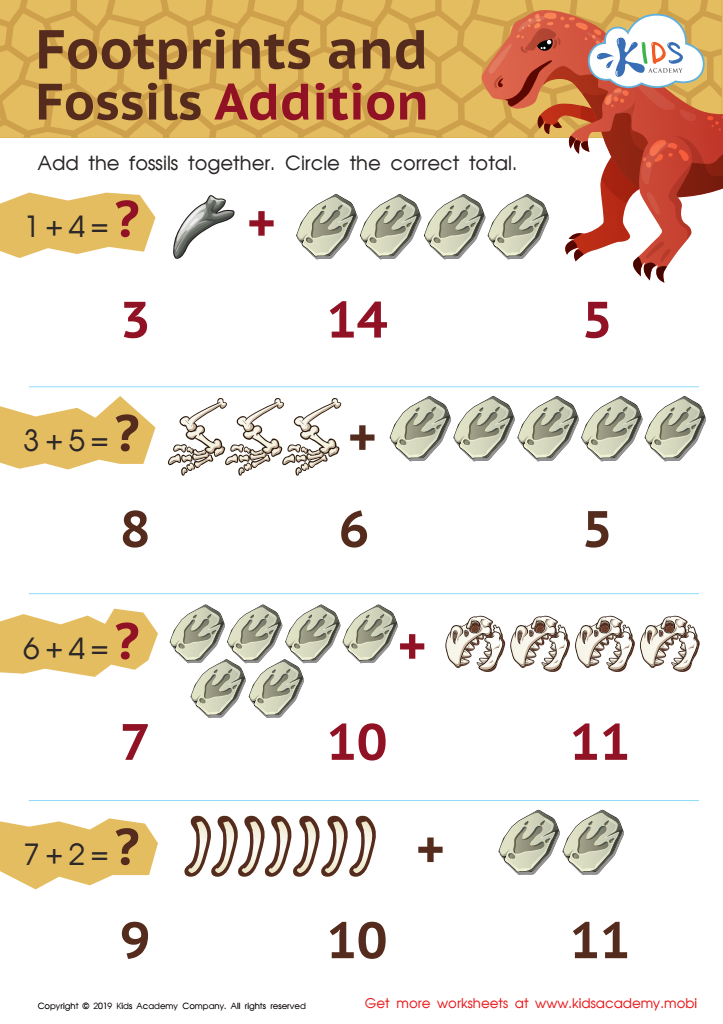
Footprints and Fossils Addition Worksheet

Footprints and Fossils Addition Worksheet

Show your students that addition and subtraction is easy with the right guidance and exercises. Use this worksheet to help them practice by adding fossils and circling the correct total of each equation. Your students will soon see that addition and subtraction is not so intimidating after all.
Footprints and Fossils Addition Worksheet
Worksheet
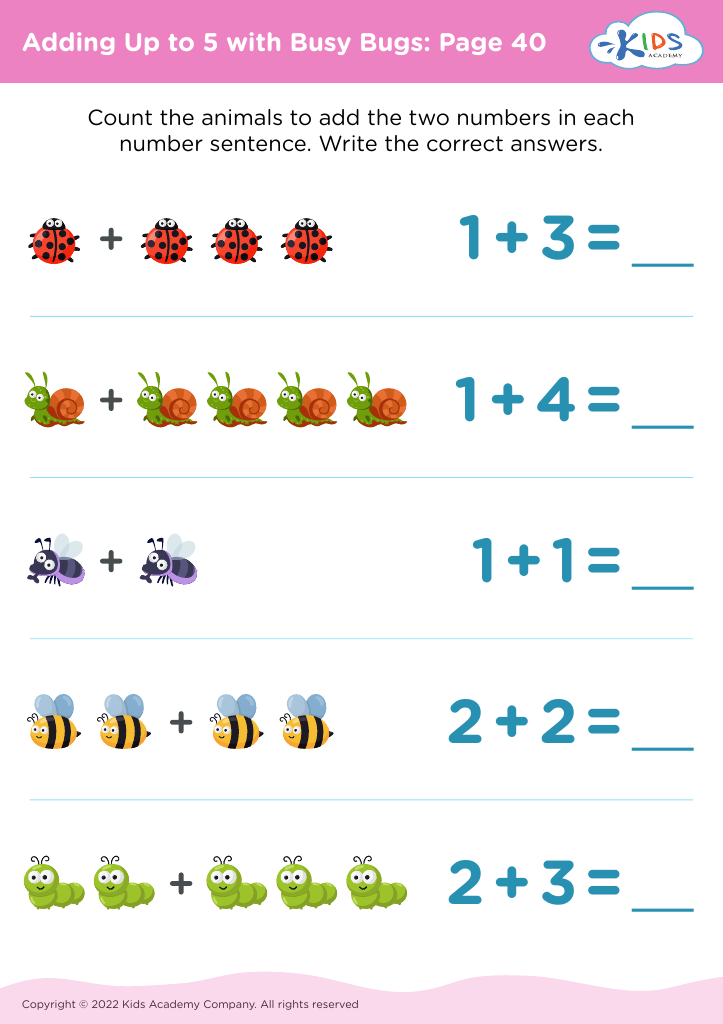
Adding Up to 5 with Busy Bugs: Page 40
Worksheet
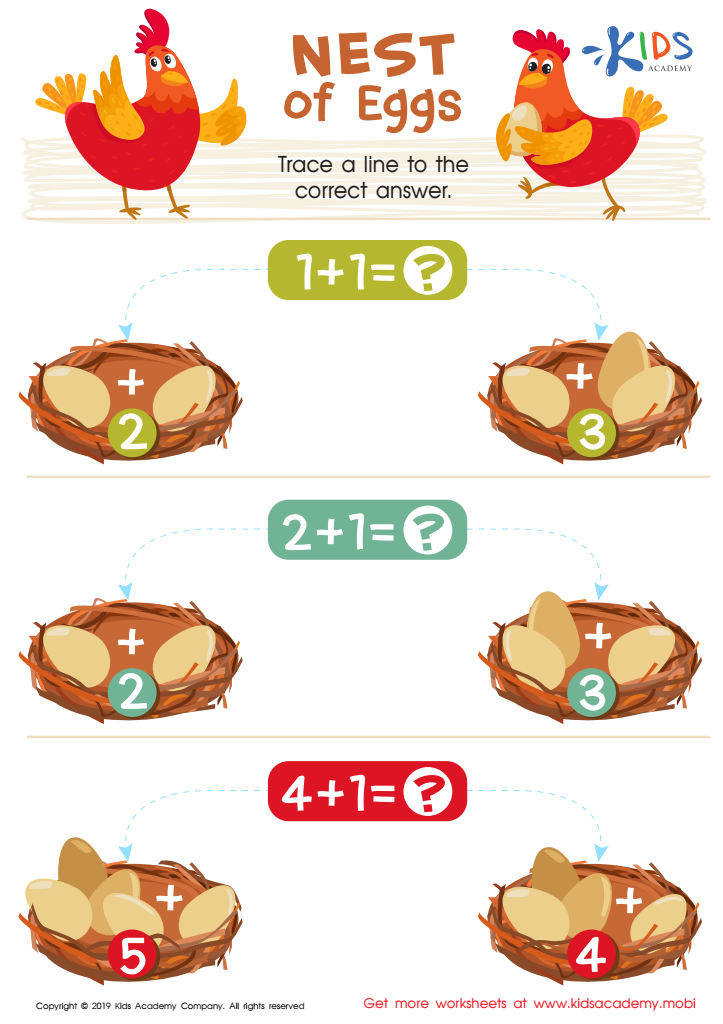
Nest of Eggs Worksheet

Nest of Eggs Worksheet

Help your kids learn math with this worksheet. First discuss the picture with them and then work through the three equations. Encourage them to trace the correct answer afterwards. With your assistance, they'll soon be able to confidently add numbers.
Nest of Eggs Worksheet
Worksheet
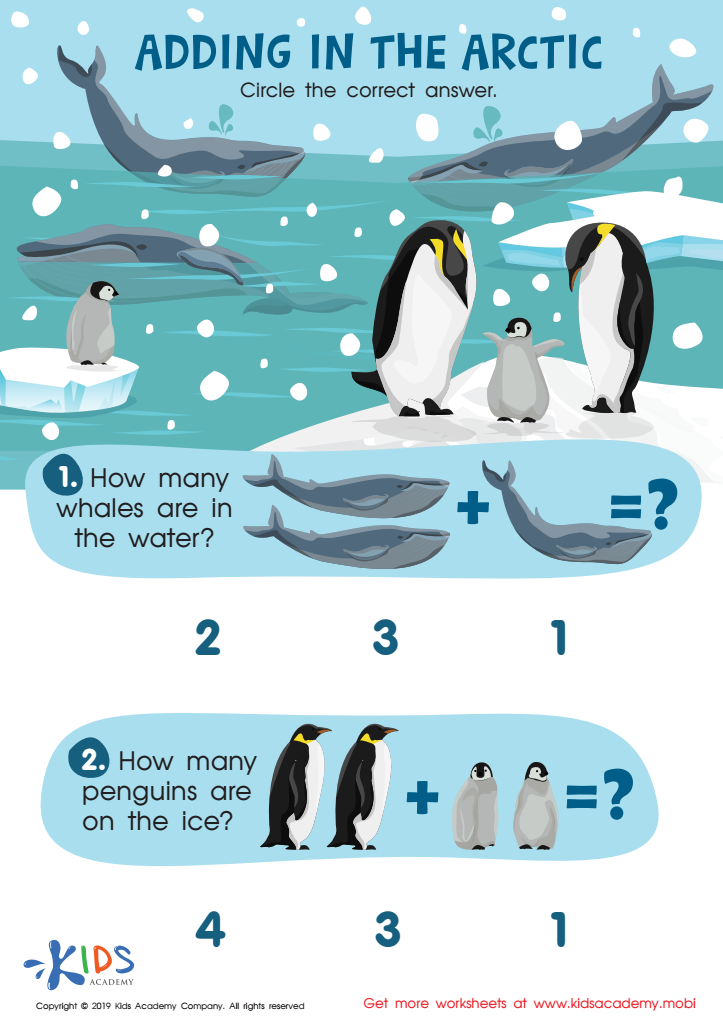
Adding in the Arctic Worksheet
Adding in the Arctic Worksheet
Introduce your kids to the Arctic with this worksheet. Let them look at the pictures, teach them the name of the animals, and help them add up the correct number. Ask your kids to tell you some of the animals found there and what the weather is like. It's a fun and educational way to learn more about the Arctic.
Adding in the Arctic Worksheet
Worksheet
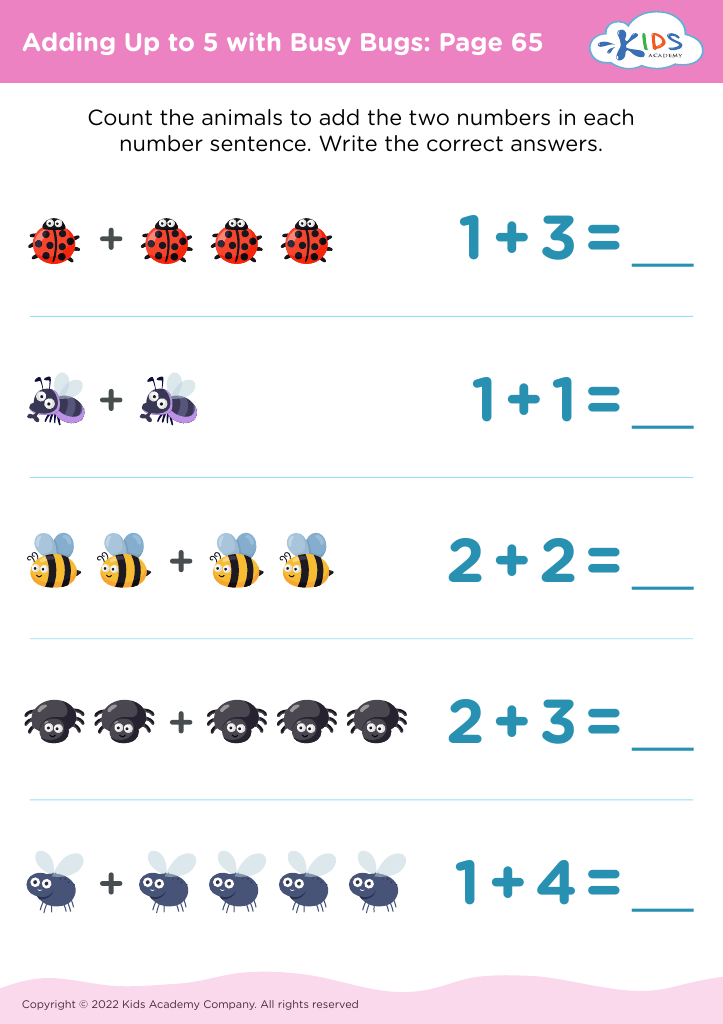
Adding Up to 5 with Busy Bugs: Page 65
Worksheet
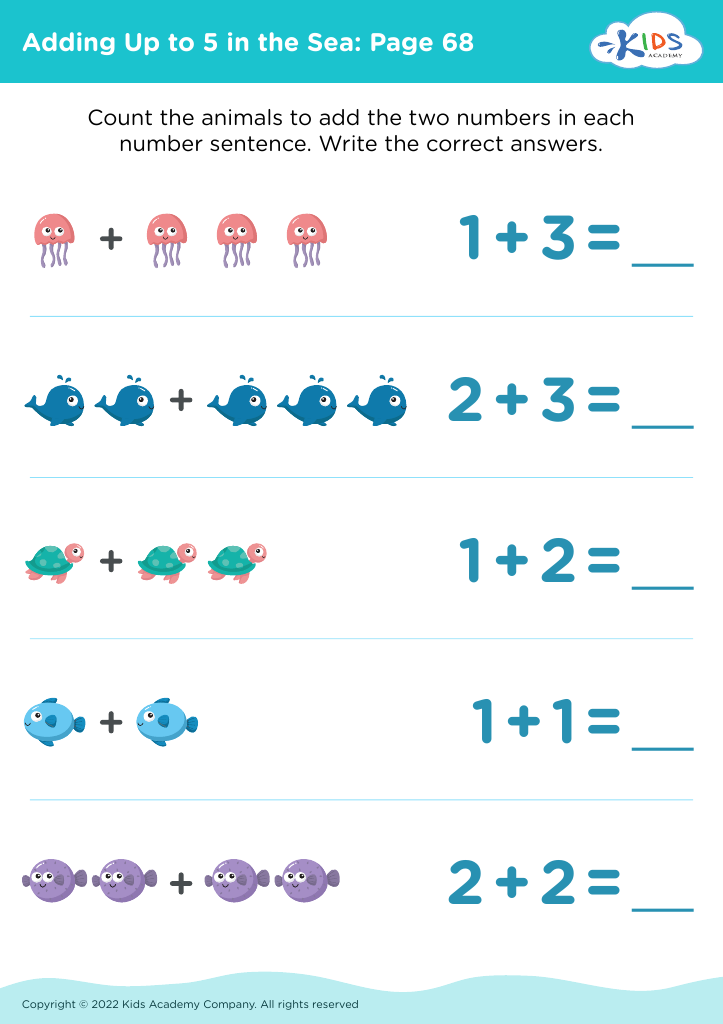
Adding Up to 5 in the Sea: Page 68
Worksheet
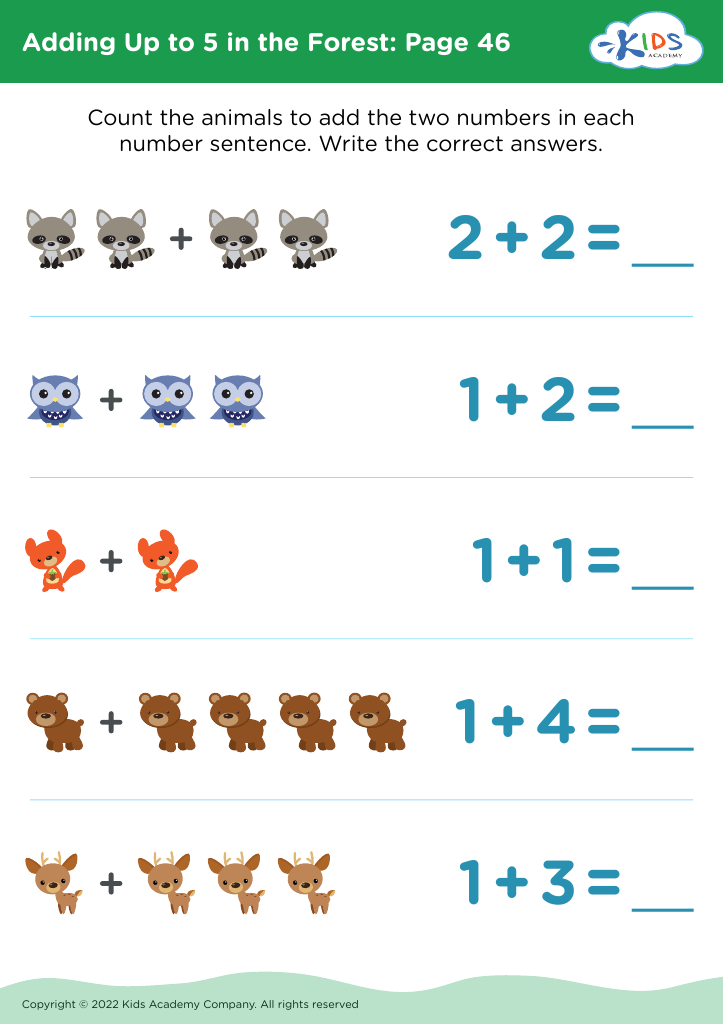
Adding Up to 5 in the Forest: Page 46
Worksheet
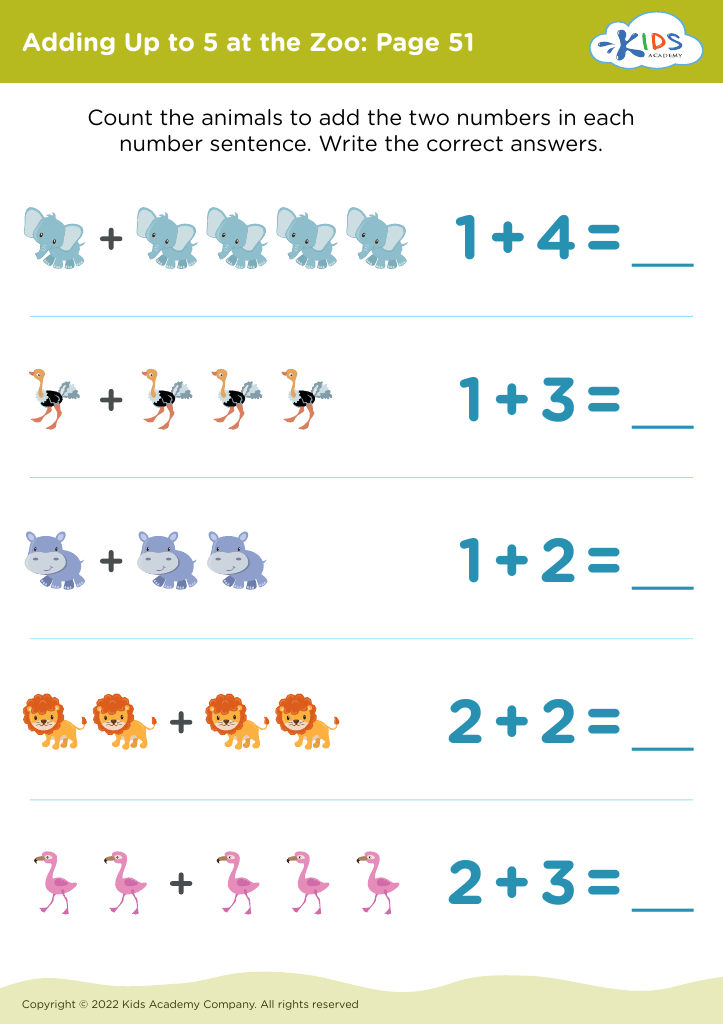
Adding Up to 5 at the Zoo: Page 51
Worksheet
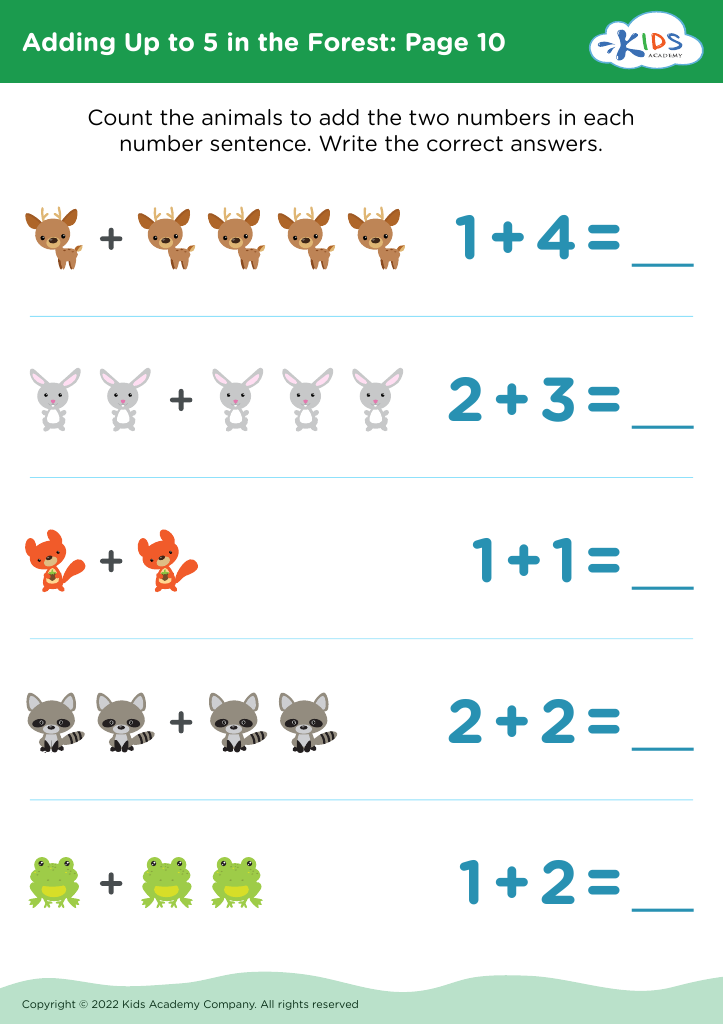
Adding Up to 5 in the Forest: Page 10
Worksheet
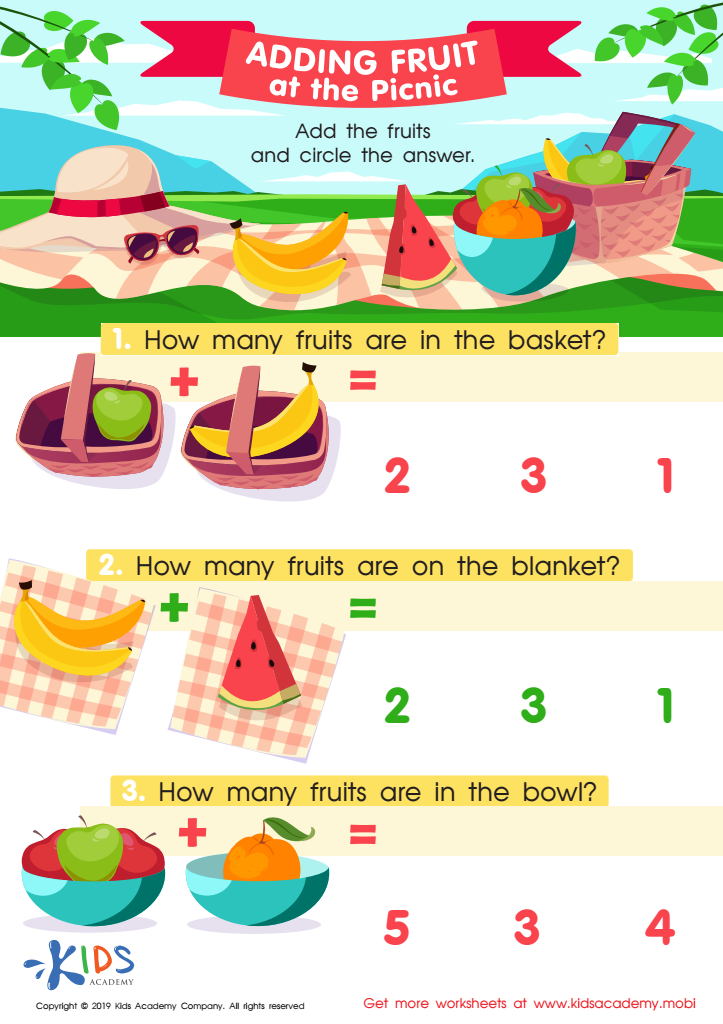
Adding Fruit at the Picnic Worksheet
Adding Fruit at the Picnic Worksheet

Picnics are a great way for the family to enjoy a fun day in the sun! Get your kids involved by having them help load the picnic basket and do this worksheet to practice their math skills while they get ready. Identify the fruits in the picture, add them up, and circle the correct answer.
Adding Fruit at the Picnic Worksheet
Worksheet
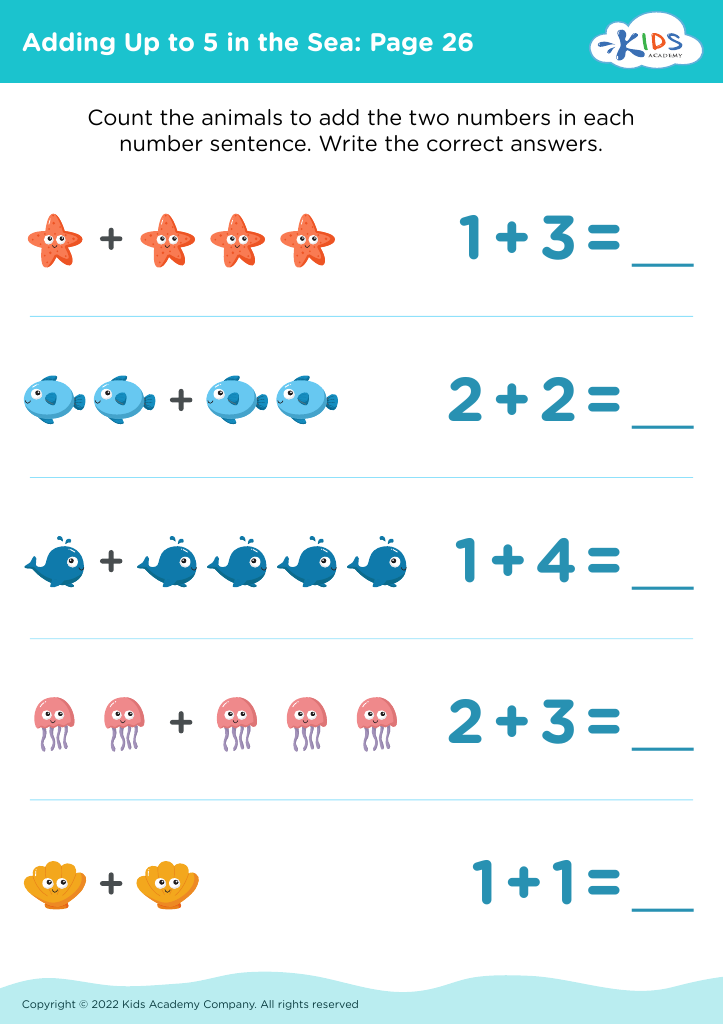
Adding Up to 5 in the Sea: Page 26
Worksheet
Pyramid Math to Make 11 Worksheet
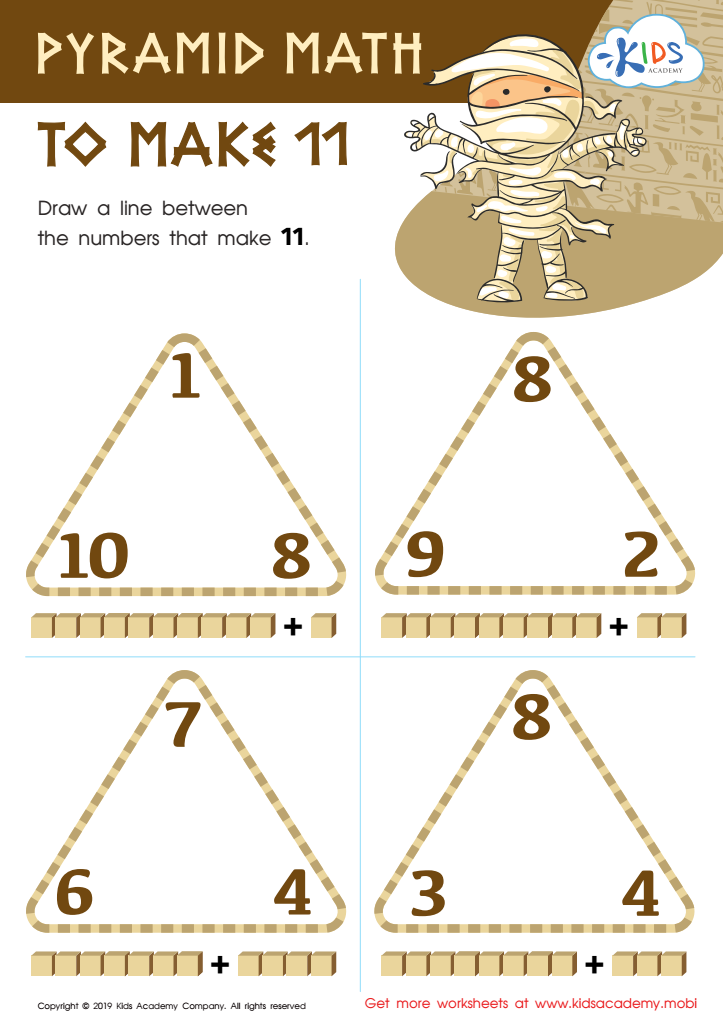
Pyramid Math to Make 11 Worksheet

Have your kids look at the picture of the Egyptian pyramids and tell you what they see. Then, help them do simple math by adding up the numbers in the pyramids and connecting those that make 11. This worksheet is perfect for teaching your kids about history, mathematics, and problem-solving.
Pyramid Math to Make 11 Worksheet

Worksheet
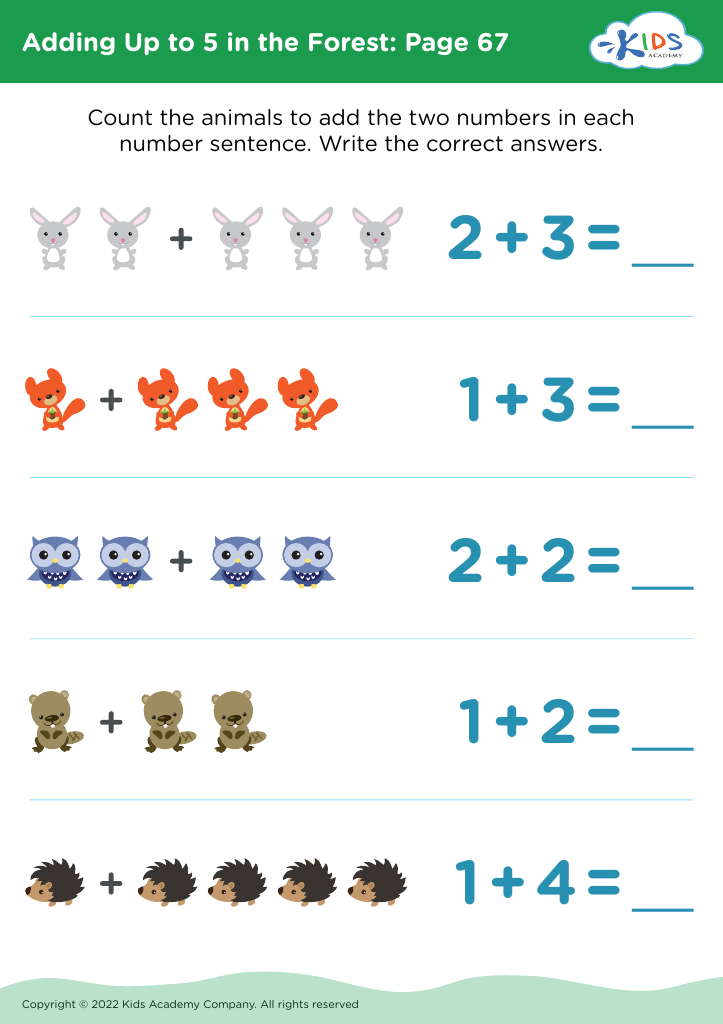
Adding Up to 5 in the Forest: Page 67
Worksheet
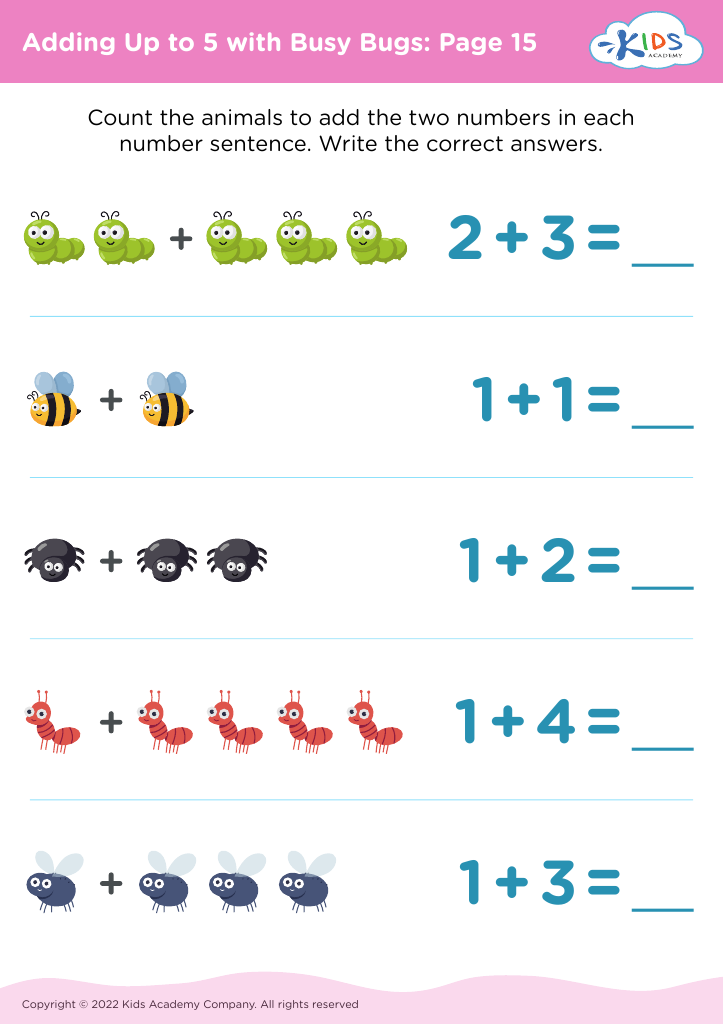
Adding Up to 5 with Busy Bugs: Page 15
Worksheet


... 4 5

Understanding addition and subtraction is fundamental for young learners, particularly for children aged 5-6, as it lays the groundwork for future math skills. Parents and teachers should care about addition and subtraction practice at this age for several reasons.

Firstly, mastering these basic operations builds confidence in children. As they grasp fundamental concepts, they feel empowered to tackle more complex problems in the future. This foundational knowledge encourages a positive attitude towards math, reducing anxiety and fostering a lifelong interest in the subject.

Secondly, practicing addition and subtraction equips children with critical problem-solving skills. Engaging in these activities helps them develop logical thinking, enhances their ability to reason, and boosts their cognitive agility, which is vital across all subjects.

Moreover, addition and subtraction are not isolated skills; they are interconnected with everyday life. Learning these concepts early empowers children to understand and manage simple financial tasks, estimate scenarios, and engage in activities that involve grouping, sharing, and comparing quantities.

Finally, consistent practice allows parents and teachers to identify areas where a child may be struggling, enabling timely interventions. Therefore, focusing on addition and subtraction practice is an invaluable investment in children’s overall educational journey.