Check out this FREE Trial Lesson on Addition & Subtraction for age 5-6!

Match Objects that Fit Together

Favorites
With answer key
Interactive
  • 5-6
  • Basic Addition Skills
  • Addition & Subtraction
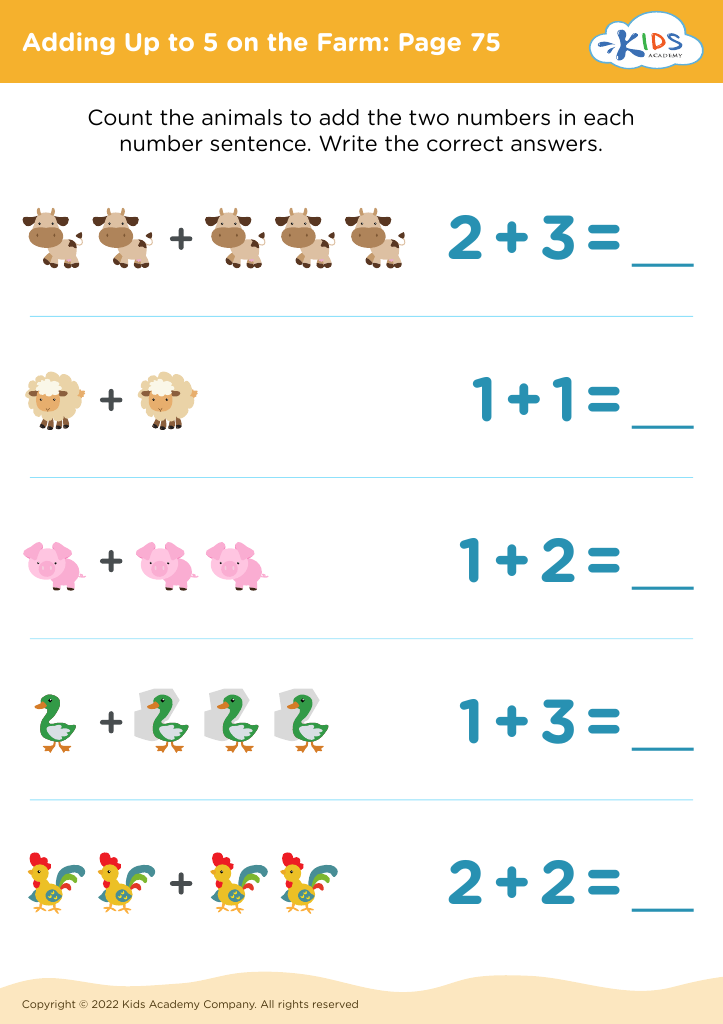
Adding Up to 5 on the Farm: Page 75
Worksheet
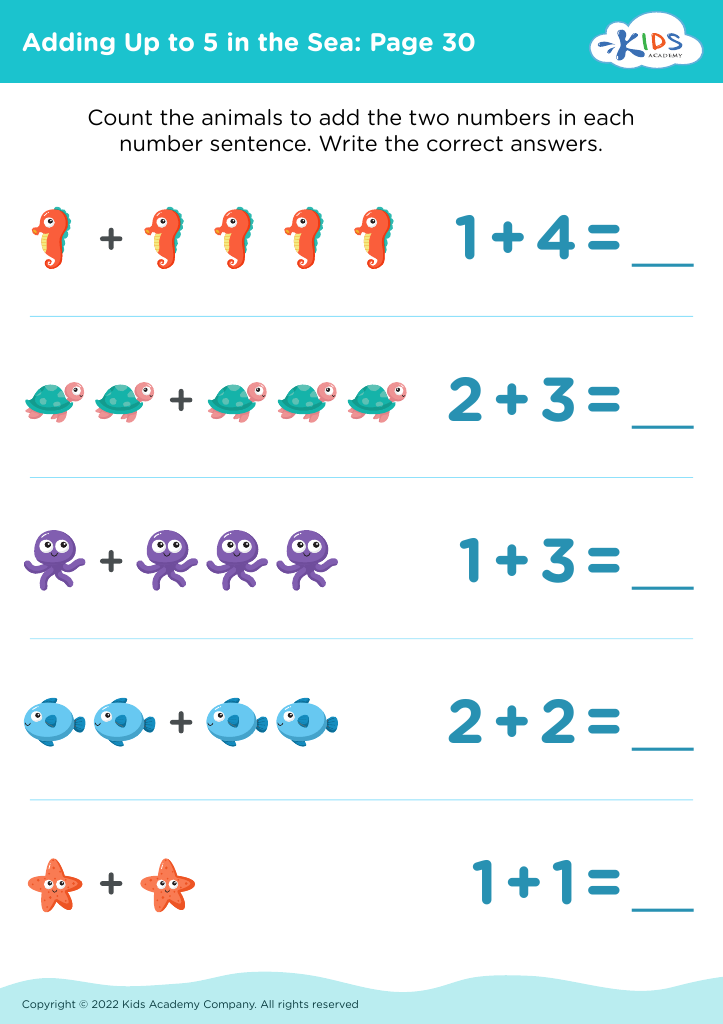
Adding Up to 5 in the Sea: Page 30
Worksheet
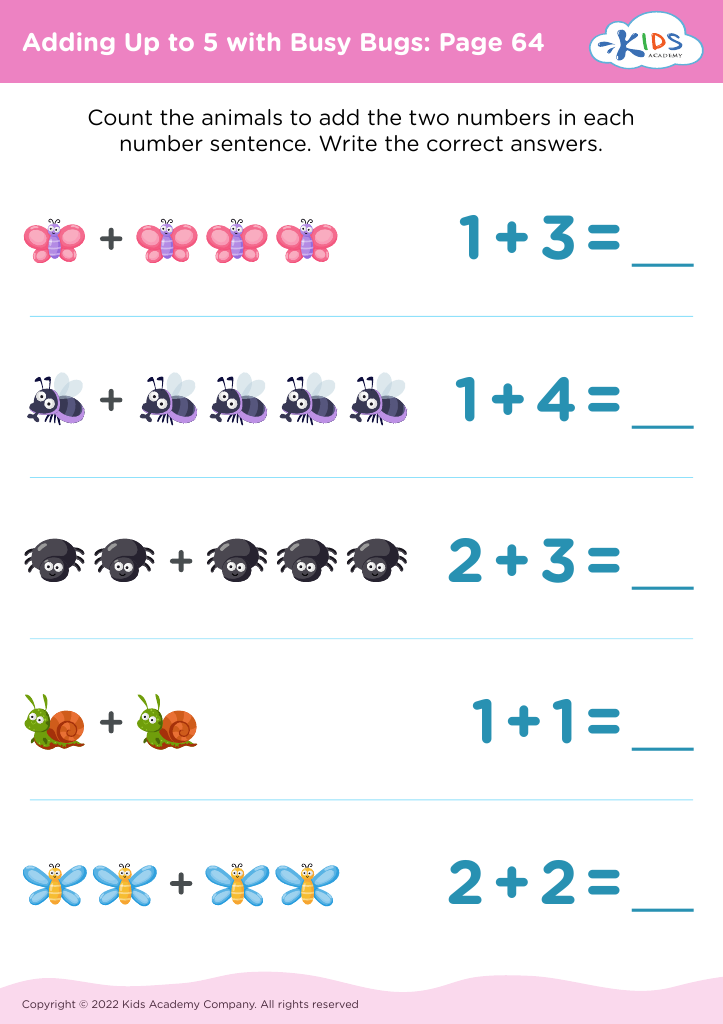
Adding Up to 5 with Busy Bugs: Page 64
Worksheet
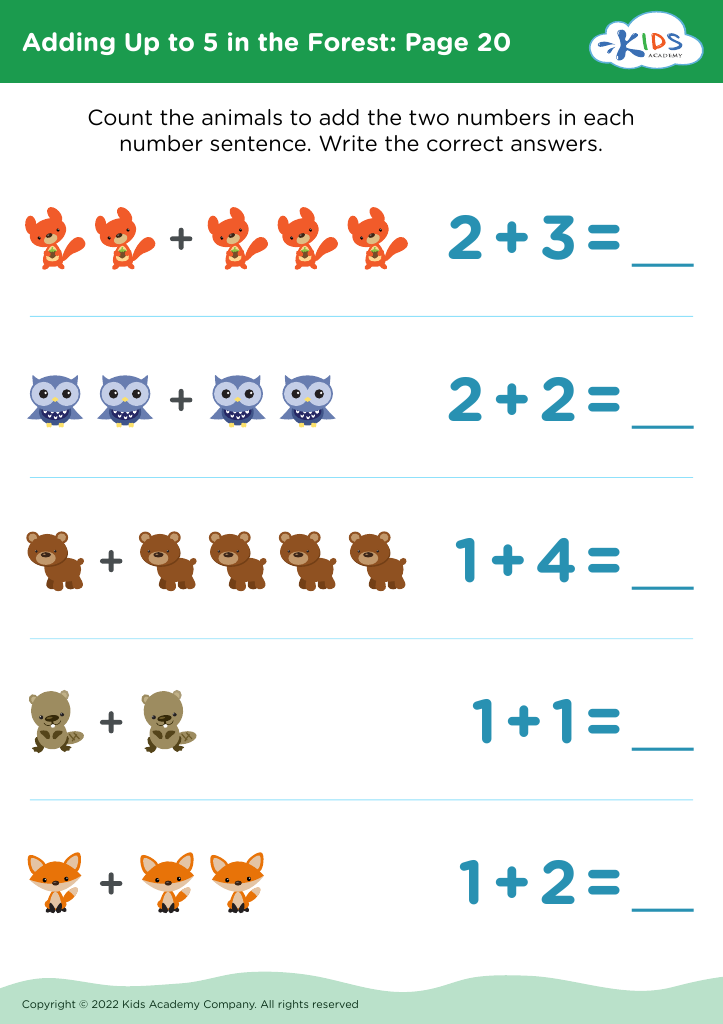
Adding Up to 5 in the Forest: Page 20
Worksheet
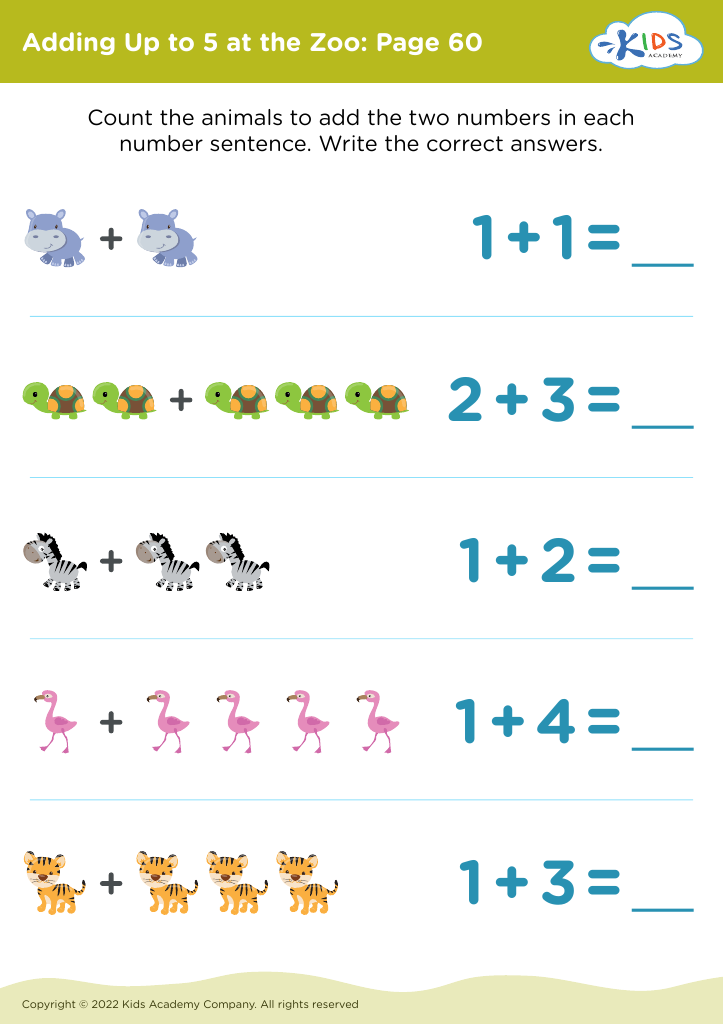
Adding Up to 5 at the Zoo: Page 60
Worksheet
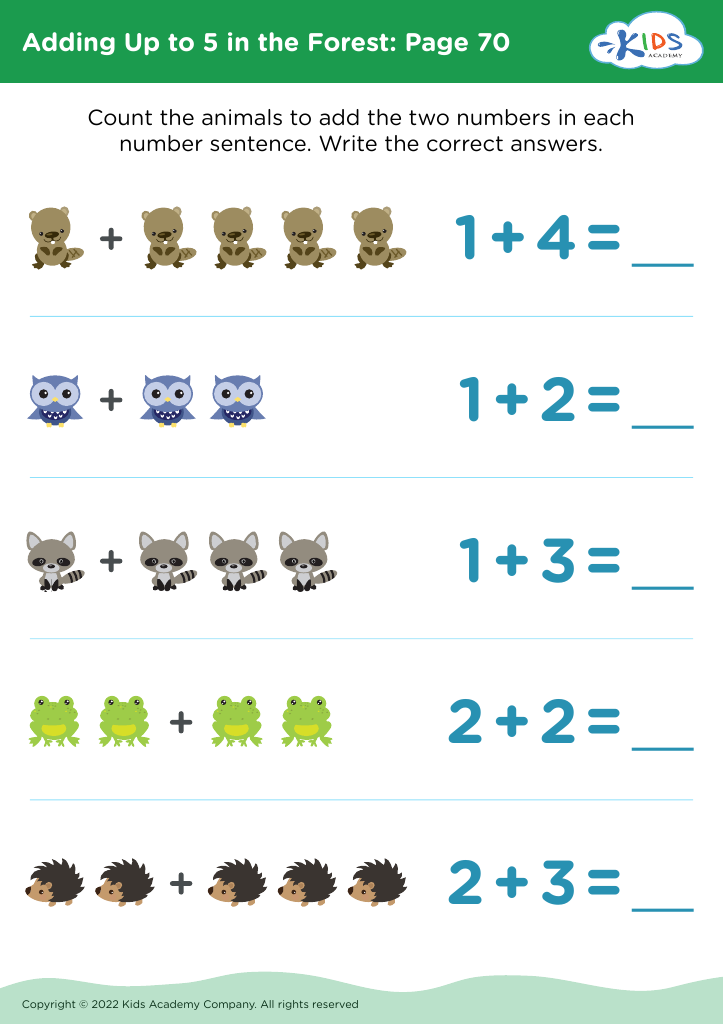
Adding Up to 5 in the Forest: Page 70
Worksheet
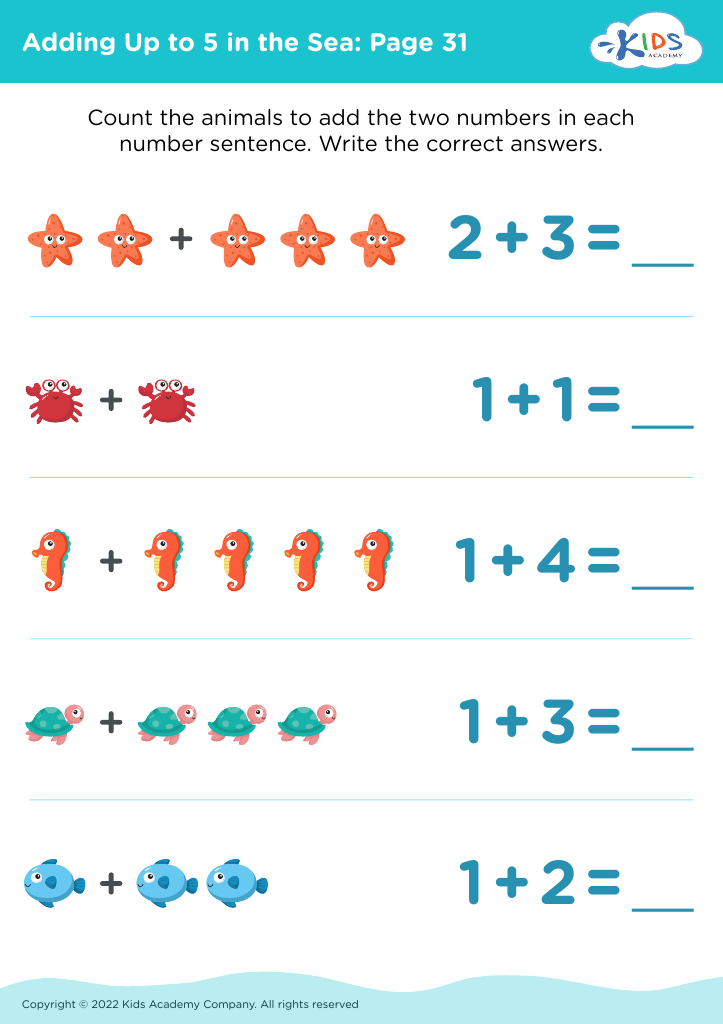
Adding Up to 5 in the Sea: Page 31
Worksheet
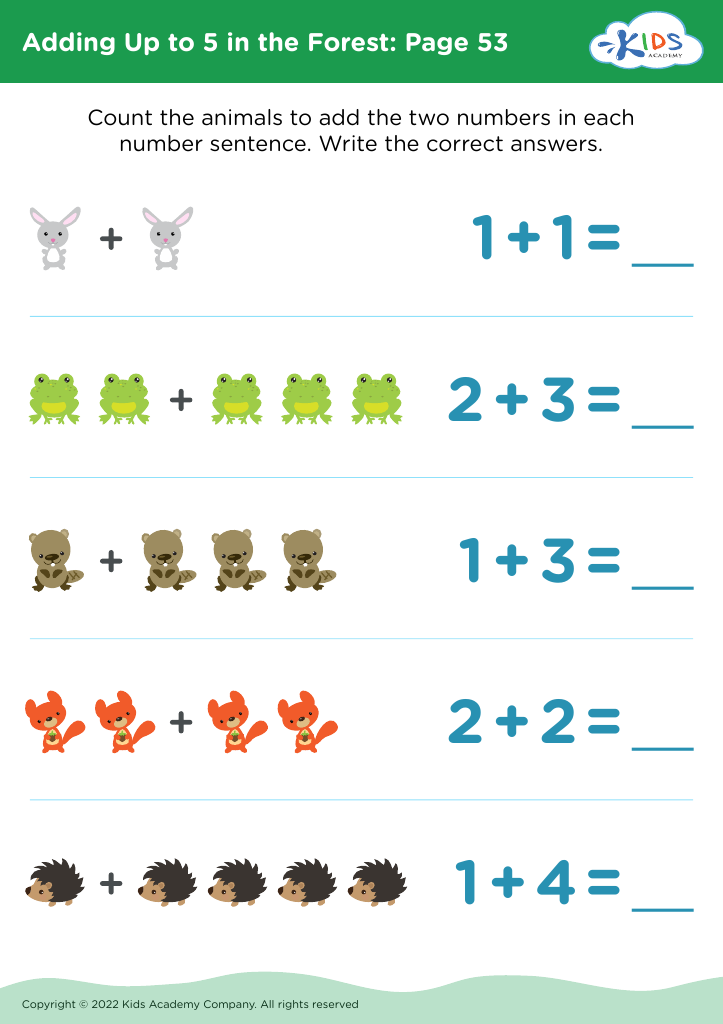
Adding Up to 5 in the Forest: Page 53
Worksheet
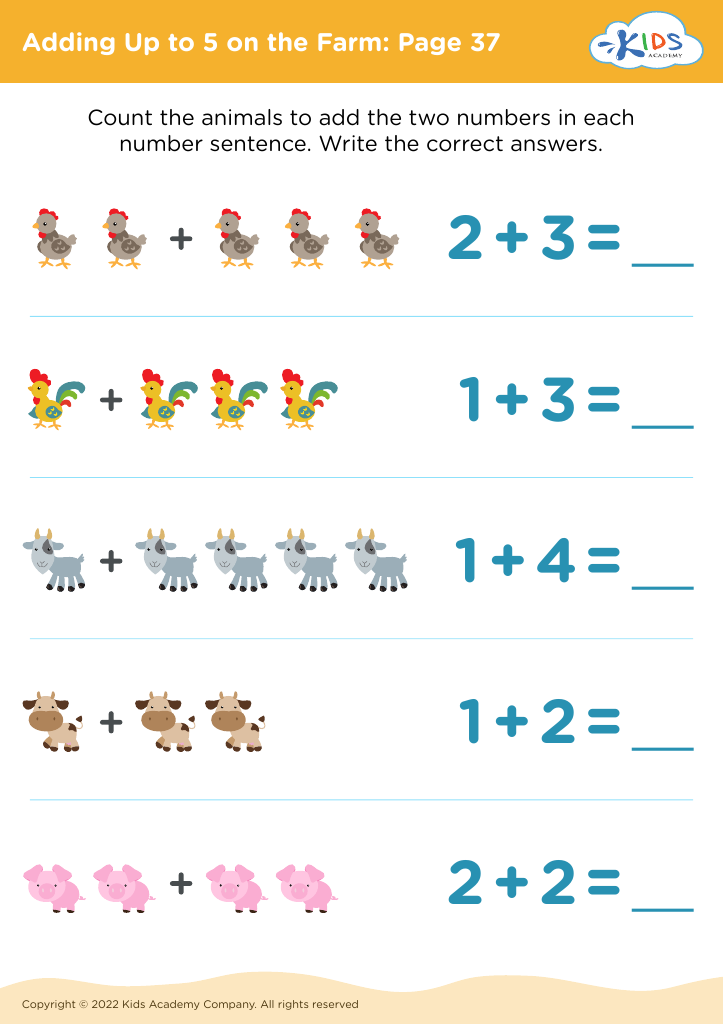
Adding Up to 5 on the Farm: Page 37
Worksheet
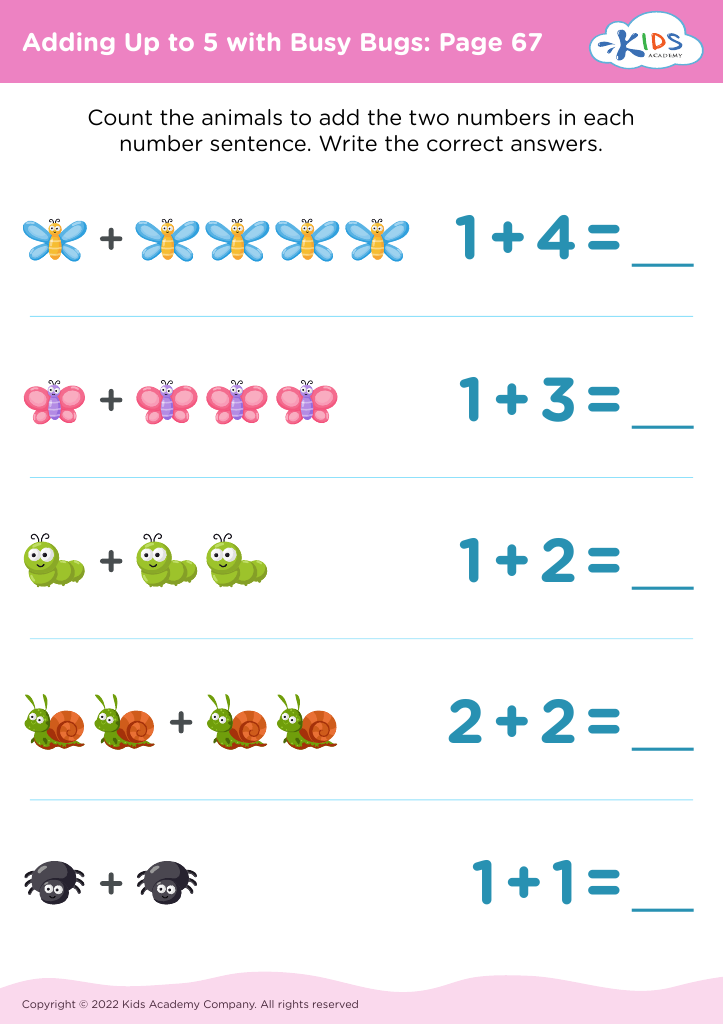
Adding Up to 5 with Busy Bugs: Page 67
Worksheet
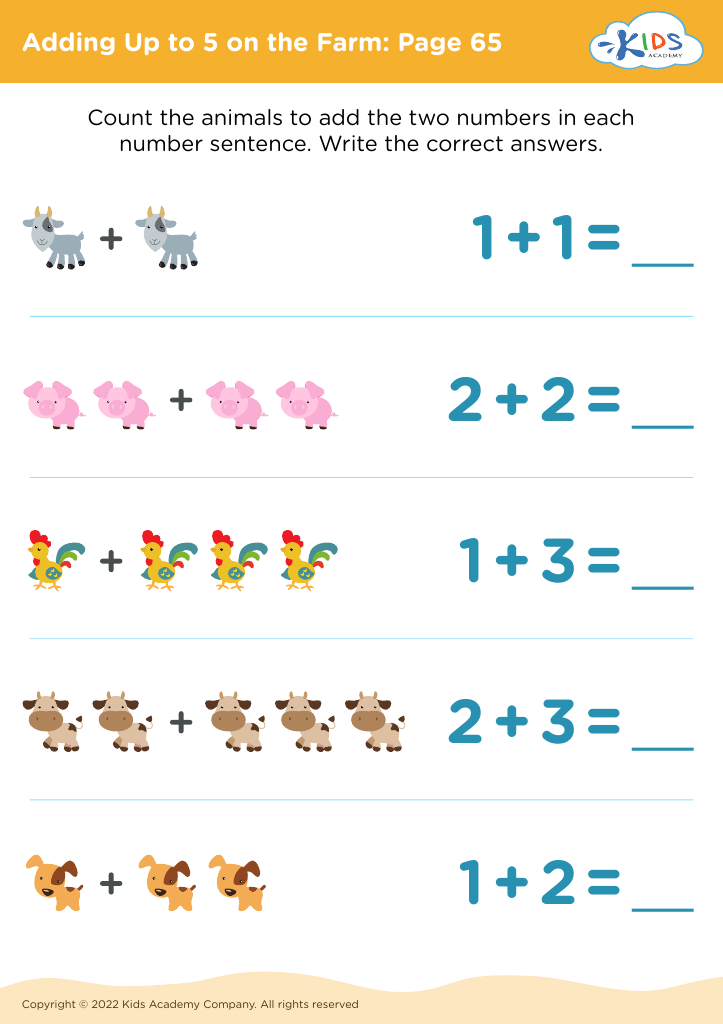
Adding Up to 5 on the Farm: Page 65
Worksheet
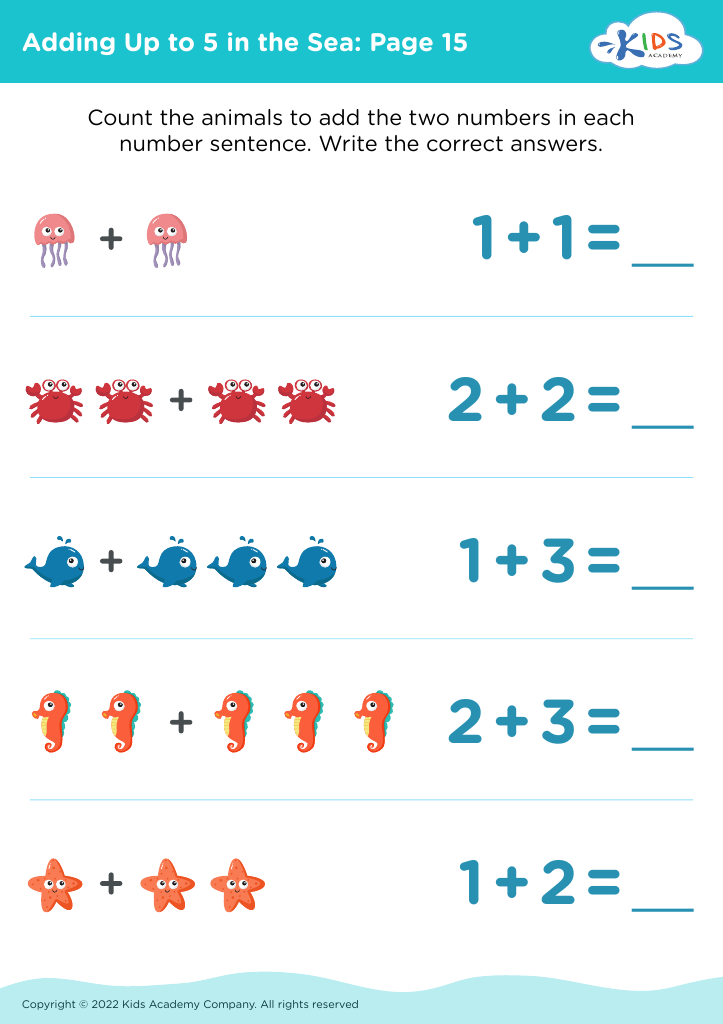
Adding Up to 5 in the Sea: Page 15
Worksheet
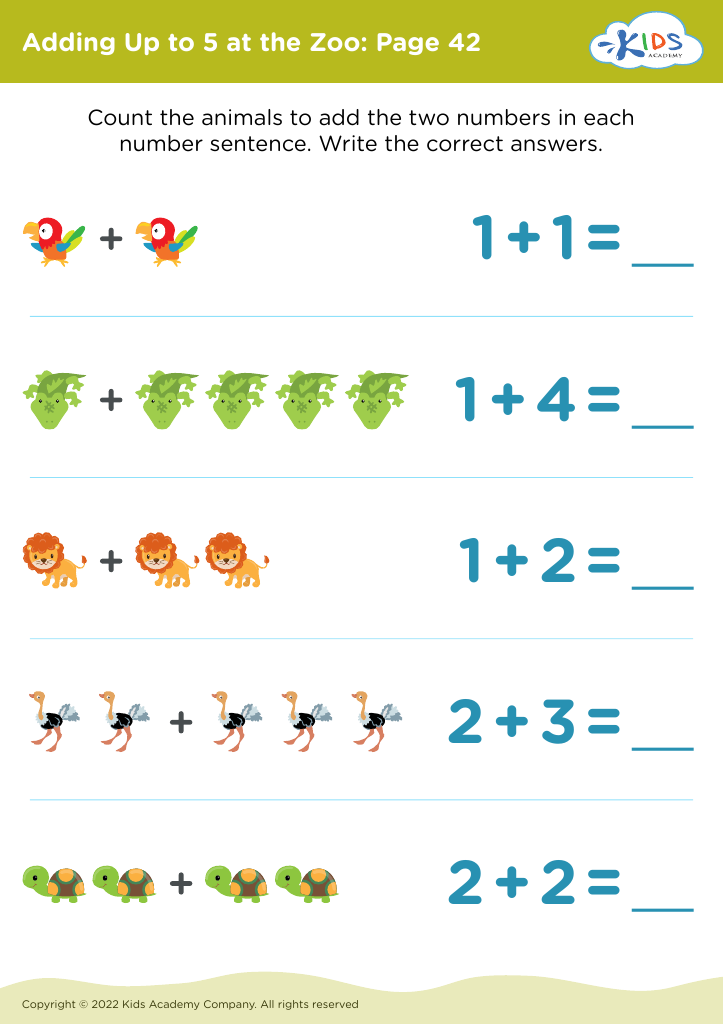
Adding Up to 5 at the Zoo: Page 42
Worksheet
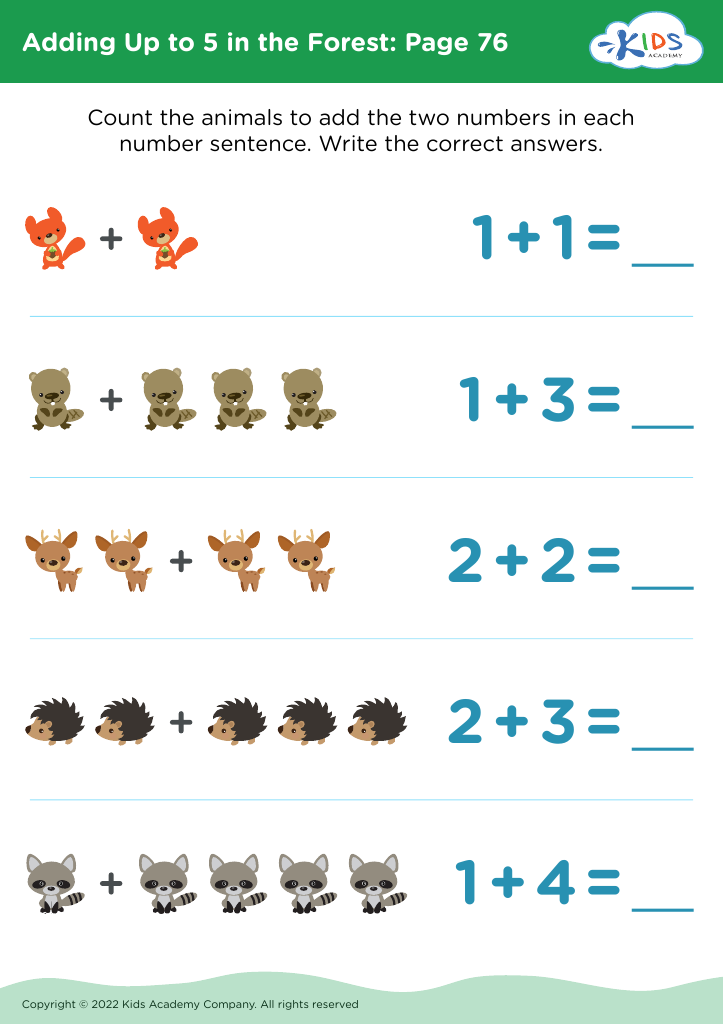
Adding Up to 5 in the Forest: Page 76
Worksheet
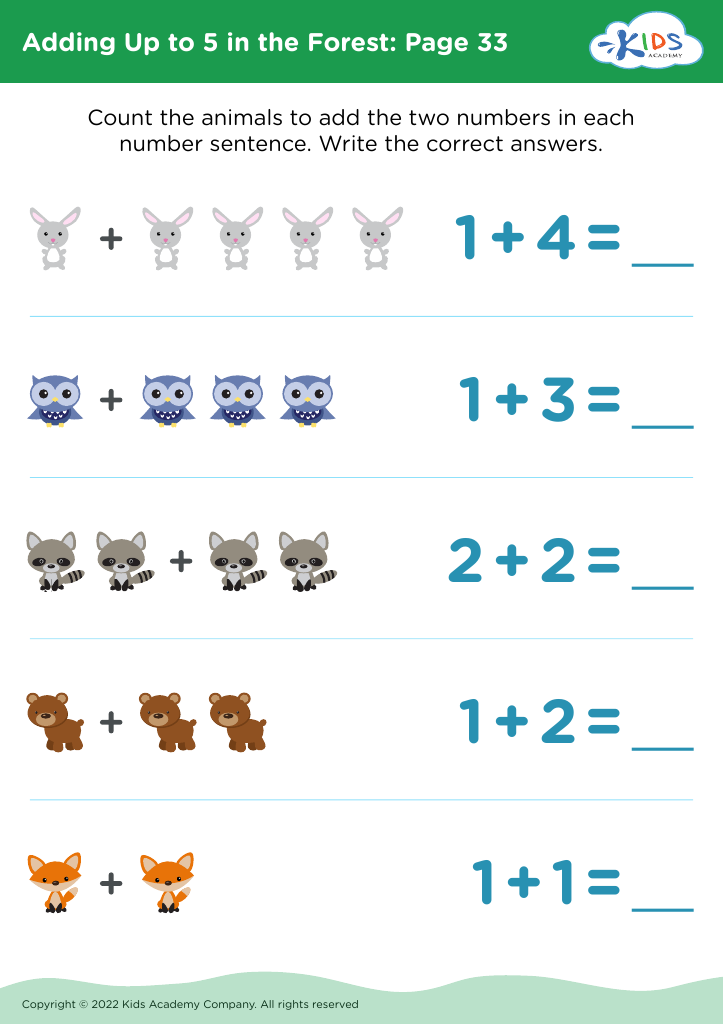
Adding Up to 5 in the Forest: Page 33
Worksheet
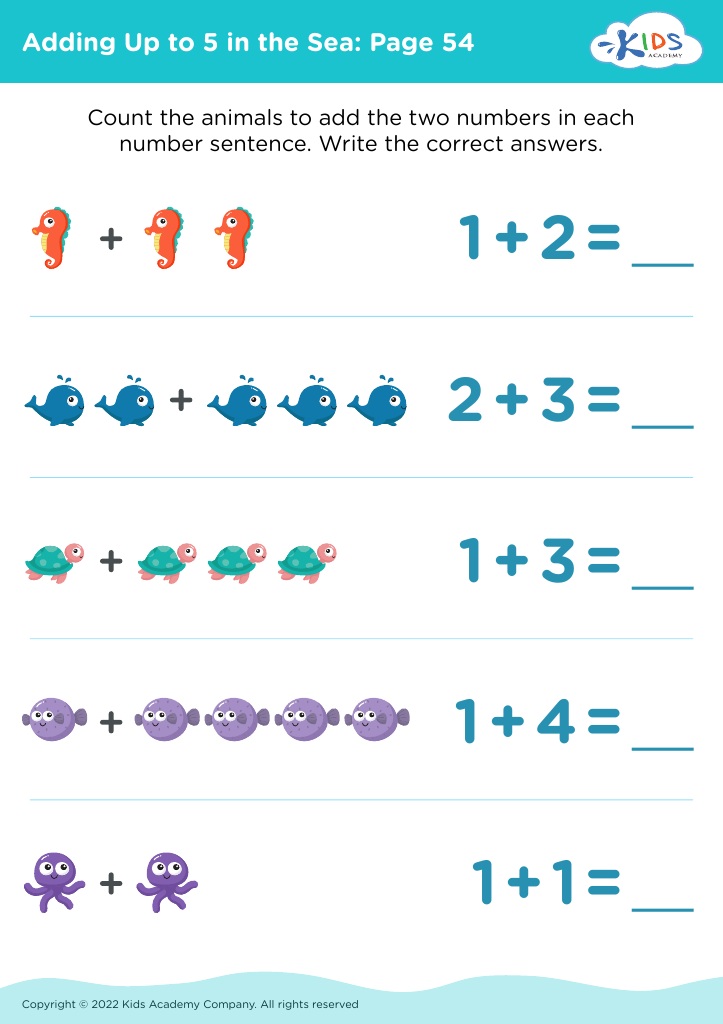
Adding Up to 5 in the Sea: Page 54
Worksheet
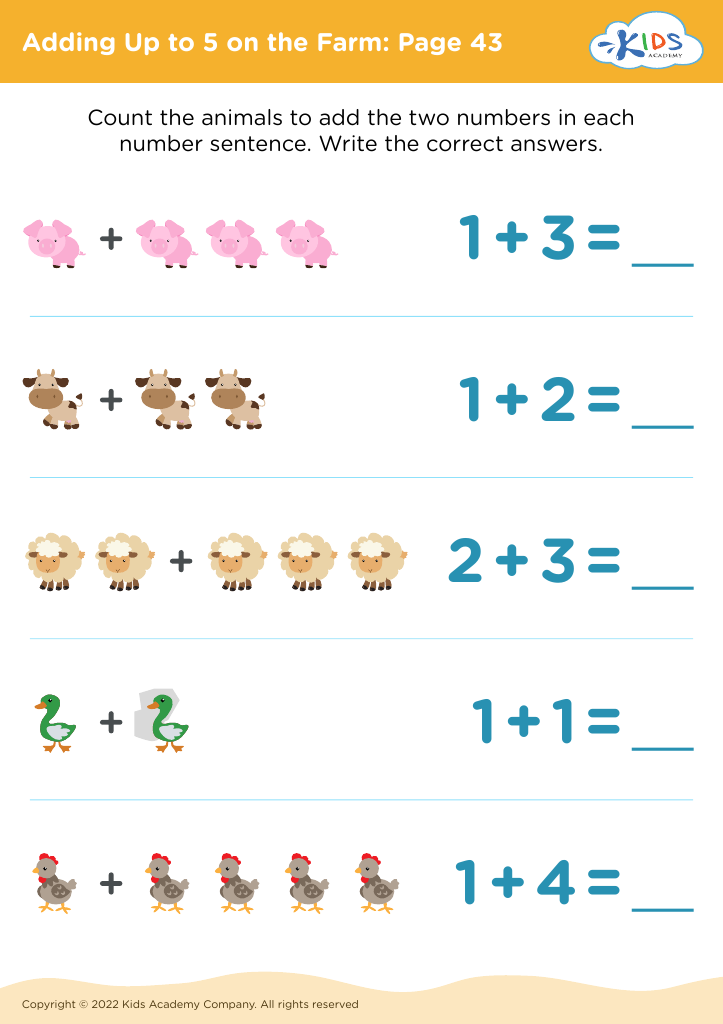
Adding Up to 5 on the Farm: Page 43
Worksheet
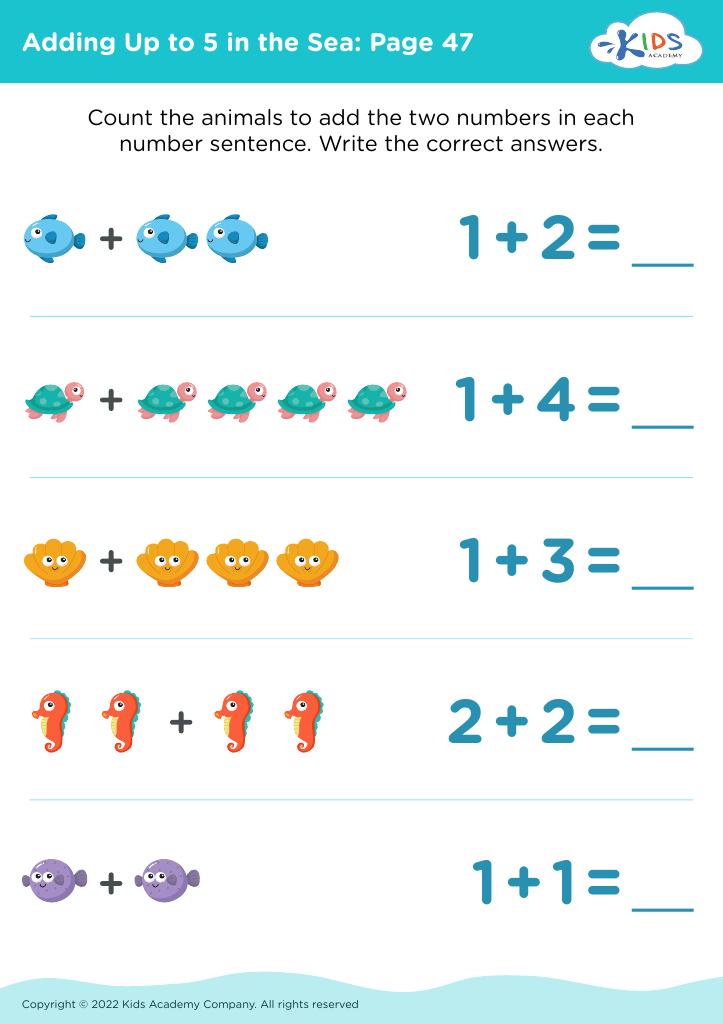
Adding Up to 5 in the Sea: Page 47
Worksheet
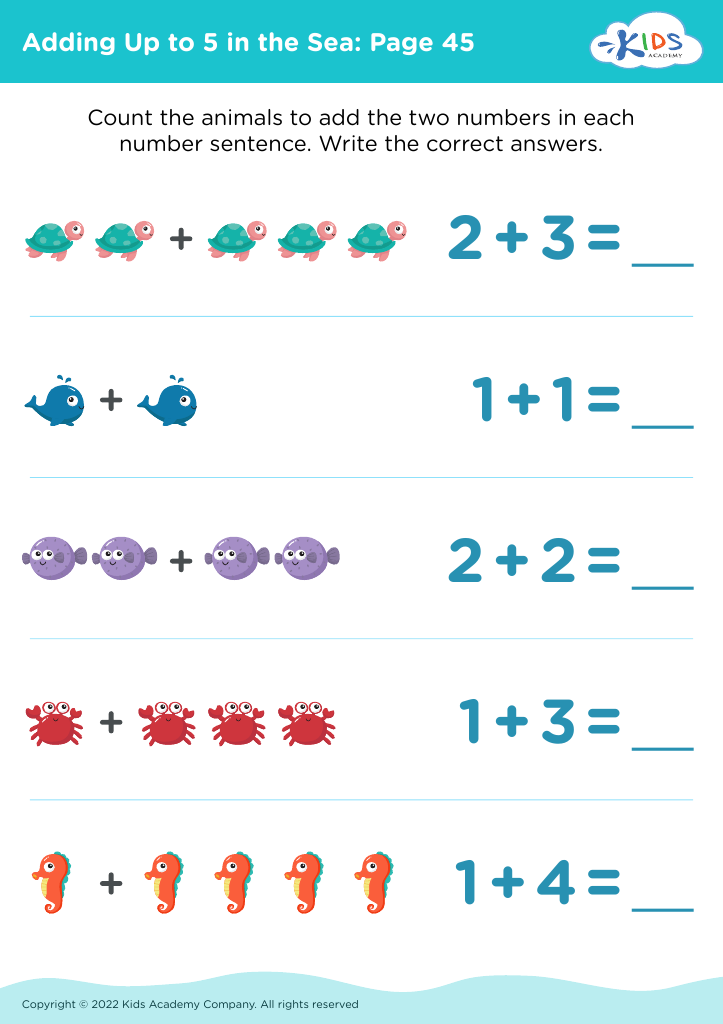
Adding Up to 5 in the Sea: Page 45
Worksheet
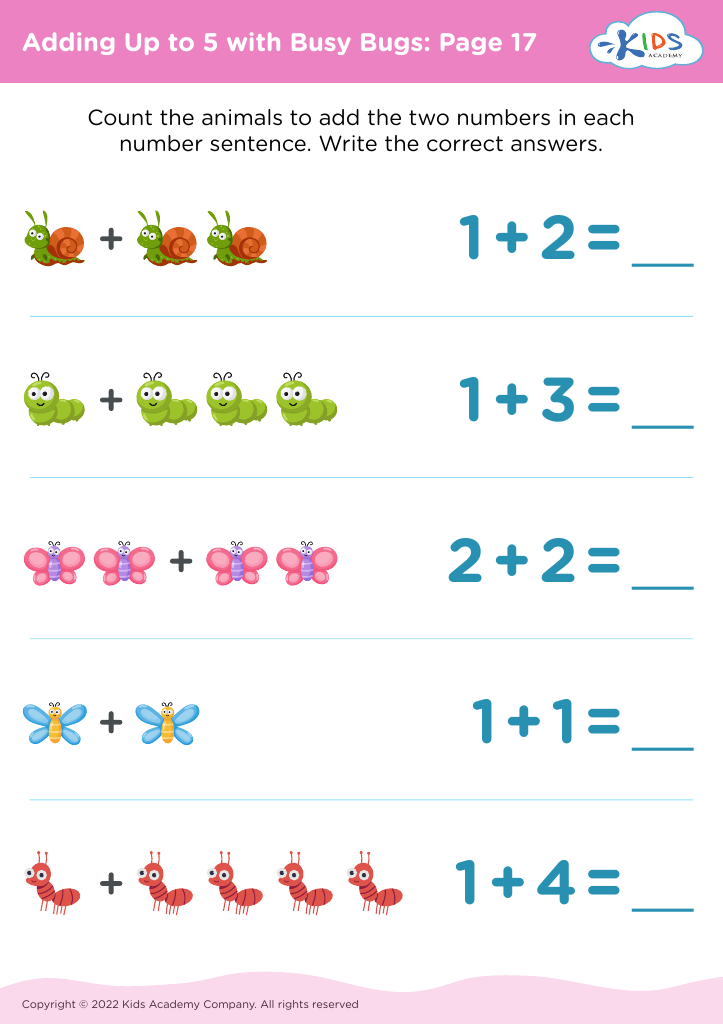
Adding Up to 5 with Busy Bugs: Page 17
Worksheet
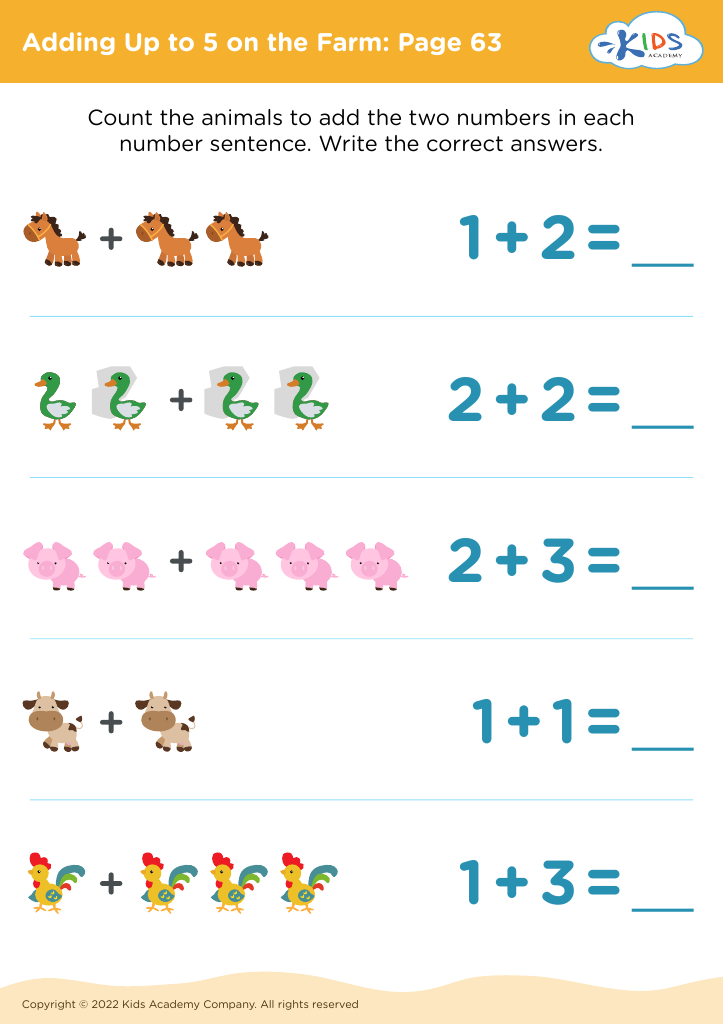
Adding Up to 5 on the Farm: Page 63
Worksheet
Addition at the Zoo Worksheet

Addition at the Zoo Worksheet

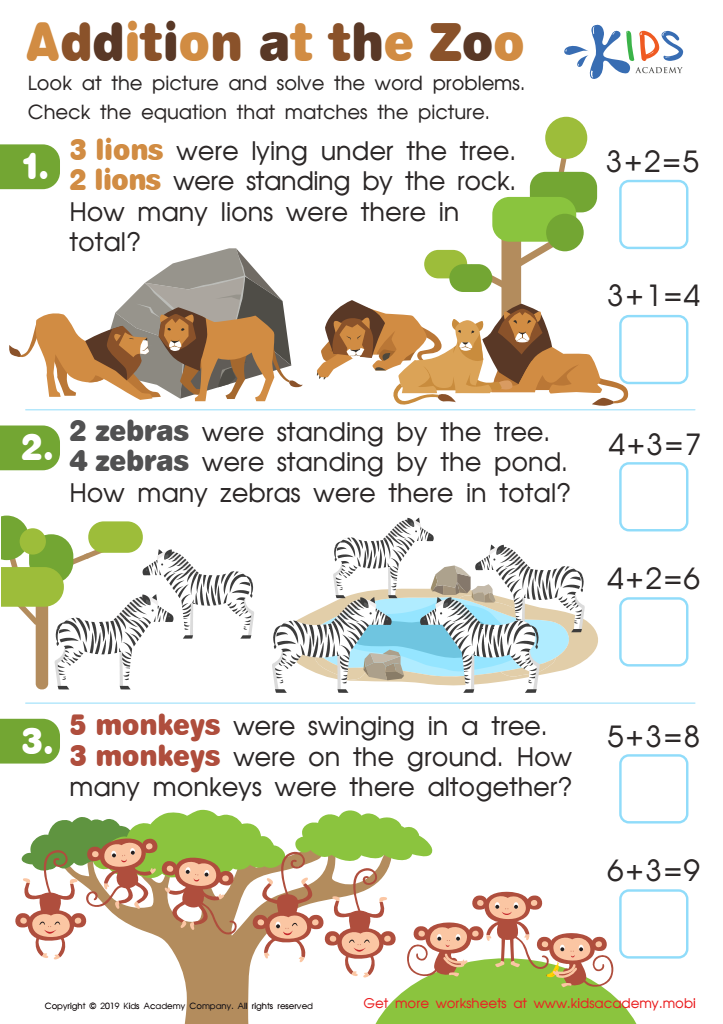
Visit the zoo with your kids and point out all the different animals. Ask them to name their favorites and identify animals on a worksheet. Challenge them to solve word problems related to the pictures. Ask them for the equation that fits the picture and check the answer.
Addition at the Zoo Worksheet
Worksheet
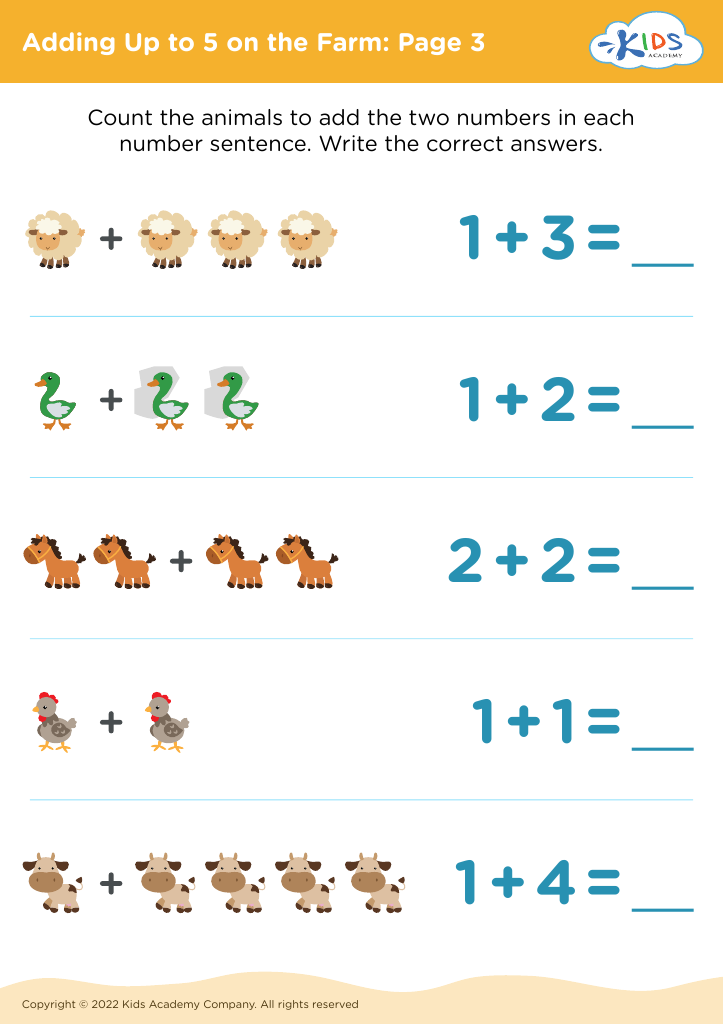
Adding Up to 5 on the Farm: Page 3
Worksheet
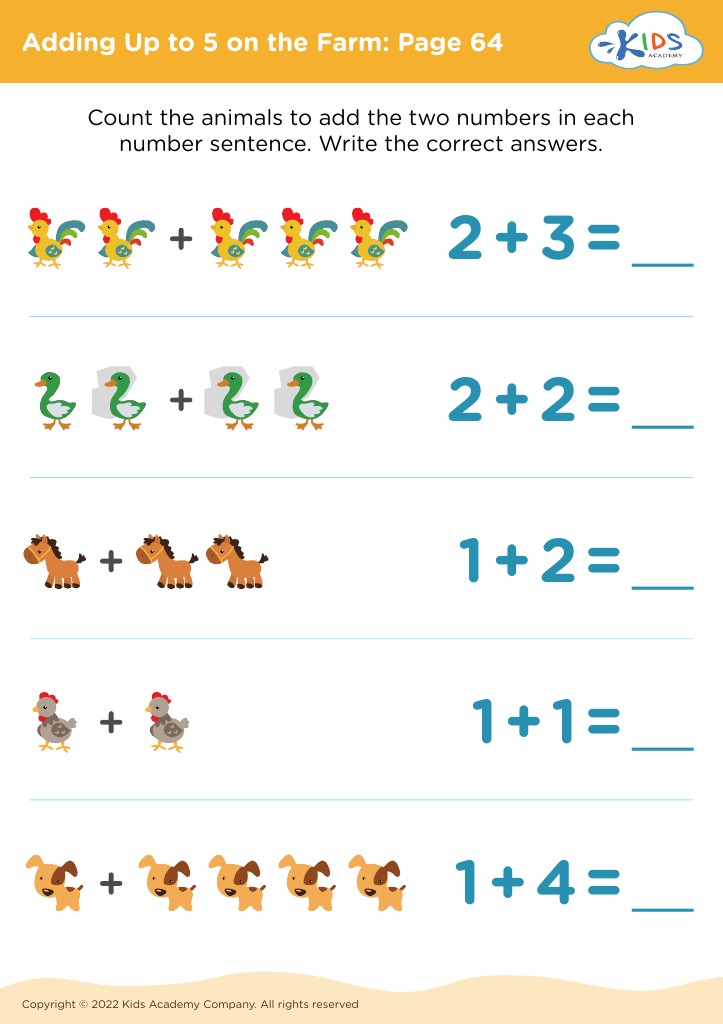
Adding Up to 5 on the Farm: Page 64
Worksheet


Parents and teachers should deeply care about developing basic addition and subtraction skills for children aged 5-6 because these foundational math skills are crucial for their cognitive development and future academic success. At this age, children are in a critical period of brain development where they are highly receptive to learning and can absorb new information quickly. Introducing basic arithmetic concepts early helps establish a strong mathematical foundation, which is essential for understanding more complex mathematical operations later on.

Mastering addition and subtraction is not just about numbers; it also enhances problem-solving skills, logical reasoning, and concentration. These skills are transferable and beneficial in other areas of the child's education and daily life. For instance, simple math skills play a crucial role in everyday tasks like counting objects, understanding time, and managing money.

Moreover, success in early math can build a child's confidence and foster a positive attitude toward learning. When children feel competent in their abilities, they are more likely to enjoy and engage with more challenging subjects. Consistent practice with basic addition and subtraction solidifies these skills, ensuring children are well-prepared for the increasingly complex mathematical concepts they will encounter in higher grades.