Counting objects Addition & Subtraction Worksheets for Ages 5-6
12 filtered results
-
From - To
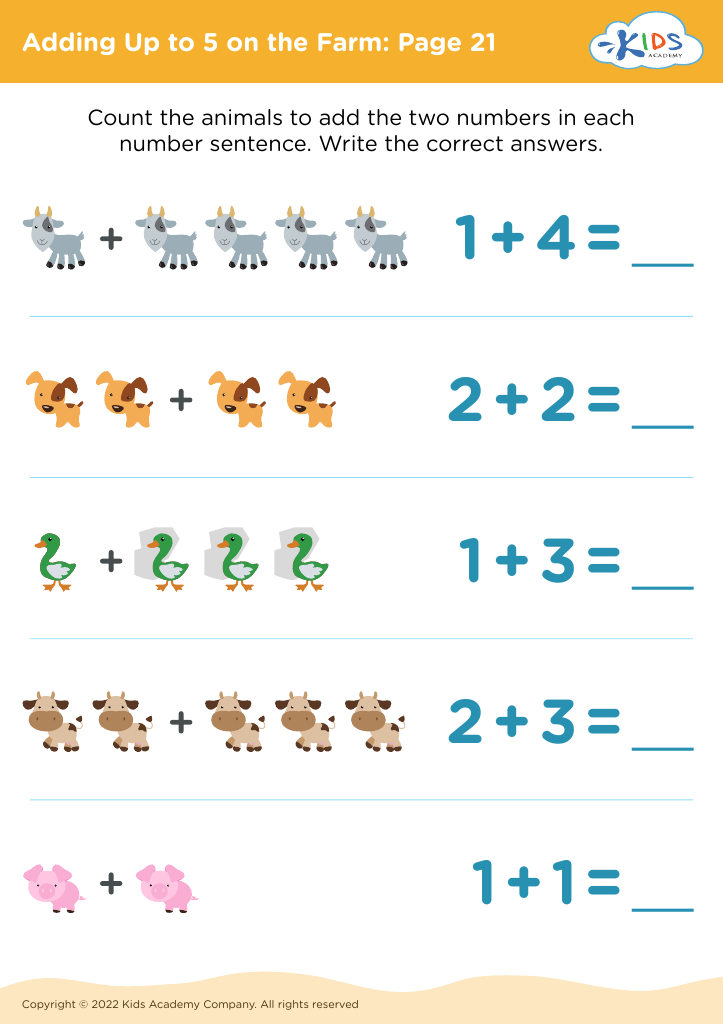
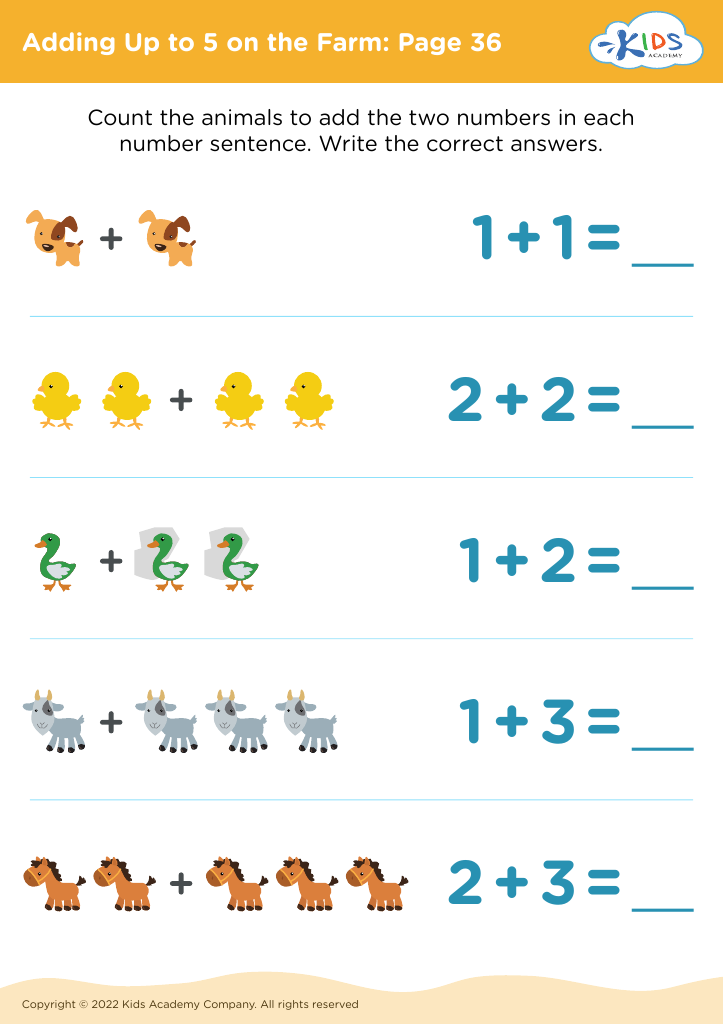
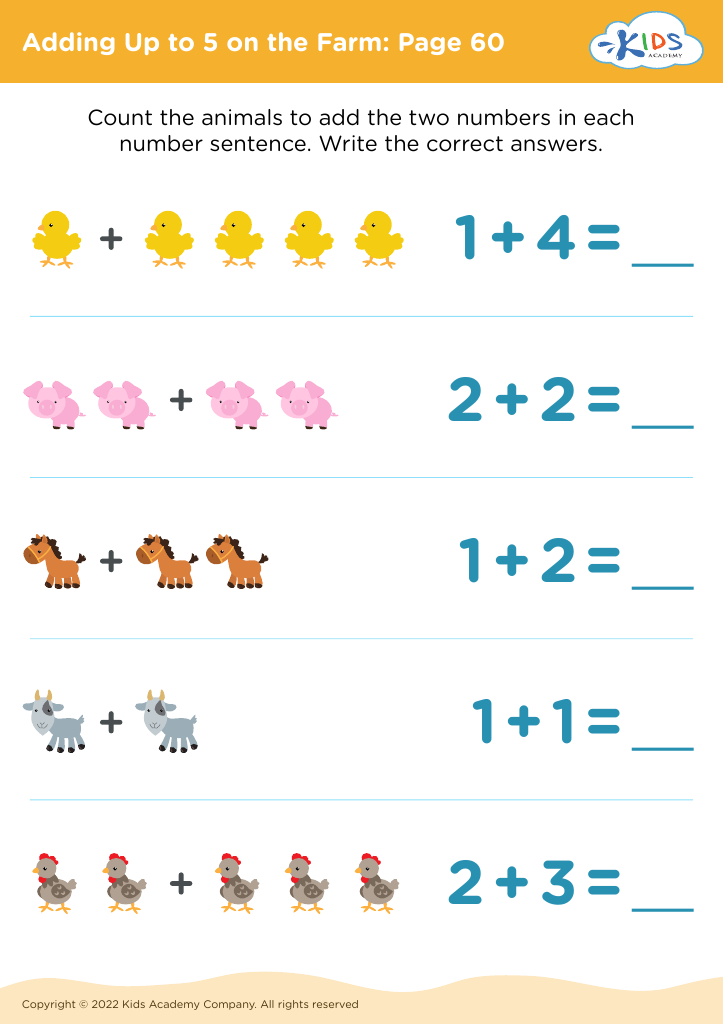
Discover our engaging Counting Objects Addition & Subtraction Worksheets designed specifically for children ages 5-6. These worksheets provide a fun and interactive way for young learners to practice basic math skills by counting various items. Each activity reinforces the principles of addition and subtraction through colorful illustrations that capture children's attention. Ideal for both classroom and home learning, these worksheets encourage problem-solving and critical thinking while boosting confidence in early math abilities. With guided instructions and varied exercises, children will easily grasp the concepts of counting, adding, and subtracting objects, making math an enjoyable experience! Start enhancing your child’s math skills today!
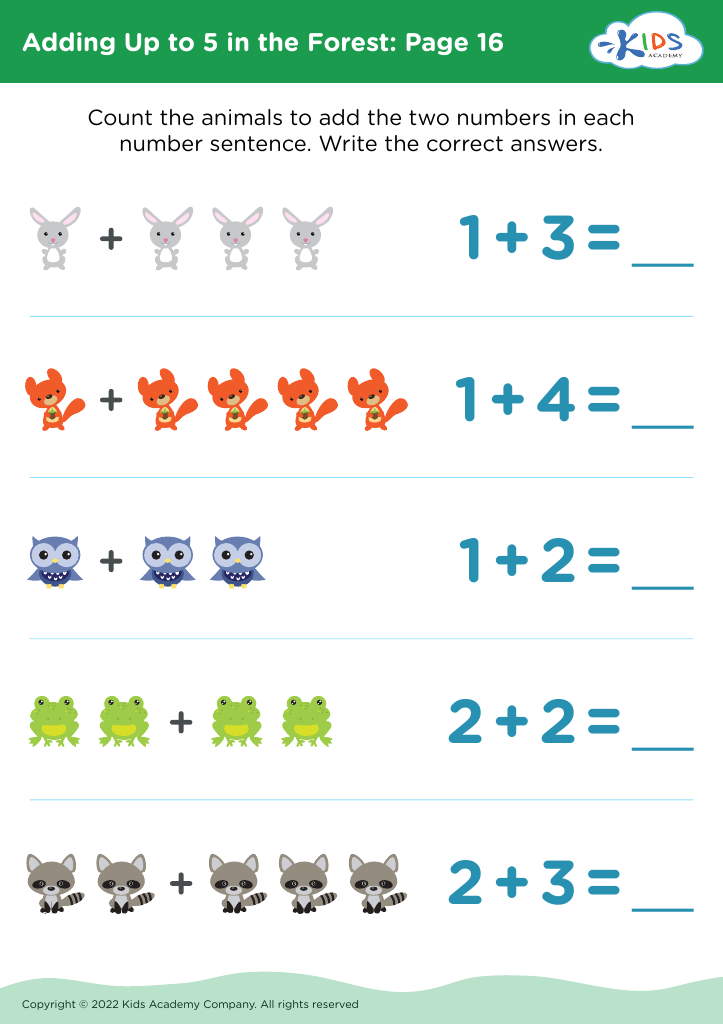
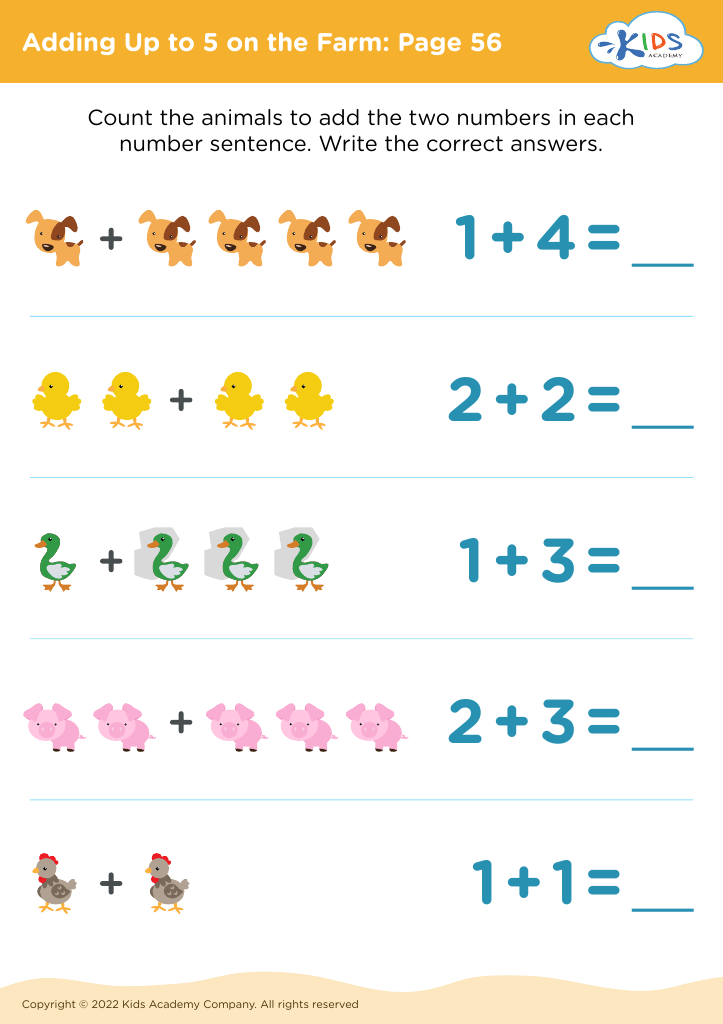
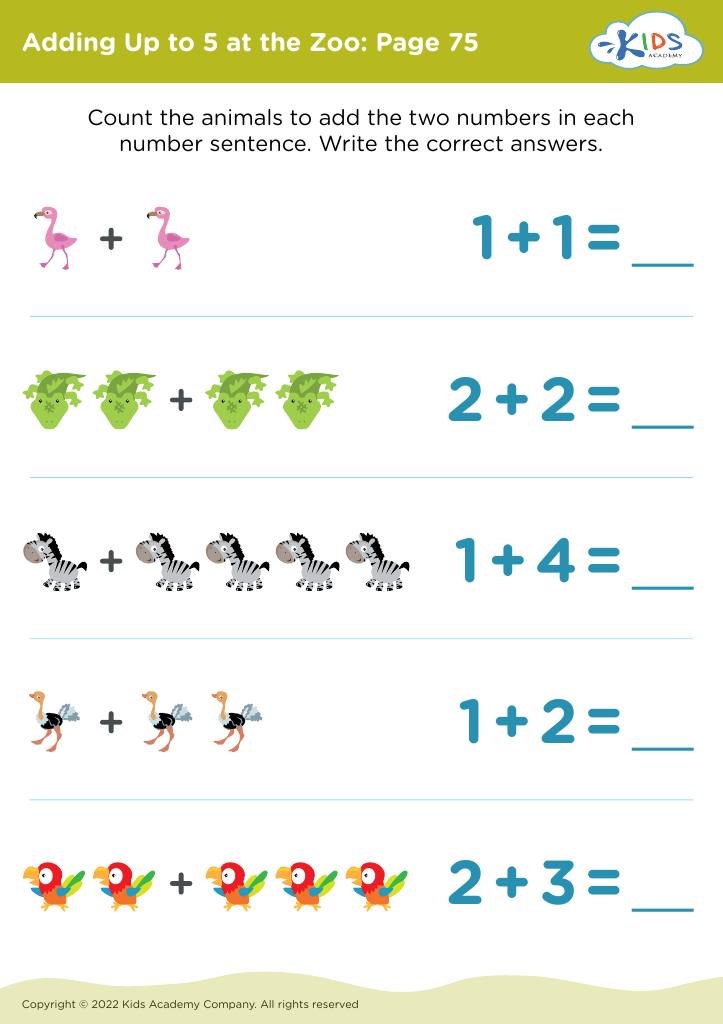
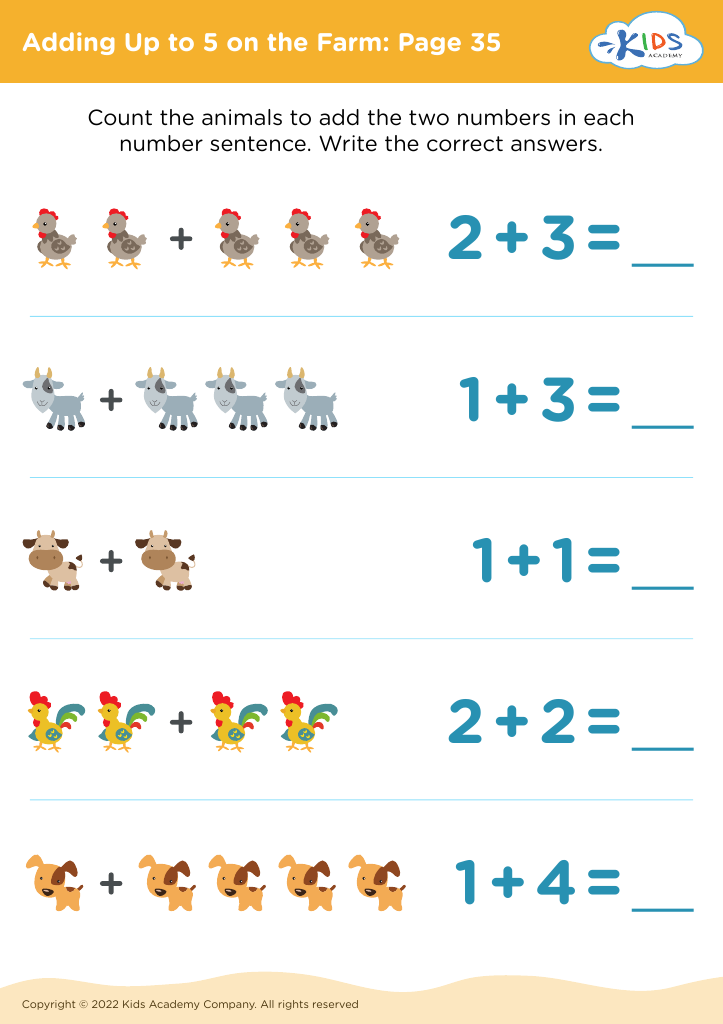
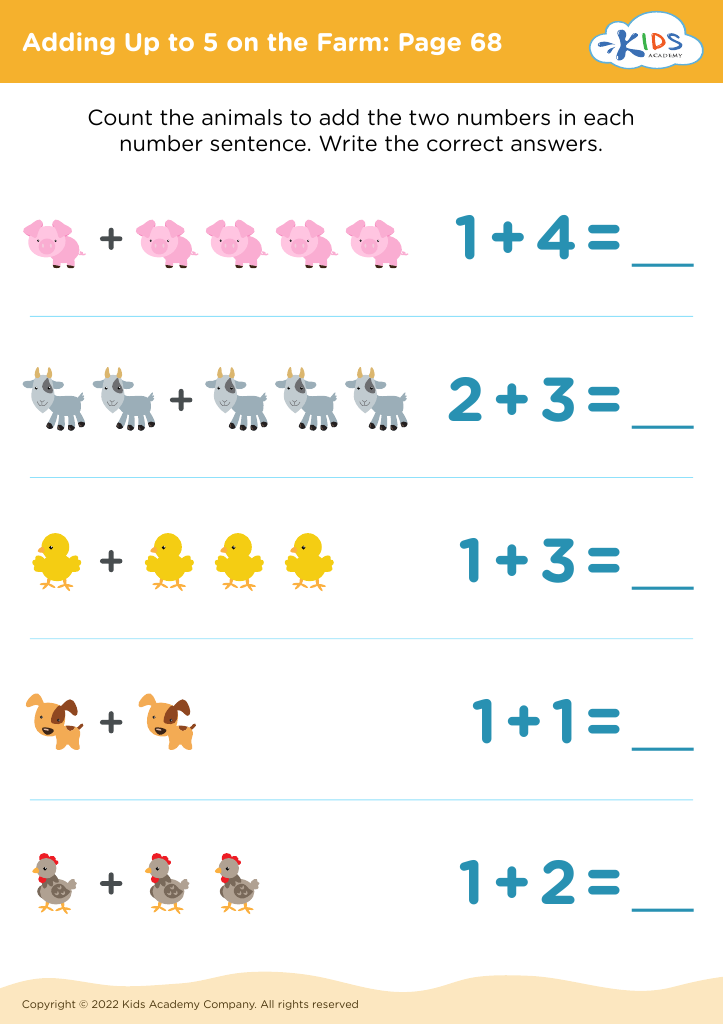
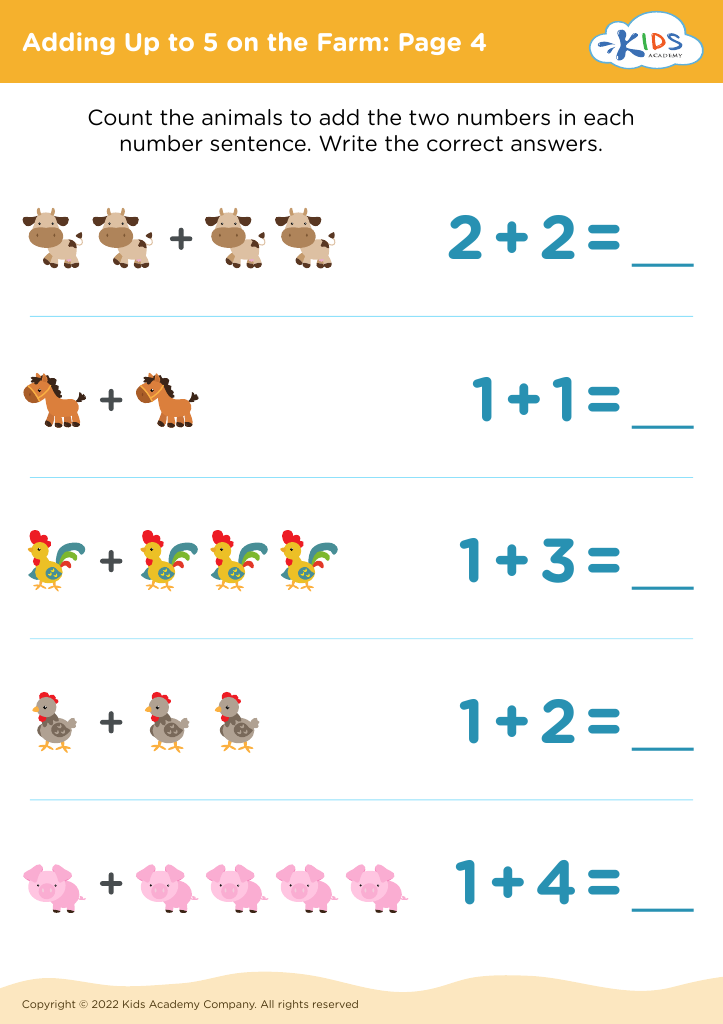
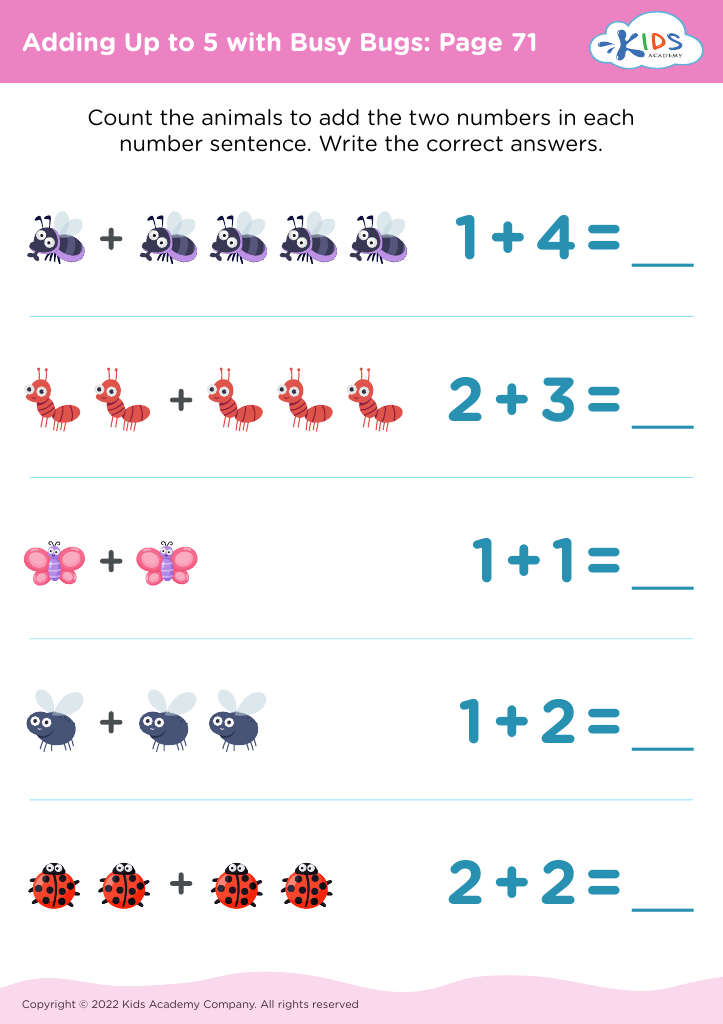
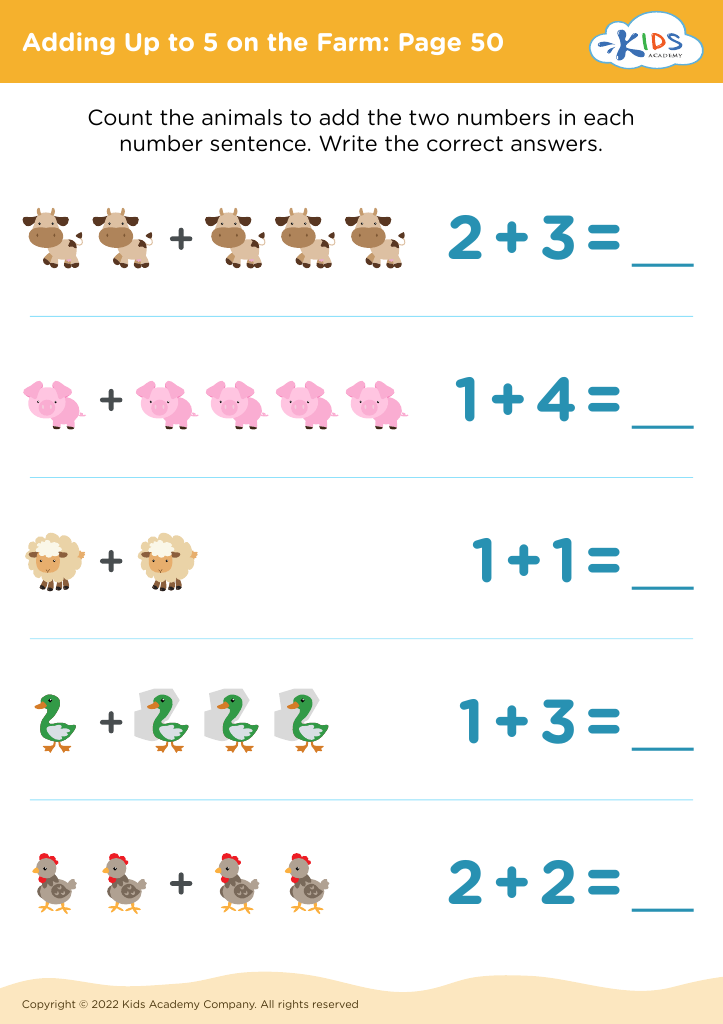
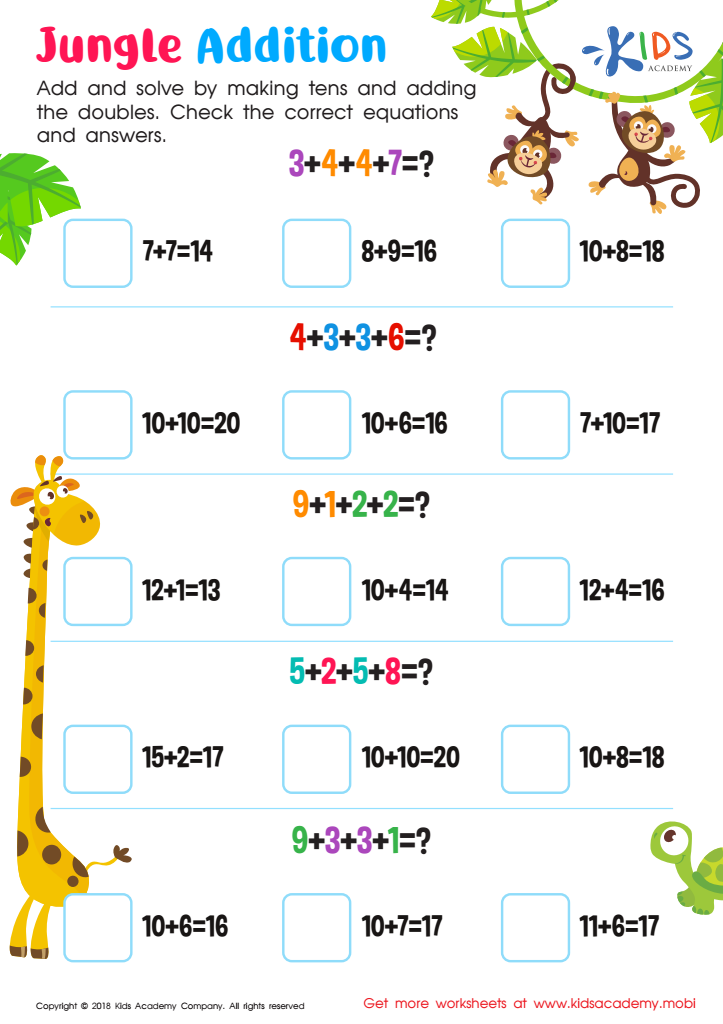
Jungle Addition Worksheet
 Assign to My Students








Counting, addition, and subtraction are foundational skills that are critical for children's cognitive development and future academic success, particularly for children aged 5 to 6. At this age, children are naturally curious and ready to explore mathematical concepts through tangible experiences. Understanding these skills fosters numeracy, which is as important as literacy for overall learning.
Counting objects helps children to connect numerals with quantities, building their ability to visualize mathematical problems. Additionally, addition and subtraction introduce them to the concept of tangible relationships between numbers, helping them grasp essential problem-solving strategies. By applying these skills in everyday contexts—such as sharing snacks or counting toys—children can relate mathematics to real life, which enhances their engagement and comprehension.
Parents and teachers play a crucial role in facilitating this learning process. By using playful and interactive methods, such as games and hands-on activities, they can nurture a positive attitude towards math, reducing anxiety and fear around the subject. Early practices of counting and basic operations create a strong mathematical foundation, paving the way for more complex concepts in the future. Ultimately, these skills not only support academic readiness but also promote critical thinking and confidence, essential traits for lifelong learners.








