Filters

251 filtered results

Clear all filters
Favorites
With answer key
Interactive

251 filtered results

Difficulty Level

Grade


Check out this FREE Trial Lesson on Addition & Subtraction for age 5-6!

L

Favorites
With answer key
Interactive
  • 5-6
  • Counting practice
  • Addition & Subtraction
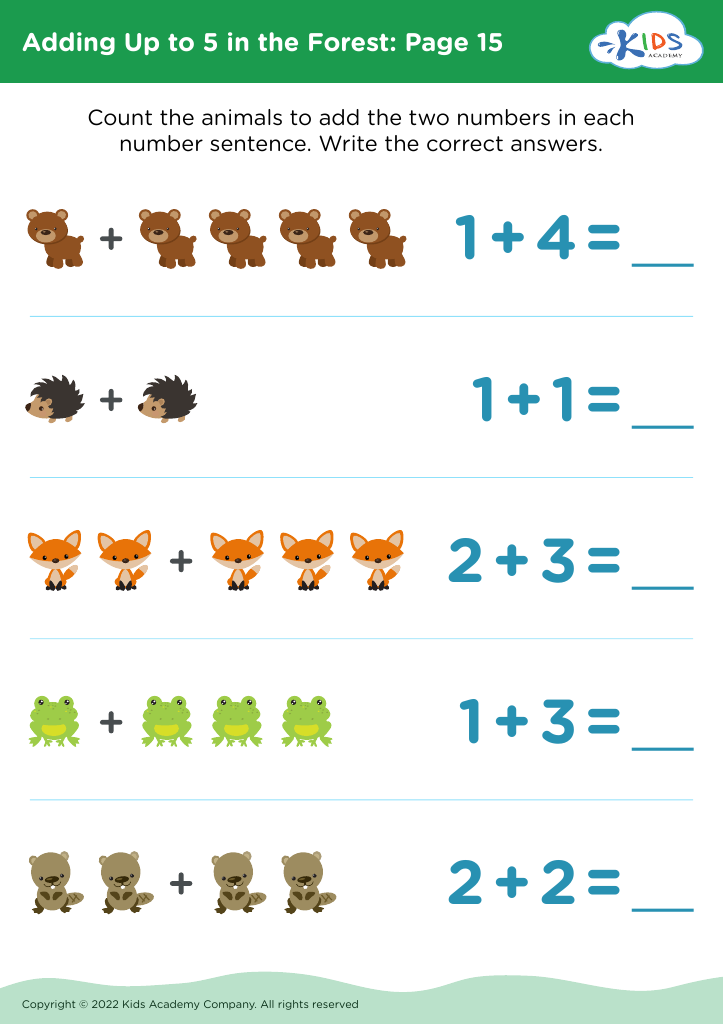
Adding Up to 5 in the Forest: Page 15
Worksheet
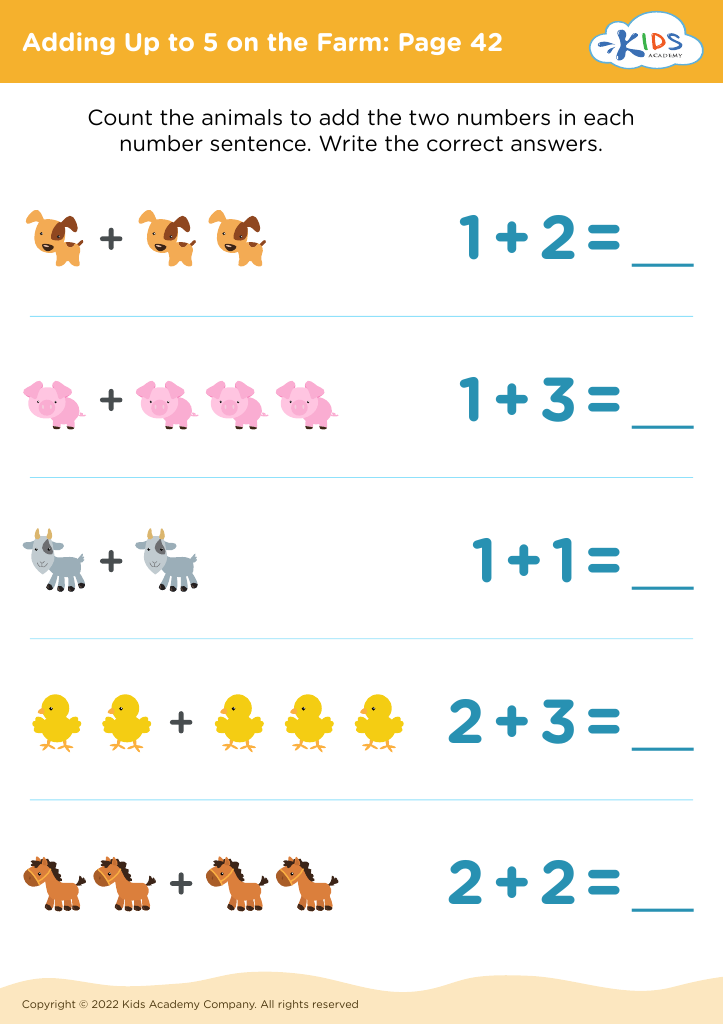
Adding Up to 5 on the Farm: Page 42
Worksheet
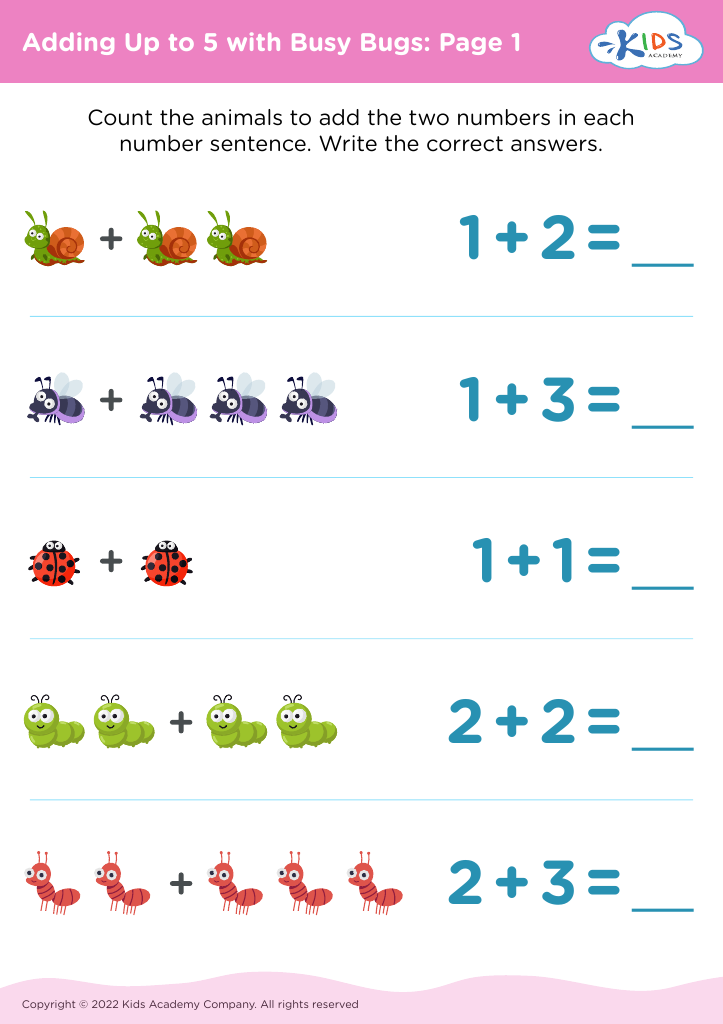
Adding Up to 5 with Busy Bugs: Page 1
Worksheet
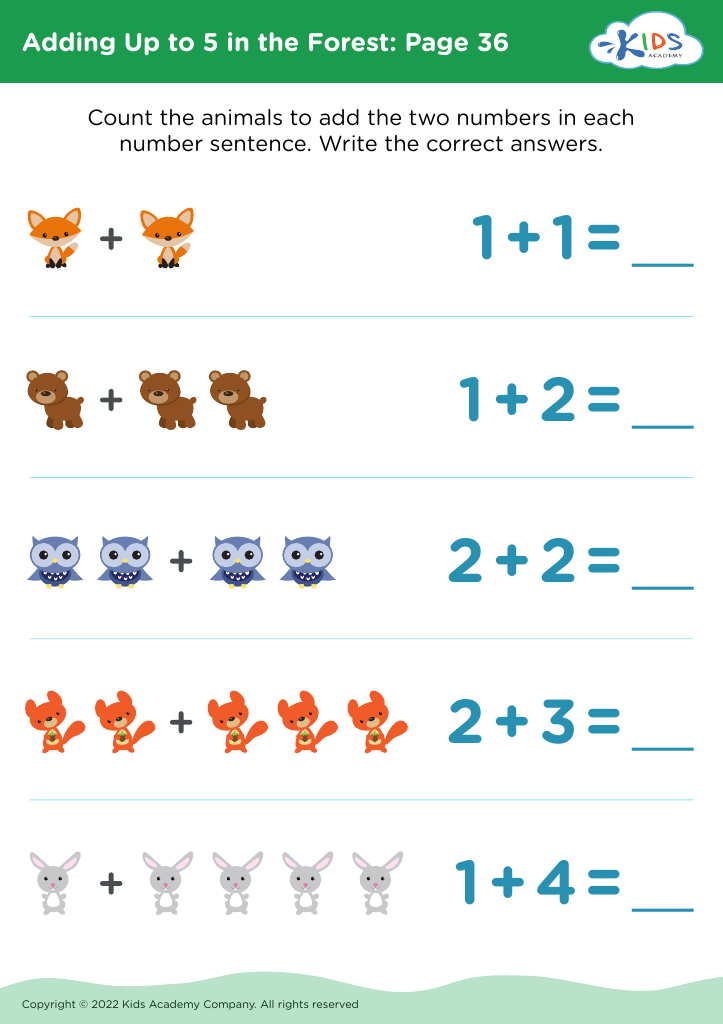
Adding Up to 5 in the Forest: Page 36
Worksheet
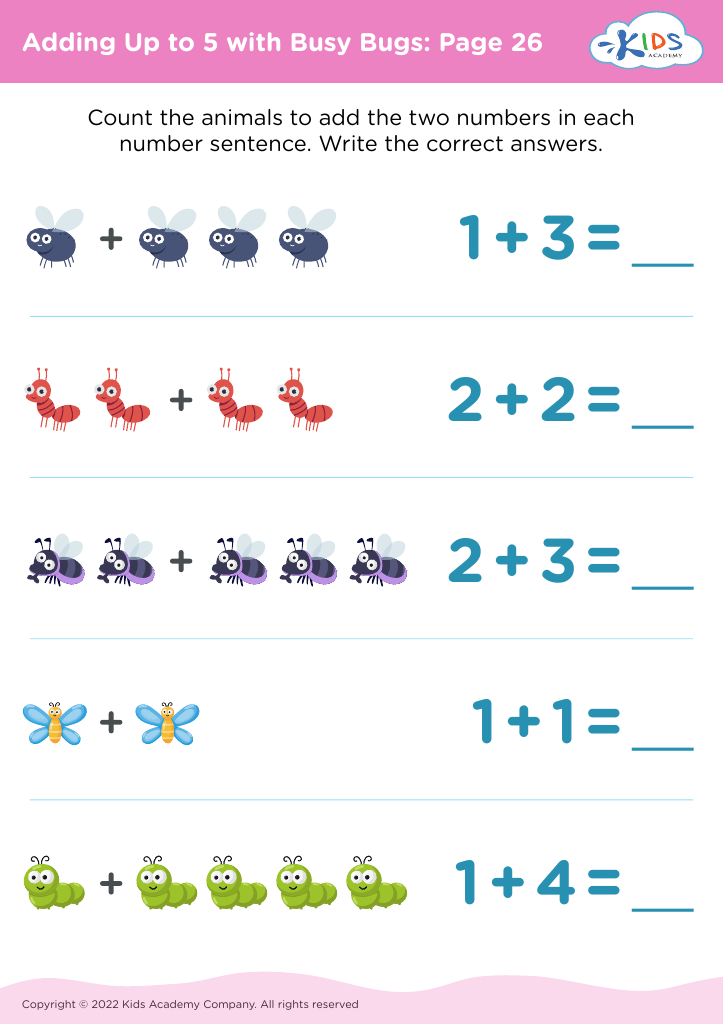
Adding Up to 5 with Busy Bugs: Page 26
Worksheet
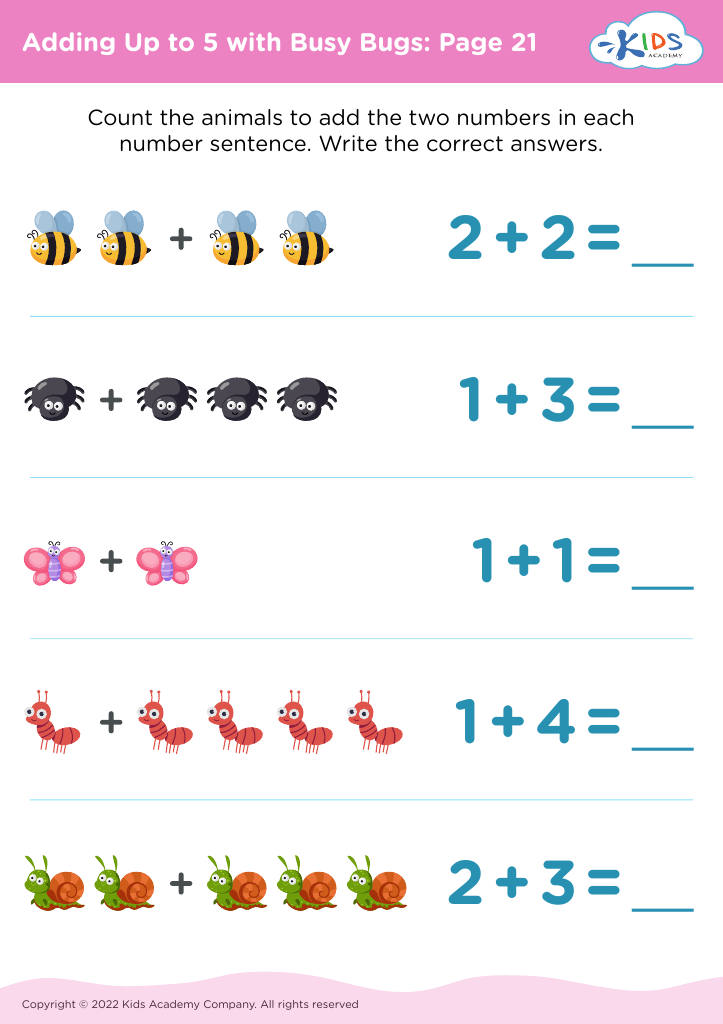
Adding Up to 5 with Busy Bugs: Page 21
Worksheet
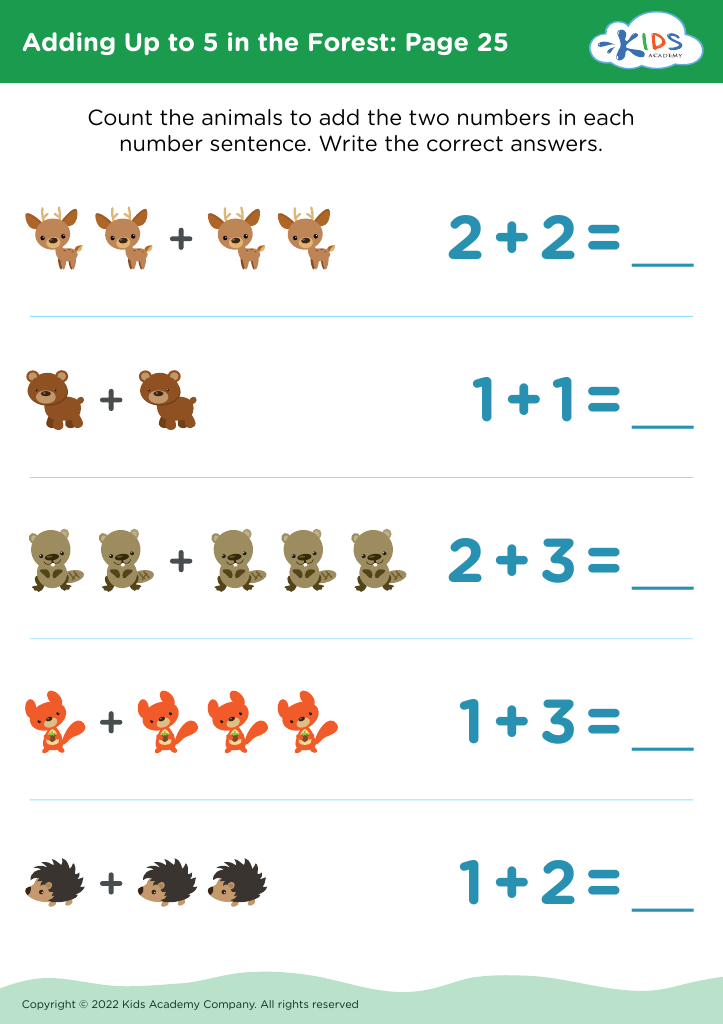
Adding Up to 5 in the Forest: Page 25
Worksheet
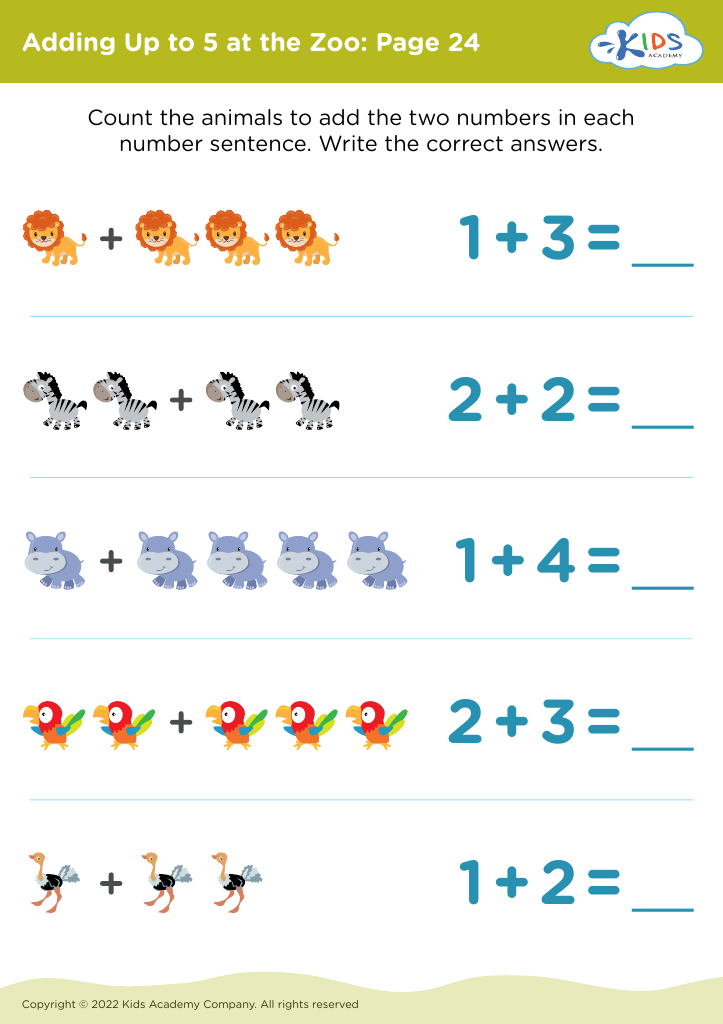
Adding Up to 5 at the Zoo: Page 24
Worksheet
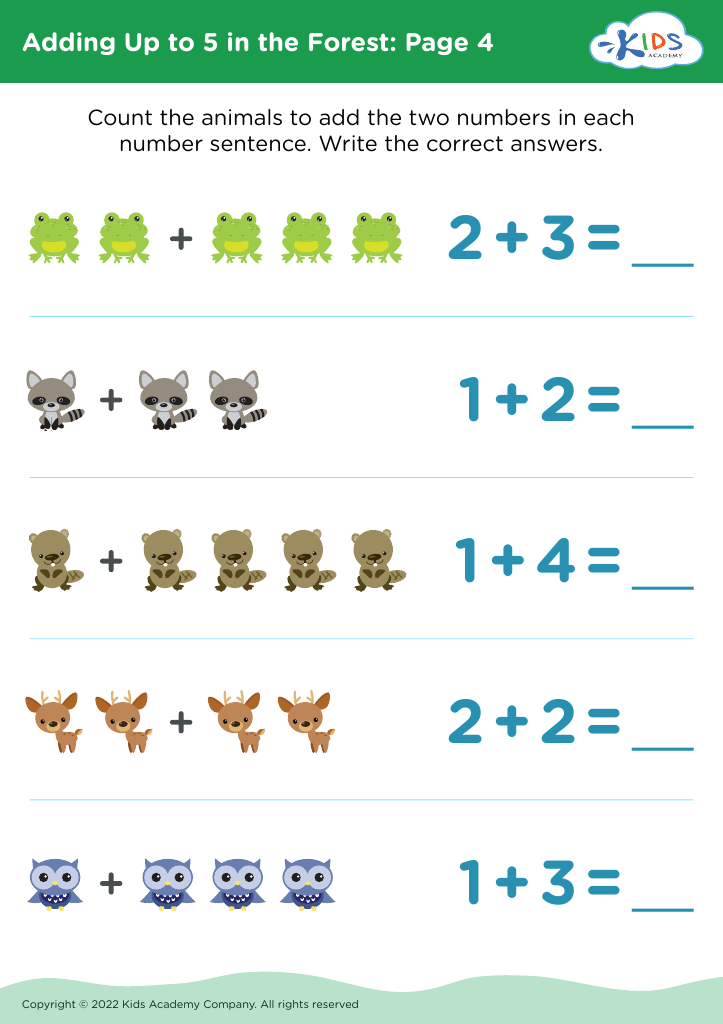
Adding Up to 5 in the Forest: Page 4
Worksheet
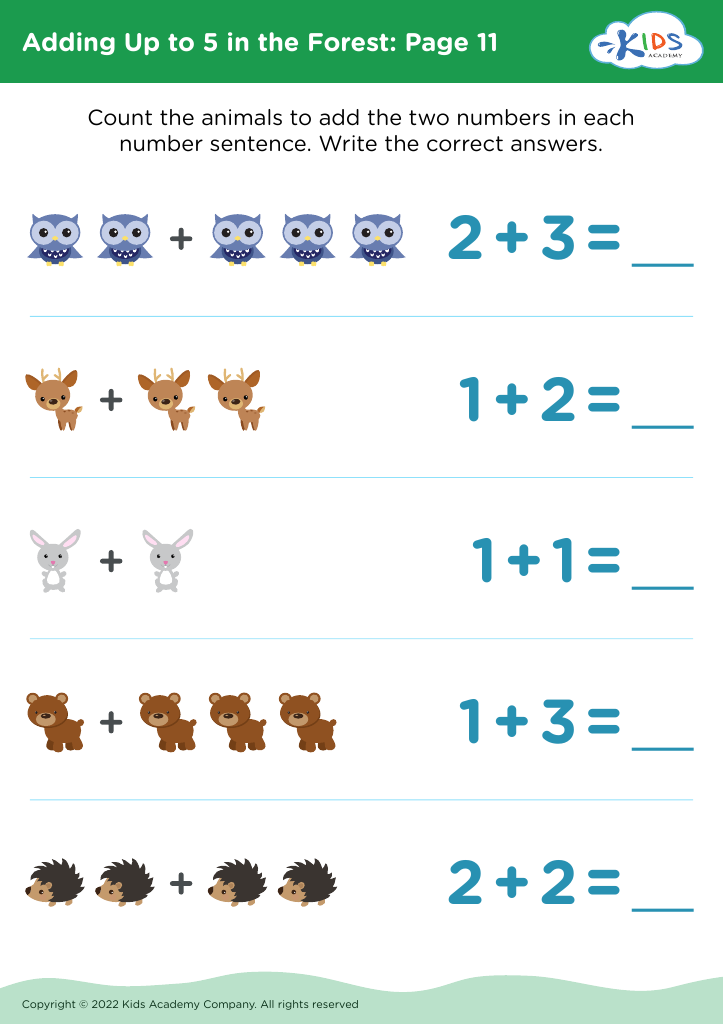
Adding Up to 5 in the Forest: Page 11
Worksheet
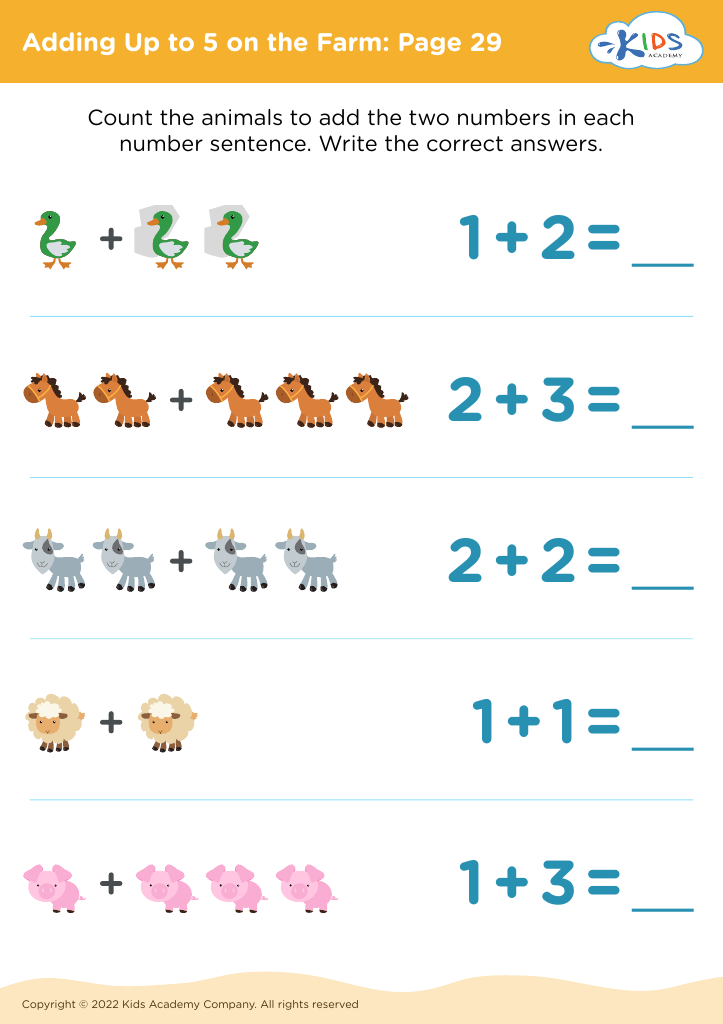
Adding Up to 5 on the Farm: Page 29
Worksheet
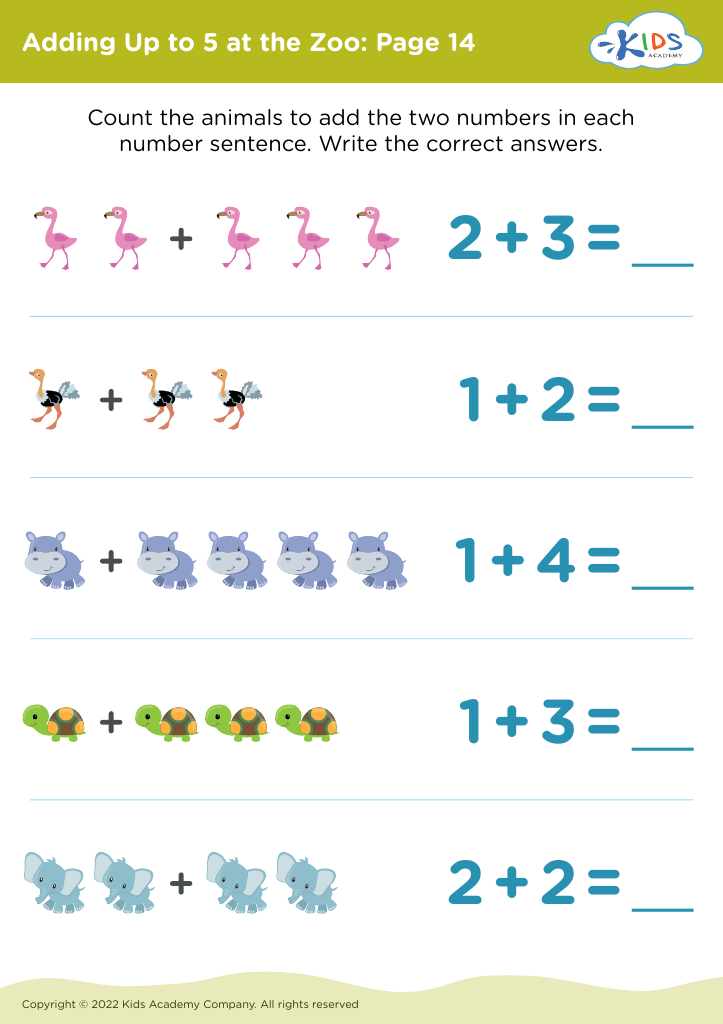
Adding Up to 5 at the Zoo: Page 14
Worksheet
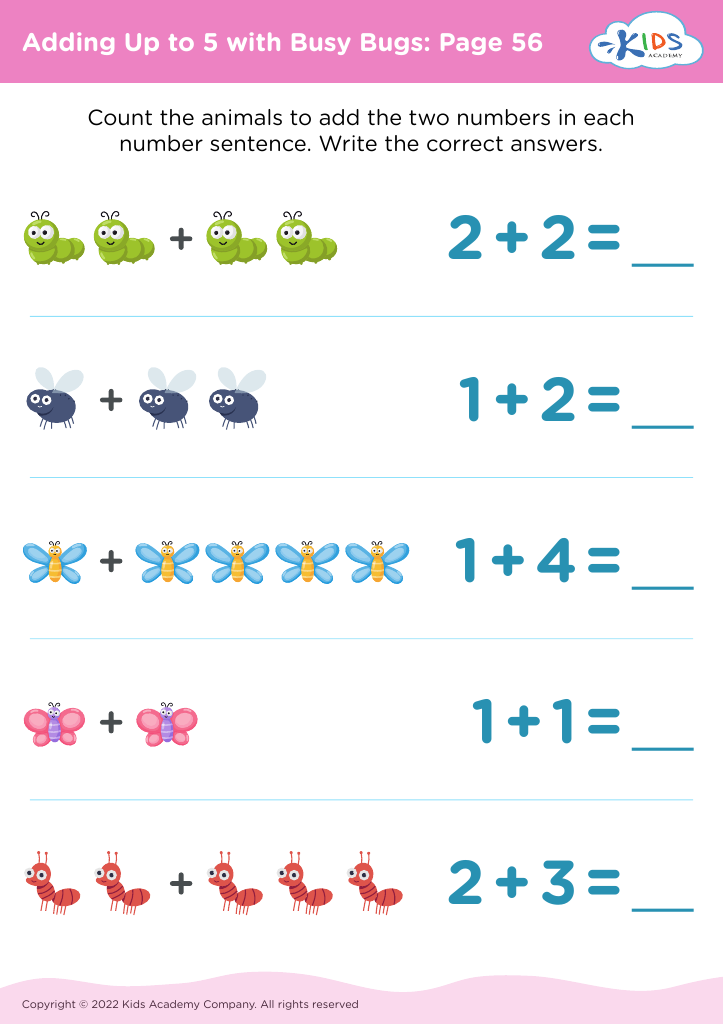
Adding Up to 5 with Busy Bugs: Page 56
Worksheet
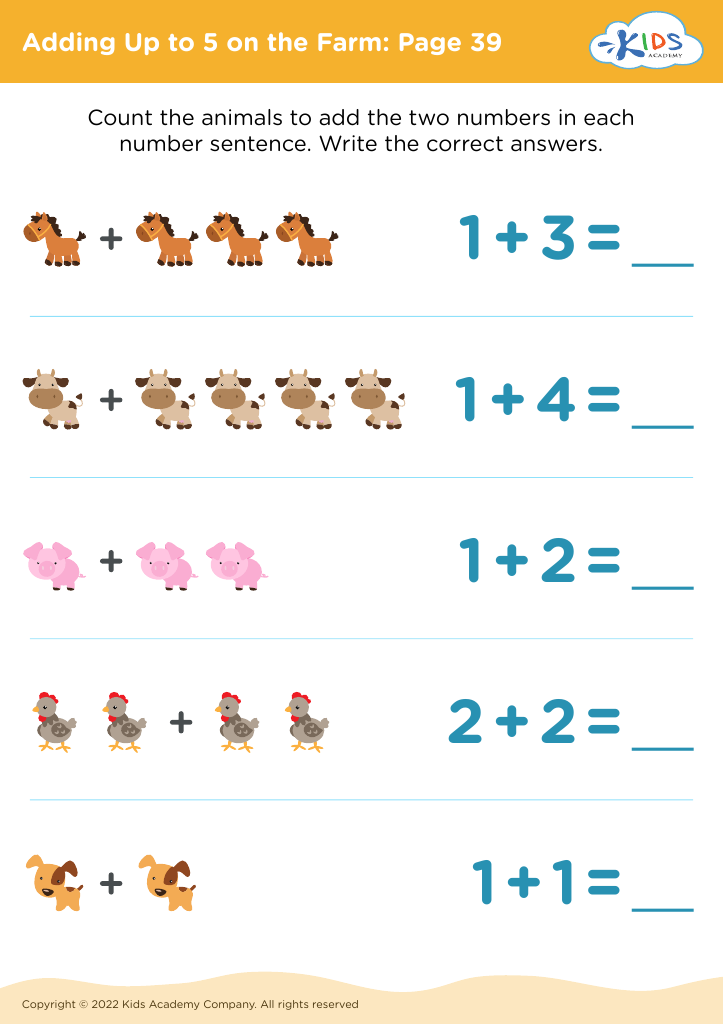
Adding Up to 5 on the Farm: Page 39
Worksheet
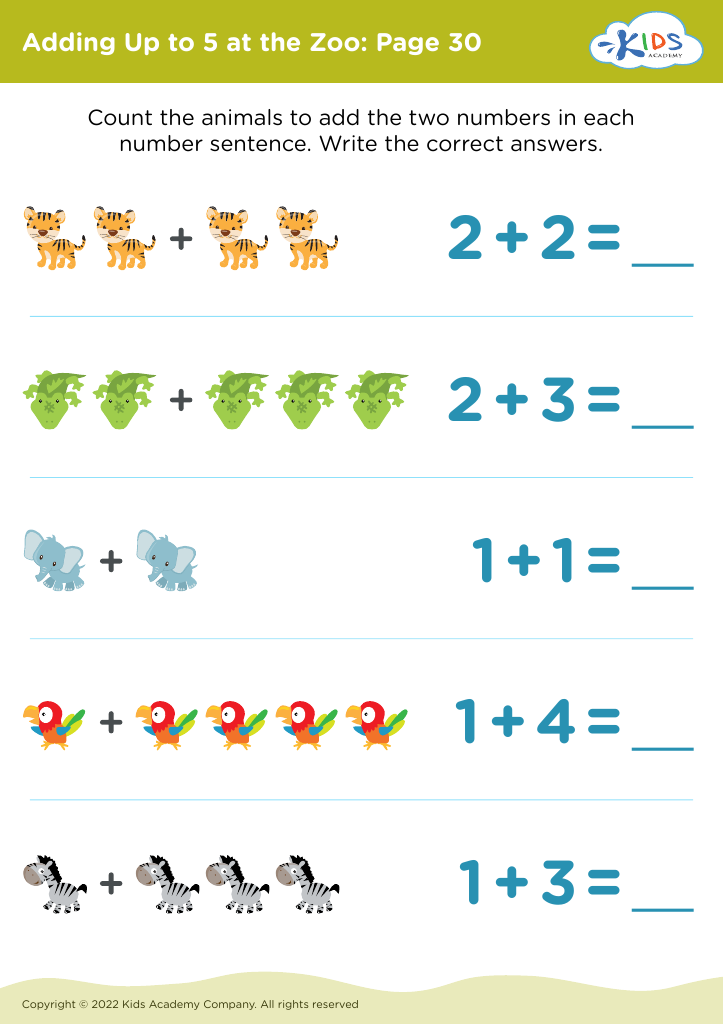
Adding Up to 5 at the Zoo: Page 30
Worksheet
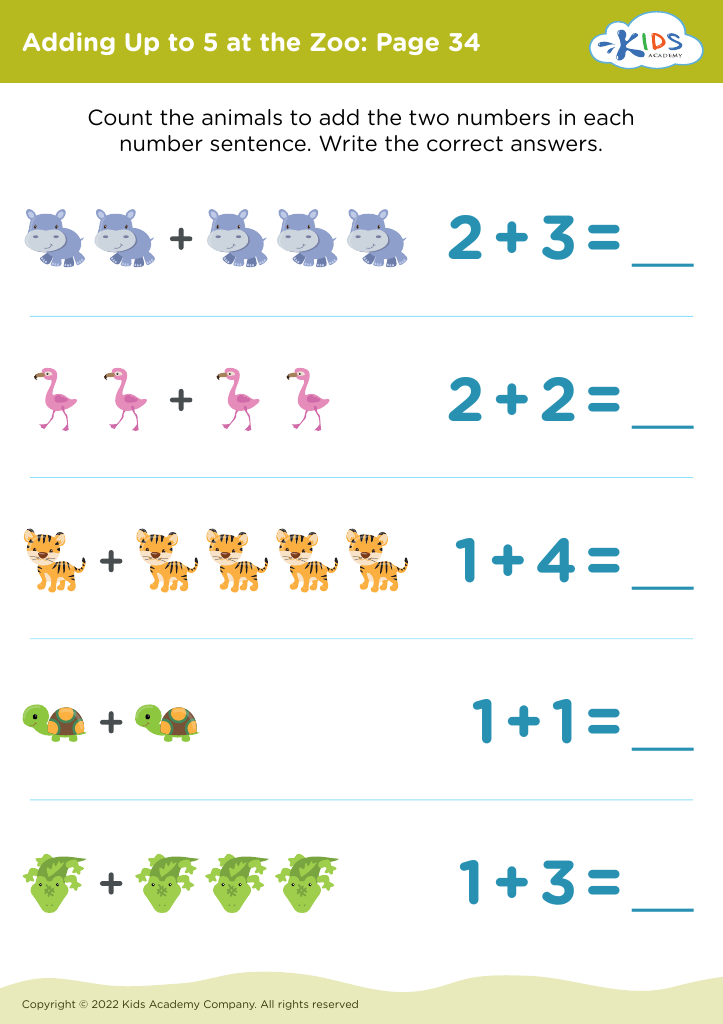
Adding Up to 5 at the Zoo: Page 34
Worksheet
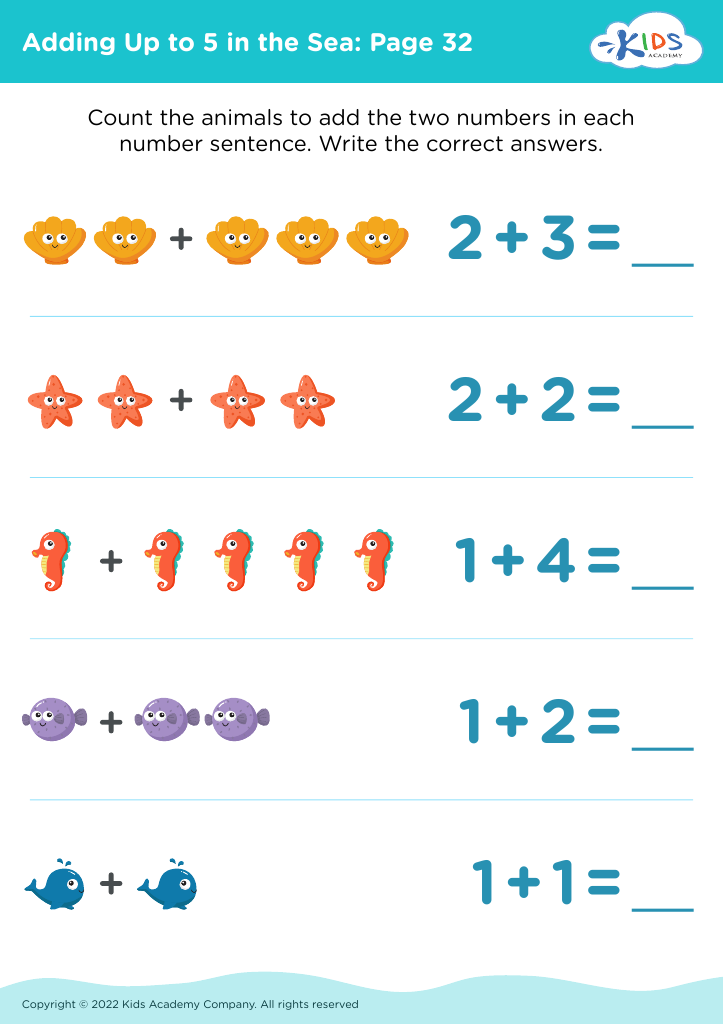
Adding Up to 5 in the Sea: Page 32
Worksheet
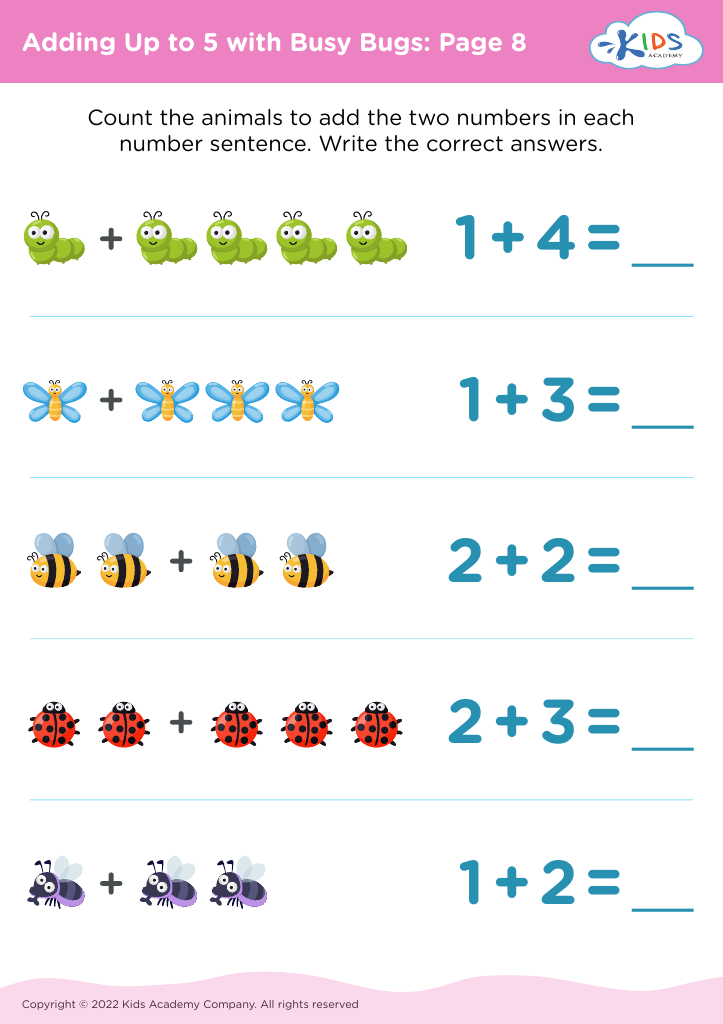
Adding Up to 5 with Busy Bugs: Page 8
Worksheet
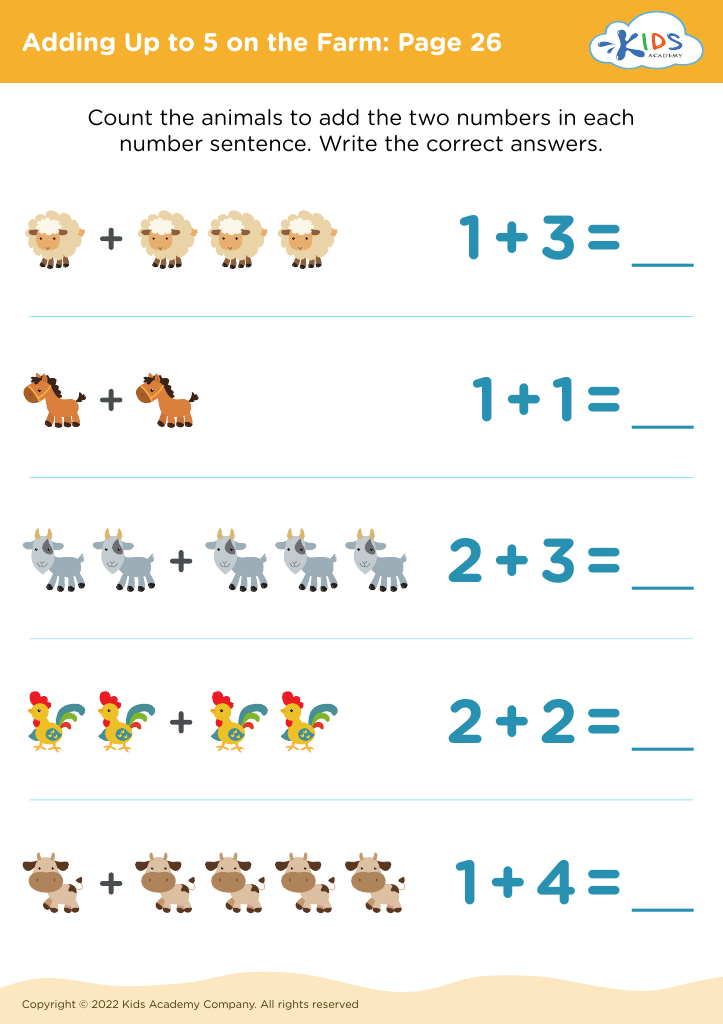
Adding Up to 5 on the Farm: Page 26
Worksheet
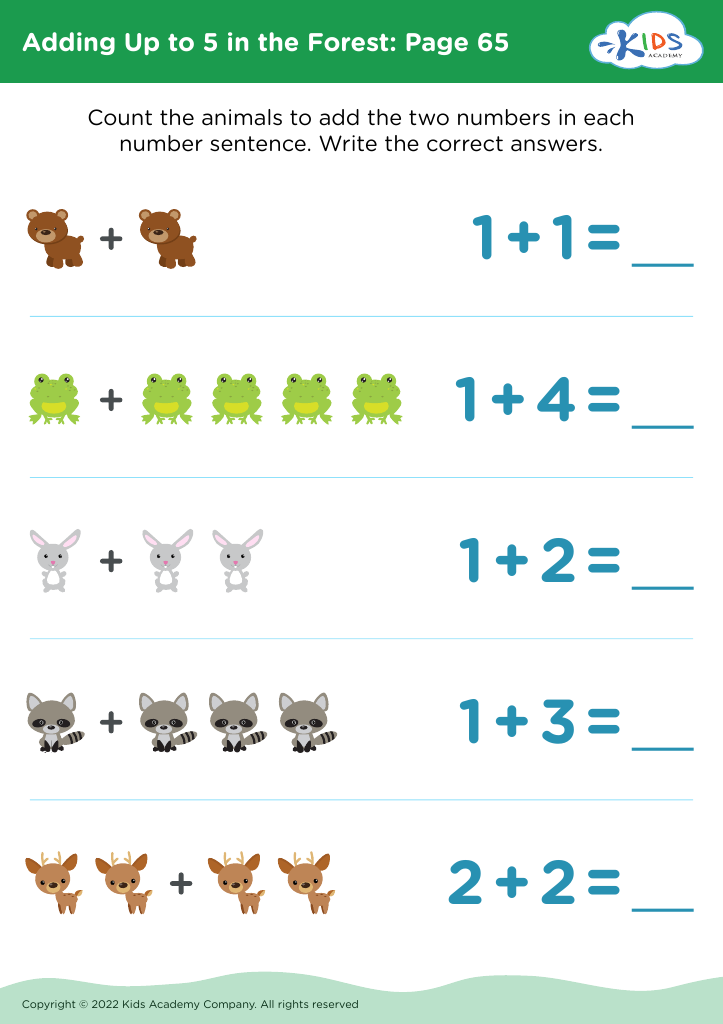
Adding Up to 5 in the Forest: Page 65
Worksheet
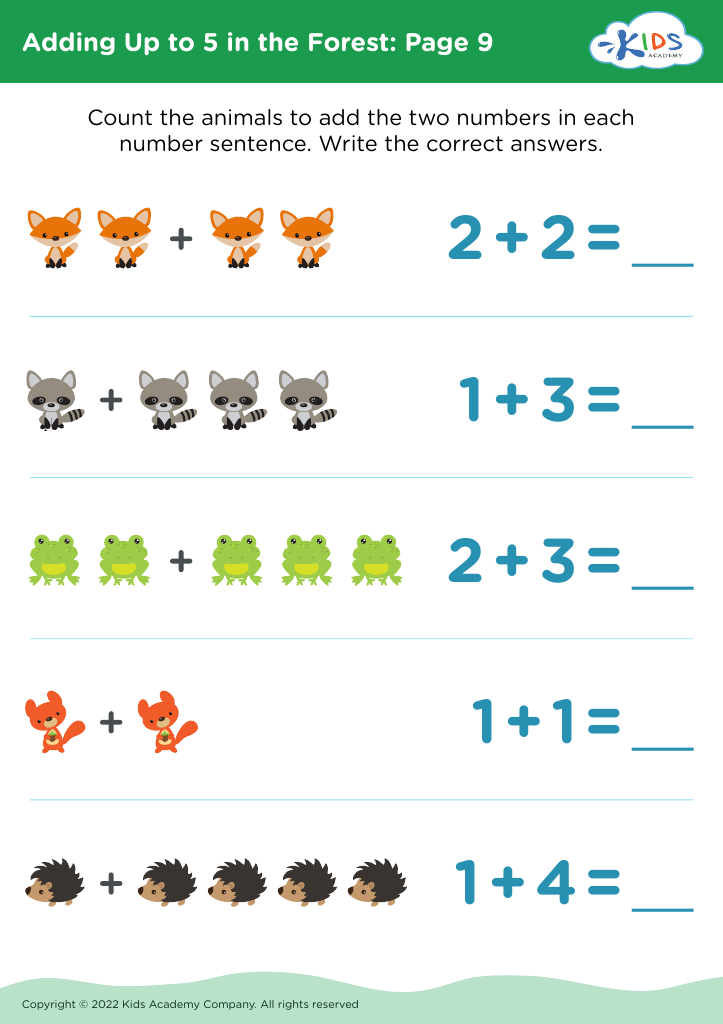
Adding Up to 5 in the Forest: Page 9
Worksheet
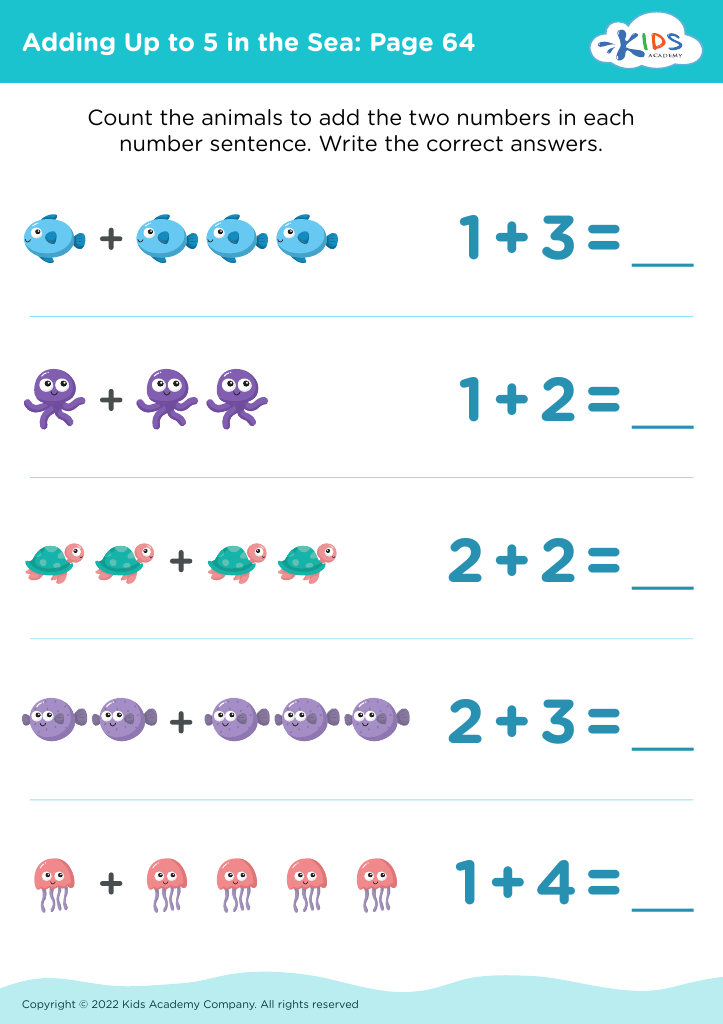
Adding Up to 5 in the Sea: Page 64
Worksheet
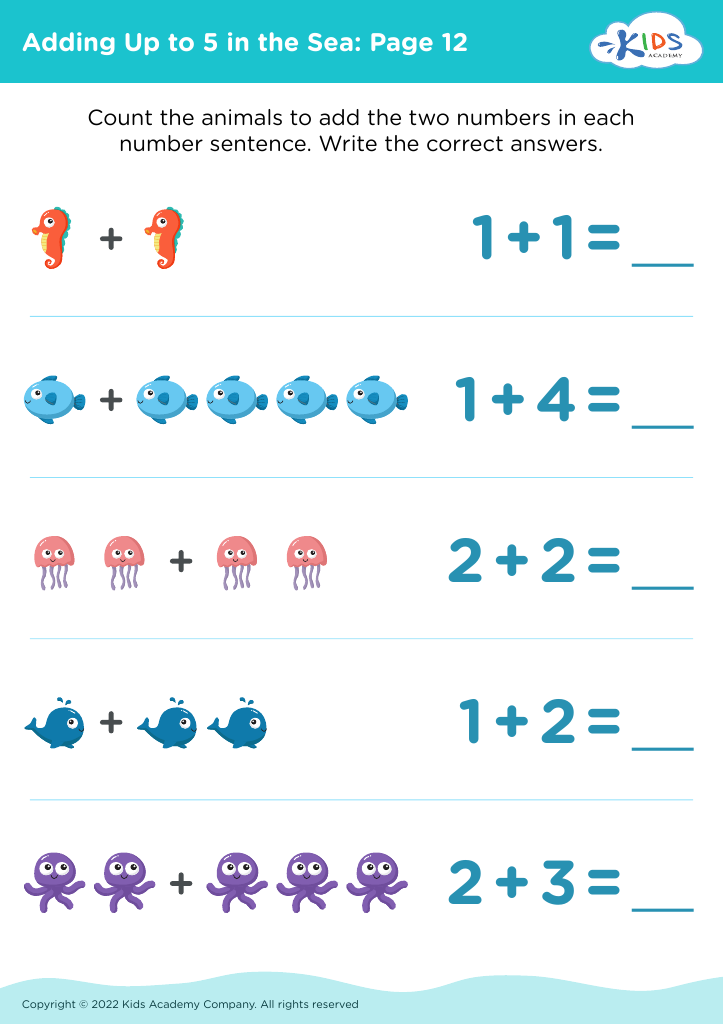
Adding Up to 5 in the Sea: Page 12
Worksheet
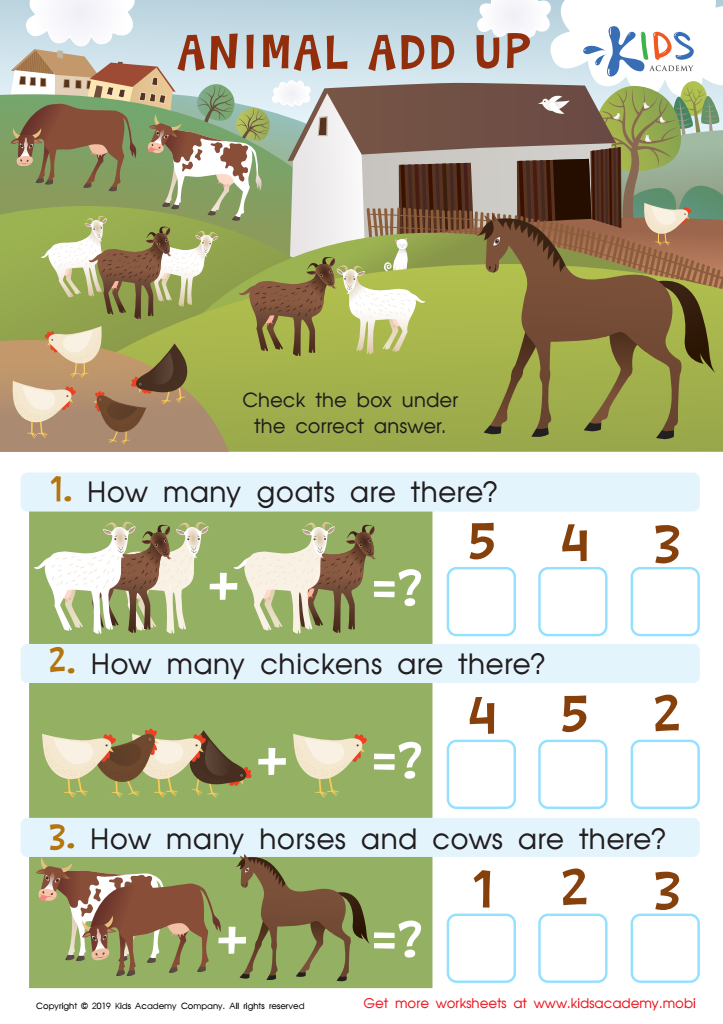
Animal Add Up Worksheet

Animal Add Up Worksheet

Animals are fun to observe and interact with. They can be seen at the zoo, parks, farms and in homes with pets. This worksheet helps kids identify animals, and build addition skills. Look at the picture with them and help name each animal. After that, add the animals up and check the box for the correct answer. 80 words.
Animal Add Up Worksheet
Worksheet


Counting practice in addition and subtraction is crucial for children aged 5-6 as it lays the foundation for their mathematical understanding. At this age, children are developing cognitive skills and concepts that will support their future learning in math and other subjects. Regular practice enhances number sense—an intuition about numbers, which is essential for understanding quantity, size, and relationships.

Additionally, these early skills promote critical thinking and problem-solving abilities. Engaging in counting, addition, and subtraction exercises enables young learners to approach challenges with confidence. It also strengthens fine motor skills through hands-on activities such as using counters or drawing shapes.

For parents and teachers, fostering a positive attitude towards math during these formative years is vital. Fun and engaging counting activities encourage children's interest in math, making learning enjoyable rather than daunting. This foundational understanding contributes to academic success as they move through school. Moreover, the skills developed during this period transfer to real-life situations, such as shopping or sharing, making math relevant and applicable.

Overall, investing time in counting practice ensures that children are confident and competent in math as they progress in their education, setting them up for future success.