Enhances concentration Addition & Subtraction Worksheets for Ages 5-6
4 filtered results
-
From - To
Enhance your child's concentration and math skills with our engaging Addition & Subtraction Worksheets, designed specifically for ages 5-6. These worksheets aim to develop essential foundational skills in a fun and interactive way, helping young learners master basic math concepts. Each activity targets improved focus while encouraging critical thinking through colorful visuals and challenging exercises. As children practice addition and subtraction, they boost their confidence and prepare for more advanced learning. Our easy-to-use worksheets are perfect for home or classroom use, making math enjoyable and accessible for your little one. Start their journey toward math proficiency today!
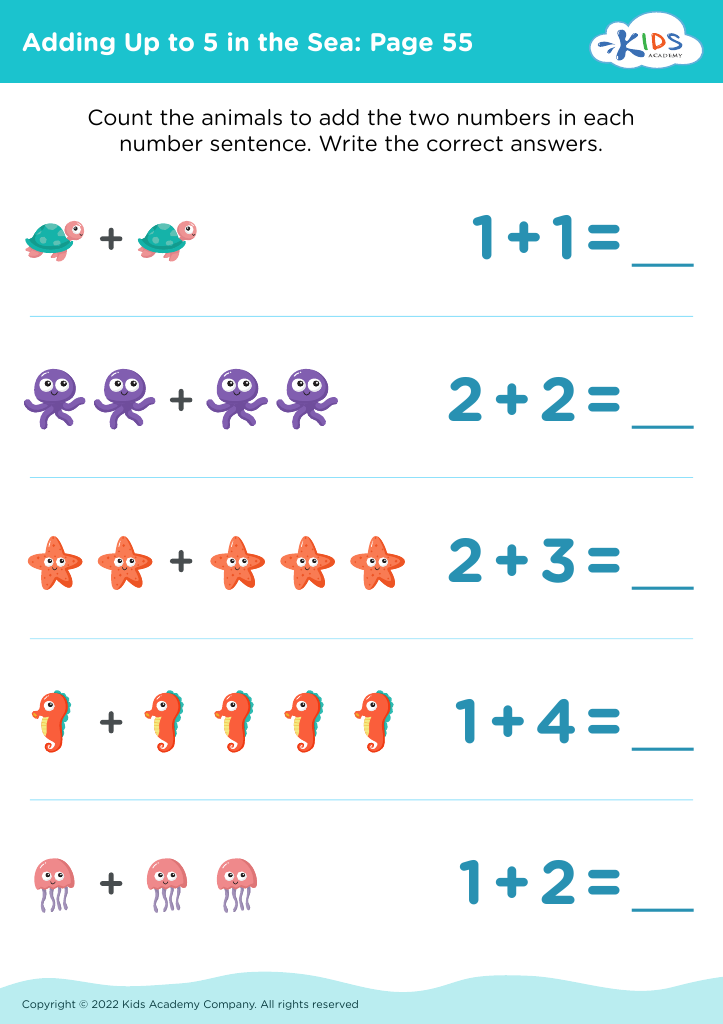
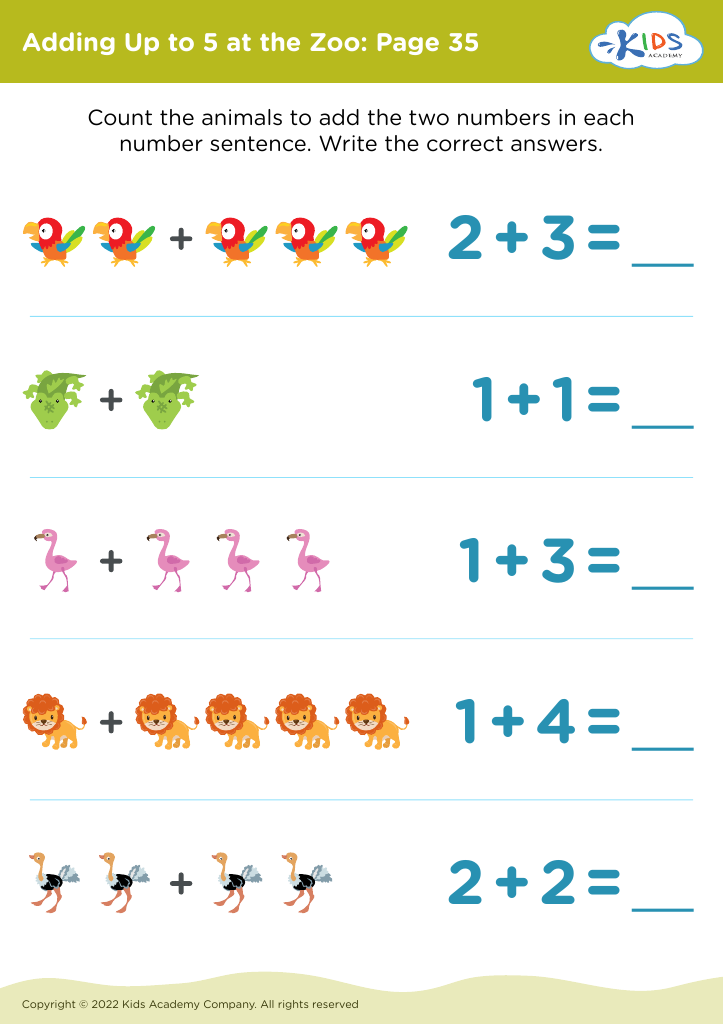
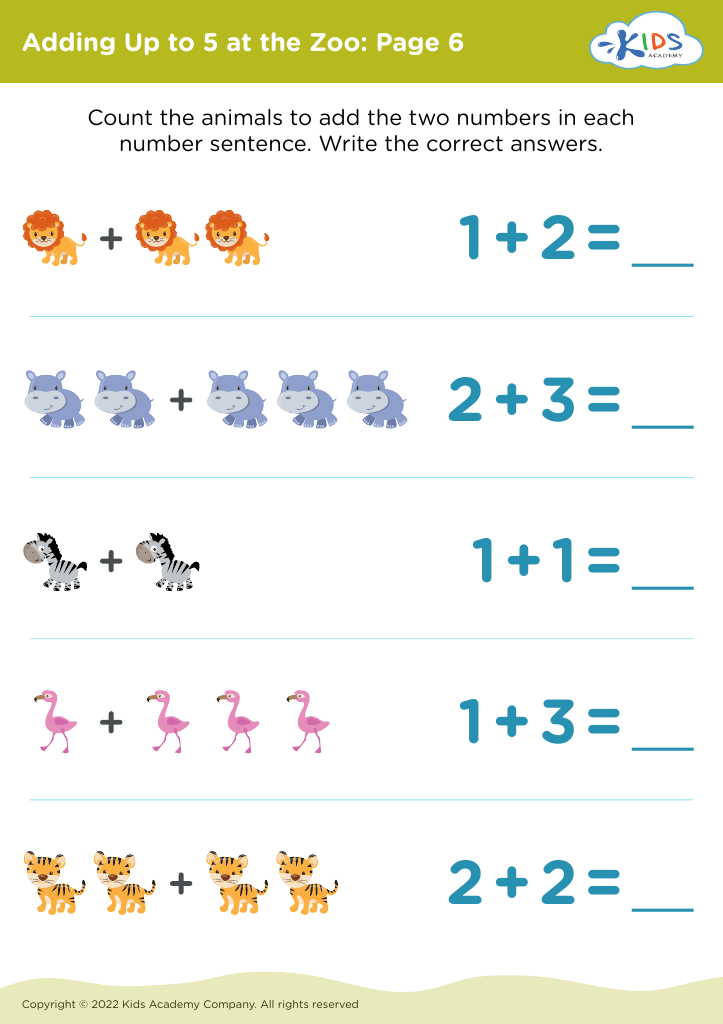
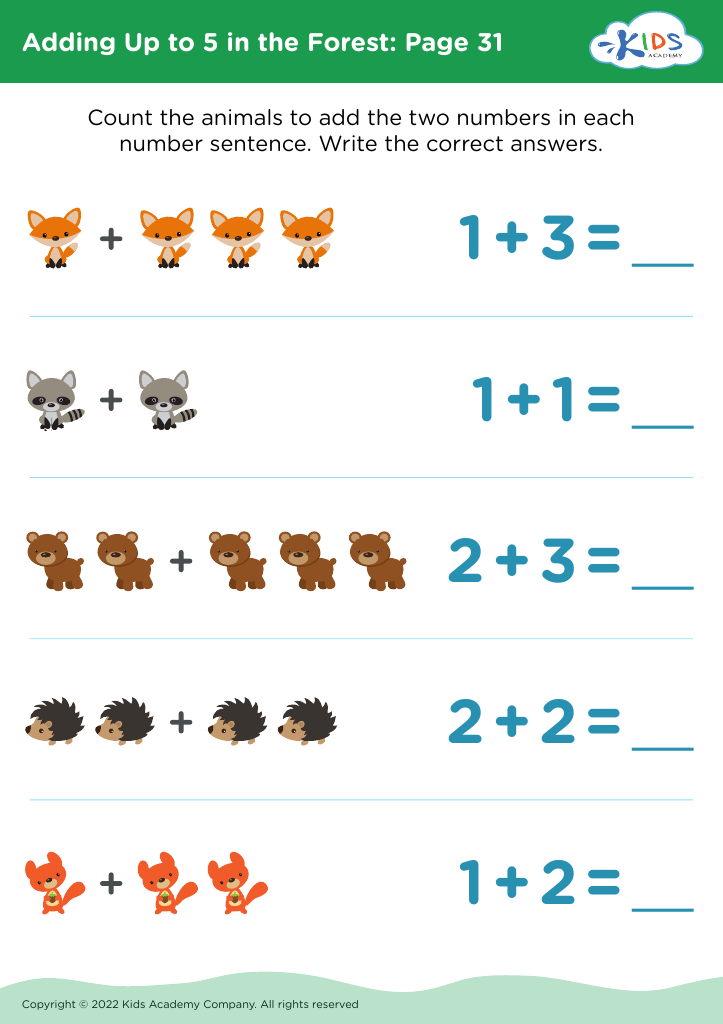








Enhancing concentration in young children during activities like addition and subtraction is fundamental for their overall cognitive development. For ages 5-6, when foundational math skills are being established, focused attention enables children to grasp concepts more effectively, leading to better retention and understanding.
Parents and teachers should recognize that strong concentration skills not only promote mathematical proficiency but also influence other academic and life skills. When children can concentrate well, they are more likely to participate actively in lessons, complete tasks without frequent distractions, and tackle problem-solving challenges confidently. This builds self-esteem and a positive attitude towards learning.
Moreover, improving concentration sets the stage for effective learning habits that will support literacy, science, and social studies skills in the future. Engaging children in fun and diverse activities tailored to foster concentration—like interactive games or hands-on learning—can make mathematics enjoyable and less intimidating.
As foundational skills are laid during these key developmental years, both parents and teachers have a critical role in nurturing concentration through practice and encouragement, ensuring that children are well-equipped to advance academically and thrive in school environments. Fostering enhanced concentration in early math eliminates barriers to learning and helps kids develop essential life skills.








