
Observational skills Addition & Subtraction Worksheets for Ages 5-6
3 filtered results
Difficulty Level
Grade
Age
-
From - To
Subject
Activity
Standards
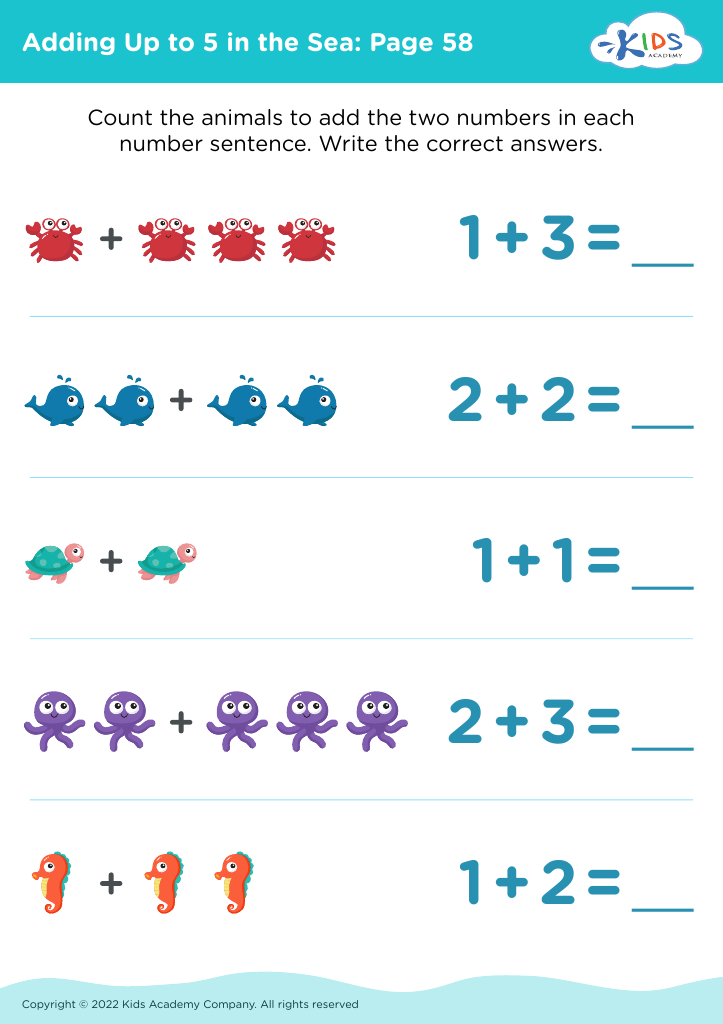
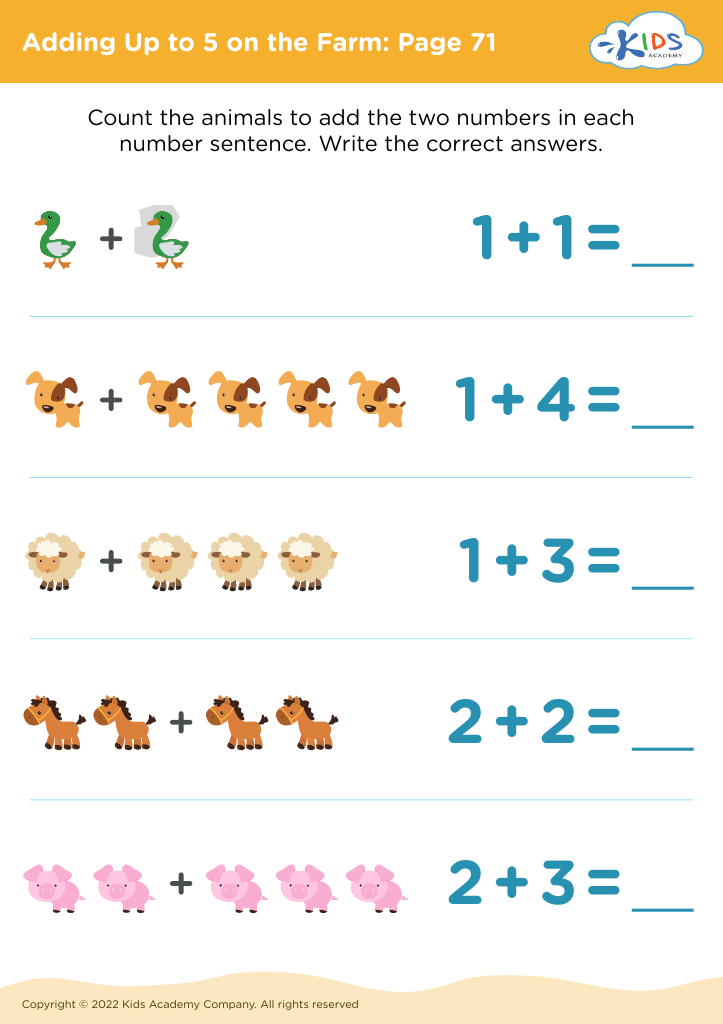
Enhance your child's math proficiency with our "Observational Skills Addition & Subtraction Worksheets for Ages 5-6". Our engaging worksheets are designed to build critical thinking and sharp observational abilities by incorporating fun images, patterns, and scenarios. These exercises not only help young learners understand basic addition and subtraction but also encourage attention to detail and problem-solving. Ideal for both classroom and home use, the activities stimulate curiosity and make math an exciting adventure. Jump-start your child's mathematical journey and visual perception skills with Kids Academy's expertly crafted worksheets. Start exploring today and watch them excel!
Favorites
With answer key
Interactive
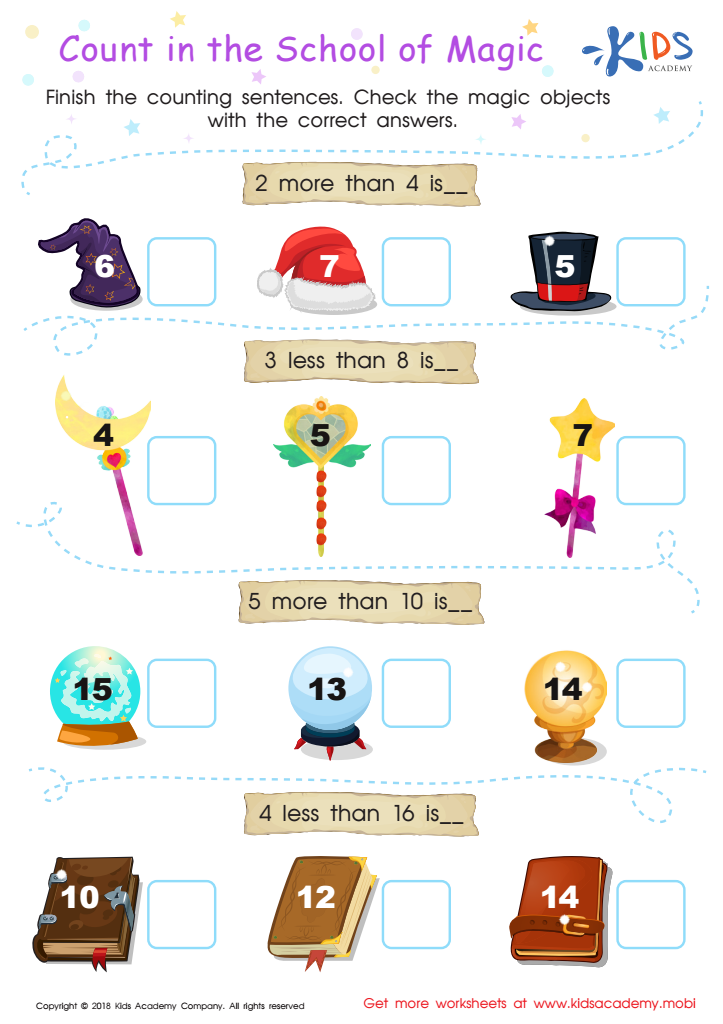
Count in the School of Magic Worksheet
Your math learners can explore the School of Magic with this worksheet. They'll read equations with addition and subtraction numbers under 20, count back and forth to find the answer, then complete the counting sentences. Fun pictures and easy accuracy make it an enjoyable and successful learning experience.
 Assign to My Students
Count in the School of Magic Worksheet
Worksheet
Join Kids Academy for Free
Who is primarily going to use this learning content?








Parents and teachers should prioritize observational skills in addition and subtraction for children aged 5-6 because these skills form the foundation of mathematical understanding and cognitive development. Observational skills enable kids to notice patterns, differentiate between quantities, and understand the relationships between numbers and physical objects. This early ability to observe and engage with their environment directly influences their numerical fluency and problem-solving skills.
At this tender age, children are developing both fine motor and cognitive abilities. Using tools like counters, toys, or illustrations helps them visualize mathematical concepts, making abstract ideas tangible. For instance, observing that adding objects increases quantity, while taking them away decreases it, embeds a practical understanding of addition and subtraction.
Cultivating strong observational skills also aligns with developmental benchmarks; it enhances attention, focus, and the ability to follow complex instructions. Moreover, these foundational skills support broader educational goals such as logical reasoning and critical thinking. Engaging children in games, story problems, and day-to-day activities involving addition and subtraction makes learning enjoyable and effective. Parents and teachers who emphasize these skills are not just preparing kids for academic success but also nurturing lifelong learners adept at interpreting and interacting with the world around them.








