Problem-solving abilities Addition & Subtraction Worksheets for Ages 5-6 - Page 2
29 filtered results
-
From - To
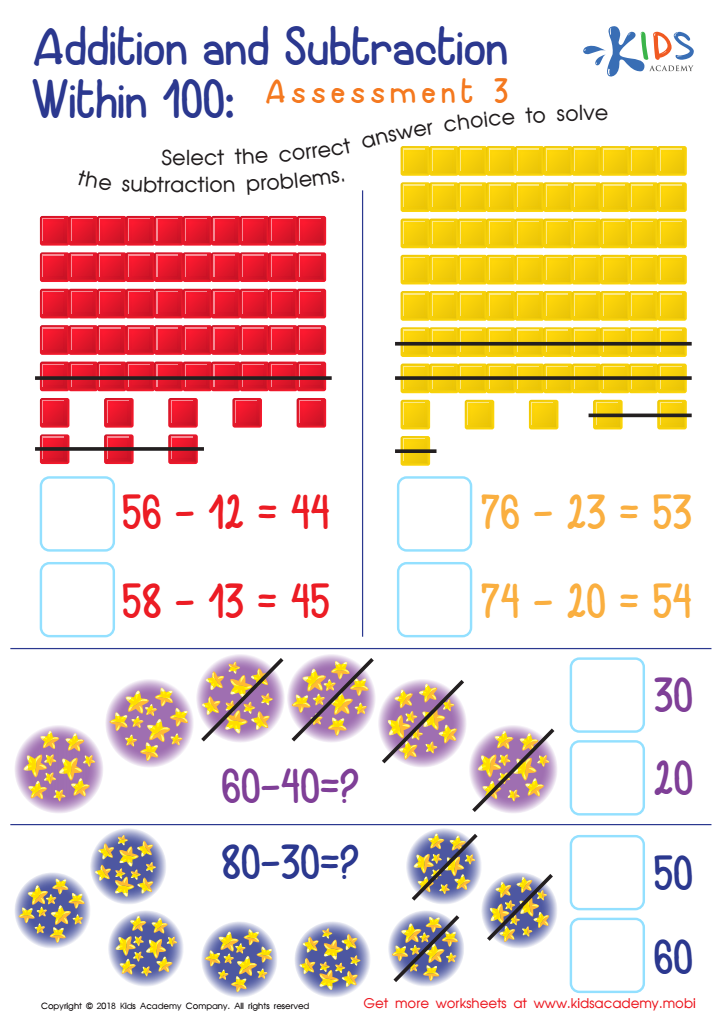
Addition and Subtraction Within 1: Assessment 3 Worksheet
 Assign to My Students
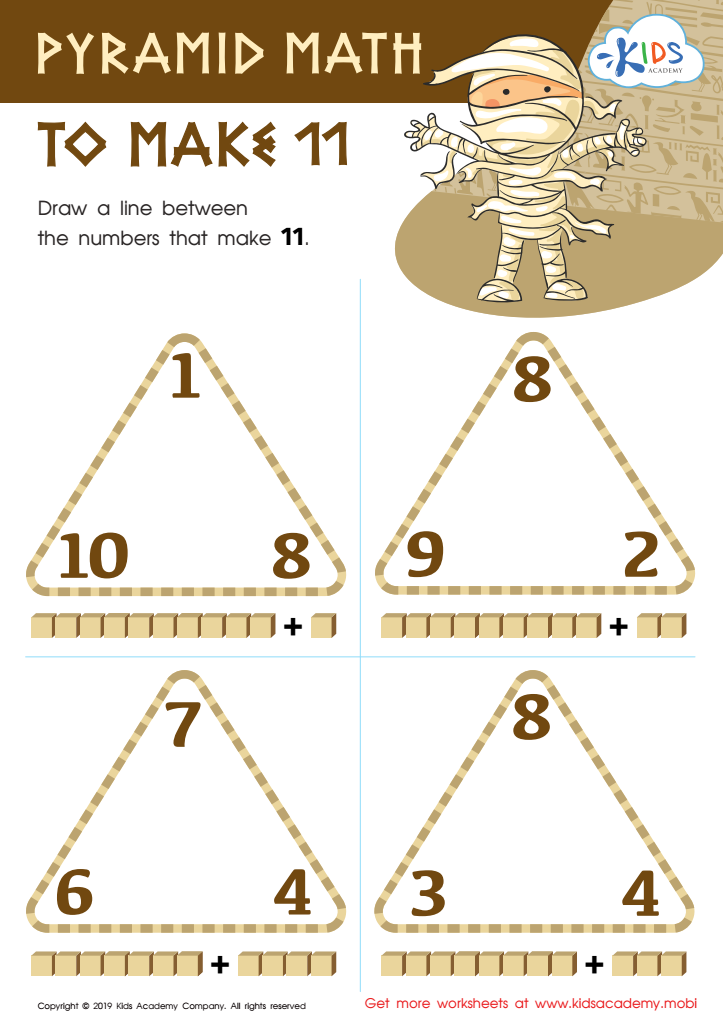
Pyramid Math to Make 11 Worksheet
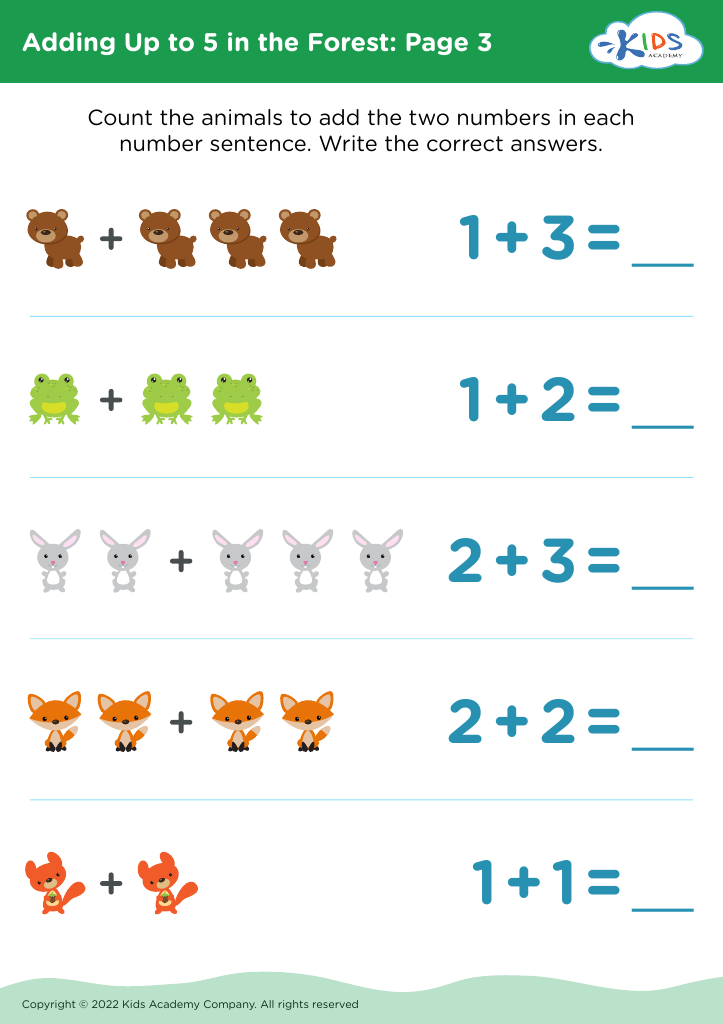


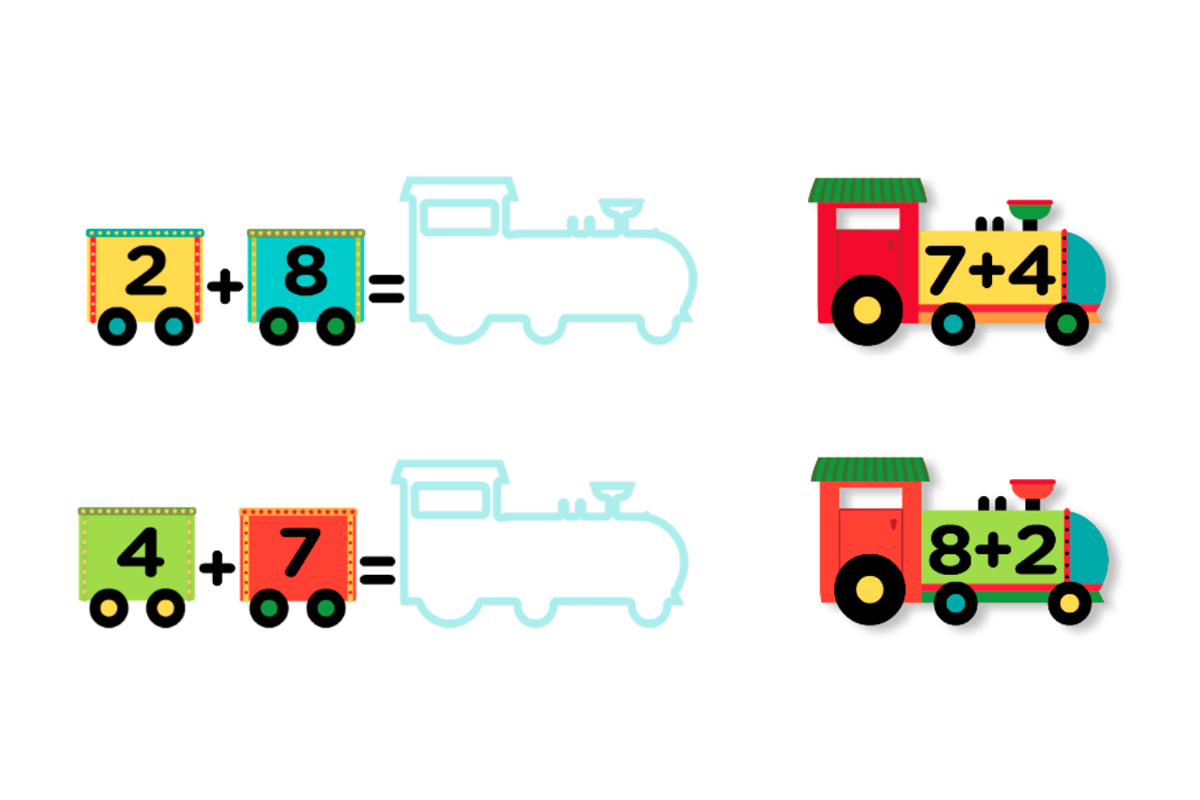





Parents and teachers should prioritize the development of problem-solving abilities in addition and subtraction for children aged 5-6 because these foundational skills are essential for future academic success and everyday functioning. At this age, children are curious and eager to understand the world around them, making it an ideal time to nurture mathematical thinking.
Problem-solving with addition and subtraction helps children develop critical cognitive skills, such as logical reasoning, analysis, and pattern recognition. When children engage in solving mathematical problems, they learn how to strategize, explore different approaches, and adapt their thinking, which are essential skills not just in math, but across all subjects.
Moreover, mastering these basic operations builds confidence and a positive attitude towards math. As children succeed in problem-solving, they are more likely to enjoy learning and less likely to experience math-related anxiety in the future.
Furthermore, strong problem-solving abilities become part of their daily lives, enhancing their capacity to tackle everyday challenges, from managing allowance money to understanding time and schedules. Therefore, investing in their mathematical skills at this stage fosters both academic readiness and life skills, creating a solid foundation for lifelong learning.








