Sea creatures identification Addition & Subtraction Worksheets for Ages 5-6
3 filtered results
-
From - To
Explore our engaging "Sea Creatures Identification Addition & Subtraction Worksheets" designed specifically for kids ages 5-6! These interactive worksheets combine math practice with ocean-themed visuals, helping young learners enhance their addition and subtraction skills. Each worksheet features adorable sea creatures that not only make math fun but also support early identification of marine life. Ideal for classroom activities or home learning, these worksheets encourage critical thinking and foster a love for math. Dive into a world of learning where numbers and nature come together, making educational experiences both enjoyable and effective for your little explorers! Perfect for foundational math skills development.
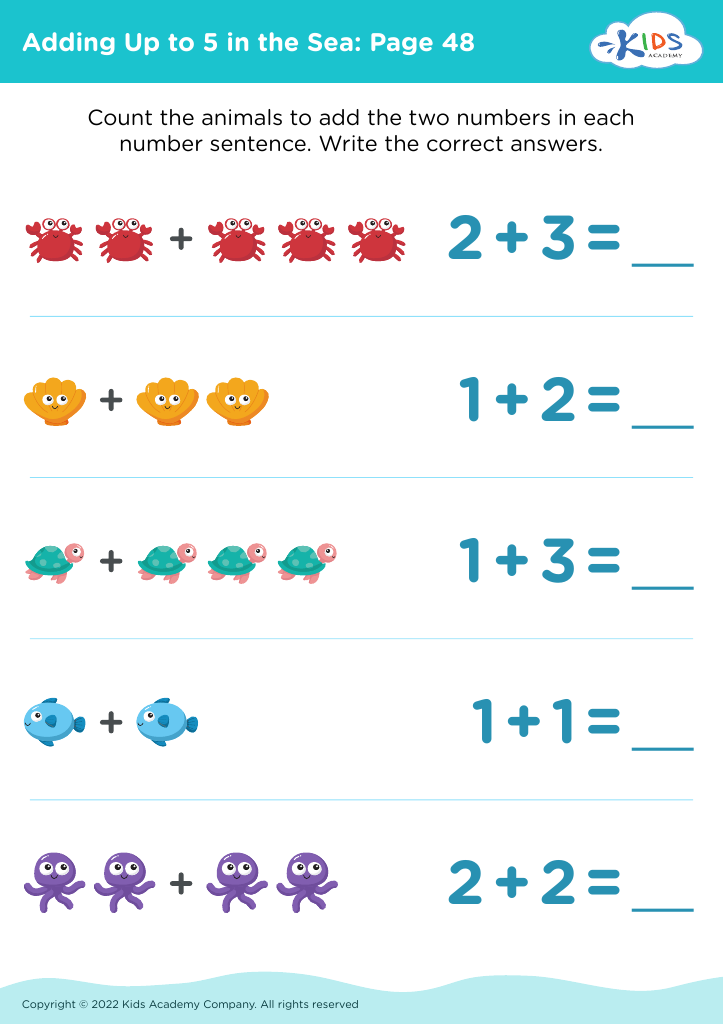
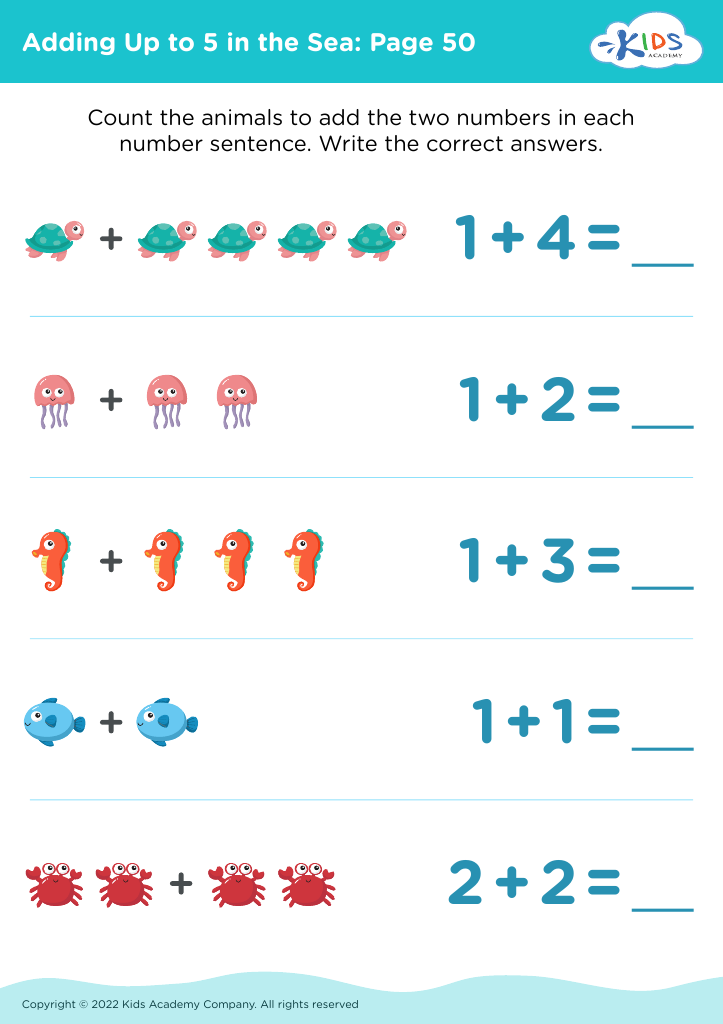
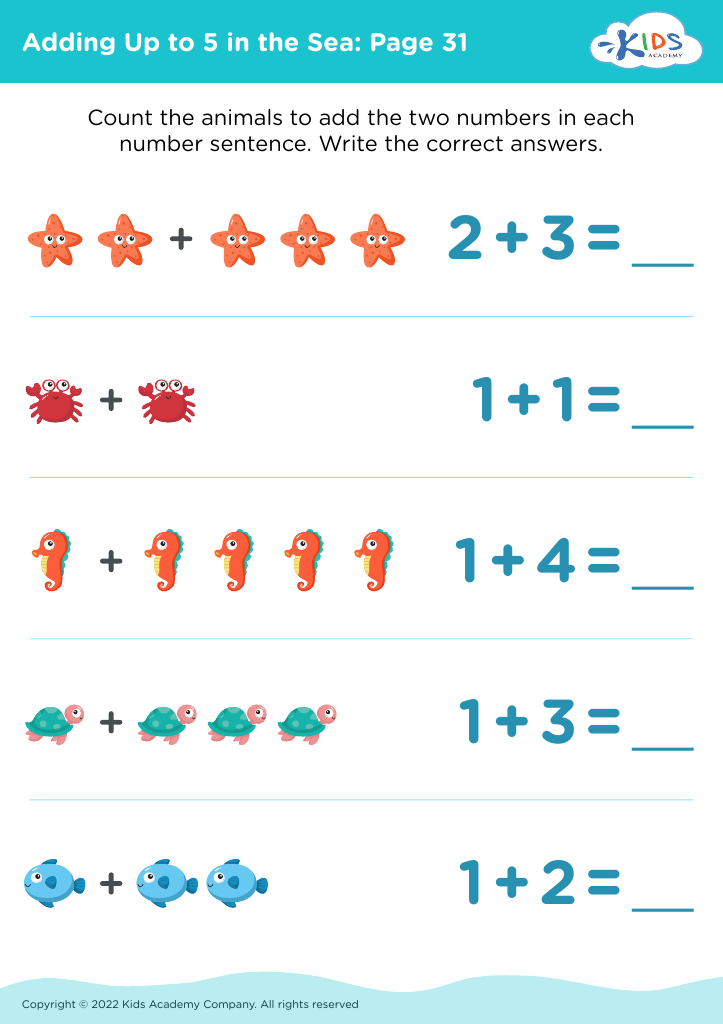








Parents and teachers should care about integrating sea creatures identification with addition and subtraction concepts for young learners because it enriches their educational experience in a fun and engaging way. At ages 5-6, children are naturally curious about the world around them. Introducing sea creatures sparks interest in marine biology while incorporating math concepts helps reinforce their learning.
Using sea creatures in addition and subtraction exercises makes mathematics relatable. For instance, by counting the number of starfish or jellyfish, children practice their counting skills while also learning to add and subtract these numbers. This method not only boosts numeracy skills but also enhances their understanding of diversity in marine life.
Additionally, this approach supports the development of critical thinking and problem-solving skills. By posing real-world scenarios about ocean life, children must think logically to find solutions, making math applicable to their lives. Finally, focusing on sea creatures fosters environmental awareness at a young age, emphasizing the importance of marine ecosystems they may encounter in their everyday lives. Overall, combining sea creature identification with math provides a holistic learning experience that builds knowledge, environmental stewardship, and foundational math skills simultaneously.








