Understanding number relationships Addition & Subtraction Worksheets for Ages 5-6
6 filtered results
-
From - To
Explore our "Understanding Number Relationships: Addition & Subtraction Worksheets" designed for ages 5-6! These essential resources help young learners grasp the core concepts of addition and subtraction through engaging activities. By visualizing number relationships, children will develop a solid foundation in math, enhancing their problem-solving skills. Our printable worksheets feature colorful illustrations, hands-on exercises, and a variety of problem-solving strategies that make learning fun and interactive. Ideal for classroom use or at-home practice, these worksheets encourage early numeracy skills and foster confidence in mathematical thinking. Start your child's math journey today with our specially crafted activities!
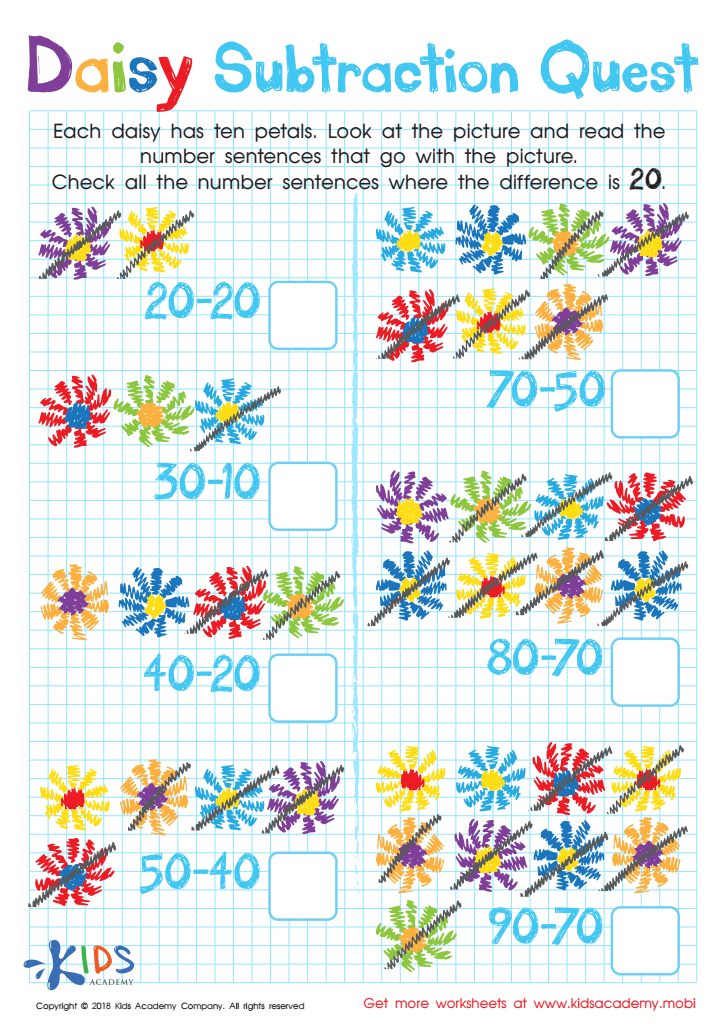
Daisy Subtraction Quest Worksheet
 Assign to My Students
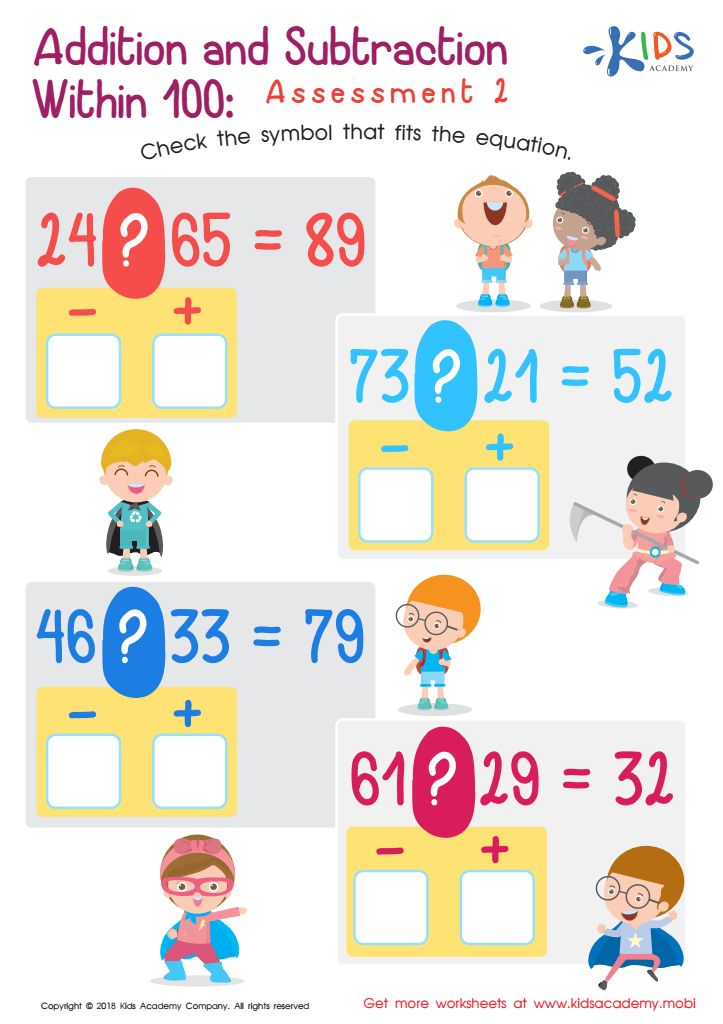
Addition and Subtraction Within 1: Assessment 2 Worksheet
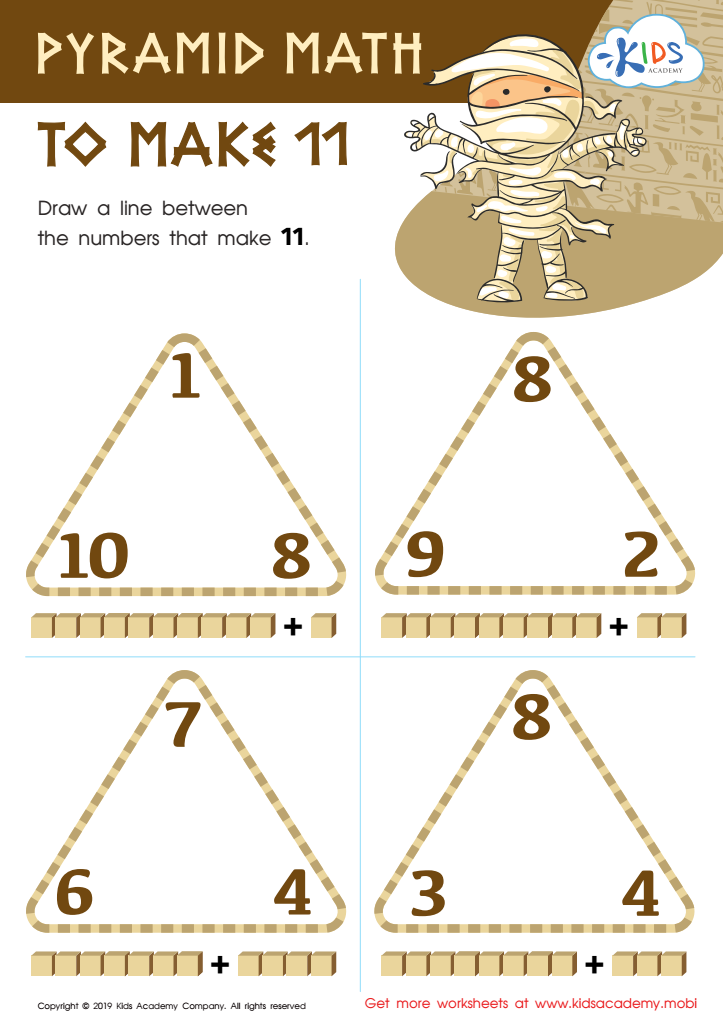
Pyramid Math to Make 11 Worksheet








Understanding number relationships related to addition and subtraction is crucial for children aged 5-6, as it lays the foundation for their mathematical skills and overall cognitive development. At this stage, children begin to grasp the concept that numbers represent quantities and can be manipulated through basic operations. Recognizing relationships between numbers fosters critical thinking, enabling young learners to assess patterns and make connections between various mathematical concepts.
Parents and teachers should care about this foundational understanding because it significantly impacts a child's confidence and success in mathematics as they progress through school. Solidifying addition and subtraction through various methods—such as counting objects, using number lines, or engaging in playful activities—helps children develop flexible problem-solving skills. When children comprehend the relationship between numbers, they can tackle more complex operations, such as multiplication and division, with ease.
Additionally, these skills enhance children's everyday life experiences, allowing them to manage situations involving quantities, budgeting, and time. Encouraging a strong grasp of addition and subtraction from a young age generates a positive attitude toward math, reducing anxiety and promoting perseverance during challenging tasks, ultimately contributing to lifelong success in learning and personal development.








