Addition up to 5 Addition Worksheets for Ages 5-6
4 filtered results
-
From - To
Explore our engaging Addition Up to 5 Worksheets designed for kids ages 5-6! These worksheets provide a fun and interactive way to introduce young learners to basic addition concepts. With colorful illustrations and simple exercises, children will develop their math skills while building confidence. Each worksheet reinforces addition through various activities, including counting objects and solving cute mathematics problems. Perfect for parents and teachers, these materials make learning math enjoyable and effective. Help your child master addition in no time! Download your free addition worksheets today and set the foundation for their mathematical journey!
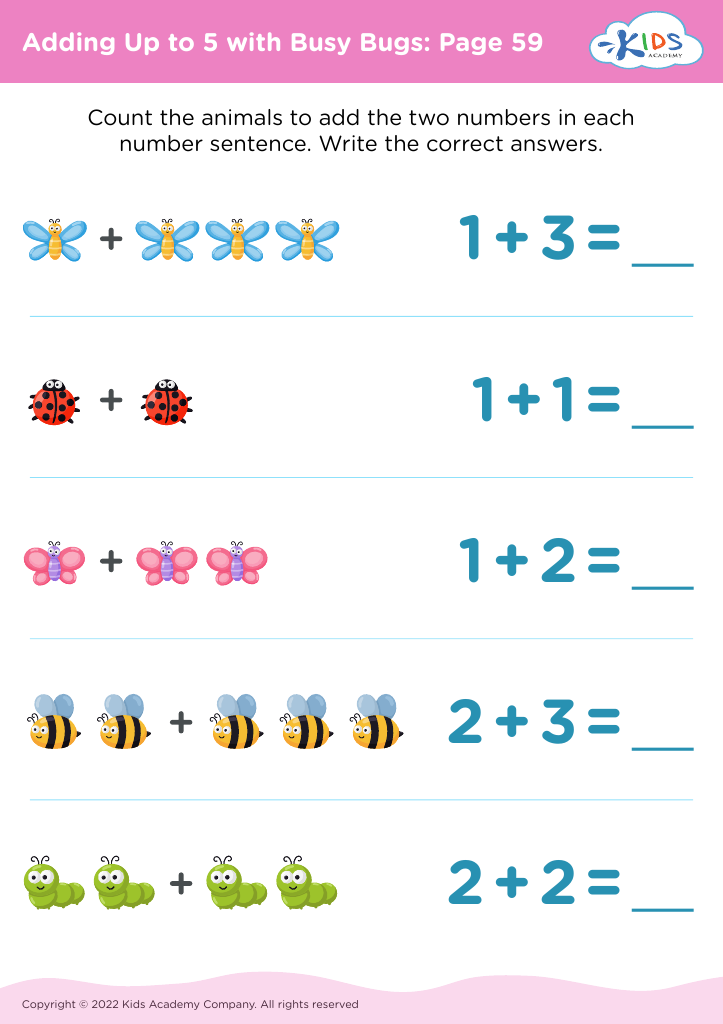
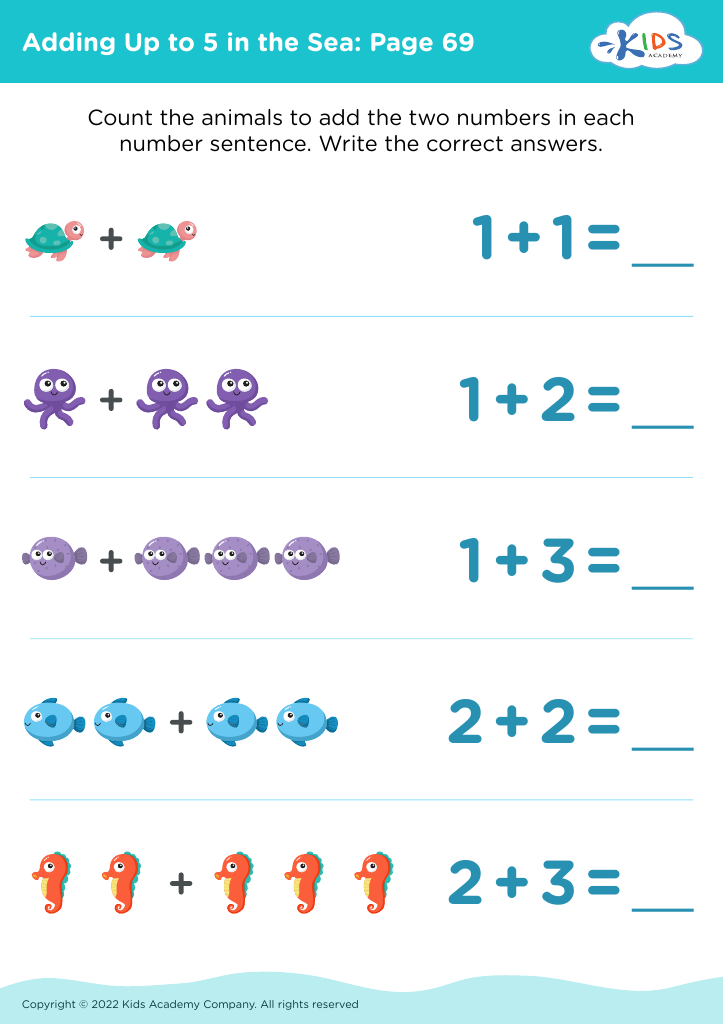
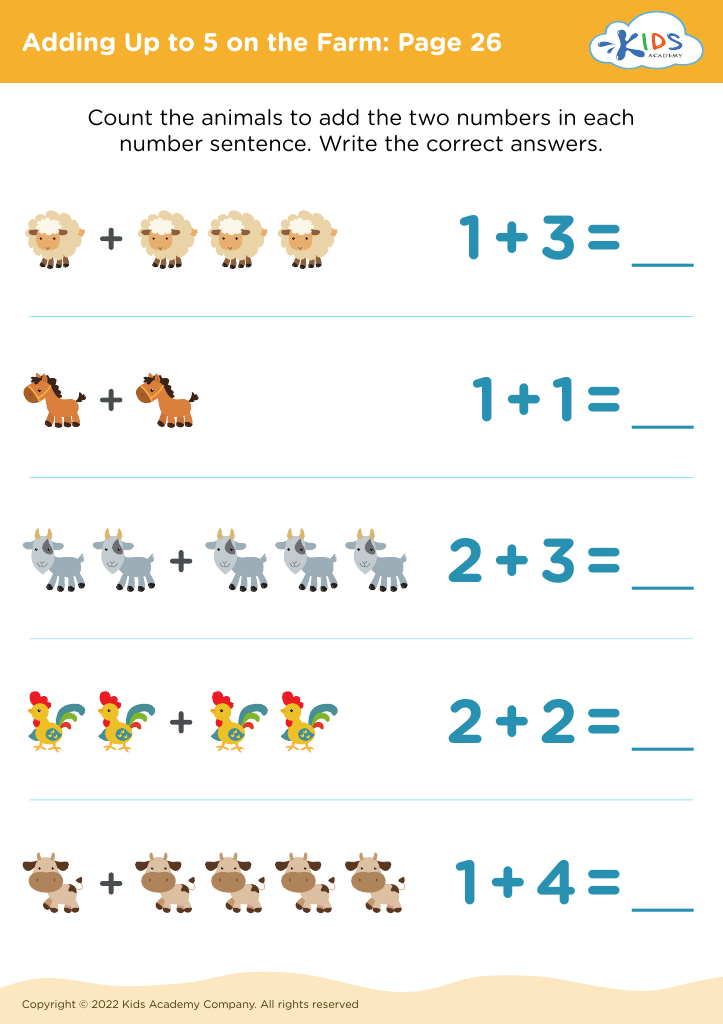
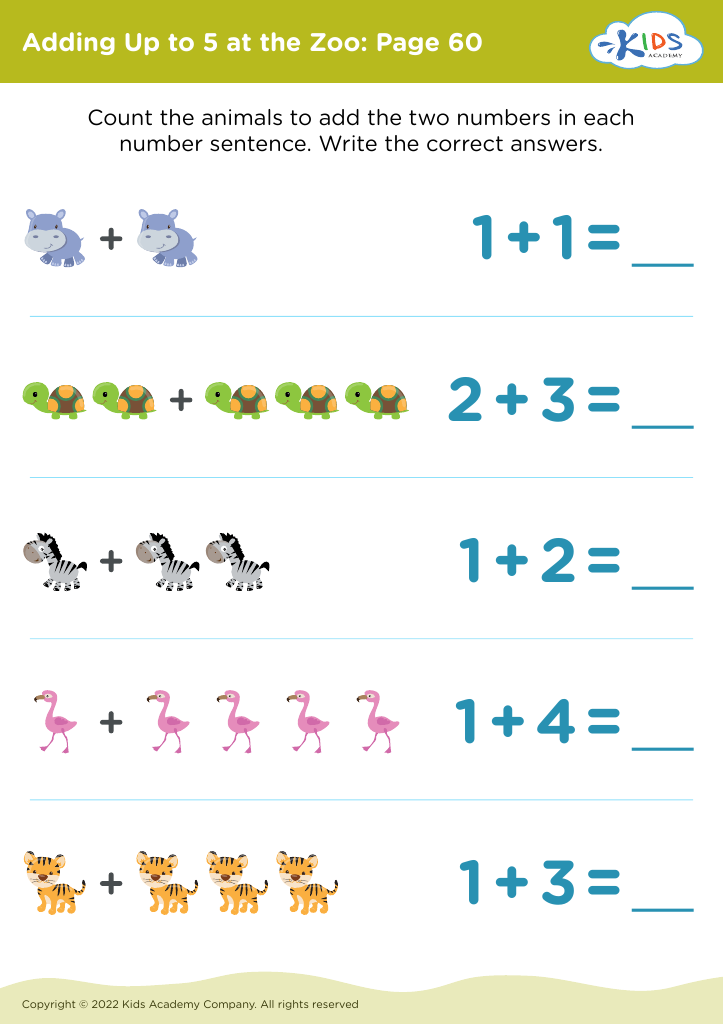








Parents and teachers should prioritize teaching addition up to 5 for children aged 5-6 because it lays the foundation for all future mathematical learning. At this early stage, children are developing crucial cognitive skills, and mastering simple addition bolsters their understanding of number relationships.
Understanding addition promotes critical thinking, problem-solving abilities, and boosts confidence in young learners. Engaging with numbers through practical activities, such as counting objects or using visual aids, fosters active learning and makes math enjoyable.
Moreover, early proficiency in addition helps develop their mathematical fluency, which is vital for more complex arithmetic skills learned in later grades. When children grasp basic addition, they can recognize patterns, make predictions, and approach more challenging math problems with a positive mindset.
Additionally, these skills encourage mindfulness and focus, as children engage in tasks like counting and combining numbers. Ultimately, promoting a solid understanding of addition sets children on a path to greater academic success and lifelong learning skills. Parents and teachers must collaborate to ensure that kids not only learn but also enjoy the process of discovering math in their everyday lives.








