Basic addition practice Addition Worksheets for Ages 5-6
9 filtered results
-
From - To
Enhance your child's math skills with our Basic Addition Practice Worksheets, designed specifically for ages 5-6! These engaging and interactive worksheets help young learners grasp the fundamentals of addition through colorful visuals and fun exercises. Each sheet encourages hands-on practice, enabling kids to improve their number recognition and problem-solving abilities while boosting their confidence. Ideal for classroom or home use, our worksheets cater to various learning paces and styles. Give your child the tools they need to succeed in math, fostering a love for learning from an early age. Explore our collection and watch them master basic addition with joy!
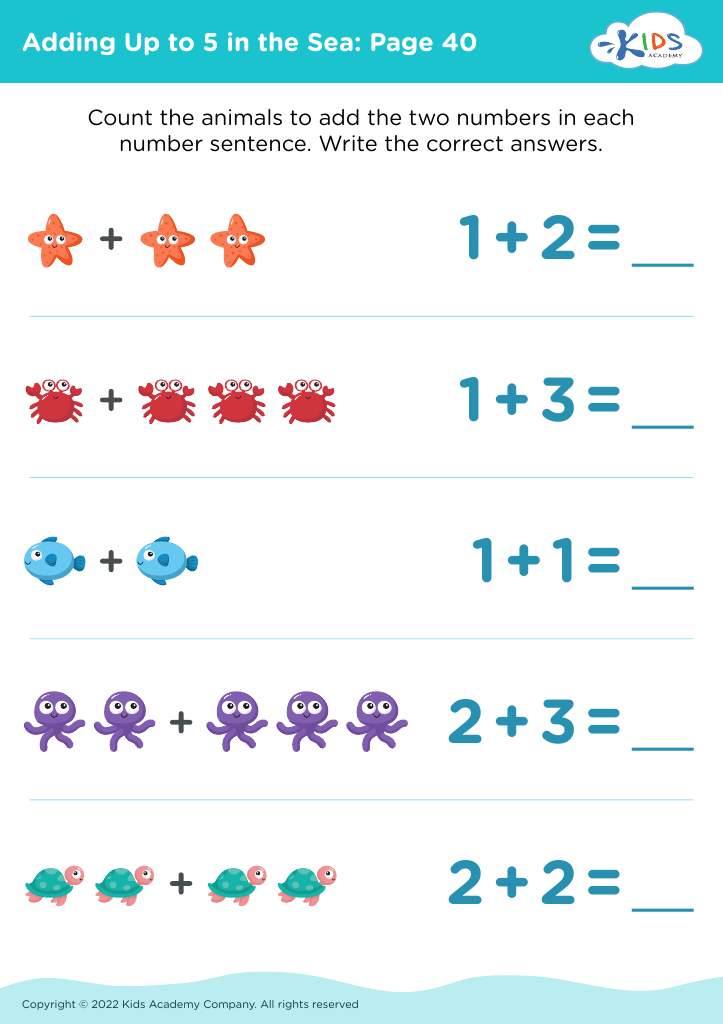
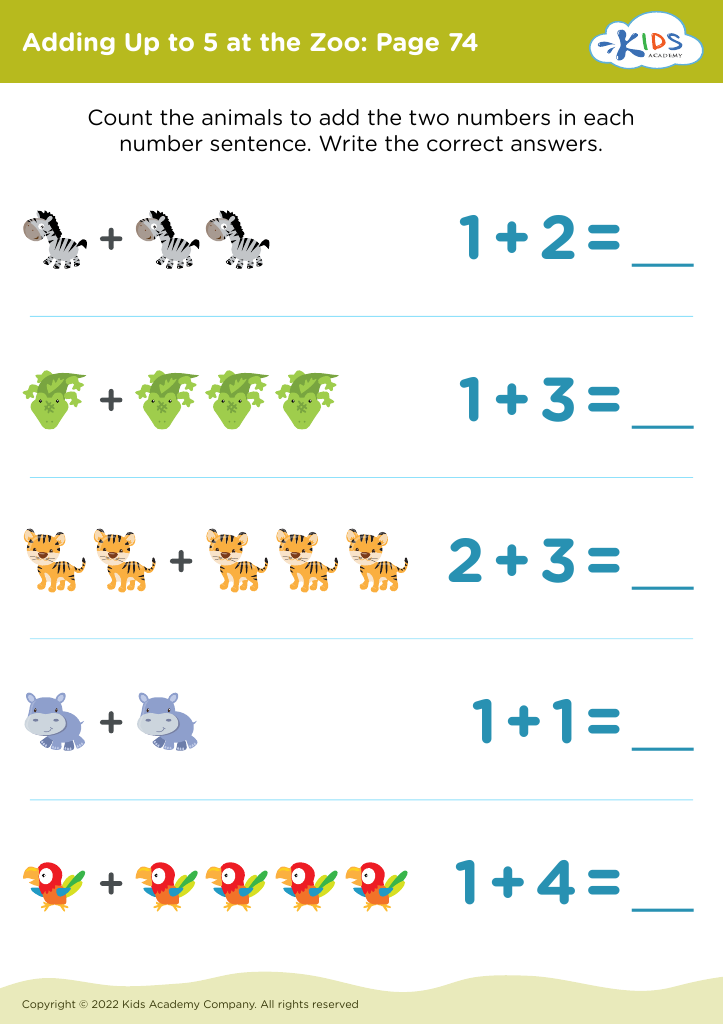
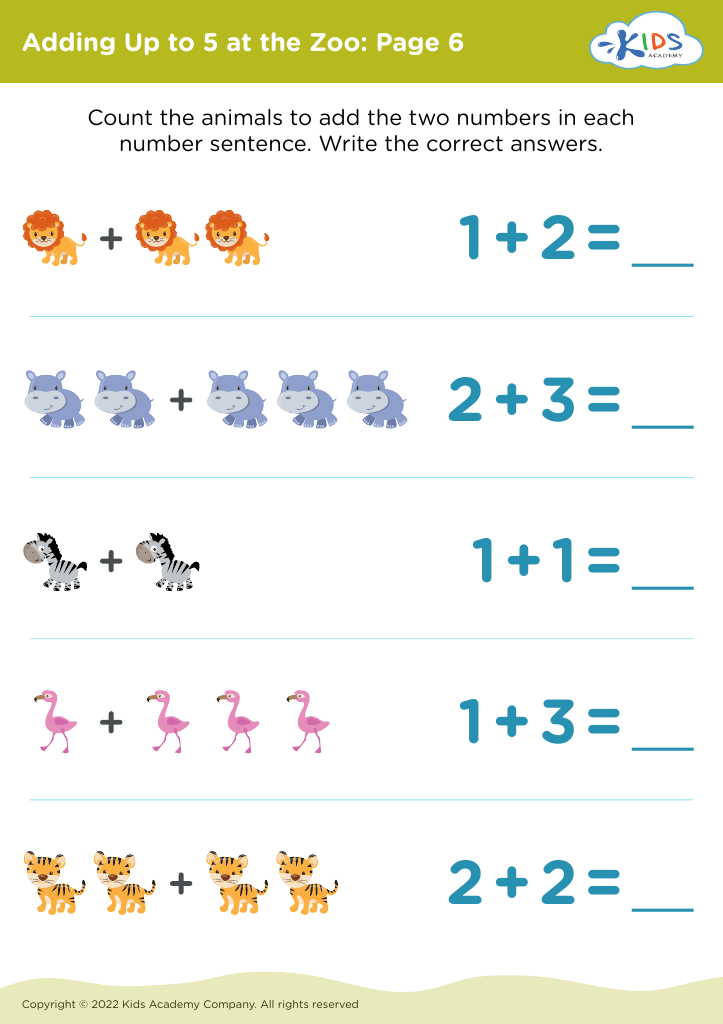
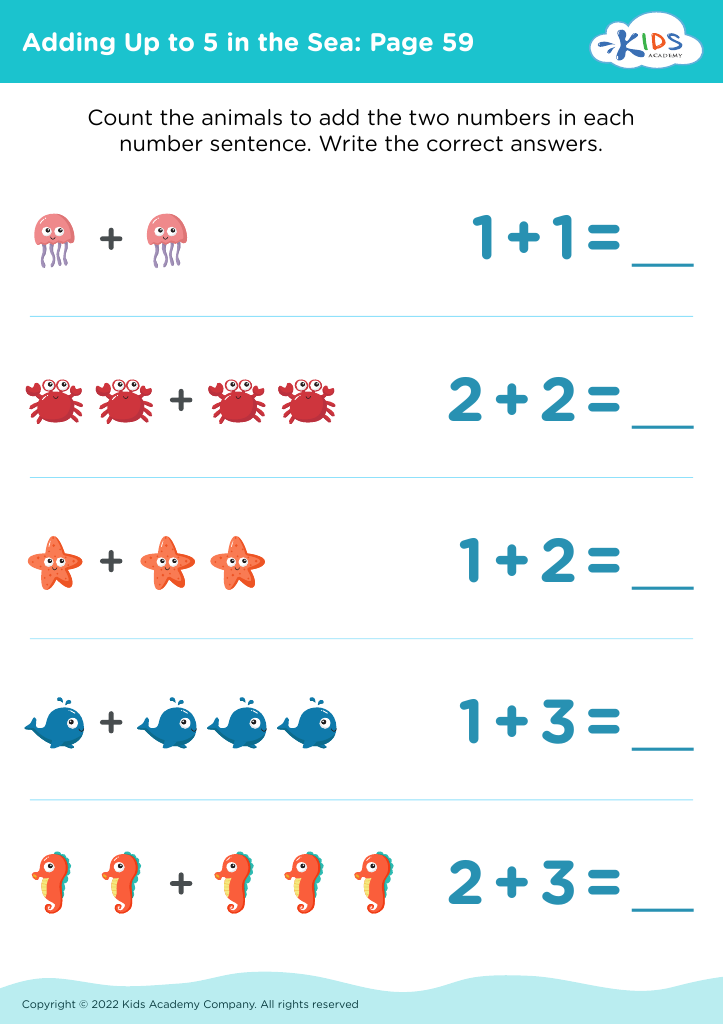
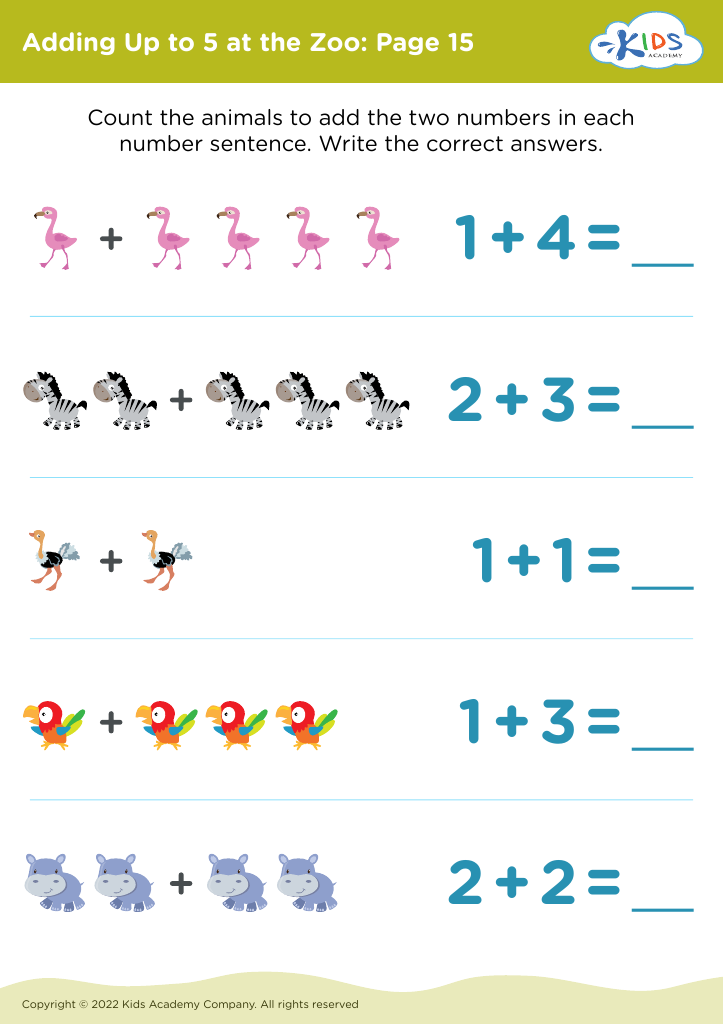
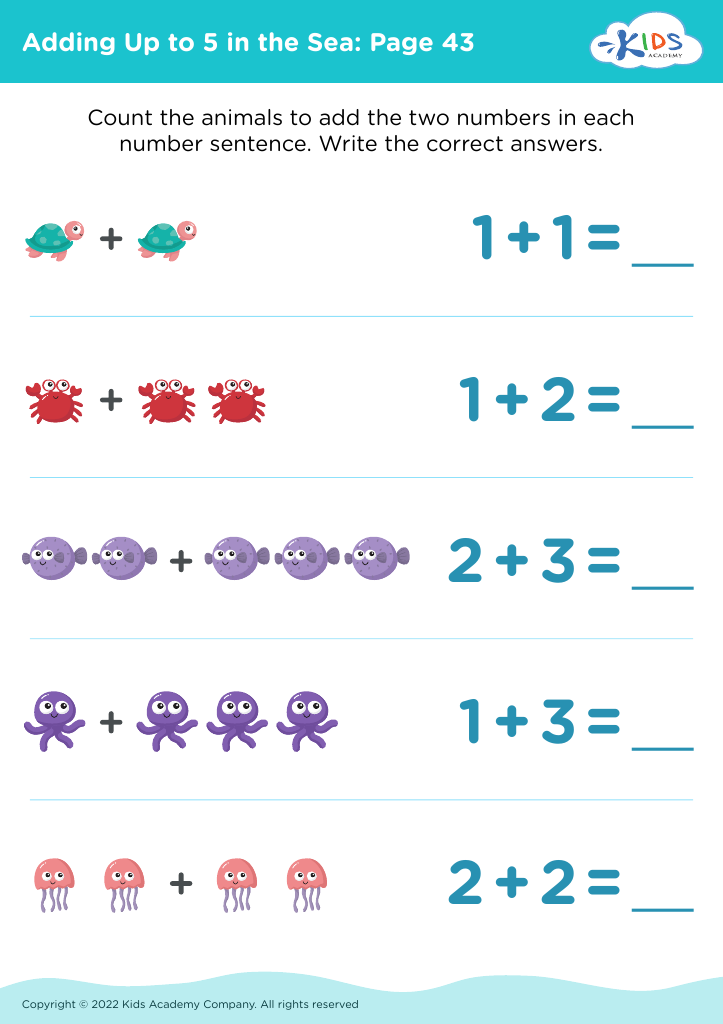
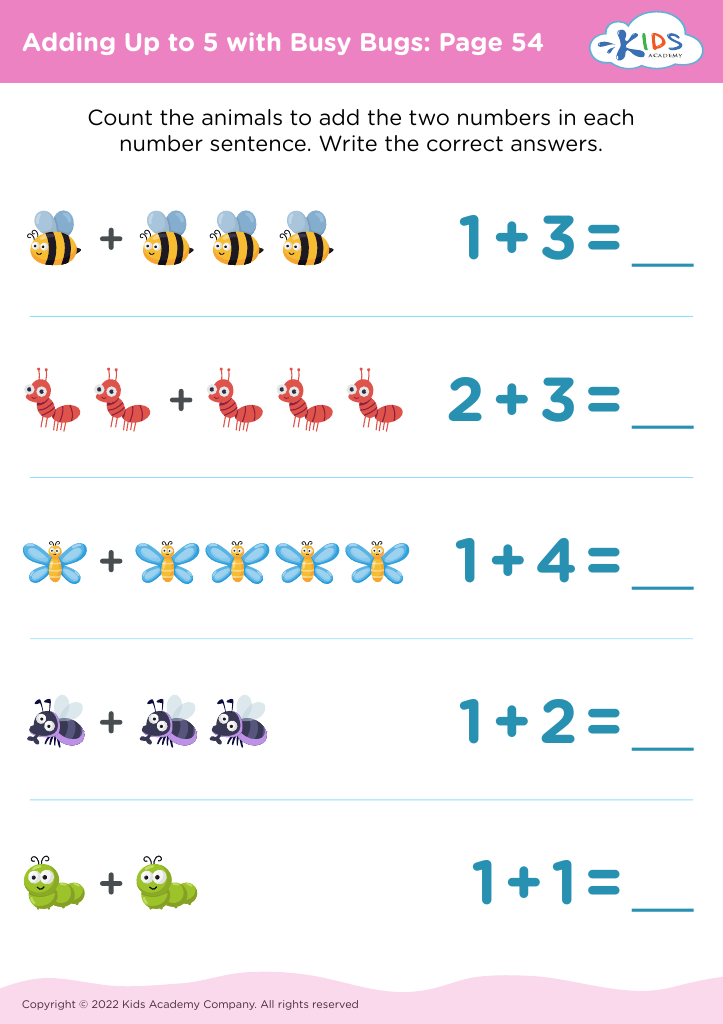
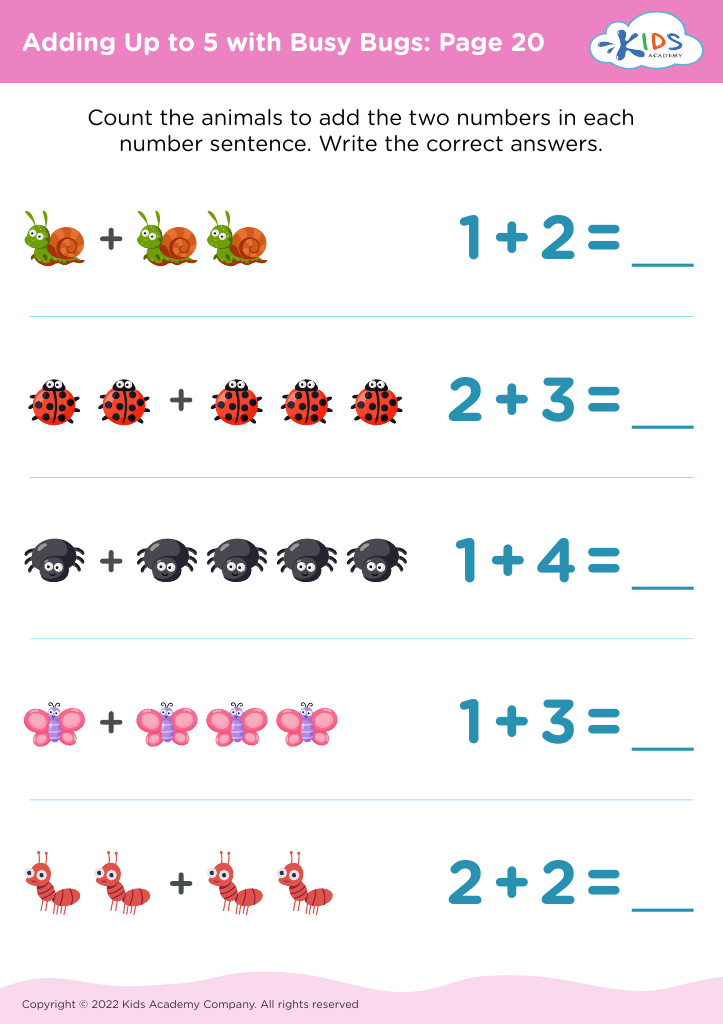
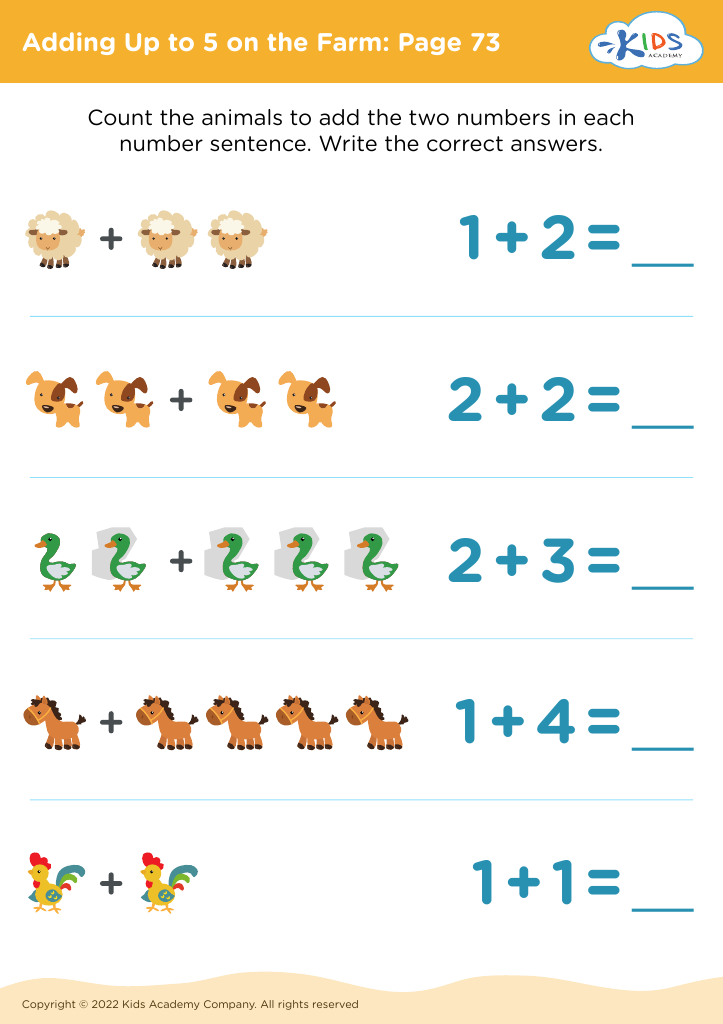







Basic addition practice for children aged 5-6 is crucial for several reasons. First, it lays the foundation for essential math skills. At this age, children begin to recognize numbers and understand the concept of quantity, introducing them to simple addition sets the stage for more complex mathematical concepts in the future.
Second, mastering basic addition boosts children’s confidence. When they can solve simple problems, they feel a sense of accomplishment that fosters a love for learning. This positive emotional connection with math can motivate them to tackle more challenging concepts later.
In addition, practicing basic addition enhances cognitive development. It encourages problem-solving skills, critical thinking, and the ability to follow instructions, enhancing overall academic performance across subjects.
Moreover, as children learn to work with numbers, they also develop important social skills. Group activities related to addition can promote collaboration and communication among peers.
For parents and teachers, fostering a supportive and engaging environment around math is essential. By emphasizing basic addition practice, they equip children with the necessary tools for lifelong learning, establishing a strong educational foundation that benefits them in their academic journey and beyond.








