
Fine motor skills (writing numbers) Addition Worksheets for Ages 5-6
13 filtered results
Difficulty Level
Grade
Age
-
From - To
Subject
Activity
Standards
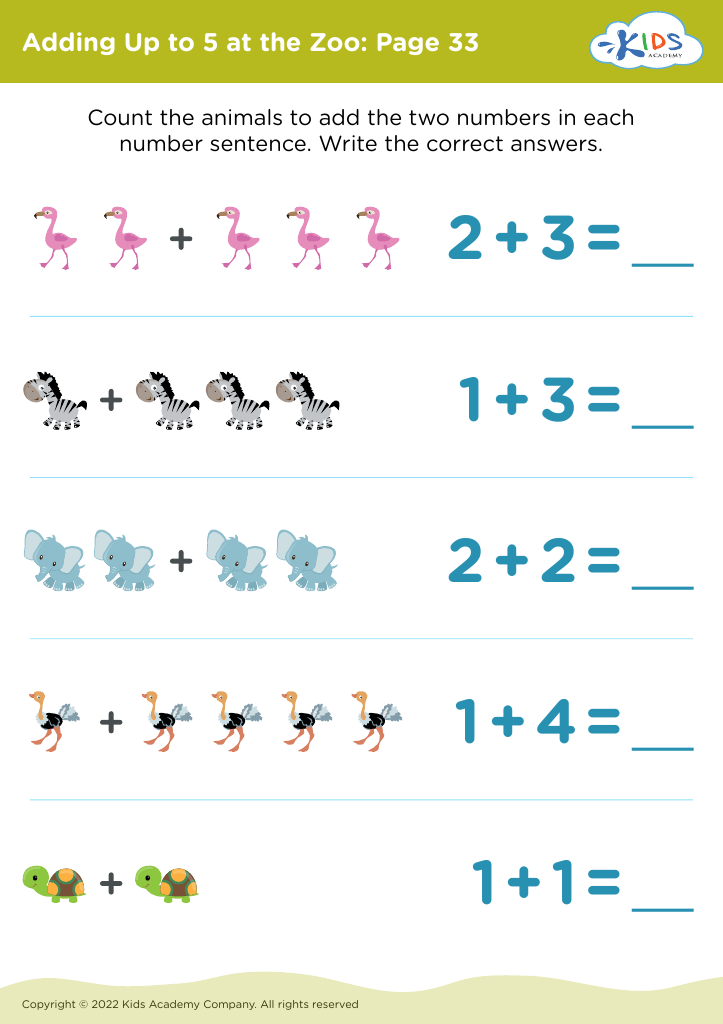
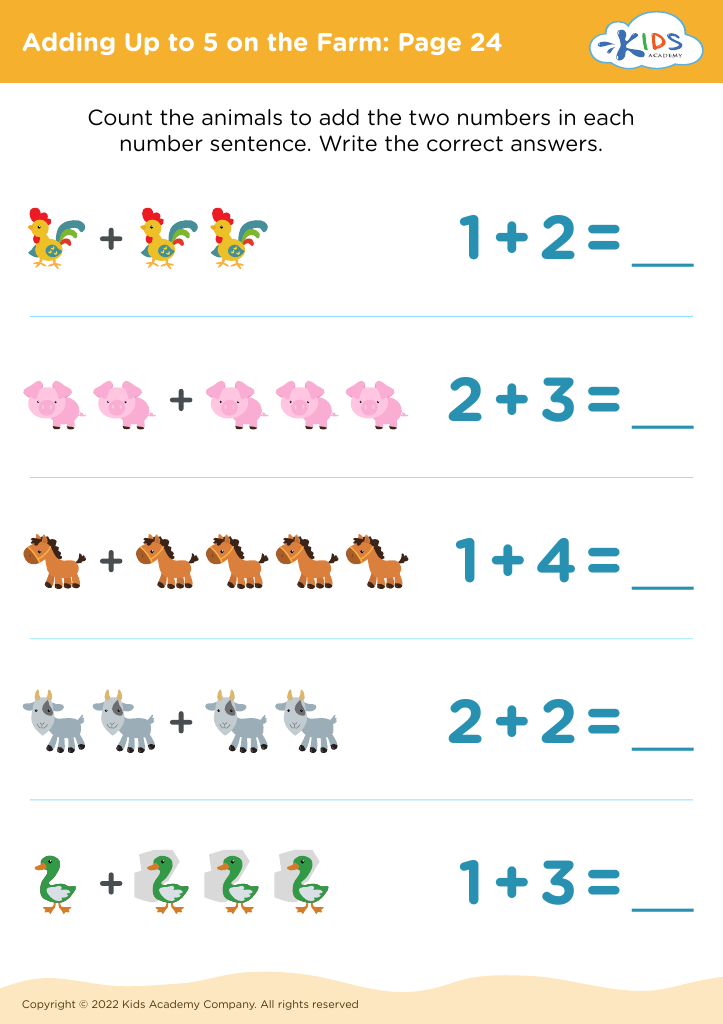
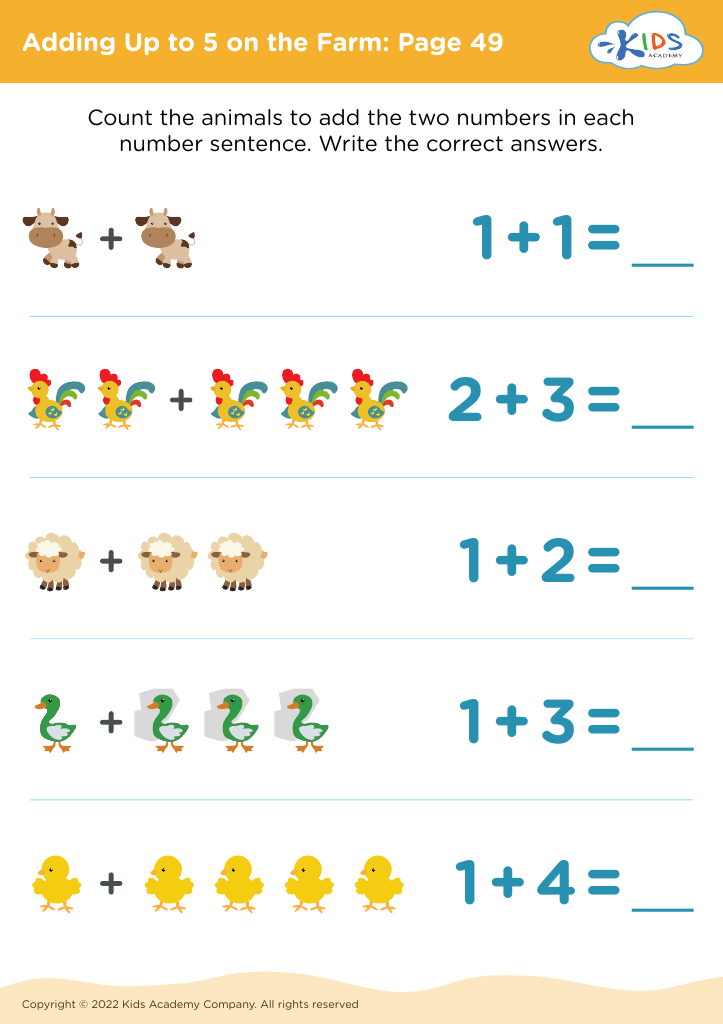
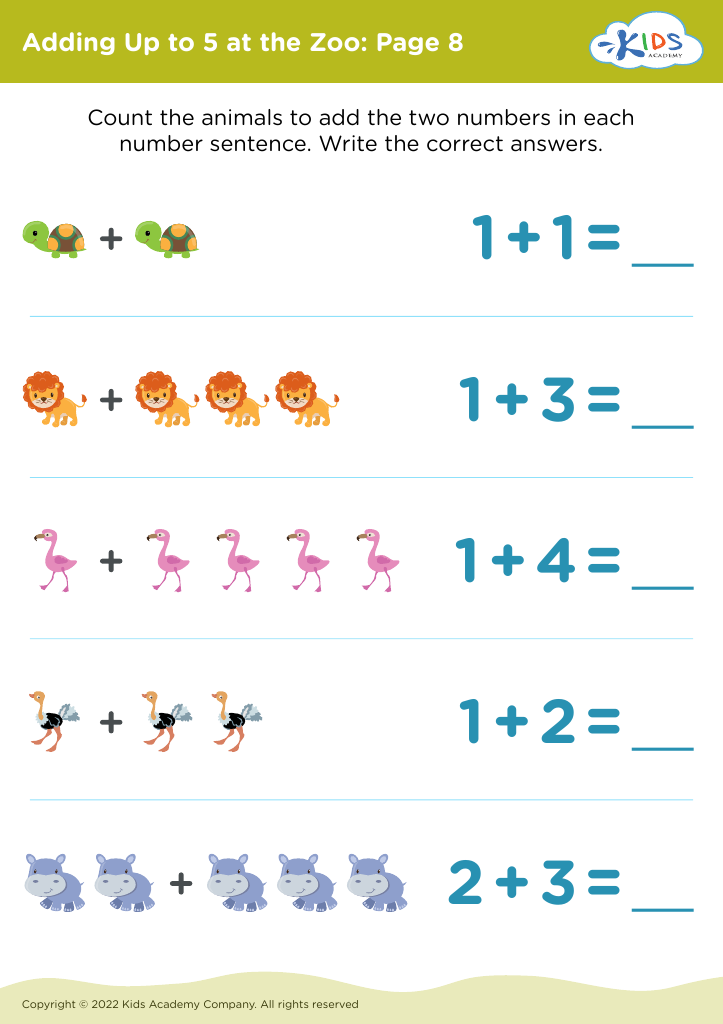
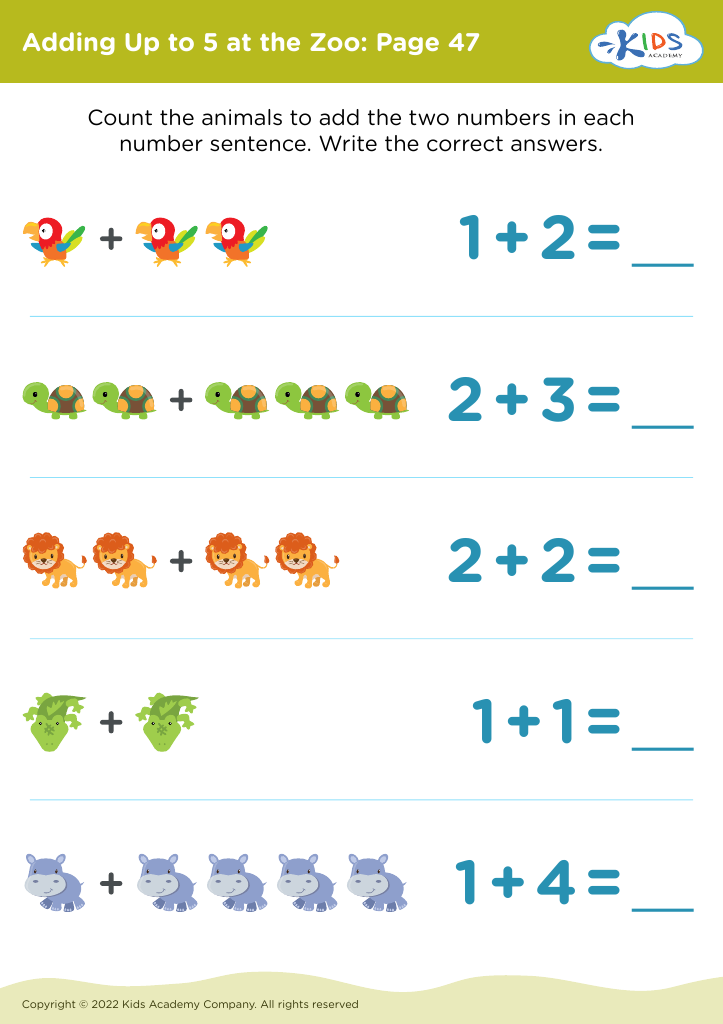
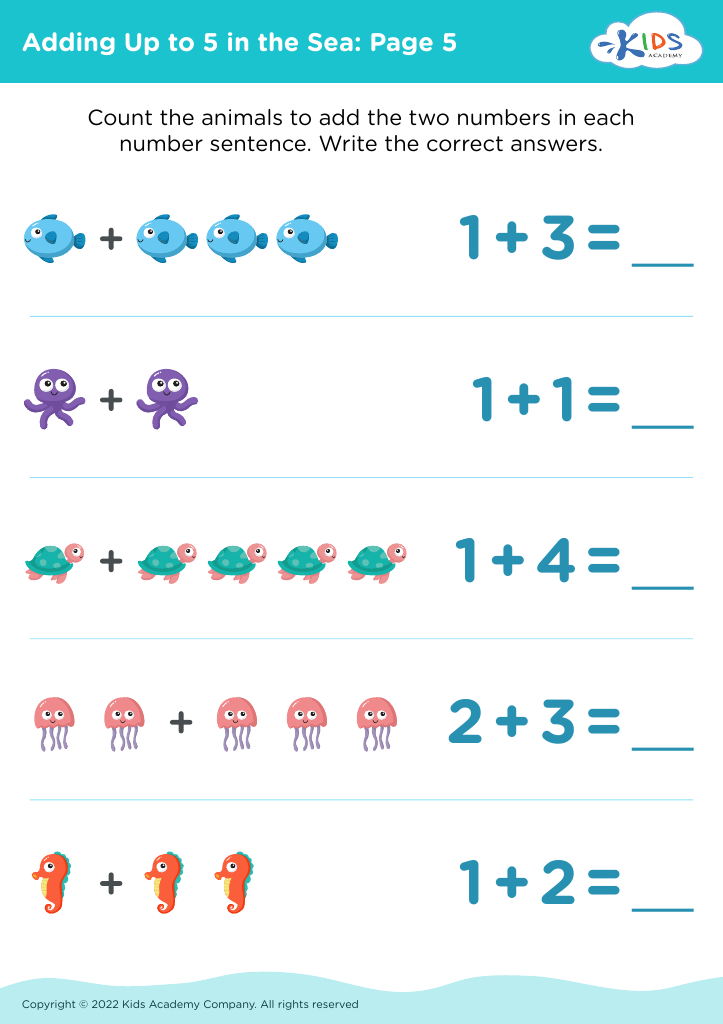
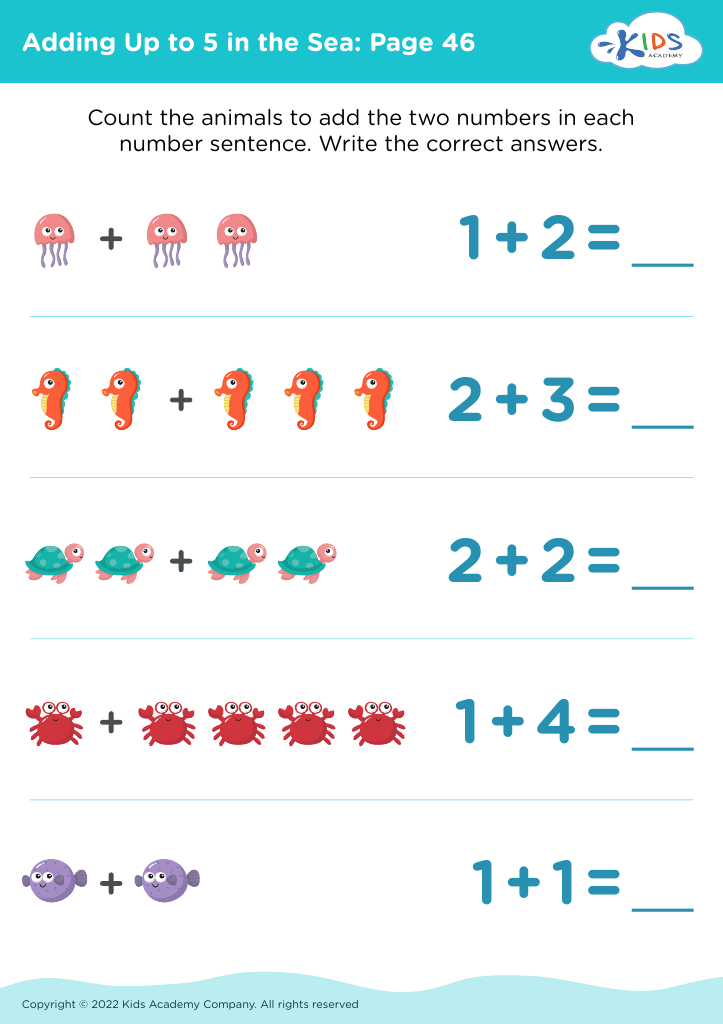
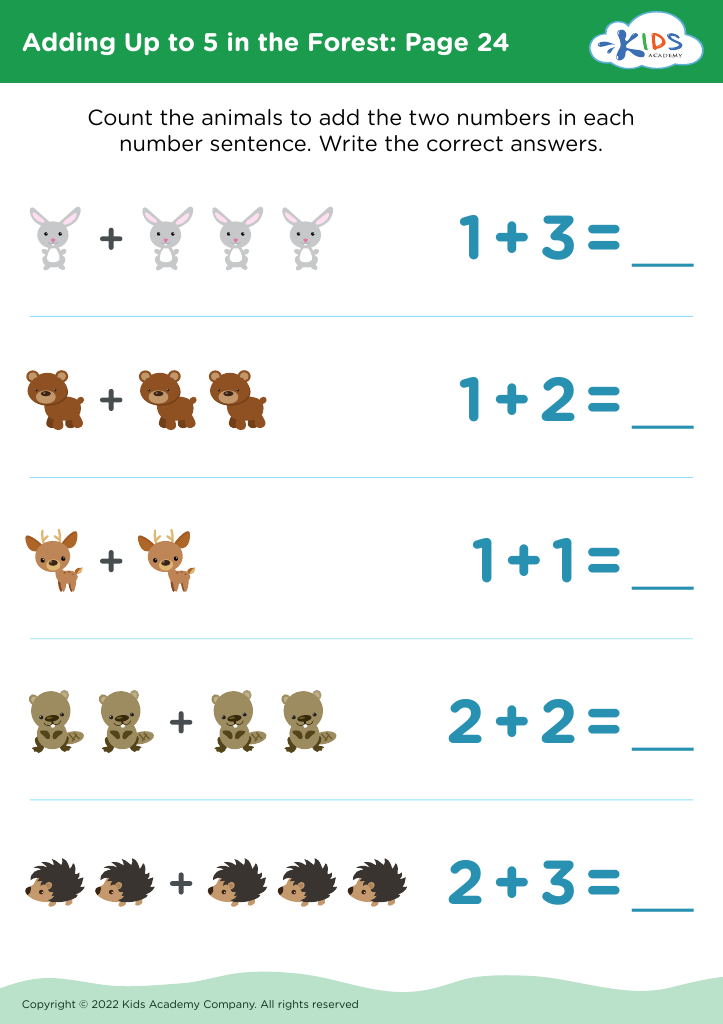
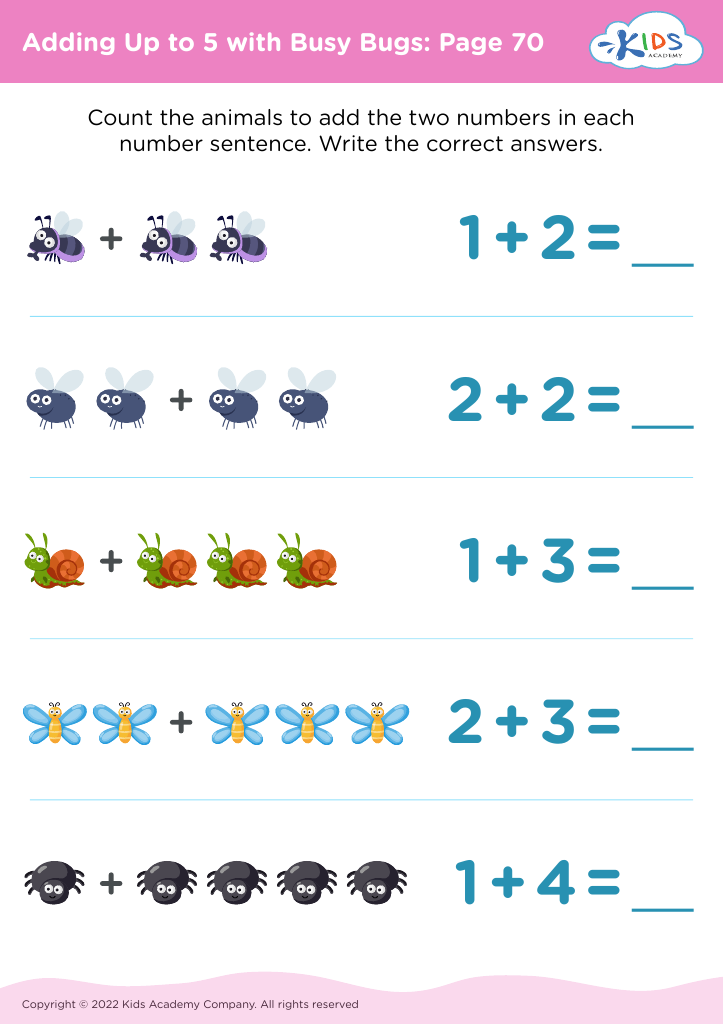
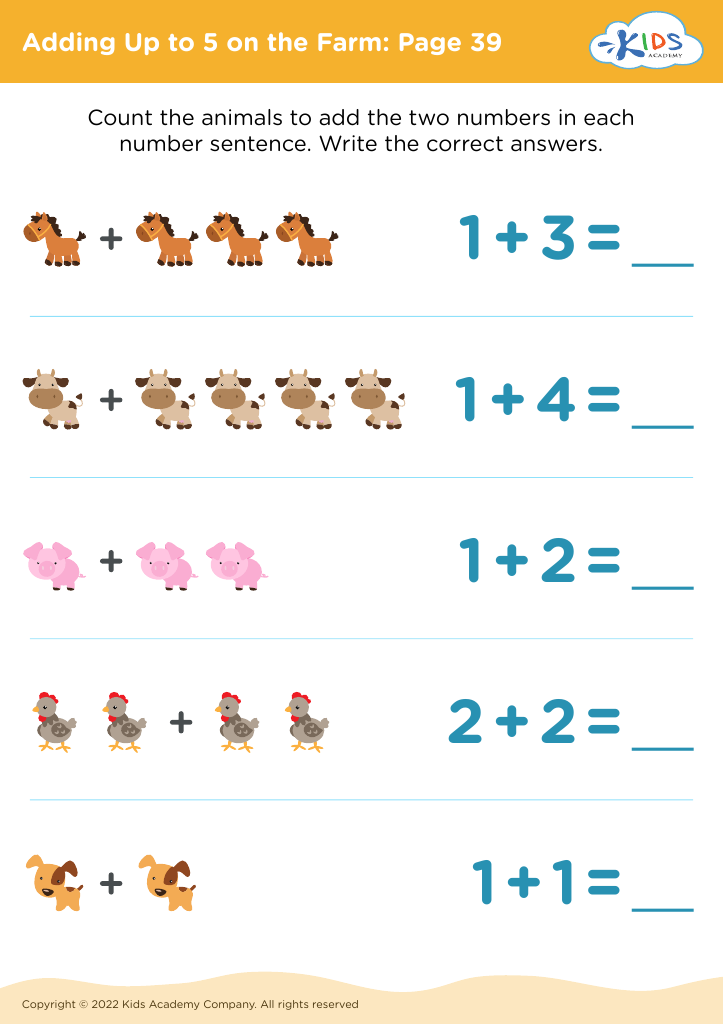
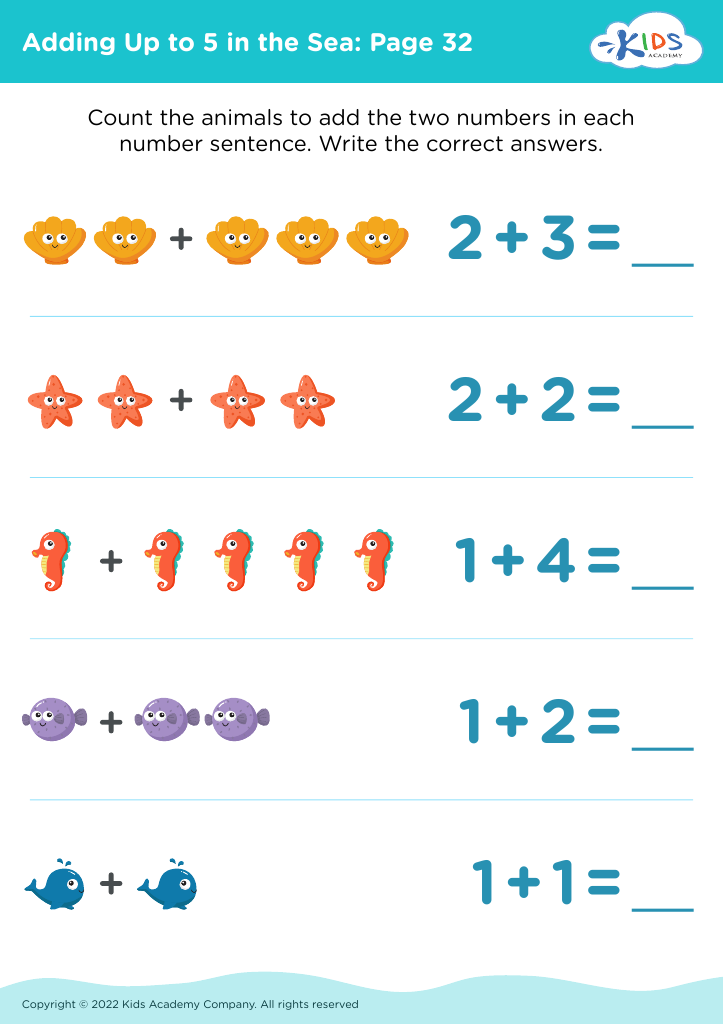
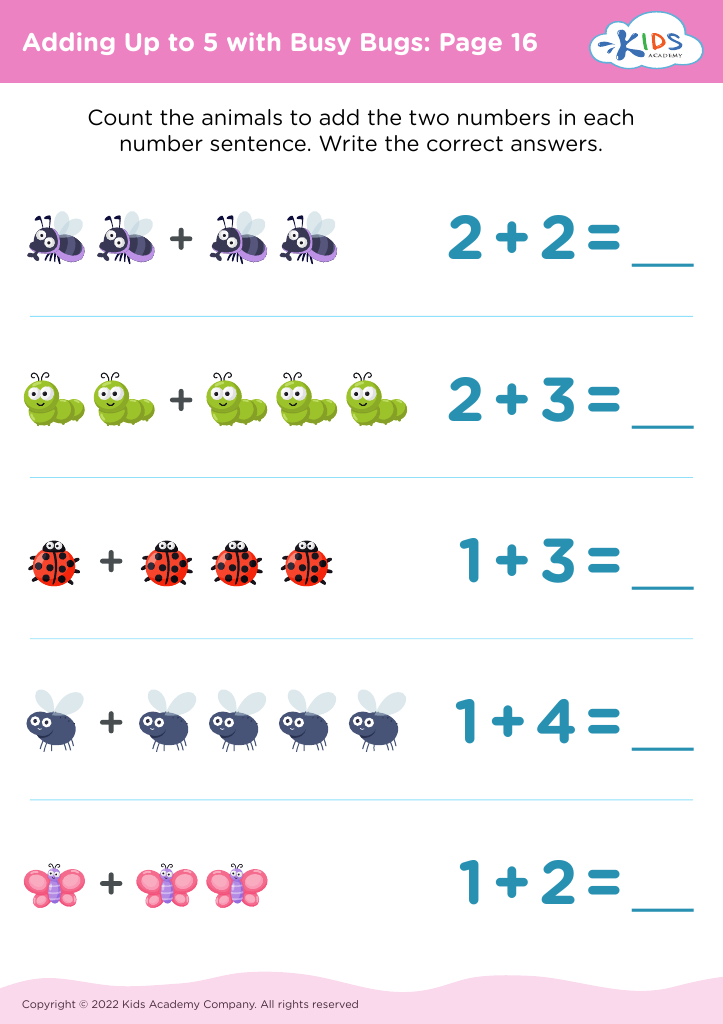
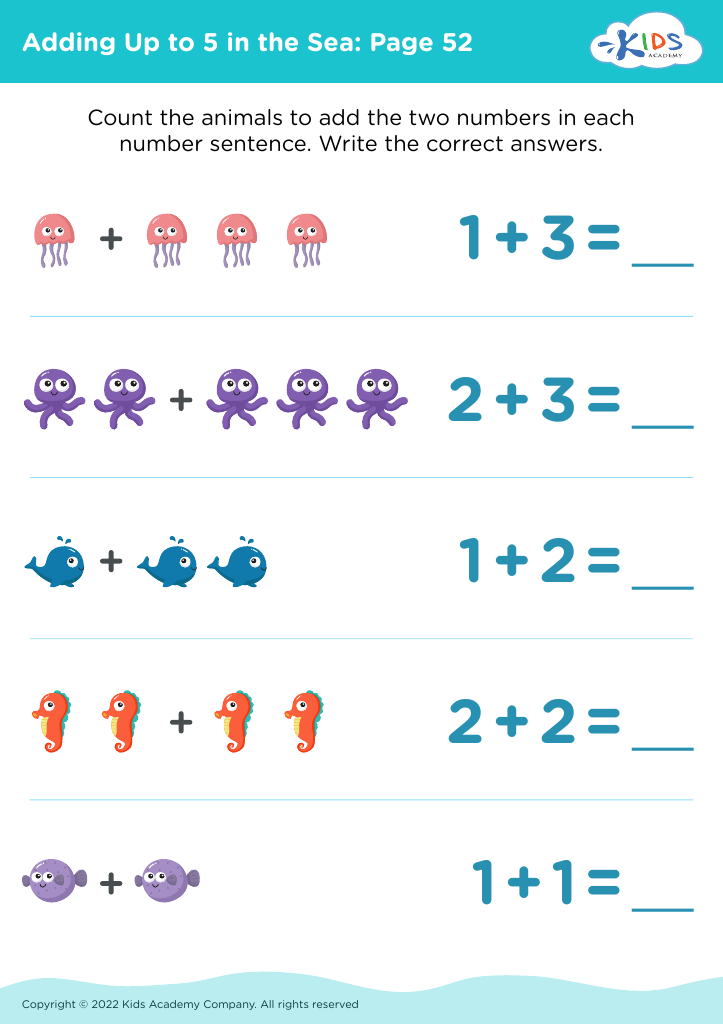
Boost your child's fine motor skills with our engaging writing numbers addition worksheets designed for ages 5-6. These worksheets not only teach basic addition but also help young learners practice handwriting and number formation. Each activity combines educational content with fun illustrations to keep kids motivated and focused. Perfect for home or classroom use, our worksheets encourage children to enhance their grip, control, and coordination as they work through addition problems. By mastering these skills, your child will build a strong foundation for future math success. Explore our collection of interactive and visually appealing worksheets to support your child's learning journey!
Favorites
With answer key
Interactive
Join Kids Academy for Free
Who is primarily going to use this learning content?








Fine motor skills are crucial for young children, particularly those aged 5-6, as they serve as the foundation for essential academic skills. Writing numbers, for example, requires a level of precision and control that is developed through fine motor activities. As children learn to form numbers, they not only enhance their writing abilities but also improve their hand-eye coordination and dexterity.
For parents and teachers, fostering fine motor skills in early childhood is especially important because it supports a child’s overall development. Strong fine motor skills contribute to better performance in math, literacy, and other subjects, as writing and manipulating tools like scissors, crayons, and counters become integral parts of learning. Additionally, proficient fine motor skills can boost a child’s confidence and independence, allowing them to navigate daily tasks more effectively.
Incorporating activities like tracing, drawing, and practicing number formation can make learning engaging and fun. By prioritizing fine motor skills at this developmental stage, parents and teachers not only prepare children for academic success but also equip them with the necessary skills to solve problems, express creativity, and build friendships, ultimately nurturing their holistic growth. Investing in these skills now yields long-term benefits in a child’s educational journey.








