Math problem-solving Addition Worksheets for Ages 5-6
4 filtered results
-
From - To
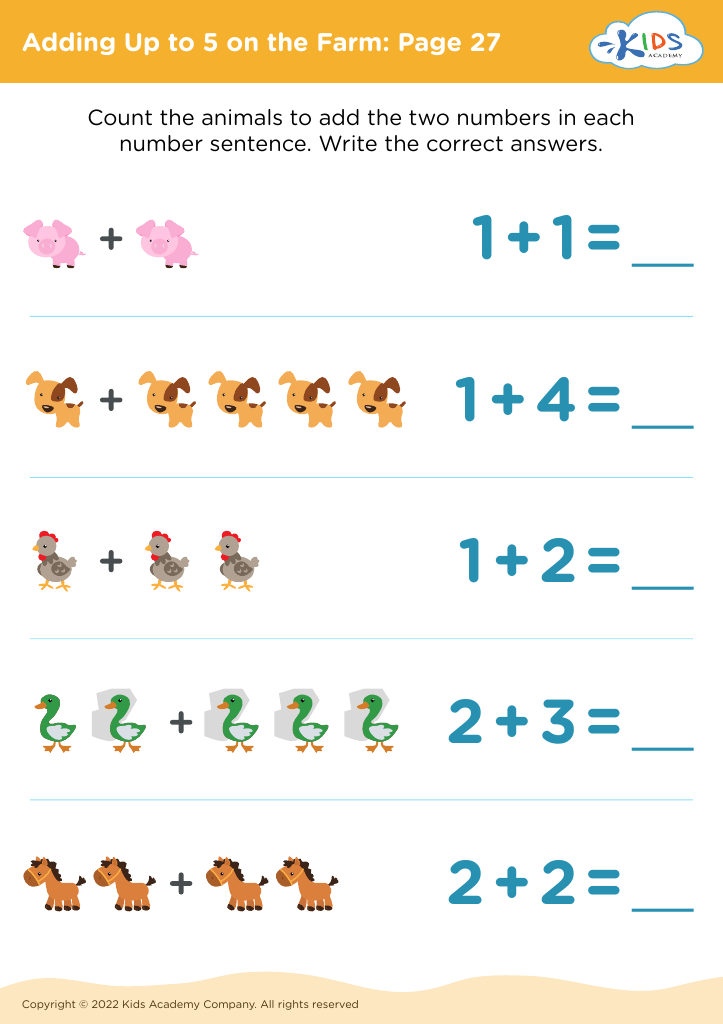
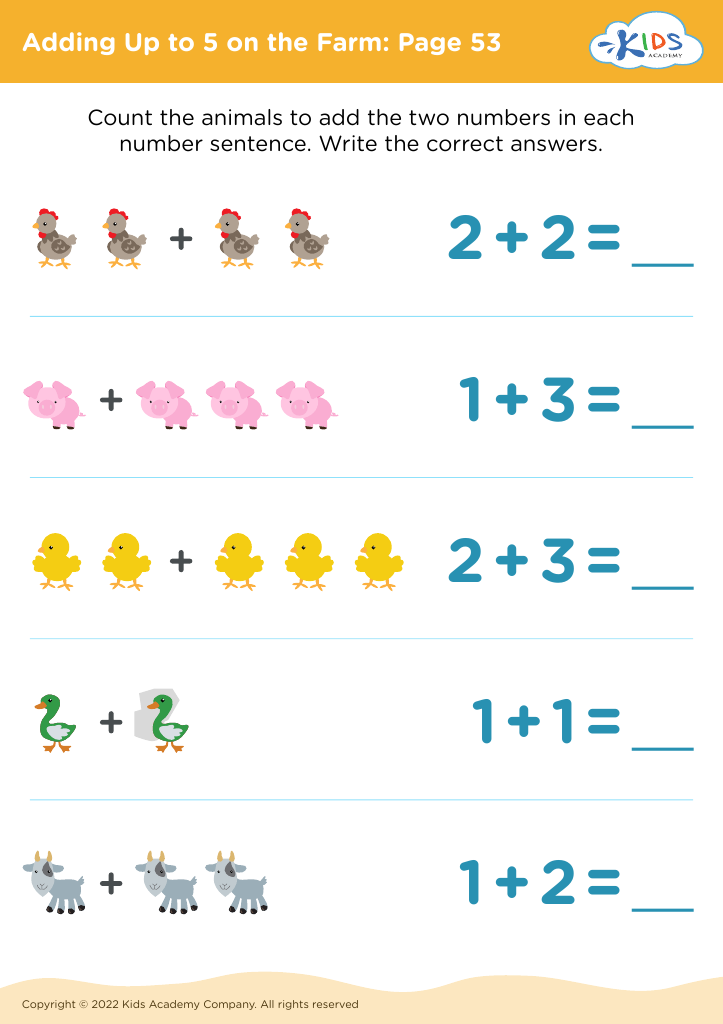
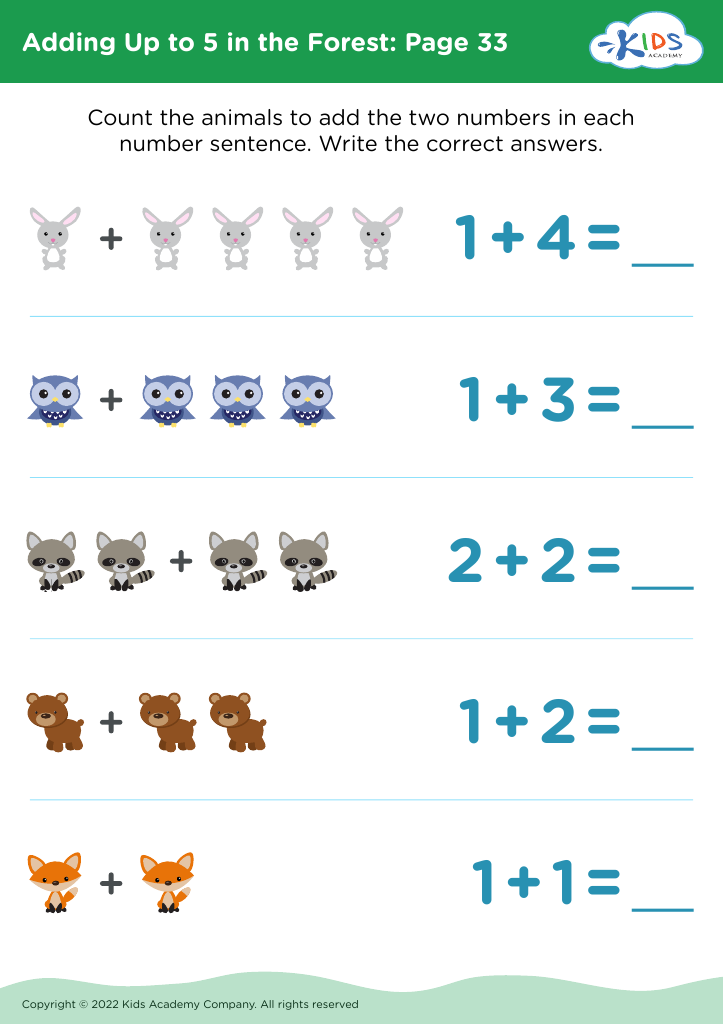
Explore our engaging Math Problem-Solving Addition Worksheets designed specifically for children aged 5-6! These worksheets provide a fun and interactive way for young learners to master basic addition skills. With colorful illustrations and varied problem formats, kids will develop critical thinking and learn to solve problems effectively. Our activities encourage playful learning, making math enjoyable while promoting cognitive growth. Perfect for homeschooling or classroom use, these worksheets can help foster a strong mathematical foundation in your child. Download the worksheets today and watch your child's confidence in math soar as they tackle addition challenges with ease!
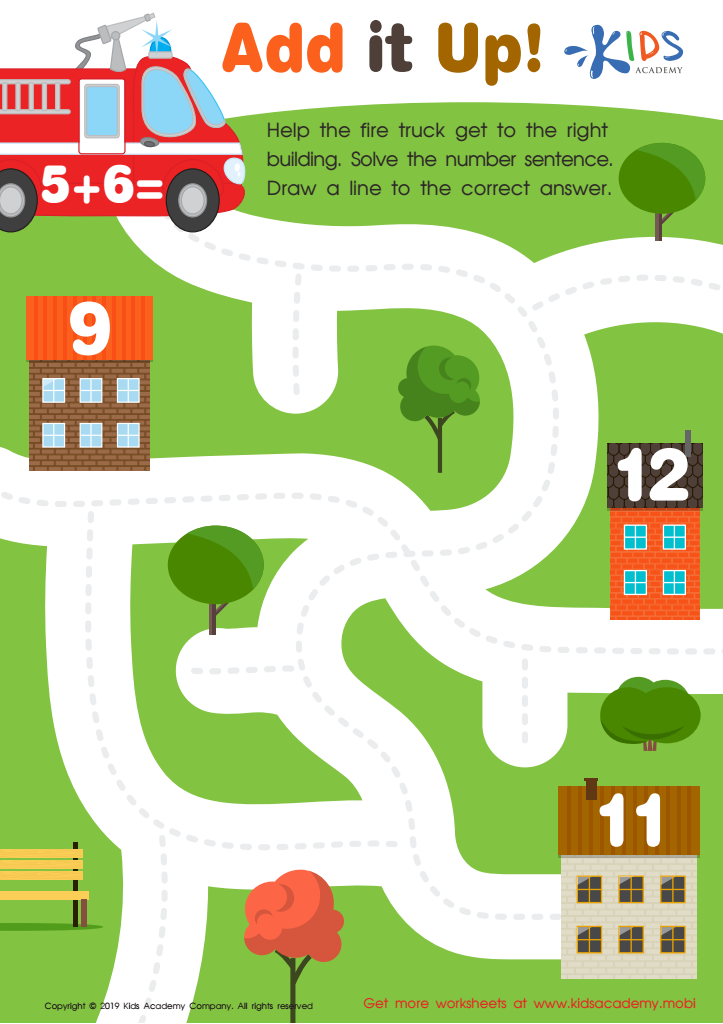
Add it Up Worksheet
 Assign to My Students








Math problem-solving, particularly addition, is a fundamental skill crucial for children aged 5-6 that impacts their overall academic development and future learning. Understanding addition helps children develop essential cognitive skills such as critical thinking, reasoning, and problem-solving. By engaging in addition tasks, youngsters learn to recognize patterns and relationships in numbers, laying a strong mathematical foundation.
Moreover, addition is often one of the first math concepts children encounter in their education, making it a gateway to more complex mathematical ideas. Early success in addition fosters a positive attitude toward math, which can influence their academic self-confidence and motivation. Critical thinking skills gained from solving addition problems also translate into everyday life, helping children make decisions based on quantitative information.
Parents and teachers play a crucial role in supporting this learning. By providing engaging, real-world addition problems—like sharing snacks or counting toys—they make math relatable and fun. Additionally, collaborating on these problems enhances parental involvement, strengthening the parent-child bond.
Overall, prioritizing math problem-solving in early education equips children with essential skills, promotes a love for learning, and prepares them for more advanced mathematical concepts in the future. Promoting positive mathematical experiences during these formative years is vital for long-term educational success.








