Numeracy development Addition Worksheets for Ages 5-6
3 filtered results
-
From - To
Enhance your child’s numeracy development with our engaging Addition Worksheets designed specifically for ages 5-6. These worksheets offer fun and interactive exercises that introduce basic addition concepts, helping young learners build a strong foundation in math. Our carefully crafted activities not only encourage independent thinking but also enhance problem-solving skills through colorful illustrations and relatable scenarios. Each worksheet progressively challenges your child, ensuring they master addition in an enjoyable way. Perfect for classroom use or at-home learning, our Addition Worksheets support young learners on their path to math fluency while making learning a joyful experience. Explore and watch your child's confidence grow!
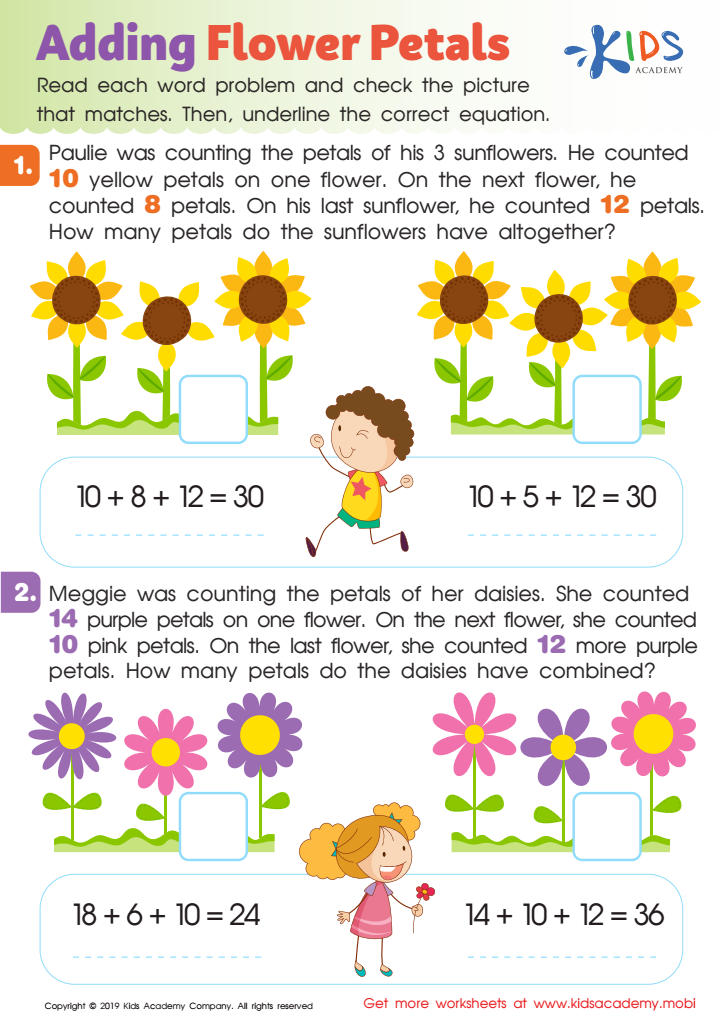
Adding Flower Petals Worksheet
 Assign to My Students
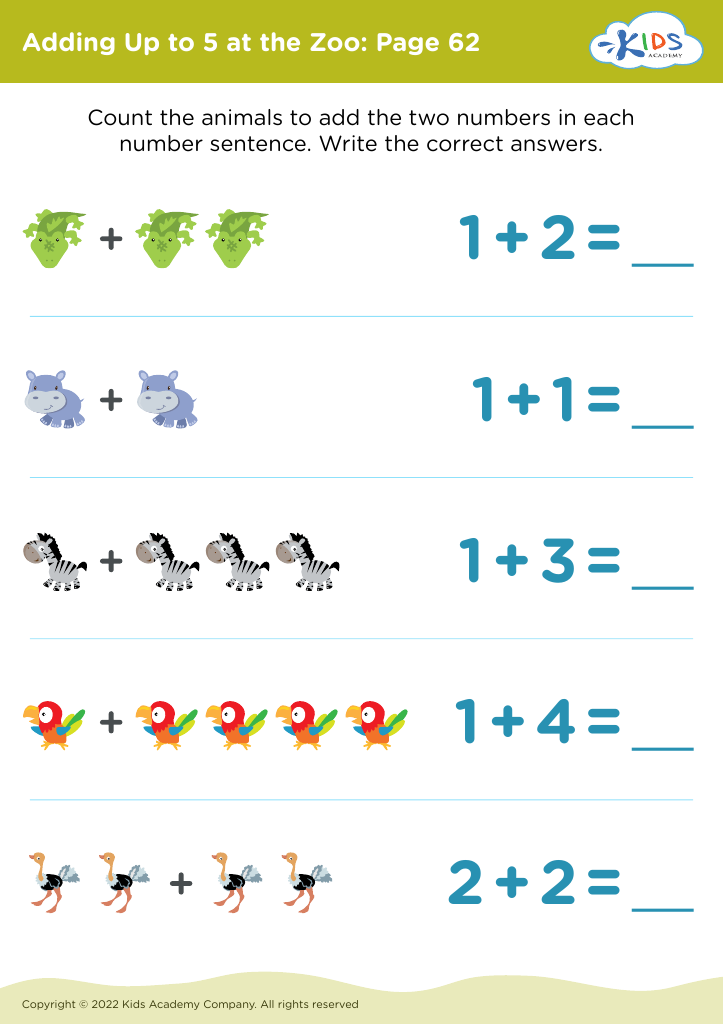
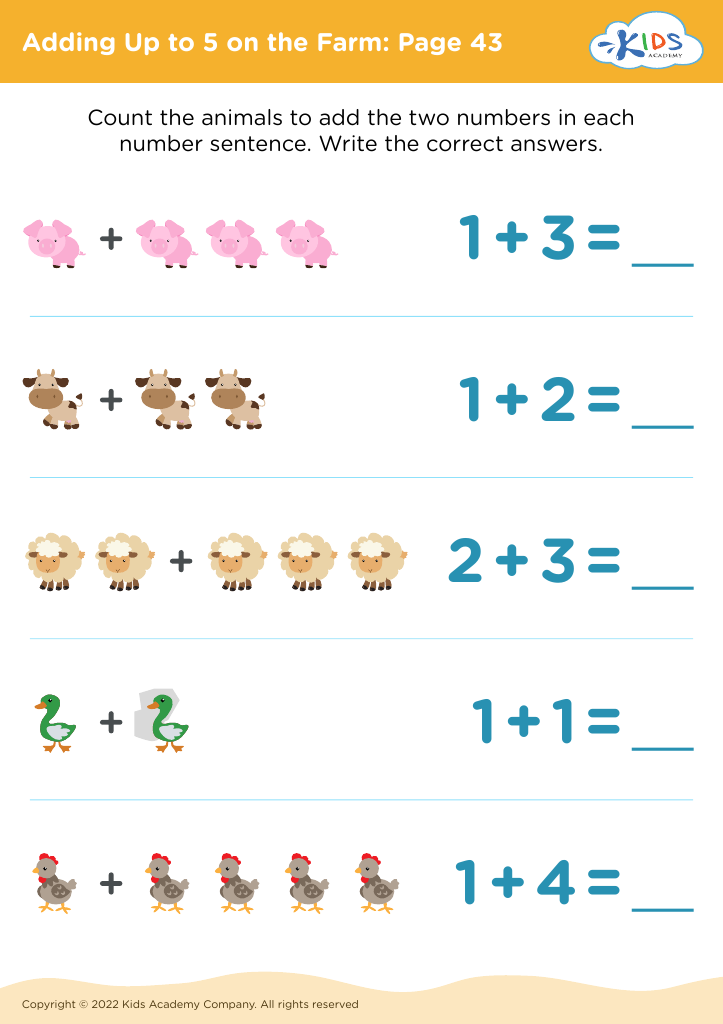








Numeracy development, particularly in addition, is crucial for children aged 5-6 as it lays the foundation for future mathematical understanding. At this age, children begin to grasp the concept of numbers, quantities, and basic arithmetic, which are essential skills not just in math but across various subjects and everyday contexts.
Parents and teachers should prioritize addition skills for several reasons. Firstly, mastering addition enhances cognitive development; it encourages logical thinking and problem-solving abilities that are vital for academic success. Secondly, early numeracy proficiency builds confidence, empowering children to take on more complex math challenges as they progress through school.
Additionally, addition is a fundamental skill that applies in real-life situations, such as counting change, measuring ingredients in a recipe, or planning time. By fostering strong addition skills, parents and teachers not only prepare children for their future education but also help them develop essential life skills.
Engaging learners through games, visual aids, and hands-on activities can make learning addition enjoyable, ensuring that positive associations with math are established early on. By investing in numeracy development at this critical stage, adults can set children on a path to lifelong success and a healthy relationship with mathematics.








