Visual learning enhancement Addition Worksheets for Ages 5-6
4 filtered results
-
From - To
Boost your child's math skills with our Visual Learning Enhancement Addition Worksheets, specifically designed for children aged 5-6. Featuring vibrant imagery and engaging activities, these worksheets cater to visual learners by making addition fun and interactive. Children will connect numbers with illustration-based problems, enhancing their understanding and retention of basic math concepts. Each worksheet encourages critical thinking and problem-solving while aligning with early educational standards. Promote confidence in basic addition through playful exercises that engage young minds. Perfect for at-home learning or classroom activities, these worksheets support parents and teachers in nurturing a love for math in young learners. Explore now!
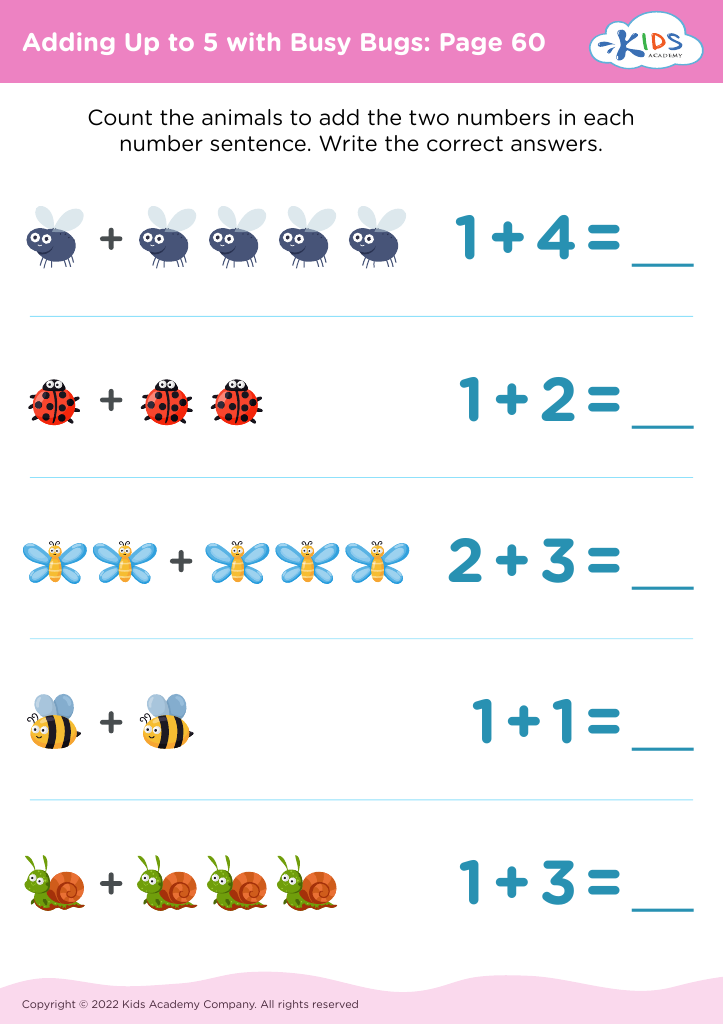
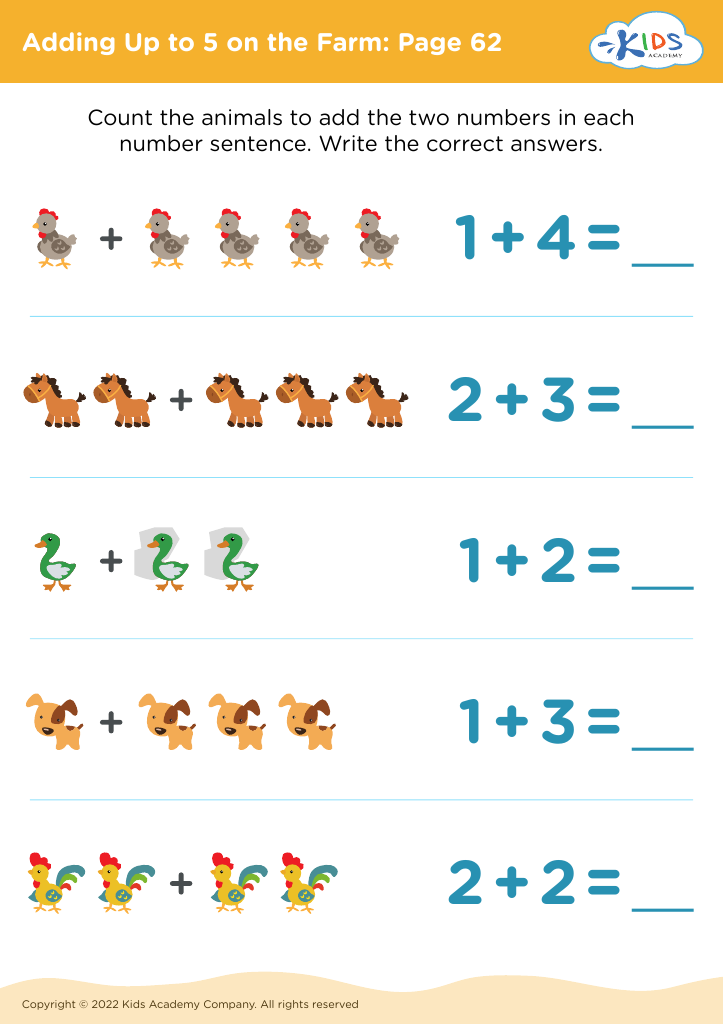
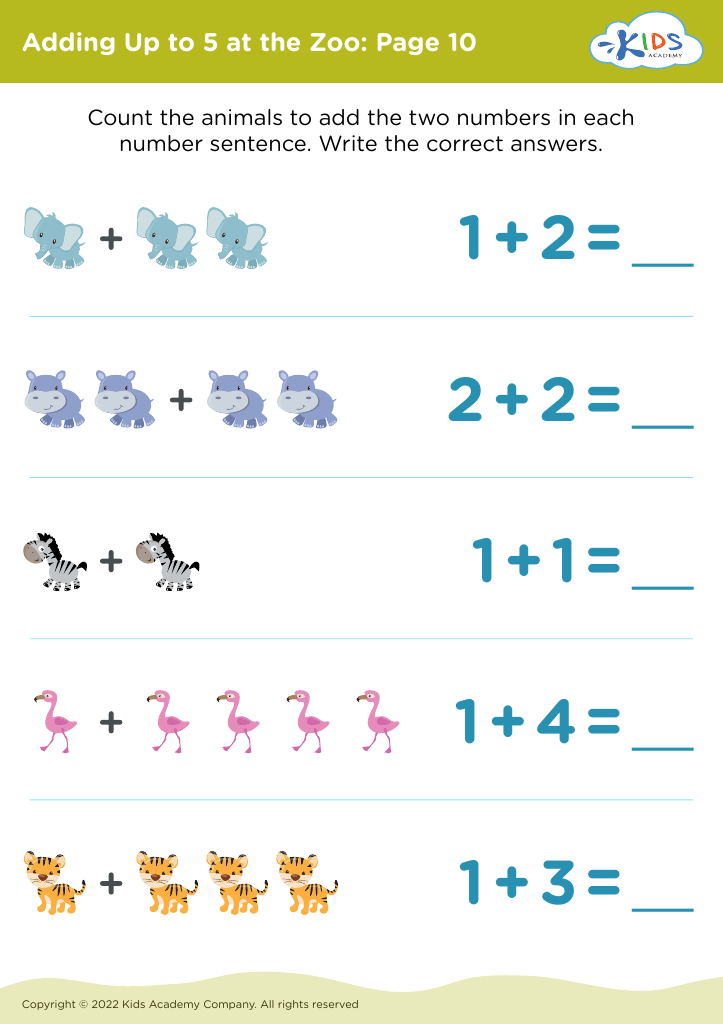
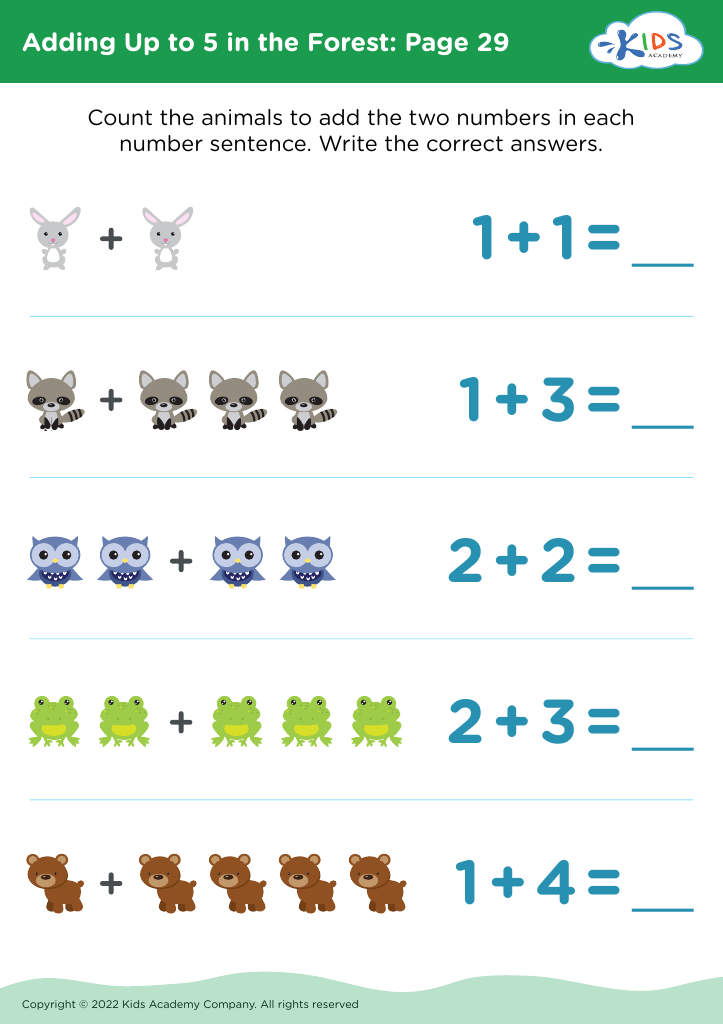


.jpg)





Visual learning enhancement for children aged 5-6 is vital for several reasons. At this stage of development, children are naturally curious and highly receptive to visual stimuli. Utilizing visual aids helps to engage their attention and facilitates a deeper understanding of abstract concepts, such as addition. By employing colorful visuals, manipulatives, and interactive tools, teachers and parents can make learning more relatable and enjoyable, thereby fostering a positive attitude towards math.
Furthermore, visual learning aligns with different learning styles. Children may be auditory or kinesthetic learners, but many are primarily visual thinkers. Through the use of visual aids, they can better grasp mathematical principles by associating numbers with tangible objects. For instance, using images of fruits or toys for practical addition exercises helps translate numbers into real-world representations.
Additionally, enhancing visual learning can build foundational skills essential for math competence. It strengthens children's ability to visualize relationships between numbers, sets the groundwork for advanced problem-solving skills, and promotes critical thinking. In this way, engaging children visually not only supports their immediate learning needs but also cultivates long-term cognitive growth. Hence, parents and teachers should prioritize visual learning strategies in addition to traditional methods for a well-rounded educational experience.








