Hand-eye Coordination Geometry Worksheets for Ages 5-6
5 filtered results
-
From - To
Enhance your child's hand-eye coordination skills with our engaging geometry worksheets designed specifically for ages 5-6! These fun, interactive activities combine basic geometry concepts such as shapes, patterns, and spatial awareness, all while promoting fine motor skills through tracing, coloring, and cutting exercises. Each worksheet fosters essential cognitive development and critical thinking abilities, ideal for young learners. Our user-friendly resources encourage independent practice, making learning enjoyable and effective. With a variety of exercises to choose from, your child will build confidence and proficiency in geometry while sharpening their hand-eye coordination. Explore our collection today and watch your little one's skills flourish!
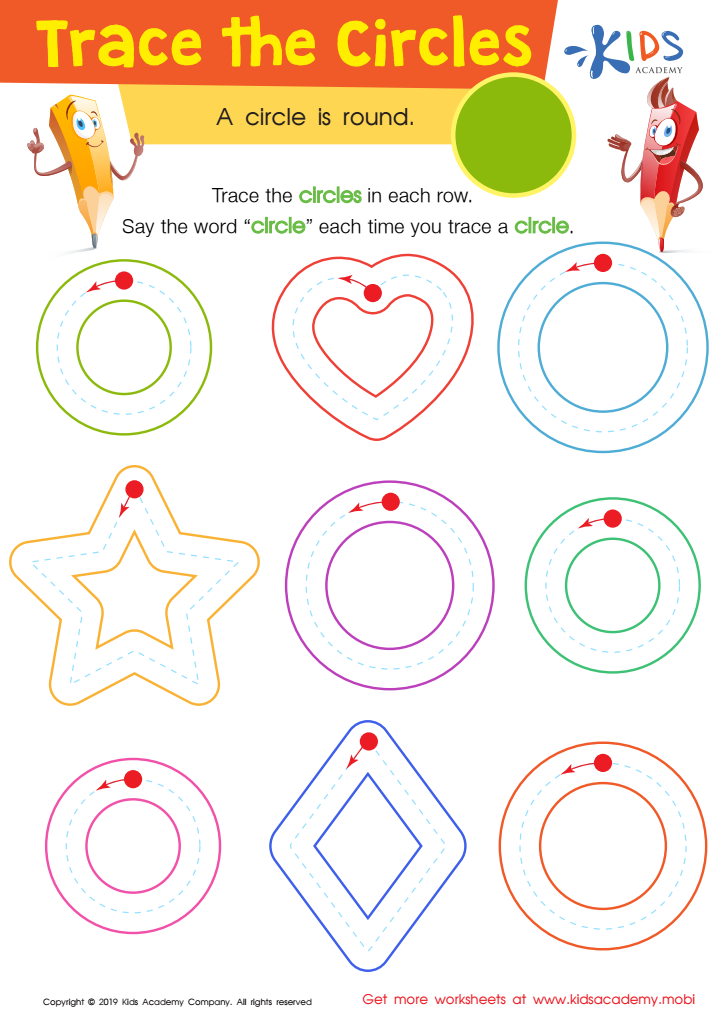
Trace The Circles Worksheet
 Assign to My Students











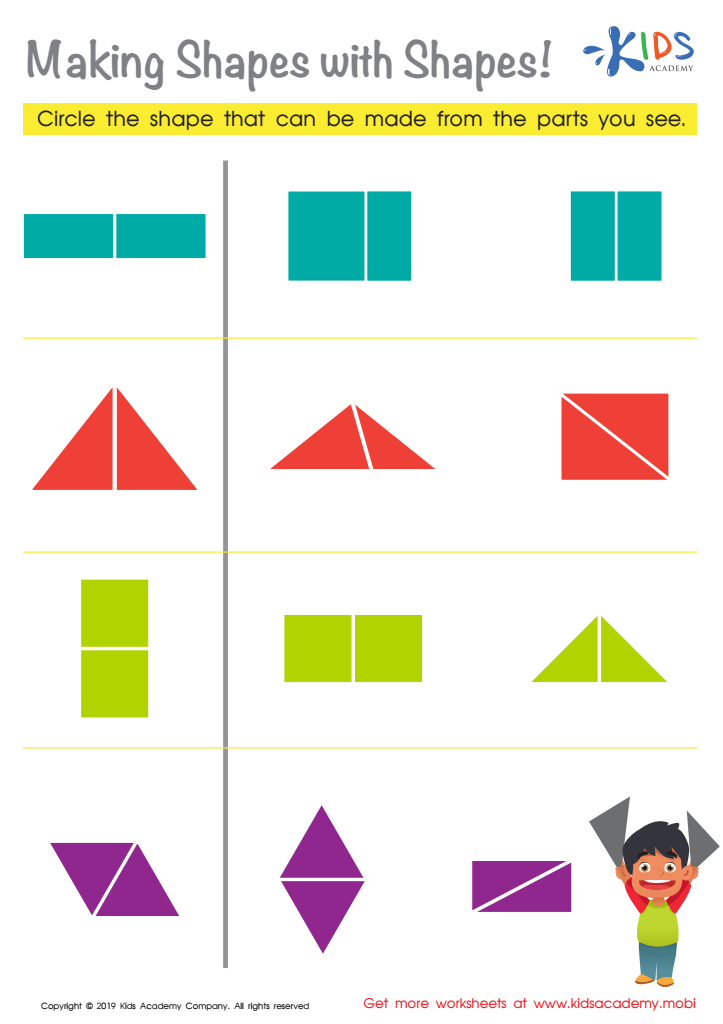
Making Shapes with Shapes Worksheet
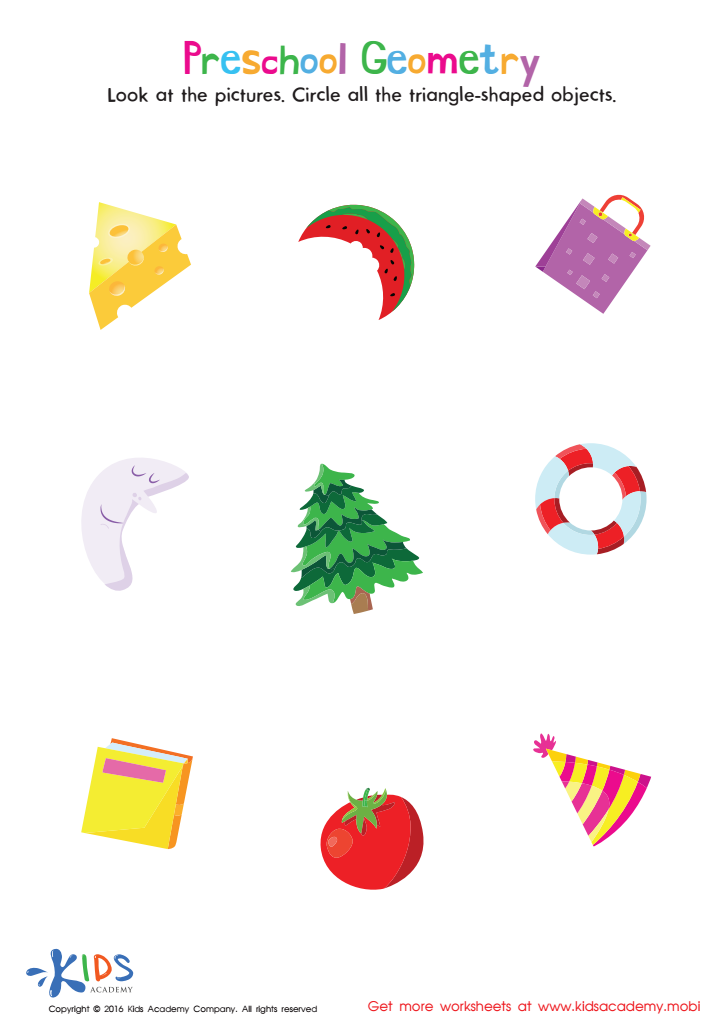
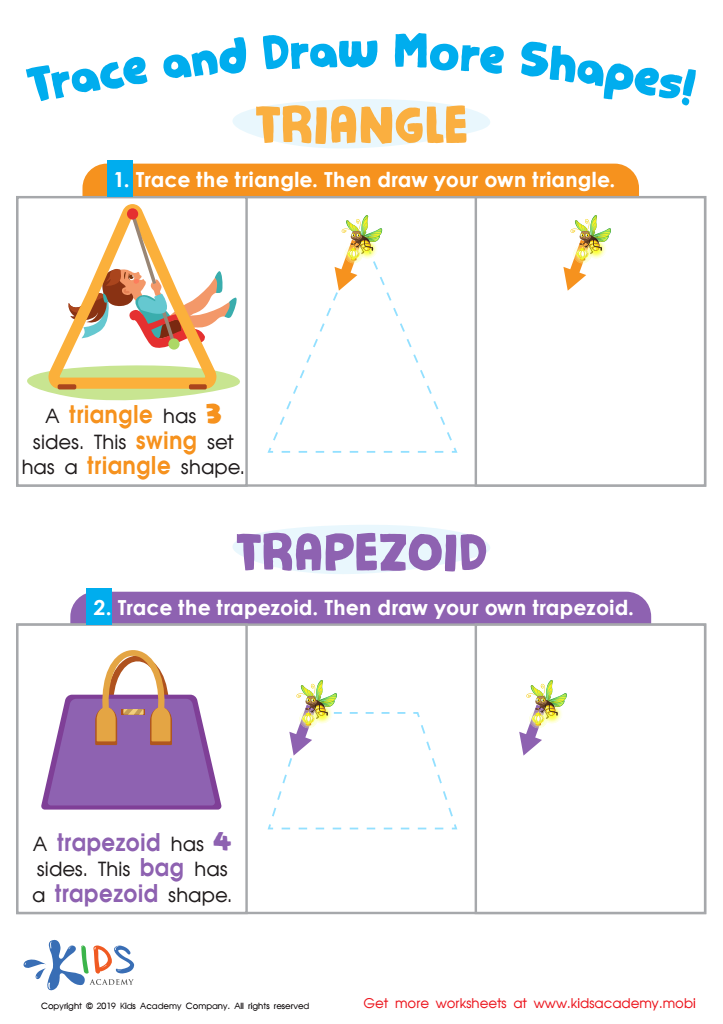
Trace and Draw More Shapes Worksheet
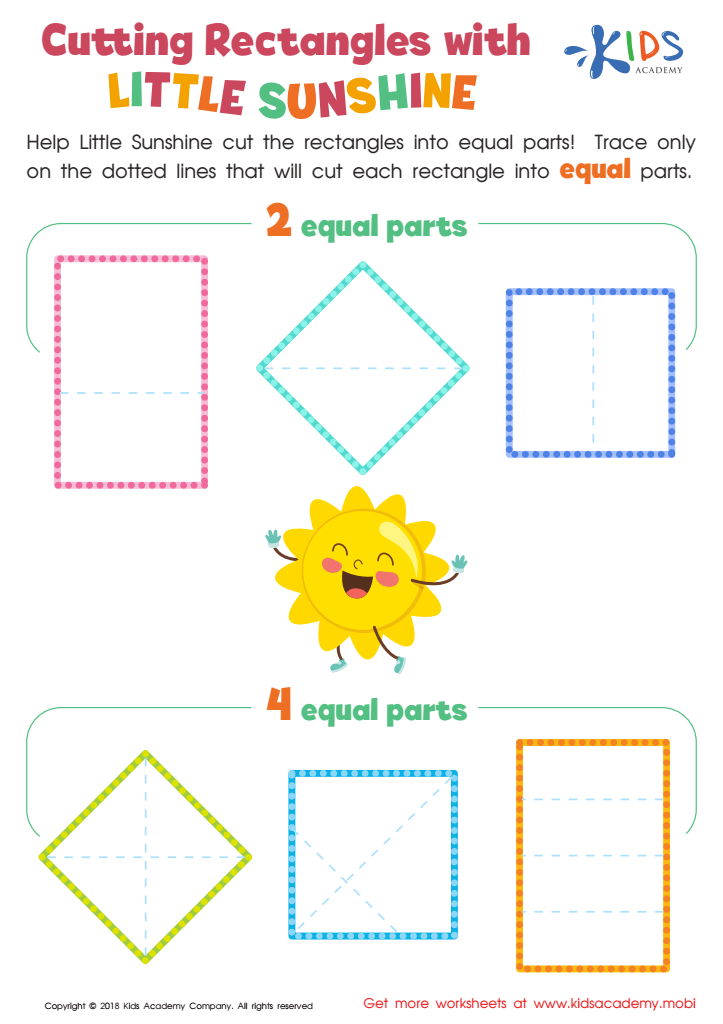
Cutting Rectangles with Little Sunshine Worksheet








Hand-eye coordination is a crucial skill developed during the early childhood years, particularly for children aged 5-6. During this stage, children engage in various activities that lay the foundation for their motor skills, which significantly impact their overall learning and development. By incorporating geometry learning activities that enhance hand-eye coordination, parents and teachers can create a rich educational experience that dovetails movement with cognitive skills.
Children at this age benefit from hands-on experiences that involve shapes, angles, and spatial reasoning. Activities such as building with blocks, tracing shapes, or engaging in arts and crafts can strengthen their ability to coordinate their hand movements with what they see, essentially intertwining these skills with geometric concepts. This interaction develops critical thinking and problem-solving abilities, which are fundamental for future mathematical understanding.
Moreover, fostering hand-eye coordination helps improve focus and confidence. Children who are adept at coordinating their movements are better prepared for more complex tasks, including writing and reading. By nurturing these skills through enjoyable geometric activities, parents and teachers support a child's holistic development, setting them up for success not only in math but across various domains of learning.








