
Improving concentration Geometry Worksheets for Ages 5-6
3 filtered results
Difficulty Level
Grade
Age
-
From - To
Subject
Activity
Standards
Enhance your child's focus and geometric understanding with our "Improving Concentration Geometry Worksheets for Ages 5-6" from Kids Academy. These expertly crafted worksheets combine fun exercises with strategic tasks to boost concentration while introducing foundational geometry concepts. Your little one will enjoy activities highlighting shapes, patterns, and spatial awareness designed to captivate young minds and sharpen their attention. Ideal for homeschooling or extra practice, these worksheets foster an engaging learning atmosphere, encouraging children to develop crucial skills in both geometry and focus. Unlock your child's potential and make learning geometry an enjoyable adventure with Kids Academy today!
Favorites
With answer key
Interactive
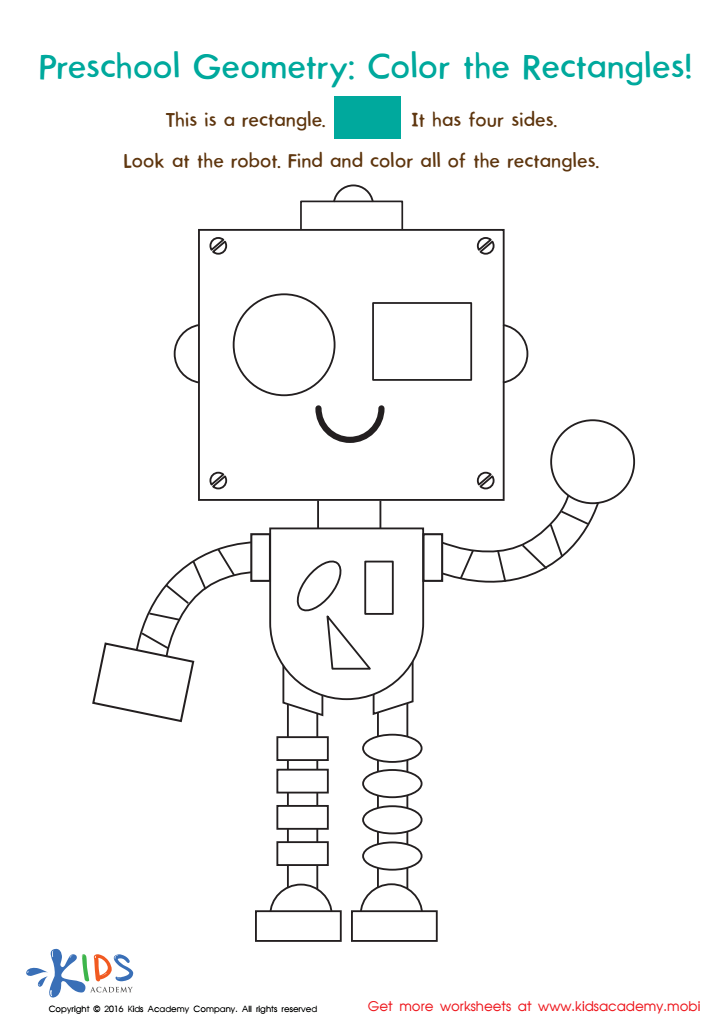
Geometry Worksheet
Geometry can be fun for kids! They explore shapes that create their favorite pics and objects. This preschool worksheet explains that rectangles have four sides, then kids color rectangles on a funny robot!
Geometry Worksheet
Worksheet











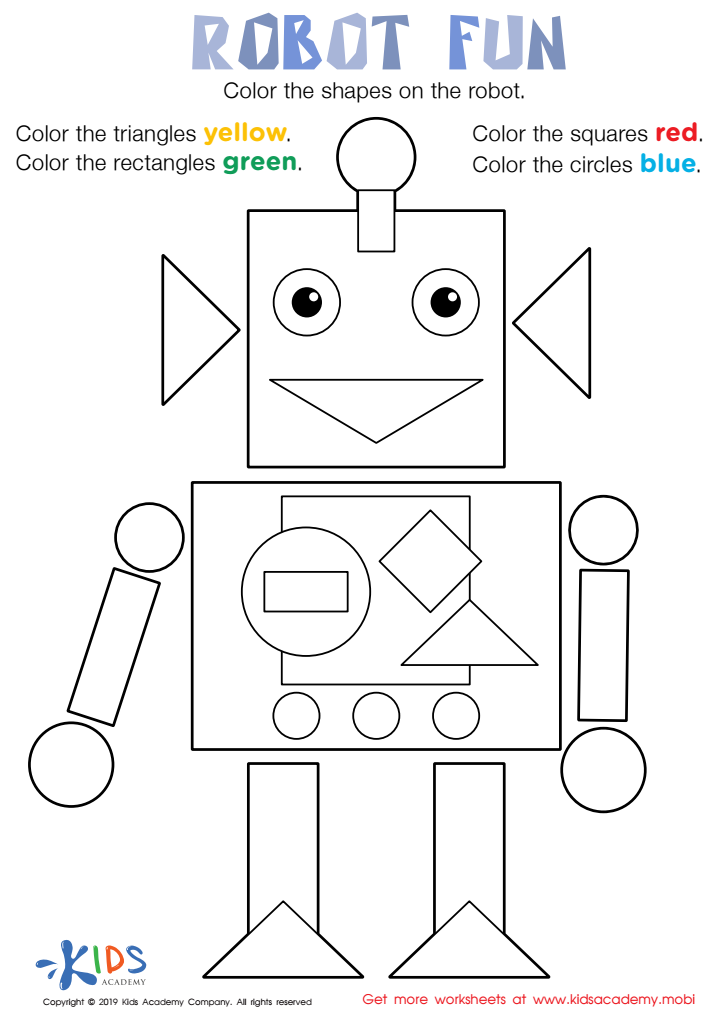
Robot Fun Worksheet
Help your child learn about basic shapes with this fun robot worksheet! Kids practice identifying circles, squares, rectangles and triangles, then color each shape according to directions. Make math practice enjoyable with this coloring page that teaches all four basic shapes - it's an important math skill!
Download (PDF)
 Assign to My Students
Assign to My Students
Robot Fun Worksheet
Worksheet
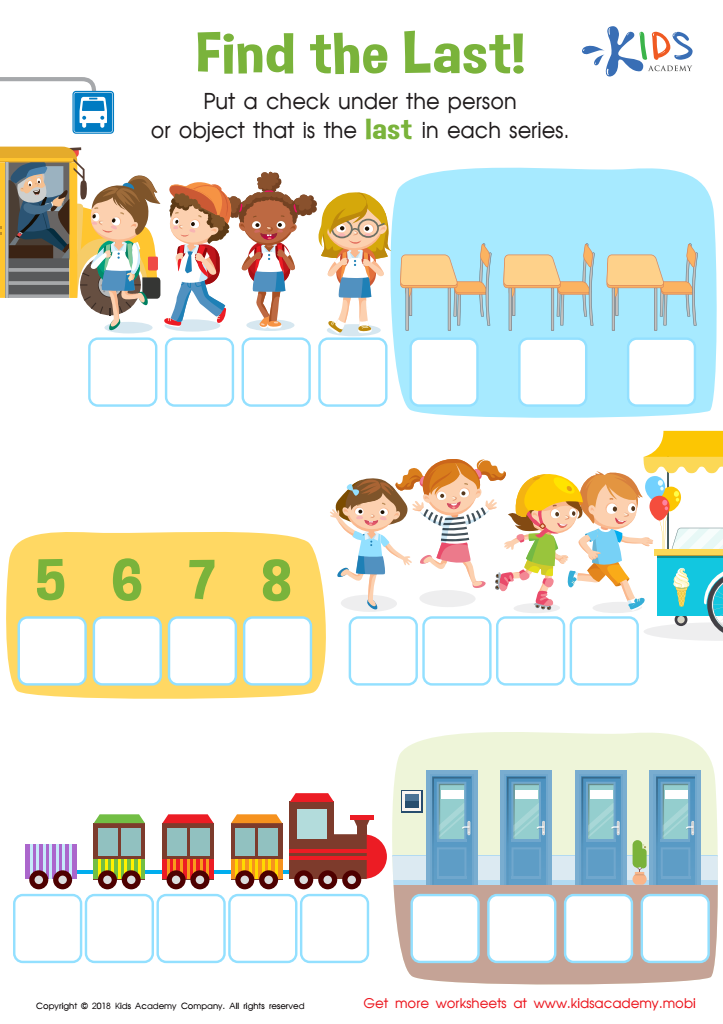
Find the Last! Worksheet
Teach young students about sequence words with this free worksheet. Have them look at sets of people or objects and choose the one that is last. Engage them further by having them describe or act out their day, and what happens last? Enjoy this printout and have fun!
Find the Last! Worksheet
Worksheet
Join Kids Academy for Free
Who is primarily going to use this learning content?








Improving concentration in young children, especially in areas such as geometry, is fundamentally important for several reasons. At ages 5-6, children are at a critical stage in their cognitive development. Their brains are developing rapidly, and they're learning to better interact with the world around them. Concentration is a key skill that impacts their ability to learn efficiently and retain information. Enhancing geometric understanding at this age helps improve spatial reasoning, which is foundational not only for mathematics but for everyday problem-solving and understanding the physical world.
In early education, focusing on geometry helps children recognize shapes, understand relationships between different objects, and develop critical thinking skills. These skills boost their competence and confidence in math, leading to a positive feedback loop where they are more motivated to learn and solve problems. Improved concentration ensures that they stay more engaged and attentive, facilitating deeper and more meaningful learning experiences.
Moreover, these skills are linked to later academic success and practical life skills. By supporting children’s concentration and geometric understanding early on, parents and teachers set a solid foundation for lifelong learning, improved academic performance, and greater capacity to tackle complex tasks and think critically as they grow older.








