Logical Reasoning Geometry Worksheets for Ages 5-6
5 filtered results
-
From - To
Welcome to our Logical Reasoning Geometry Worksheets for Ages 5-6! Designed to engage young minds, these worksheets introduce children to basic geometric shapes and concepts while enhancing logical reasoning skills. Our fun and interactive activities help kids recognize patterns, make comparisons, and solve simple puzzles, all within the context of geometry. With colorful illustrations and age-appropriate exercises, these worksheets are perfect for reinforcing classroom learning at home. Parents and educators can use these resources to cultivate critical thinking, boost problem-solving abilities, and support early math skills. Explore our comprehensive collection today and inspire a love for learning through geometry!
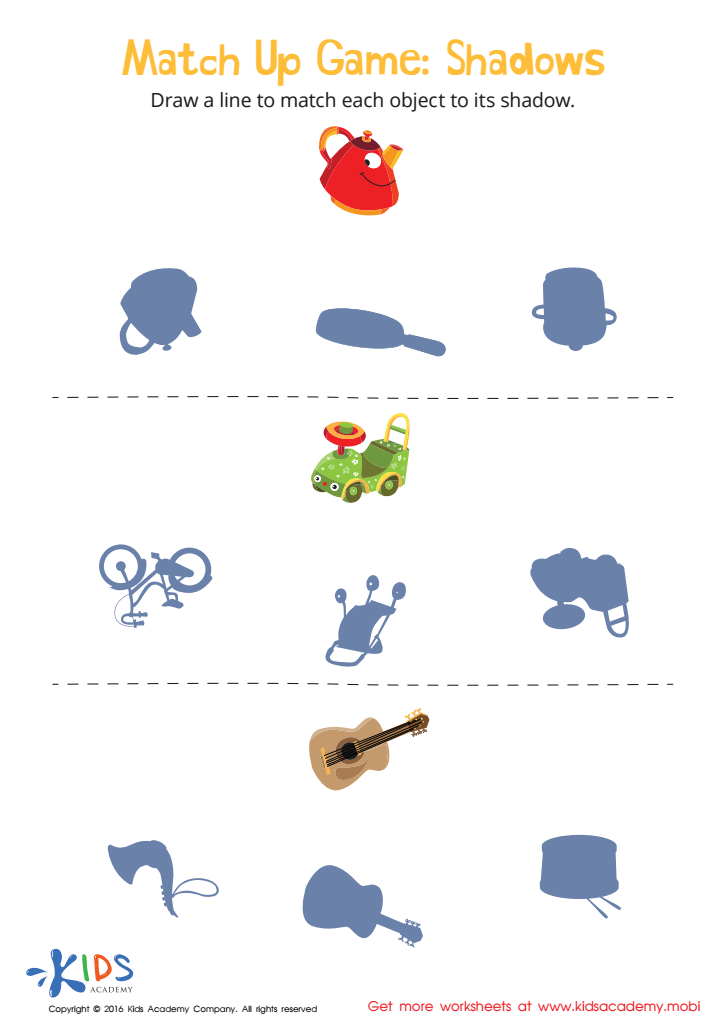
 Assign to My Students











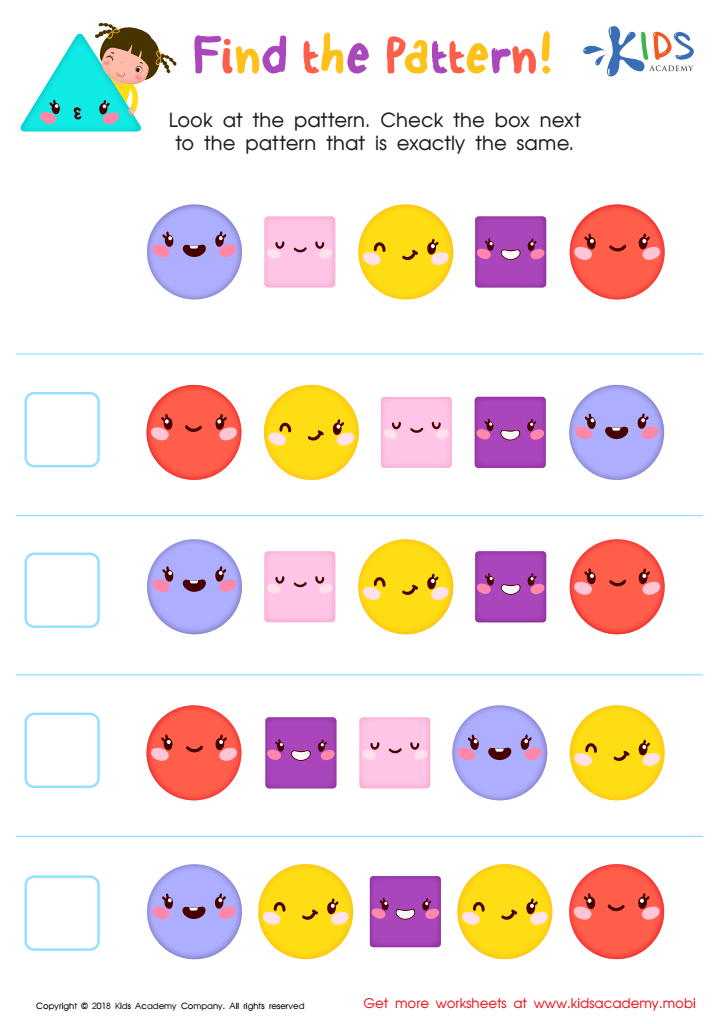
Find the Pattern Worksheet
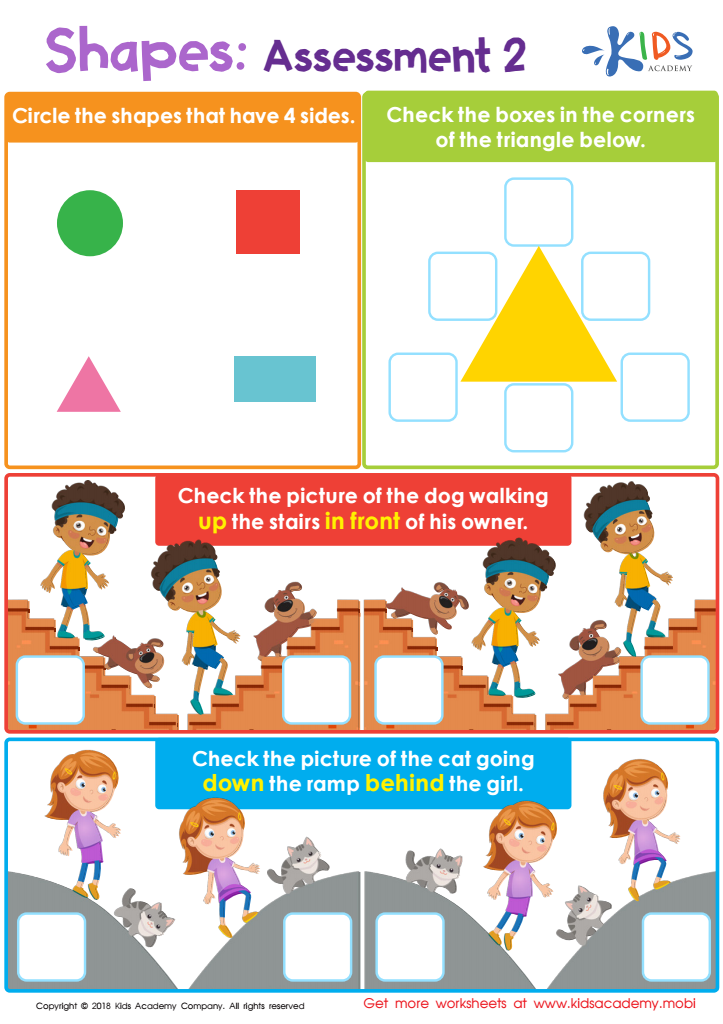
Shapes: Assessment 2 Worksheet
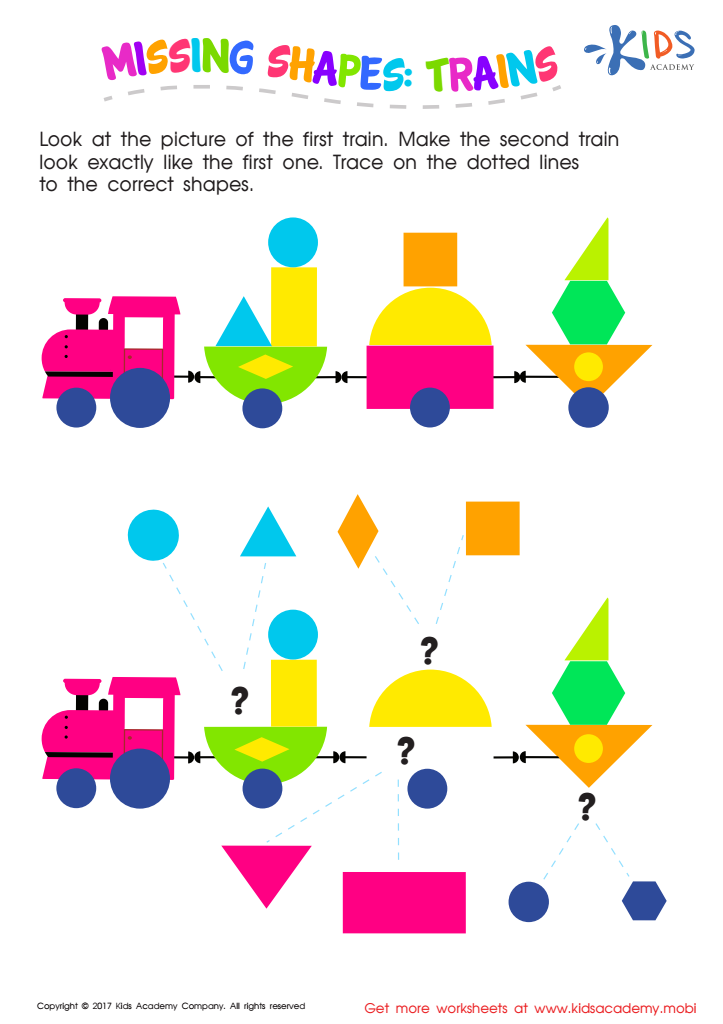
Missing Shapes: Trains Worksheet
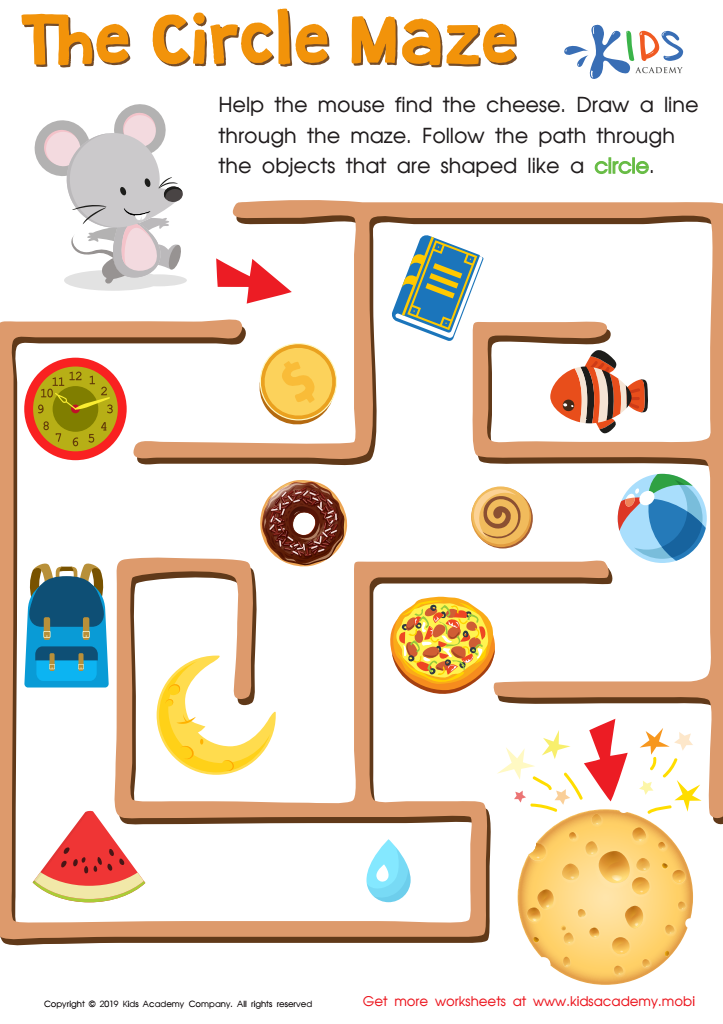
The Circle Maze Worksheet








Logical Reasoning Geometry is essential for children aged 5-6 as it lays the foundation for critical thinking and problem-solving skills. At this early developmental stage, children are naturally curious, and incorporating geometry helps shape their understanding of the world around them. By engaging with shapes, patterns, and spatial relationships, young learners enhance their observational skills and cognitive abilities.
Parents and teachers should prioritize this area because it fosters not only mathematical understanding but also logic and reasoning capabilities. As children learn to identify, classify, and manipulate geometric shapes, they develop the ability to think logically and work through complex problems. This is crucial in fields beyond mathematics, including science, technology, engineering, and art.
Moreover, early exposure to Logical Reasoning Geometry can improve social skills through cooperative learning activities, where children share ideas and strategies, promoting teamwork and communication. It also increases confidence, as mastering new concepts encourages a positive attitude toward learning.
Incorporating activities that involve logical reasoning and geometry into educational practices can promote a lifelong love of learning while equipping children with essential skills necessary for their academic journey ahead. Thus, supporting this aspect of their education is vital for holistic development.








