Pattern recognition Geometry Worksheets for Ages 5-6
3 filtered results
-
From - To
Introduce your young learners to the fun world of shapes and sequences with our Pattern Recognition Geometry Worksheets for ages 5-6. These innovative printables are designed to boost your child's early math skills through the engaging practice of recognizing and predicting patterns. With charming visuals and easy-to-follow instructions, kids will explore shapes, sizes, colors, and sequences, helping them build a strong foundation in geometry and critical thinking. Perfect for both classroom and home use, these worksheets make learning feel like play while ensuring your little ones are ready for more advanced math concepts. Make learning a delightful adventure!
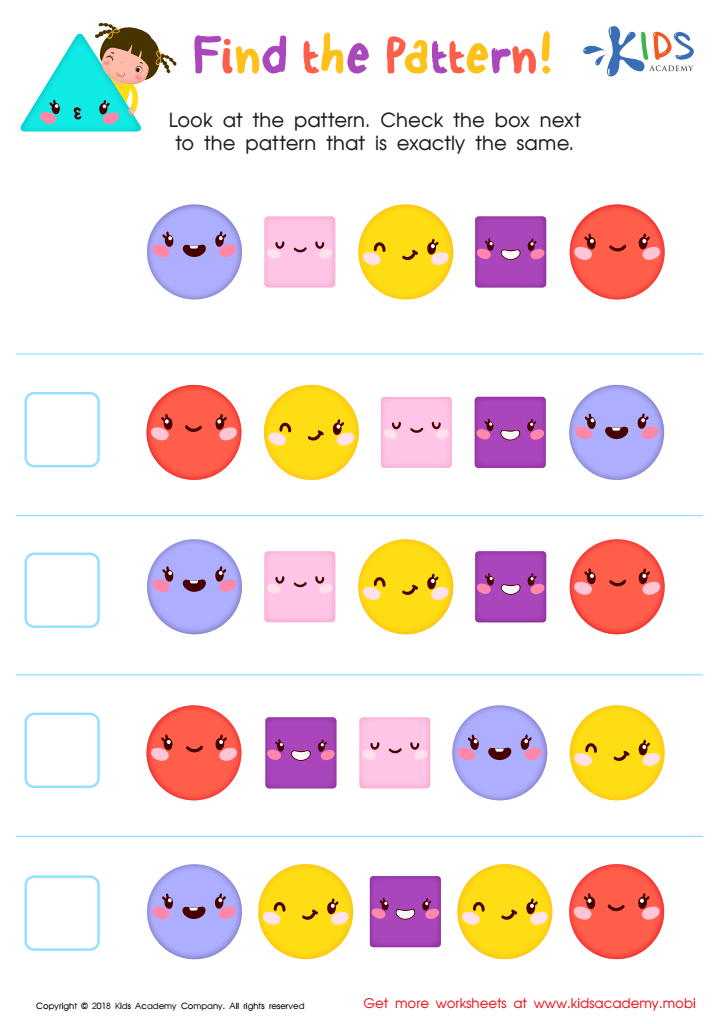
Find the Pattern Worksheet
 Assign to My Students











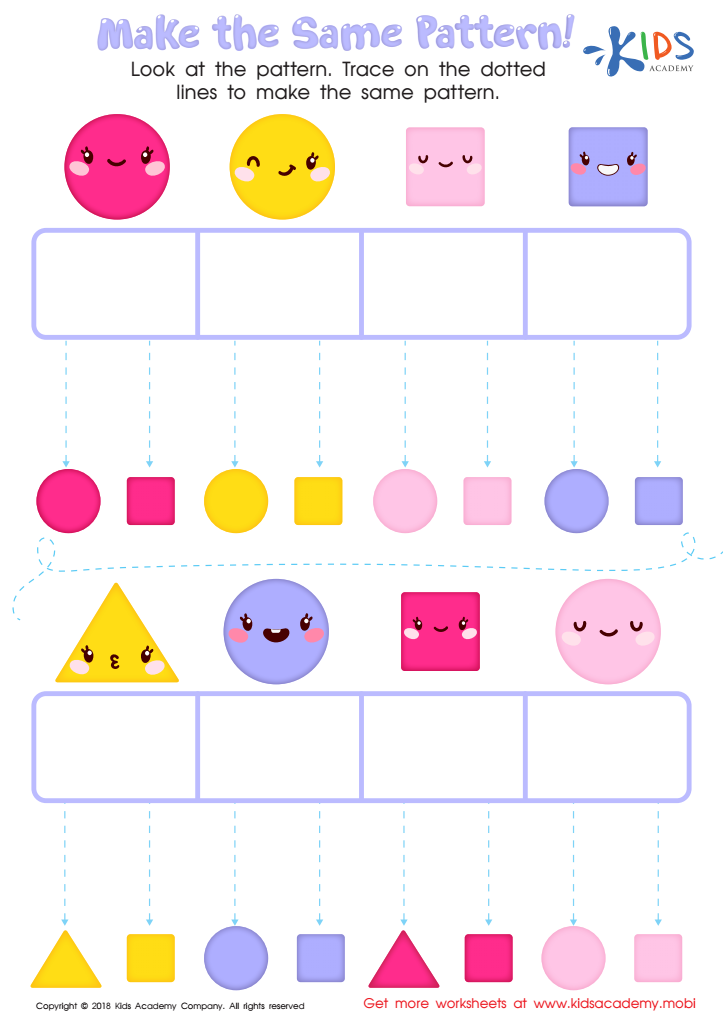
Make the Same Pattern Worksheet
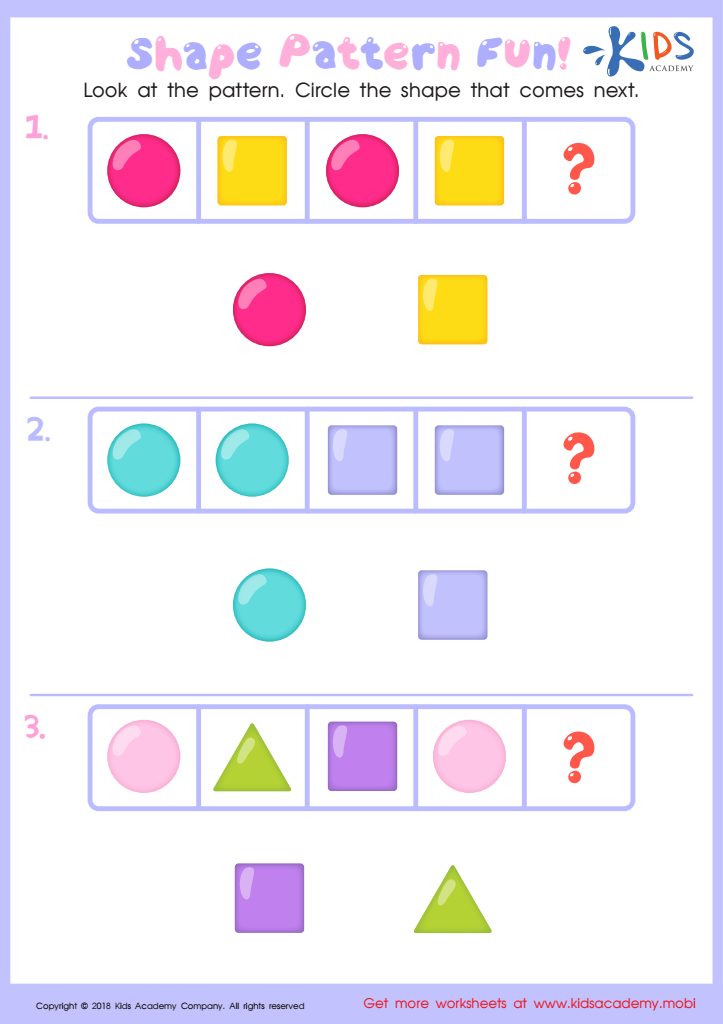
Shape Pattern Fun Worksheet








Pattern recognition and geometry play vital roles in the cognitive development of young children, particularly those ages 5-6. Parents and teachers should care about fostering these skills because they form the foundation for future math and logic abilities. Understanding patterns helps children grasp sequencing, symmetry, and spatial relationships, enhancing their problem-solving skills. Recognizing and creating patterns boosts memory and the ability to predict outcomes, essential skills in both academic and everyday life.
Geometry, on the other hand, introduces children to shapes, sizes, positions, and dimensions—concepts they'll encounter in many daily activities. When children identify and describe geometric shapes, they develop visual and spatial awareness. This awareness translates to better hand-eye coordination, improved motor skills, and the ability to navigate their environment more effectively.
Moreover, engaging with patterns and geometry nurtures creativity and critical thinking. By exploring and experimenting with shapes and patterns, children learn to observe, compare, and contrast, skills that are transferable to literacy and science.
In sum, early exposure to pattern recognition and geometry helps children build a natural proficiency in math, encourages logical thinking, and enhances overall cognitive development. These are crucial skills that support a child's academic journey and practical life applications, making them indispensable in early childhood education.








