Reading comprehension Geometry Worksheets for Ages 5-6
5 filtered results
-
From - To
Discover our engaging Reading Comprehension Geometry Worksheets designed specifically for children ages 5-6. These fun and educational worksheets help young learners improve their reading skills while exploring basic geometrical concepts. From identifying shapes to understanding positional words, each activity seamlessly blends reading comprehension with geometry through delightful illustrations and easy-to-follow instructions. Perfect for at-home practice or classroom enrichment, our worksheets support foundational skill development in both literacy and math, preparing your child for future learning success. Boost your child's confidence and knowledge with our thoughtfully-crafted, age-appropriate resources. Visit our website for these must-have tools!
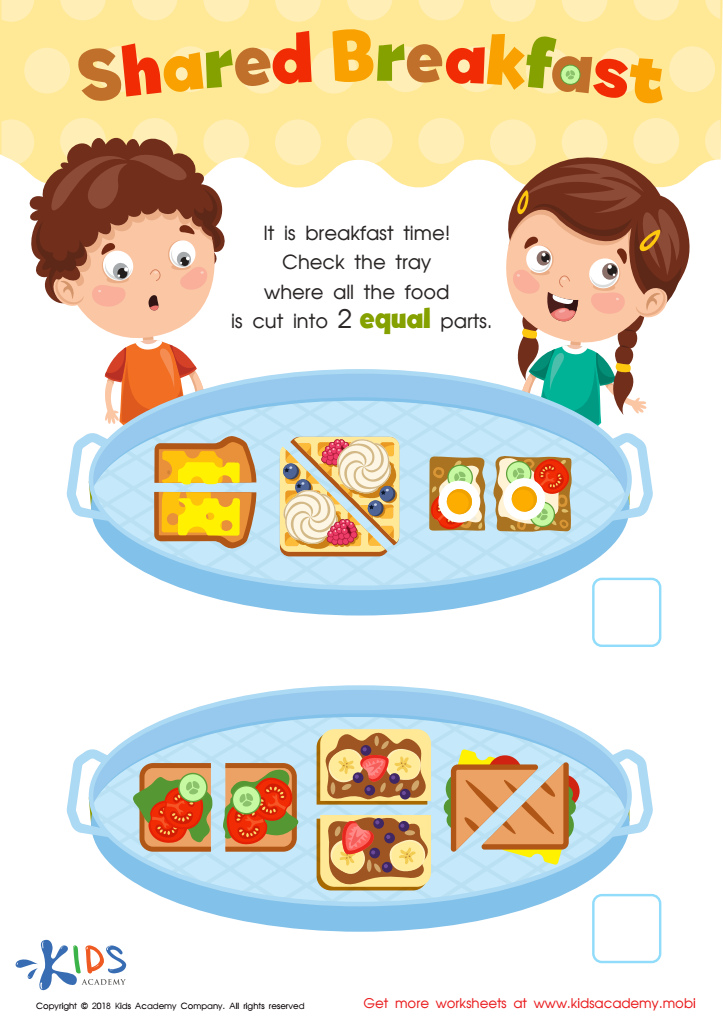
Shared Breakfast Worksheet
 Assign to My Students











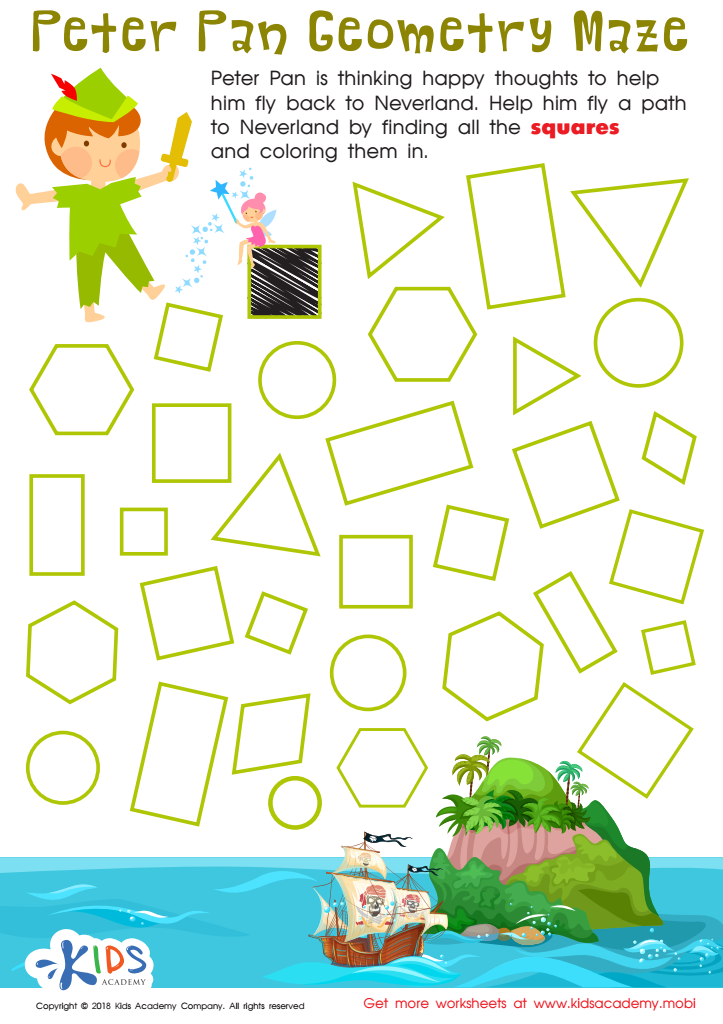
Peter Pan Worksheet
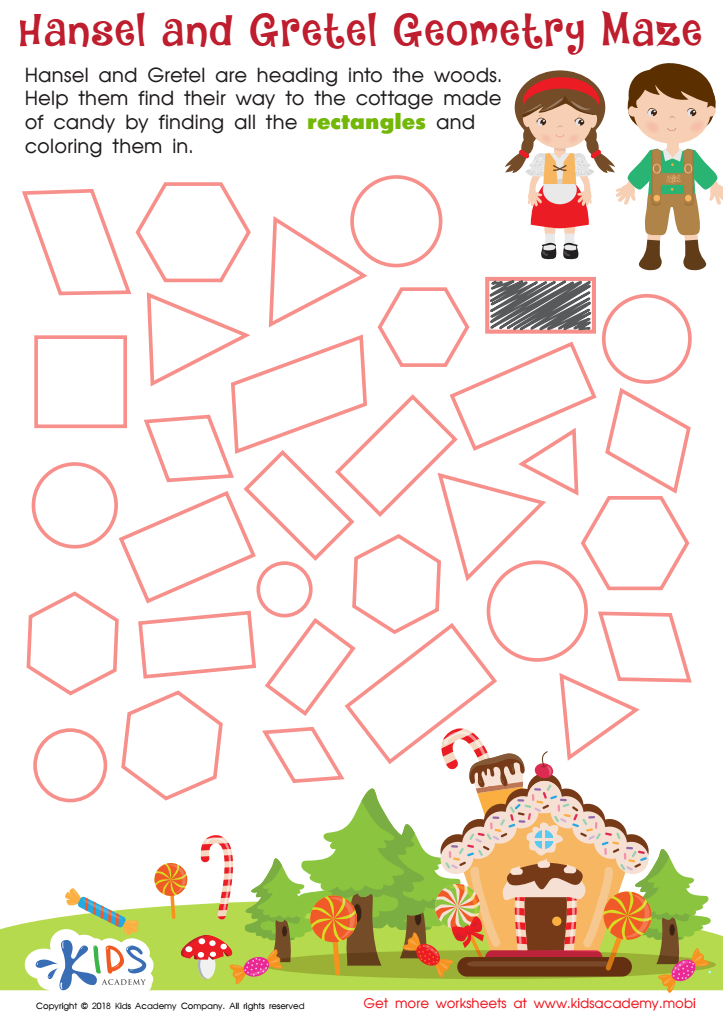
Hansel and Gretel Geometry Maze Worksheet
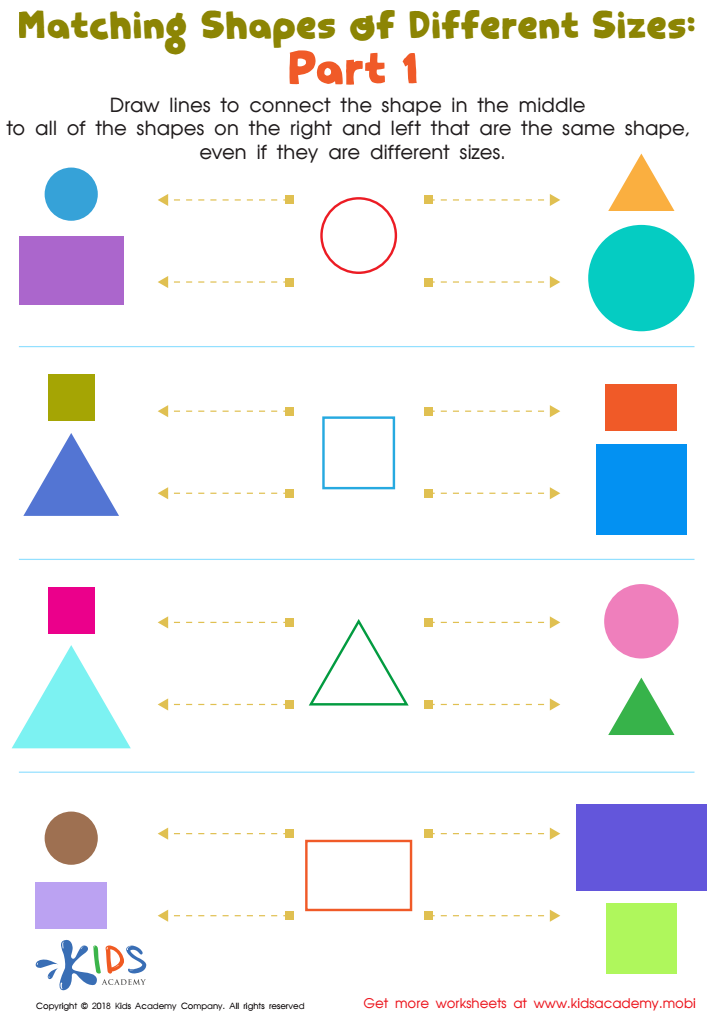
Geometry: part 1 Worksheet
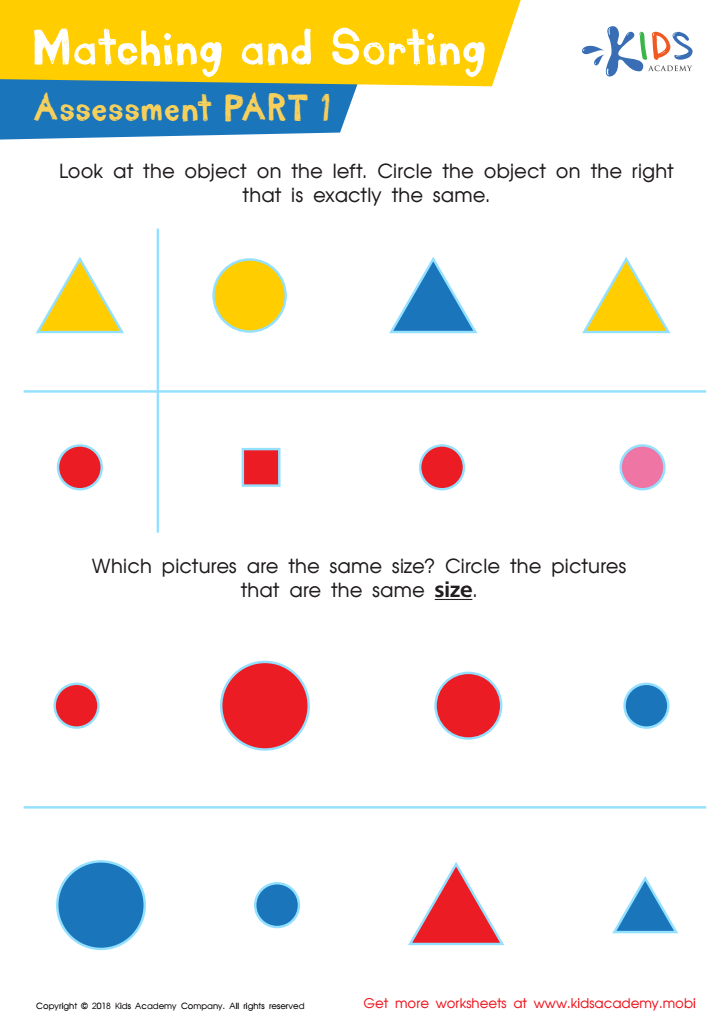
Matching and Sorting for Kindergarten: Assessment 1 Worksheet








Investing in early education, specifically focusing on reading comprehension and geometry, is crucial for the holistic development of children aged 5-6. At this formative stage, children's brains are highly receptive and adaptable, making it an optimal period for introducing foundational skills that will benefit their lifelong learning journey.
Reading comprehension is more than just the ability to decode words. It encompasses understanding, interpreting, and engaging with texts, which fosters critical thinking skills. When children comprehend what they read, they expand their vocabulary, improve memory, and enhance their ability to follow instructions. This sets a strong foundation for future academic success and cultivates a love for learning.
Parallelly, geometry introduces basic mathematical concepts through shapes, sizes, and spatial understanding. Early exposure to geometry helps children develop problem-solving skills and logical reasoning. It also encourages visual-spatial intelligence, laying the groundwork for more complex math concepts they'll encounter later.
Moreover, integrating reading comprehension and geometry can make learning more engaging. Storybooks that incorporate shapes or counting can teach these concepts in a fun and relatable manner. This dual focus not only strengthens cognitive abilities but also supports creative and analytic forms of thinking, providing a balanced educational foundation that parents and teachers should prioritize for the betterment of young learners.








