Spatial reasoning Geometry Worksheets for Ages 5-6
4 filtered results
-
From - To
Unlock the potential of young minds with our Spatial Reasoning Geometry Worksheets designed for ages 5-6. These educational resources are tailored to develop crucial early math skills through engaging activities that foster spatial awareness and geometric thinking. Our worksheets make learning fun by incorporating puzzles, matching games, and shape recognition exercises. As children interact with the materials, they build a strong foundation in geometry, enhancing their visual and cognitive abilities. Perfect for both classroom and home use, these expertly crafted worksheets from Kids Academy are an excellent tool to prepare your child for future academic success in mathematics.
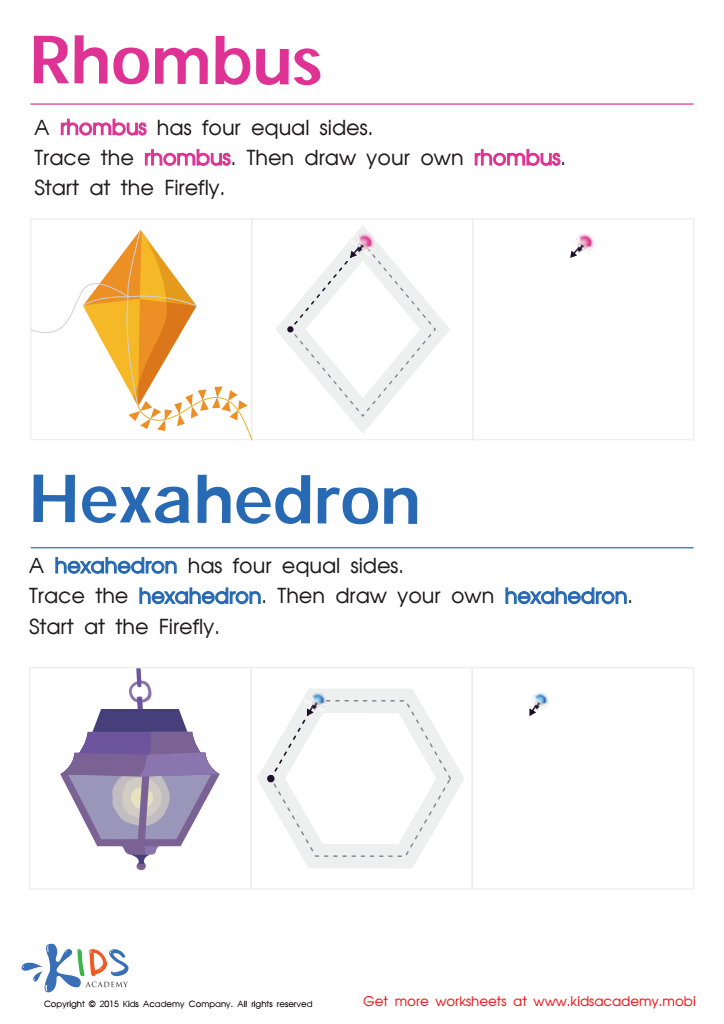
Draw a Rhombus And a Hexahedron Printable
 Assign to My Students











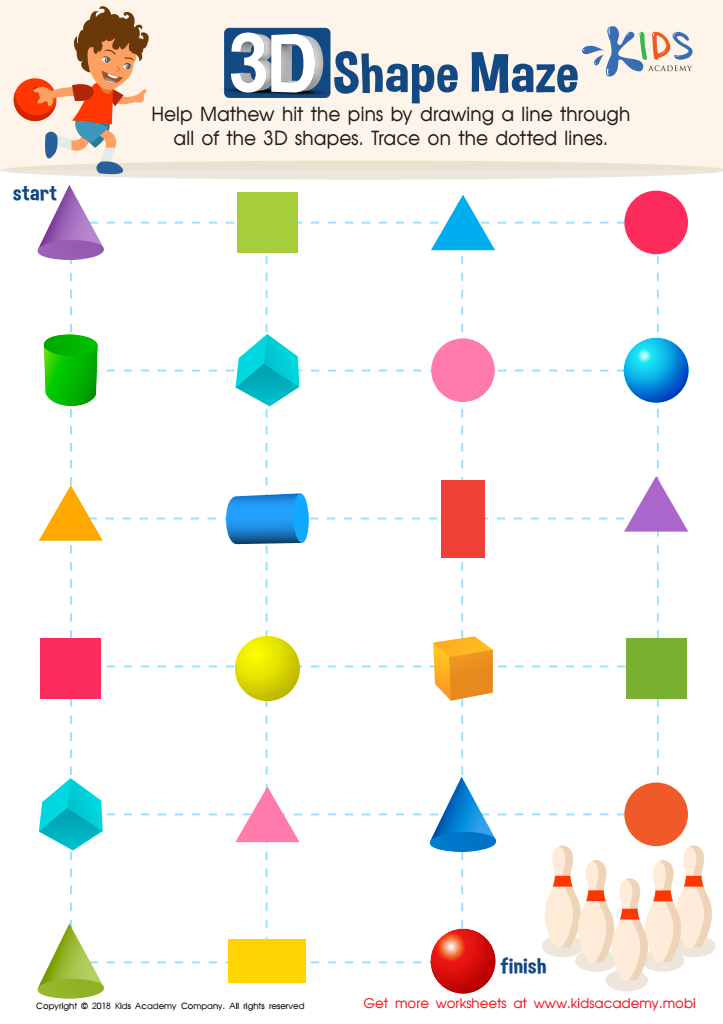
Shapes Maze Geometry Worksheet
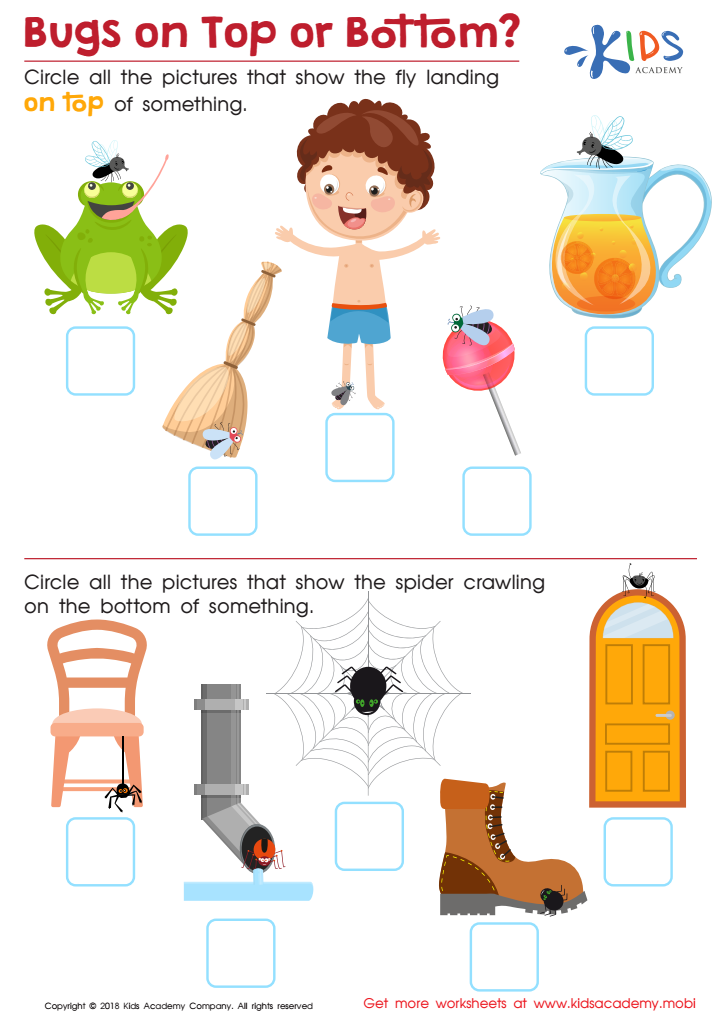
Bugs on Top or Bottom? Worksheet
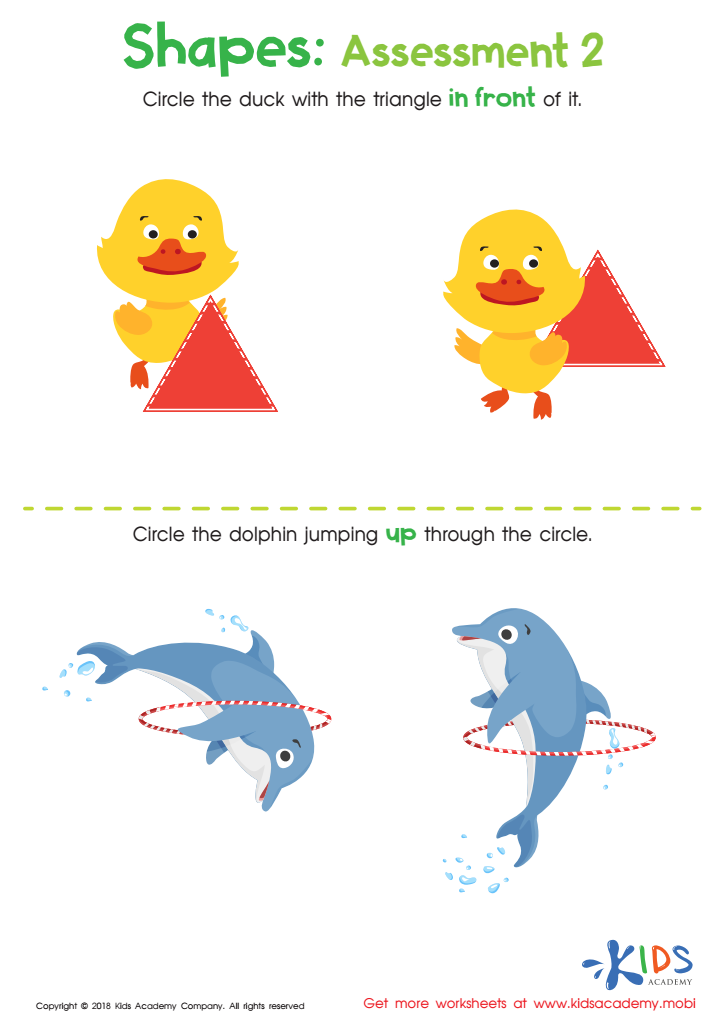
Geometry – Assessment 2 Worksheet








Parents and teachers should care about spatial reasoning and geometry for children aged 5-6 because these foundational skills play a crucial role in cognitive development and everyday functioning. Spatial reasoning enables children to understand and navigate the physical world, helping them make sense of shapes, sizes, and the positional relationships between objects.
At this developmental stage, engaging with geometry enhances problem-solving and critical thinking abilities. Children learn to visualize and manipulate shapes, which are skills directly linked to later success in STEM (Science, Technology, Engineering, and Mathematics) fields. For example, recognizing patterns or understanding how parts fit together forms the basis for more complex concepts in math and science.
Moreover, spatial skills are essential for day-to-day tasks. They help children get dressed, organize their environment, draw, write, and even solve puzzles. Early exposure to spatial reasoning activities—like playing with blocks, doing simple jigsaw puzzles, or engaging in shape-based games—can improve hand-eye coordination and fine motor skills.
Incorporating spatial activities into learning nurtures a child's ability to think abstractly and fosters creativity. Thus, parents and teachers can set the stage for academic and personal success by prioritizing spatial reasoning and geometry exercises for young children.








