Visual Perception Skills Geometry Worksheets for Ages 5-6
3 filtered results
-
From - To
Unlock your child's potential with our "Visual Perception Skills Geometry Worksheets for Ages 5-6." These engaging and educational worksheets are designed to enhance your child's visual perception and geometry skills through a series of fun, interactive exercises. By focusing on shapes, patterns, and spatial relationships, these activities help young learners develop critical thinking and problem-solving abilities. Perfect for use at home or in the classroom, these worksheets provide a strong foundation for future math success. Set your child on the path to academic excellence with these innovative geometry worksheets crafted specifically for young minds.
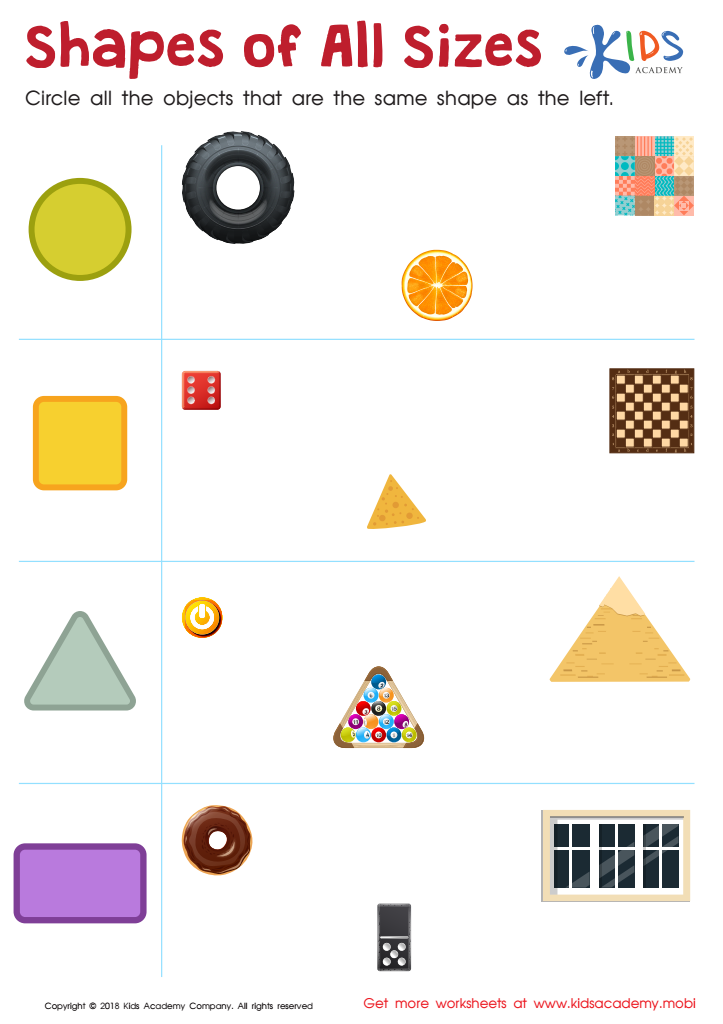
Shapes of All Sizes Worksheet
 Assign to My Students











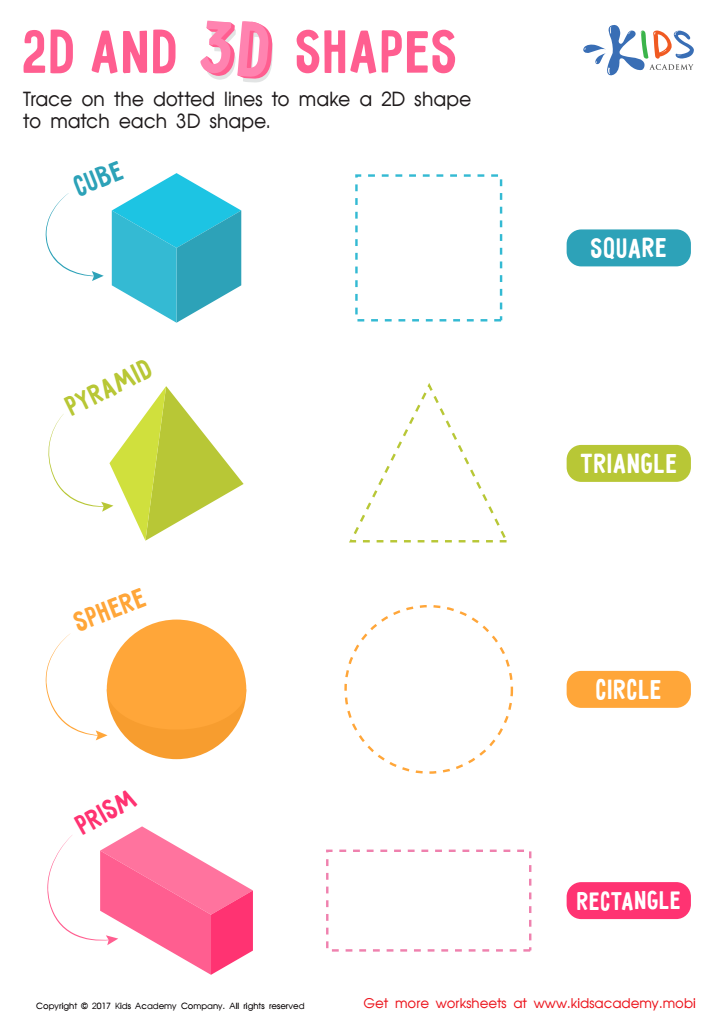
2D and 3D Shapes Worksheet
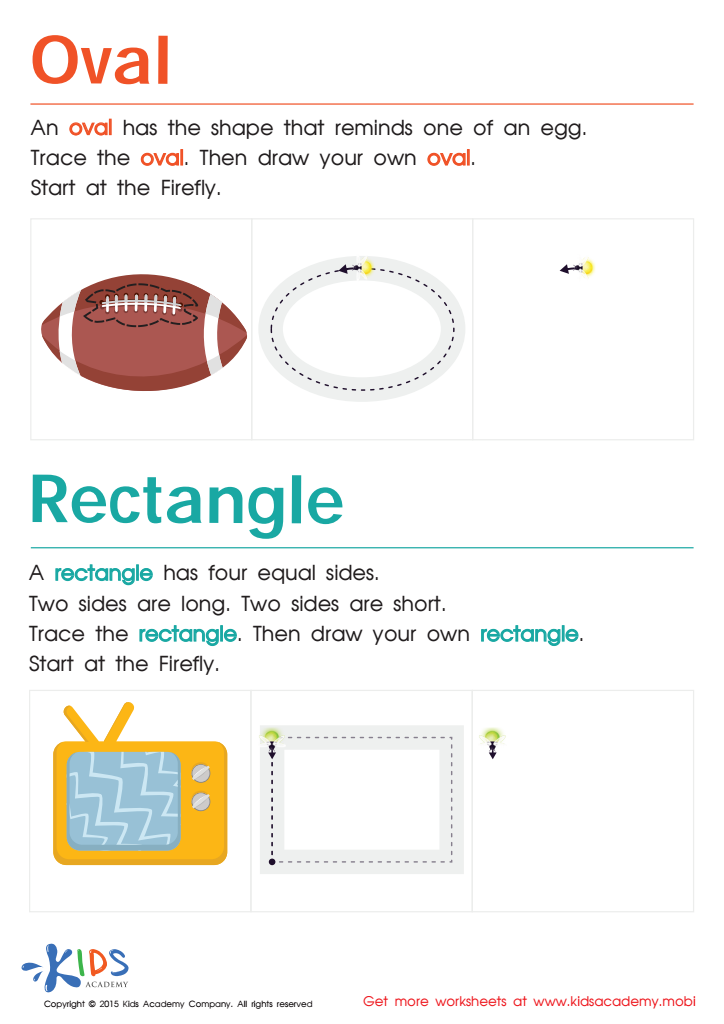
Easy Drawing of Ovals And Rectangles Worksheet








Visual perception skills are fundamental for young children, especially within the realm of geometry, and are crucial for their overall development. For children aged 5-6, these skills enable them to interpret and understand visual information, which is vital for learning and performing daily tasks.
Firstly, strong visual perception skills enhance a child's ability to recognize and differentiate shapes, patterns, and spatial relationships. This is important not only for math—the obvious domain of geometry—but also for reading, writing, and problem-solving. For instance, distinguishing between similar-looking letters (e.g., 'b' and 'd') involves geometric understanding.
Secondly, these skills support cognitive development. When children engage in activities like puzzles, shape sorting, or drawing, they boost their ability to concentrate, think critically, and plan ahead. This lays down a strong foundation for more complex mathematical concepts and reasoning skills in future educational stages.
Lastly, motor skills are closely linked with visual perception skills. Manipulating shapes and navigating space can improve hand-eye coordination and fine motor skills, which are possible through drawing geometric shapes or constructing with blocks.
In essence, by nurturing visual perception skills through geometric activities, parents and teachers help children develop essential cognitive, academic, and motor proficiencies that support overall growth and learning success.








