Addition Practice Numbers Worksheets for Ages 5-6 - Page 2
28 filtered results
-
From - To
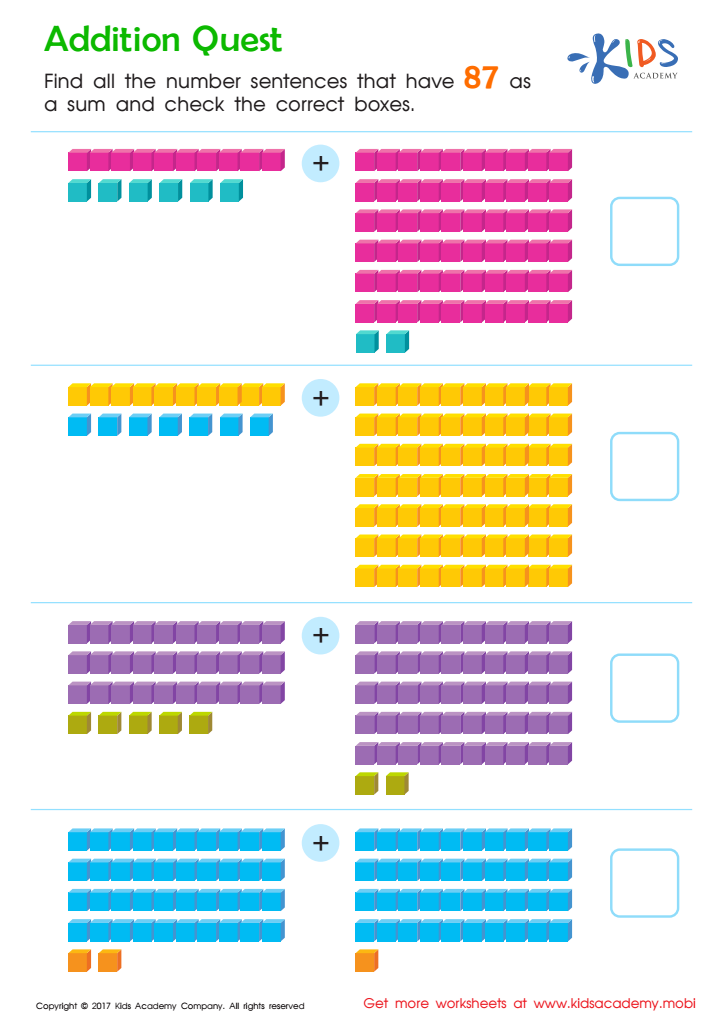
Addition Quest Worksheet: Part 1
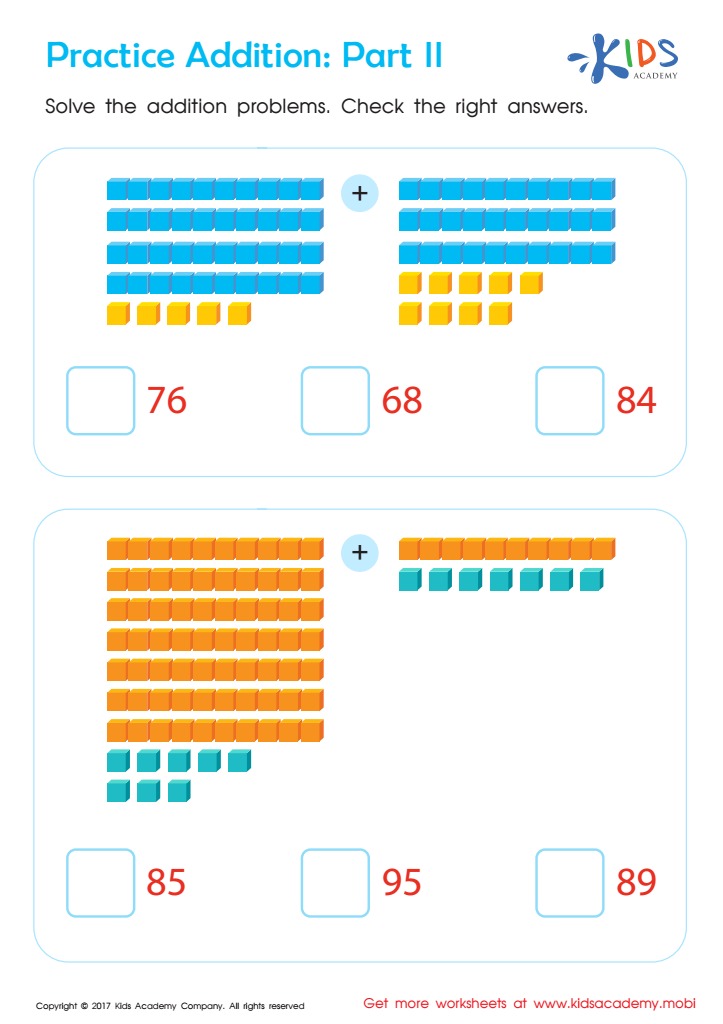
Practice Addition: Part 2 Worksheet
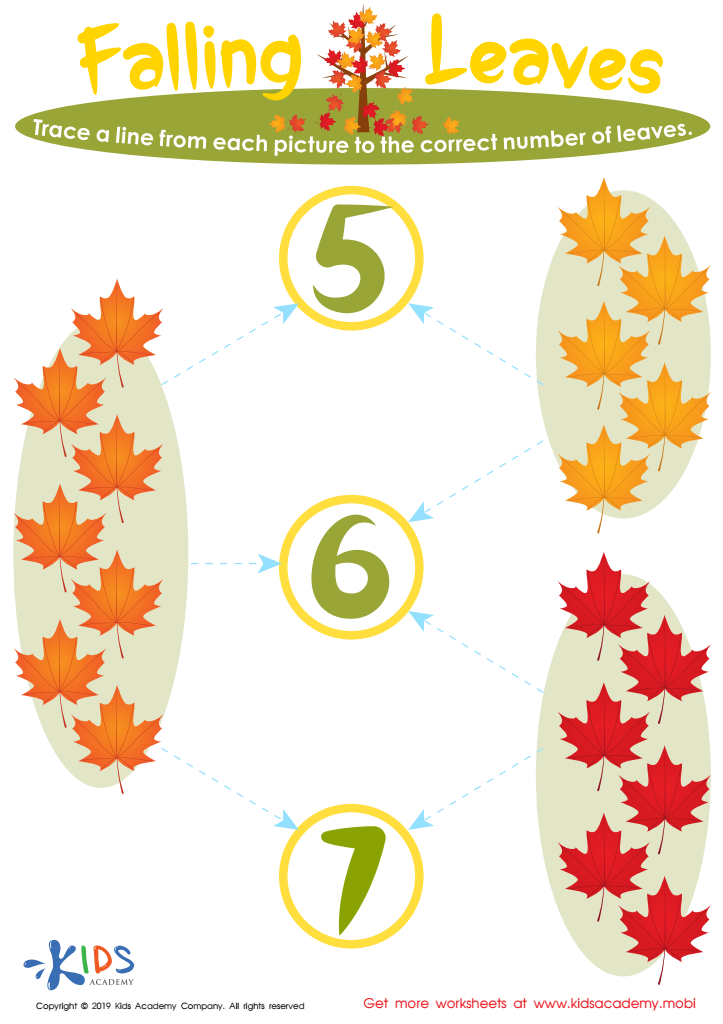
Falling Leaves Worksheet
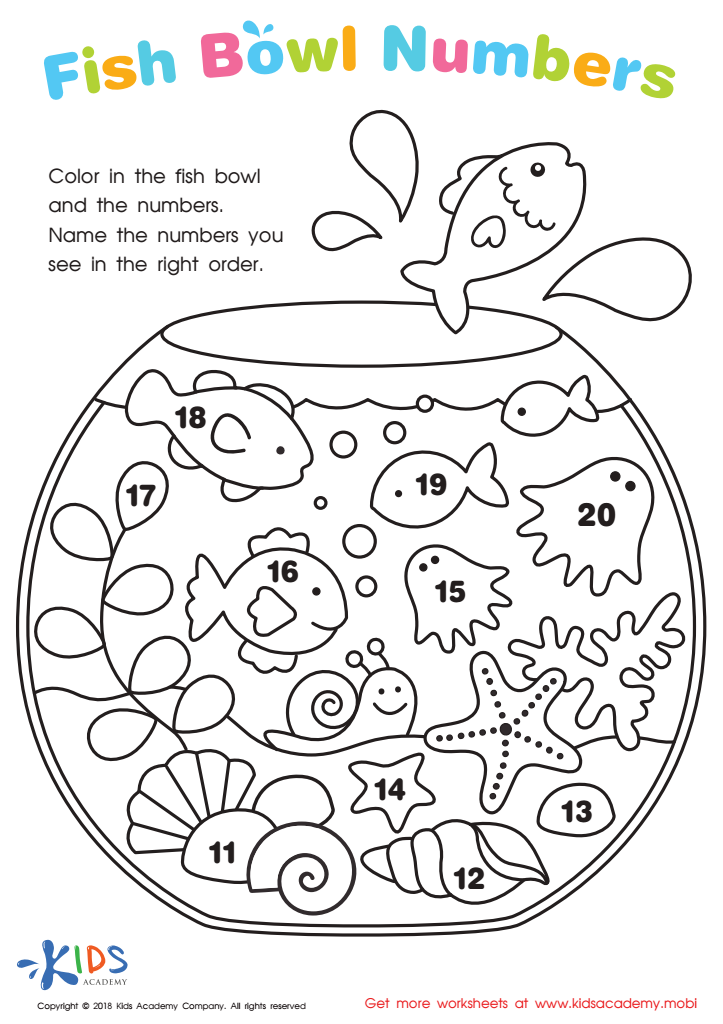
Fish Bowl Numbers Worksheet
 Assign to My Students








Parents and teachers play a crucial role in nurturing foundational math skills in young children. Engaging children in addition practice at ages 5-6 is vital for several reasons. Firstly, mastering basic addition sets the stage for future mathematical learning and understanding. Children who become comfortable with addition early on are more likely to grasp more complex concepts involving subtraction, multiplication, and division as they progress in their education.
Secondly, practicing addition strengthens critical thinking and problem-solving skills. By learning to add numbers, children develop logical reasoning and the ability to recognize patterns, both of which are essential skills inside and outside the classroom.
Additionally, early success with addition can bolster a child’s confidence. When children understand and solve addition problems, it builds a sense of achievement and enjoyment in learning. This positive reinforcement encourages a proactive attitude towards education.
Moreover, addition practice supports the development of memory and concentration. As young learners work to recall basic addition facts, they improve their capacity for longer focused tasks and richer cognitive activities.
Ultimately, dedicating time to addition practice for 5-6-year-olds provides a strong mathematical foundation, nurtures critical academic and life skills, and sets them up for continuous learning successes and confidence in their abilities.








